Romance bestseller 'Beach Read' sets lead pairing
Updated 11 hours ago

Celebrating Hollywood figures whose experiences spotlight International Day of Persons with Disabilities
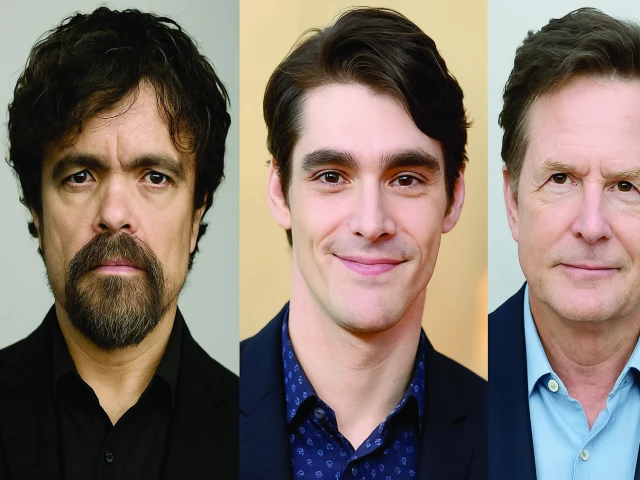
The International Day of Persons with Disabilities on December 3 offers a yearly moment to honour visibility, rights and the creative contributions of people with disabilities — including many high-profile performers whose careers have reshaped representation in Hollywood and beyond.
Their stories show how visibility can drive policy, access and cultural change while reminding us that disability is not a footnote but part of public life.
Marlee Matlin's career is a landmark for deaf performers. Deaf since infancy, Matlin won the Academy Award for Best Actress for her debut in the film 'Children of a Lesser God' and has used her platform to campaign for authentic casting and accessibility in entertainment.
She has insisted that "deaf is not a costume," arguing for roles that reflect lived experience rather than stereotypes. Her advocacy remains a touchstone for discussions about inclusive casting.
'Game of Thrones' superstar Peter Dinklage's prominence has altered public conversation about actors with dwarfism.
Best known for his role as Tyrion Lannister, Dinklage has spoken repeatedly about how his stature should not be reduced to a single character trait, urging writers and casting directors to offer complex parts rather than caricatures. His stance illustrates how established stars can push narrative nuance and challenge reductive portrayals.
RJ Mitte brought cerebral palsy into mainstream television drama through his portrayal of Walter White Jr on 'Breaking Bad'. Mitte, who has cerebral palsy himself, has advocated for employment and better representation for actors with disabilities, and his visibility helped normalise disability on one of television's most-watched series. Industry recognition — including awards and advocacy roles — underlines how performers with lived experience can change expectations on and off screen.
Selma Blair's public disclosure of her multiple sclerosis diagnosis has been a candid, high-profile example of an actor using disclosure to reduce stigma. Blair described the relief and responsibility of going public, telling audiences: "I have MS and I am okay," an admission that highlighted the practical challenges the condition creates and helped spark conversations about accommodation and empathy within the industry.
The late Christopher Reeve is emblematic of how a disability experience can transform a career into activism. After a spinal cord injury left him paralysed, Reeve became a prominent campaigner for research and care for people with paralysis, and his foundation continues to provide resources and funding for spinal-cord research and rehabilitation services. His work illustrates how celebrity can be channelled into durable institutional change.
Michael J Fox's long-running public role as an advocate for Parkinson's research has reshaped the relationship between celebrity and medical philanthropy. After his diagnosis he founded the Michael J Fox Foundation, which remains one of the largest non-profit funders of Parkinson's research and an influential voice in public policy and clinical trial recruitment. Fox's openness about living with Parkinson's has helped broaden public understanding and research participation.
Other historic figures such as Harold Russell — a double amputee whose performance in 'The Best Years of Our Lives' won an Oscar — remind us that representation is not new, but that the forms and platforms have evolved. From wartime veterans to contemporary pop stars, the arc of inclusion has lengthened, though gaps remain.
On the International Day of Persons with Disabilities, these performers' lives offer more than inspiration; they provide concrete lessons. Authentic casting, workplace accommodation, accessible storytelling and sustained funding for cures and supports are all practical outcomes that follow from visibility.
Celebrating high-profile advocates is important, but the day is also a call for structural change so that the arts and society genuinely include the one in six people worldwide who live with a disability.






This material may not be published, broadcast, rewritten, redistributed or derived from. Unless otherwise stated, all content is copyrighted © 2026 The Express Tribune.







COMMENTS (3)
Comments are moderated and generally will be posted if they are on-topic and not abusive.
For more information, please see our Comments FAQ