Mahira Khan, Hina Rabbani Khar and more to attend Harvard conference
Updated 1 hour ago

Foreign productions thrive, but Trump tariff threats and a stalled subsidy stoke fears of collapse
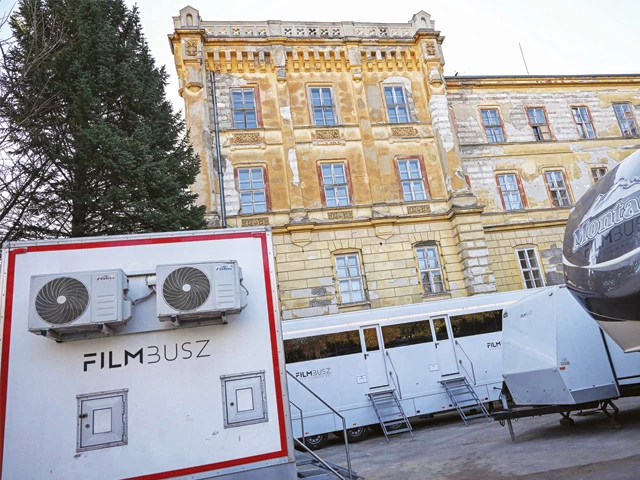
A prop axe was brought in as crew members prepared a scene for a horror film inside Budapest's former psychiatric institute, one of numerous Hollywood productions currently under way in the Hungarian capital.
But Hungary's flourishing one-billion-dollar-a-year movie industry, often dubbed "Hollywood on the Danube", may soon face the axe in the form of tariffs proposed by US President Donald Trump.
"It's like a meteor heading towards Earth. Either it passes, or it hits us," said Karoly Radnai, managing director at Hungarian tax firm Andersen. "There is no way to adapt. If Trump introduces tariffs, that will be very bad for us."
Cheap labour, diverse locations and a generous cash-rebate scheme have made the central European nation of 9.5 million an attractive filming destination. Productions range from epic sci-fi blockbusters such as the 'Dune' franchise to arthouse period dramas including 'The Brutalist', a four-time BAFTA and three-time Golden Globe winner.
Trump proposed a 100% levy on films produced abroad in May, claiming the US industry is "DYING a very fast death", and reiterated the threat in September. While experts agree outsourcing has hurt California's industry, many doubt tariffs would fix the problem.
"The current model is so important to Hollywood's bottom line that producers will figure a workaround if tariffs are implemented," said Timothy Havens, a professor at the University of Iowa.
Budapest's eclectic architecture and modern studios have made it Hollywood's most important production hub outside the English-speaking world, he added, especially for streaming platforms reliant on visually ambitious, high-budget series.
Hungary's government commissioner for film industry development, Csaba Kael, said the issue had been raised with the Trump administration. "We would like to move forward," he told AFP.
Foreign film spending reached a record $910 million in 2023, a fourfold increase in five years, with US productions accounting for most of the total. Beyond the money, Kael said foreign shoots boost Hungary's image and provide invaluable experience for local crews.
Visiting stars promote Budapest by posting selfies at landmarks, while world-renowned directors and cinematographers mentor Hungarian teams, he noted. The industry has already produced breakout talents such as set decorator Zsuzsanna Sipos, who won the 2022 Oscar for Best Production Design for her work on the first 'Dune' film.
Hungary's film service sector took off after 2004, when a rebate programme allowed productions to reclaim 30% of local spending. But its future is now uncertain after the government suspended new project registrations in June.
Although Kael has promised clarity soon, producers fear prolonged uncertainty as Prime Minister Viktor Orban's government focuses on voter-friendly programmes before next year's elections.
On the Budapest set earlier this month, producer Daniel Kresmery said the industry remains functional "for now", but warned it could unravel quickly. "The government needs to show their support properly in the long run again," said the US-born Hungarian producer at HeroSquared, one of the many local companies servicing foreign productions.







1725429132-0/Untitled-design-(12)1725429132-0-208x130.webp "widespread rain thunderstorms expected across country from april 1 pmd")




This material may not be published, broadcast, rewritten, redistributed or derived from. Unless otherwise stated, all content is copyrighted © 2026 The Express Tribune.






COMMENTS
Comments are moderated and generally will be posted if they are on-topic and not abusive.
For more information, please see our Comments FAQ