Tariff protection hurts consumers
Updated 9 hours ago

Country has agreed to achieve 60% renewable energy share but is discouraging it under influence of IPPs
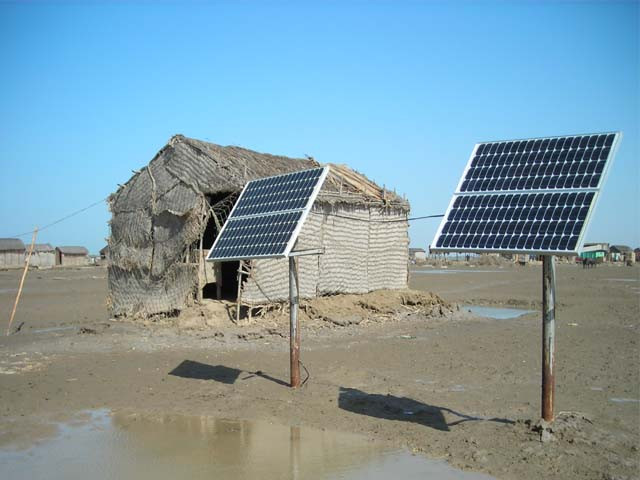
Pakistan possesses a solar power potential of 40 gigawatts as reported by the World Bank. This may help to push the share of solar to 60% in energy mix by 2030.
Historically, Pakistan depends on fossil fuels, especially oil and gas, for power generation; however, due to advances in solar technology and its increased supply low prices have shifted the energy mix paradigm more to renewable sources in recent years. Therefore, the government has developed the net metering policy, also referred to as net energy metering (NEM), which in fact is an electricity billing method that enables consumers generate their own power to sell it to the power generating company. It involves customers with solar panels transferring the excess electricity they produce to the grid and receiving credits from the utility company on their electric bill. When solar panels generate more electricity than its consumption, the surplus power flows back to the grid.
The government has endorsed the Alternative and Renewable Energy Policy 2019, offering incentives and support for renewable energy ventures. However, challenges persist in executing the National Electricity Policy 2021, which was ratified by the Council of Common Interests in February 2021.
Reports indicate that the government plans to slash the price for solar power exported to the national grid from Rs21 per unit to Rs11 per unit, sparking widespread criticism. This is in sharp contrast to the tariff of Rs60 per unit for power generated from fossil fuel.
The installed capacity of solar net metering has surged to 3,000 megawatts. Pakistan Bureau of Statistics (PBS) data show that in 2020, fossil fuels constituted roughly 63% of total power generation, followed by hydropower at 29%, nuclear energy at 5% and renewable energy at approximately 3%. The proposed solar rate reduction is believed to be influenced by the independent power producers (IPPs), who fear loss of revenue with the rapid increase in solar power installations, potentially at the expense of consumers. Notably, regulatory bodies like the National Electric Power Regulatory Authority (Nepra) are perceived to favour IPPs over consumers and solar net metering users.
The surge in demand for solar panels has disrupted the government's capacity payment plan amid fears that IPPs will lose business. While the government contends that the current rate enables consumers to recoup their solar panel installation costs within 18 months, the IPPs are pushing for an extension in this payback period to 10 years. Globally, the Sustainable Energy for All (SE4All) initiative aims to achieve universal access to modern energy by 2030 and double the share of renewable energy and energy efficiency gains. Consequently, there's a rapid transition towards renewable and alternative energy sources for power generation.
The EU's revised Renewable Energy Directive elevates its binding renewable target for 2030 to a minimum of 42.5%, up from the previous 32%, with an ambition to reach 45% of total energy from renewable sources, nearly doubling the existing share. Similarly, other advanced countries are also committed to increasing the proportion of renewable energy in their energy mix by 2030.
The Sustainable Development Goal 7 (SDG-7) advocates for "affordable, reliable, sustainable, and modern energy for all" by 2030, with three core targets forming the foundation of this endeavour to ensure universal access to affordable, reliable, and modern energy services. Pakistan has ratified the United Nations Framework Convention on Climate Change (UNFCCC) and adopted SDG-7 to align with global efforts to combat climate change and transition away from traditional fossil fuels and other carbon-intensive energy sources. To meet its Nationally Determined Contributions (NDC) target, Pakistan aims to transition to 60% renewable energy and achieve 30% penetration of electric vehicles by 2030. Additionally, Pakistan plans to ban coal imports and expand nature-based solutions.
Solar net metering stands out as a rapidly growing sector, offering consumers the opportunity to leverage their own resources for energy generation. Through such initiatives, Pakistan can fulfil its commitments under the Paris Agreement, UNFCCC, and SDG-7.
Keeping in view the above national and global commitments, leveraging net metering facilities can significantly aid in fulfilling Pakistan's obligations under the UNFCCC and Paris Agreement. Therefore, reducing the per-unit price of solar energy from Rs21 to Rs11 could undermine the transition to renewable energy. The irony is that Pakistan has committed to achieving a 60% renewable energy share, but is discouraging it under the influence of IPPs. The world is moving fast to renewable sources of energy as Australia is offering three hours a day of free solar energy to citizens, and the EU has already achieved renewable energy targets well ahead of the committed deadline of 2030.
The government should work with the public in promoting solar energy rather than obstructing it. Renewable sources of energy like solar, wind, biomass and biogas are highly sustainable and may help reduce the import bill of oil and gas meant for power production.
A comprehensive review, involving the input from market experts and the Ministry of Climate Change, as well as consultation with solar consumers, is imperative. It's crucial to assess broader national and global dynamics before making any unilateral decisions.
This approach will help to uphold Pakistan's international obligations and safeguard the interests of citizens.
The writer is a climate change, forestry, and environment expert









This material may not be published, broadcast, rewritten, redistributed or derived from. Unless otherwise stated, all content is copyrighted © 2026 The Express Tribune.








COMMENTS
Comments are moderated and generally will be posted if they are on-topic and not abusive.
For more information, please see our Comments FAQ