
The evolution of our media
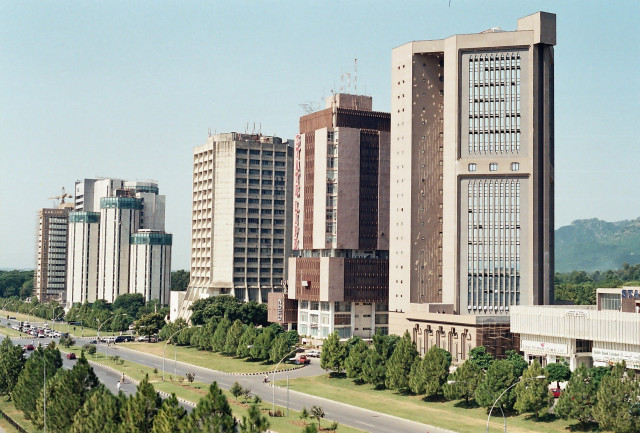
Meanwhile, those who are literate cannot afford regular access to print media. These facts make television the only truly affordable and accessible platform for information and discourse and as a result, a serious player in the Pakistani polity.
Since it was de-regulated less than a decade ago, under the regime of the former military ruler Pervez Musharraf, the media has gone on to play a critical role in many of Pakistan’s escalating and interconnected civil, military, social and political conflicts.
It was the media that covered the tragedy of Mukhtaran Mai, the victim of a brutal gang rape in rural Punjab and propelled her to become the international voice of suppressed Pakistani women. It was the media that highlighted the lawyers’ movement for the restoration of an un-constitutionally dissolved Supreme Court bench. They aired live images from across the ‘divide’ during the Mumbai attacks, challenging the Pakistani ‘establishment’ to confront its ambiguous stance on supporting terrorism.
But given the country’s reputed status of being the eye of the global security storm, what role is the Pakistani media playing in this region’s version of what was once called the ‘war on terror?’ Is it exercising its immense power responsibly? Is the media ‘selling’ the war to Pakistanis, or is it aligning itself with the anti-war – and thus essentially anti-American – movement?
In question is the media’s use of language in targeting, developing and exploiting pre-ordained opinions among sectors of the polity. Like most media, the media in Pakistan take their lead from language and ‘mimic’ the print side. In Pakistan, most Urdu news publications are relatively more conservative and less secular as compared to the English press. Considering that the English-Urdu divide in Pakistan is actually a manifestation of the haves versus the have-nots, the media in Pakistan effectively tend to merge linguistics and politics by serving Urdu news to the ‘teeming masses’ compared to the English carriers that cater to the ‘ruling elite’. Thus, different information goes to different people, channelled through the interface of the language divide in the media.
This is a critical trend. An entire generation of Pakistanis receiving news and analysis that is not in sync with another generation that co-exists with them, greatly outnumbers them and relies on them for their economic survival. What further complicates this argument is clear evidence that bilingual media groups shift their editorial stances from left to right based on the language of their products, thus providing a controlled experiment that premises language as the key driver of the growing schism in a disparately politicised Pakistani audience. Then there are the built-in structural efficiencies and/or deficiencies of the Pakistani media, including an inherent arrangement that motivates self-interest over objectivity.
All local media groups are family-owned — only one entertainment-centric group is publicly listed. That ends up giving substantial control to a very small group of individuals and, with it, the ability to advance ‘personal’ agendas into the information mainstream.
This ‘genetically driven’ structure – also called the seth culture – is the proverbial elephant in the room (or news studio) as far as Pakistan’s media powerhouses are concerned. The first automated affect of this arrangement is the breach of the church and state divide, which in journalism stands for the separation between ‘management and editorial.’ Thus, inherent in the industrial configuration of the Pakistani media is a natural dilution of the most basic principle of unbiased journalism.
Watch this space to track the bizarre, modern evolution of Pakistan’s fourth estate, which many slam as its fifth column.
(Part 1 of 3)
LATEST
Opposition sit-in enters third day over Imran Khan’s medical care

Autism in our classrooms
Imran Khan’s prison medical record sent to Punjab Home Dept
'No more high-handedness': CM Maryam orders sweeping police reforms
PM Shehbaz departs for two-day visit to Austria for talks with chancellor

11 killed as passenger coach, trailer collide on highway in Khairpur
MOST READ
Gold rises Rs7,000 in Pakistan, $70 on world markets

LHC declines to stay net metering reversal
Petrol, diesel prices likely to increase from February 16
Strategic opportunity for Pakistan
Jeffrey Epstein: Polio work, intelligence briefings and a shadowy presence in Pakistan’s tribal belt






COMMENTS
Comments are moderated and generally will be posted if they are on-topic and not abusive.
For more information, please see our Comments FAQ