
Gas shortage: Govt may scrap LNG import plans
Rising international prices, demands of sovereign guarantees seen as key hurdles.
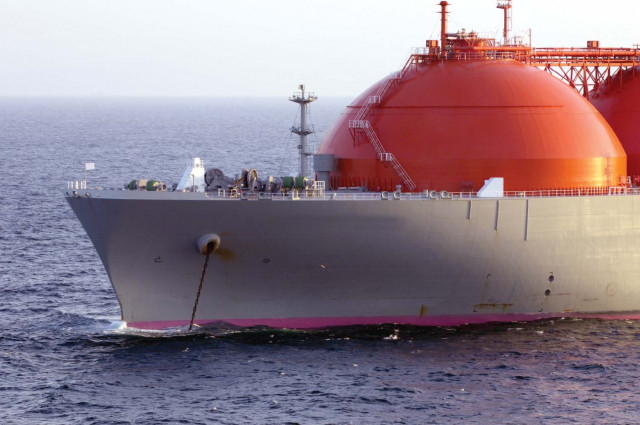
Despite the chronic shortage of gas in the country, the government’s move to import liquefied natural gas has hit several hurdles, including the skyrocketing international price of LNG and the government’s own unwillingness to conform to global industry practises by offering a sovereign guarantee to firms currently bidding to import the gas.
The petroleum ministry has been actively lobbying the Council on Common Interest (CCI) for the approval of a comprehensive incentive package for LNG import terminal operators, including a five-year tax holiday. Petroleum Secretary Ijaz Chaudhry said that the Federal Board of Revenue is amenable to such a policy.
Yet many companies, including the Turkish firm Global Energy International Pakistan (GEIP) have been reluctant to begin importing gas until the government provides a sovereign guarantee for payment, a practise that is the industry standard globally, but that violates the 2011 LNG Policy. The petroleum ministry rejected GEIP’s demand at a meeting held on December 13, on grounds that meeting the condition would require amending the policy, which in turn would delay the process.
Petroleum ministry officials are expected to brief Prime Minister Yousaf Raza Gilani on the matter at a meeting to be held in Islamabad on Tuesday (today). Sources told The Express Tribune that the ministry is expected to seek the prime minister’s intervention to resolve the matter, particularly with regard to GEIP’s demands.
At the meeting, the Oil and Gas Regulatory Authority (Ogra) is expected to argue that it will not be possible to meet GEIP’s demands and that they diverge from the expression of interest and construction licence that GEIP filed. Ogra is expected to argue that meeting GEIP’s demand would require the entire bidding process to be scrapped and restarted.
Petroleum ministry officials were more cautious in commenting about the matter. “We are examining whether the demands of GEIP are doable or not,” said the petroleum secretary.
The arrangement GEIP is looking for would involve the state-owned Sui Southern Gas Company and Sui Northern Gas Pipelines to guarantee that they will buy – and pay for – 150 million cubic feet per day (mmcfd) and 200 mmcfd respectively. GEIP specifically wants to avoid having the power companies as its end-clients since that would involve GEIP becoming entangled in the inter-corporate circular debt issue, which has financially crippled the power sector owing to the government’s inability to pay its promised subsidies.
“We have sought a payment guarantee against the supply of gas to the power sector that is unable to give guarantees itself due to the reluctance of banks to extend financing,” said one GEIP official who declined to be identified, adding that GEIP had not violated the terms of its EOI.
GEIP officials say they expect to invest $350 million in building an import terminal that will be able to provide 500 mmcfd of gas. At the current international price of close to $18 per mmcfd, that would cost about $3 billion a year and would require GEIP to have close to $1 billion in outstanding receivables at any given moment in time.
GEIP officials insist that, despite the high cost of LNG, their project would still save the country about $1 billion per annum in imports of oil to run power plants.
GEIP has also asked to reframe the Third Party Access (TPA) Rules. Ogra has said that these rules were finalised with consultation of all stakeholders and had been sent to cabinet for notification. “Any further amendment shall restart the never ending process,” said one Ogra official.
Published in The Express Tribune, December 22nd, 2011.


1733130350-0/Untitled-design-(76)1733130350-0-208x130.webp "reimagining our economy in the ai age")


MOST READ

Gold rises Rs7,000 in Pakistan, $70 on world markets

Petrol, diesel prices likely to increase from February 16
Cost of commuting rises as government hikes fuel prices
Iran says regional countries can resolve issues together, rejects need for external guardianship

Strategic opportunity for Pakistan








COMMENTS
Comments are moderated and generally will be posted if they are on-topic and not abusive.
For more information, please see our Comments FAQ