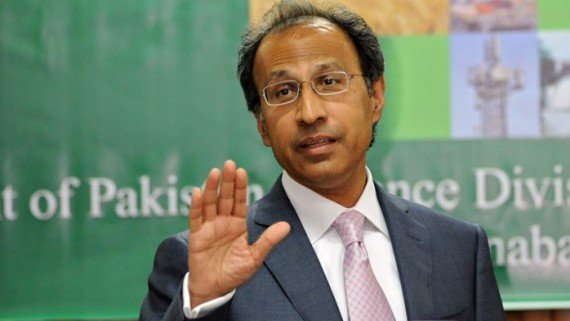
The seventh round of talks, which continued for two days, remained inconclusive. In a joint communiqué, however, both sides agreed to continue discussions to seal an early agreement.
Dr Abdul Hafeez Shaikh, Minister for Finance, represented Pakistan while Hazrat Omar Zakhilwal, Afghan Finance Minister, led his team. Under an American initiative both the sides initiated dialogue last year to sign a new transit trade treaty.
An official of the finance ministry said that both the nations could not reach an agreement, as Afghanistan refused to sign any deal without getting land route access to New Delhi through the Wagha border, a demand rejected by Islamabad.
Pakistan’s stated position is that trade with New Delhi does not fall under the ambit of the Afghanistan-Pakistan Transit Trade Agreement. Experts believe that the opening of the Wagha border may end up creating a regional trade hub and Pakistan could become a gateway to export energy from the energy-surplus Central Asian region to energy-starved India. Land-locked Central Asia has immense energy resources, which are enough to meet the needs of hungry economies of China and India.
However, the detractors of the idea say that allowing Afghanistan and India to use Pakistani soil would also result in losing Central Asian markets to more competitive Indian products.
Both the sides signed a memorandum of understanding to establish a road-link at the end of the talks aimed at promoting regional trade and accelerating communications between the two countries. The countries agreed to start work on feasibility reports on two important rail linkages. The Torkham-Jalalabad and Chaman-Spinboldak-Kandhar rail connections would provide connectivity to boost regional trade.
The MOU was signed by Ghulam Ahmed Bilour, Minister for Railways from the Pakistani side and Hazrat Omar Zekhiwal from Afghanistan.
Pakistan also did not entertain Afghanistan’s demand of giving it sea, air and land access for the transit trade. However, it only accepted to give air-to-air access.
Published in The Express Tribune, July 8th, 2010.




















1714024018-0/ModiLara-(1)1714024018-0-270x192.webp)












COMMENTS (4)
Comments are moderated and generally will be posted if they are on-topic and not abusive.
For more information, please see our Comments FAQ