
Insecurity, social taboos: Schools shut as fear drives teachers away
Children in Wana have not attended class since November.
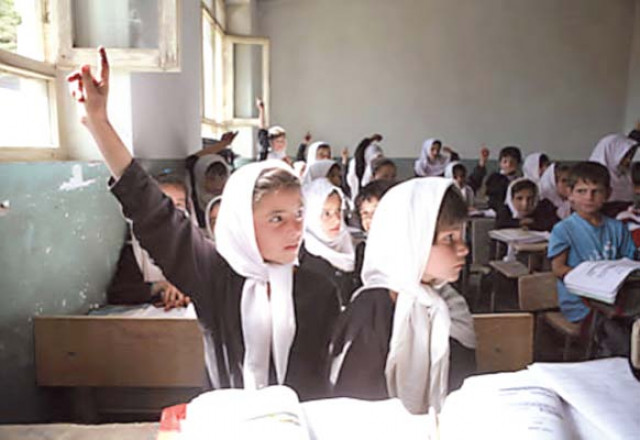
Insecurity, social taboos: Schools shut as fear drives teachers away
A local school in Wana, the main settlement in South Waziristan tribal agency, has been closed for several months, and the children only come to play games in the compound.
“We have no teacher at the school,” Rida Ali, 8, said. “So we just play or do chores at home.” The teacher who taught them before insecurity shut down schools in the area lives only 1km or so away, but is unwilling to come to work. The children in Wana have not attended class since November.
“Due to security issues, teachers, especially female ones, are not going to class and this affects the education of girls,” Syed Fawad Ali Shah, emergency education officer for the UN Children’s Fund (UNICEF) in Pakistan, told IRIN.
According to media reports, fear of the Taliban has meant many teachers have not gone back to work even in areas like Swat, which are now clear of militants.
“I love teaching, but I will never teach again. My husband says I must not do so as it is too dangerous,” Aima Malik, 25, said from the Khyber Agency where she had taught at a school for girls from 2006 to 2009. “Fewer and fewer women are ready to teach any longer,” she added.
“It is better that they be safe and learn how to cook or sew at home,” said Maryum Bibi, a mother of two teenage daughters living in a rural area on the outskirts of Peshawar. Her daughter, Jamila, 13, dreams of being a teacher but now says: “It seems I will never even complete my matriculation.”
Abdul Monib, a secondary school teacher in the Bajaur Agency, told IRIN: “As a teacher, I always feel sad when pupils drop out before completing their education. Now so many can no longer continue because their families need them to work. Others fear the classroom because of bombings in the past at schools and refuse to come any longer.”
Literacy rates down
The insecurity is affecting literacy rates. “Barely 1 per cent of women are literate in these areas,” Roohi Bano, regional manager for the Peshawar-based NGO Khwendo Kor, which works for the education of girls, told IRIN.
“It has always been difficult to find teachers in these parts. Few women are educated and families prefer them not to work. The situation that has now arisen following the reign of the Taliban will make matters even worse, with fewer and fewer women wishing to take up this work,” said Azra Khan, headmistress at a private school in Peshawar.
In some cases, she said, threats had been made even against teachers in big cities. “At least two of my teachers no longer wish to work here,” she added.
The problem is compounded by the reluctance of parents to allow men to teach girls. “My husband has insisted we withdraw our daughter from her school because there are some male teachers there. He has orthodox views and says this is unacceptable,” said Zakia Bibi, 40, from the town of Mingora in Swat.
Other factors have also affected education. “There are many families who have suffered financially, using up their savings during the displacement and unable to find jobs now, even when they have returned,” said Ahsan Ullah, 40, who runs a small shoe-making factory in the South Waziristan agency. He says he receives “dozens” of requests for jobs each week, but cannot accommodate more workers.
In the town of Mardan in Khyber Pakhtunkh’wa, Zainab Bibi, from the Orakzai Agency, wonders how to educate her four children. Her husband was part of the Taliban force in the area. “I fled on my own, with the children, in 2010, when fighting became fierce,” she said. “Some relatives helped us. I have not heard from my husband since then; my two older boys, aged 14 and 15, go out to work at an automobile workshop to bring in some kind of income - but I am desperate to see them back in school.”
Bibi is also concerned that unless they are educated, the boys may be tempted to join the Taliban. “A gun is a huge attraction for a young boy,” she said.—
Published in The Express Tribune, May 5th, 2011.
LATEST

Umrah fares surge as Ramazan begins, business class hits Rs500,000

Govt to clear net metering applications filed by Feb 8
Gas cylinder blast kills at least 16 as building collapses in Karachi

Dar urges justice and accountability for lasting Middle East peace at UN

Punjab reports 1,695 suspected measles cases in first four weeks of 2026

Pakistan extends airspace ban on Indian flights till March 23
MOST READ

Sri Lanka removes Pakistan from negative visa lists after Naqvi meeting

Punjab’s quiet acquisition of luxury Gulfstream jet spurs scrutiny

Workplace harassment: SHC disposes of KE ex-CEO's plea

'The cheater has finally been exposed': Sannia Ashfaq fires back at Imad Wasim

SC adjourns Imran Khan’s Toshakhana, cipher, defamation cases indefinitely










COMMENTS
Comments are moderated and generally will be posted if they are on-topic and not abusive.
For more information, please see our Comments FAQ