The Express Tribune » Naureen Aqueel http://tribune.com.pk Latest Breaking Pakistan News, Business, Life, Style, Cricket, Videos, Comments Sun, 20 May 2012 10:25:23 +0000 en hourly 1 http://wordpress.org/?v=3.2.1 Home is where the school is http://tribune.com.pk/story/267451/home-is-where-the-school-is/ Sun, 09 Oct 2011 08:07:35 +0000 http://tribune.com.pk/?p=267451

While harried moms in her neighbourhood rush to pack off their kids to school every morning, Sadaf Farooqi’s day starts on a relaxed note. Her six-year-old daughter A’isha Irfan rises early, makes her own breakfast and starts the day by unleashing her creativity using pencils, colours, water colours, scissors and paper. A’isha later switches to reading one of the books from her curriculum set, going to her mother for questions whenever she feels the need. Her four-year-old brother Abdullah Irfan soon joins her; he scribbles with colour pencils, experiments with Lego and peppers his mother with numerous questions throughout the day.

A’isha and Abdullah do not go to school, for them their home is their school — a place where they are free to learn in a natural setting. But that’s not because they have special needs or couldn’t get into a ‘normal’ school. Sadaf, a freelance writer and blogger, has been homeschooling her kids for over a year now and says she prefers this unconventional approach to schooling.

She follows the official Oxford University Press curriculum with books for Maths, English, Urdu, Social Studies, General Science and Islamiat along with daily Quran lessons, but prefers to let her children choose what they want to study. She says this approach hones the children’s natural inclination to learn.

Sadaf’s not the only one who has decided to opt out of the system. The Irfans are part of a community of like-minded parents who are choosing to homeschool their children. The concept, though relatively new in Pakistan, is gaining popularity among families who are dissatisfied with the traditional schooling system and prefer being more involved in their children’s education. Parents like the Irfans got together and formed the Pakistan Home Education group which consists of an online community with approximately 150 members comprising homeschooling parents and those interested in home education. They also launched a quarterly magazine focusing on their activities and various issues related to home education.

The group, comprising of roughly 20 homeschooling families, also holds regular social events where moms and children get together for combined social activities and support. Such meetings are held every second Monday of the month at someone’s home where kids play with each other and moms discuss problems and solutions, and Bookworm’s Book Club is held weekly and consists of story-telling followed by craft activities and snacks.

Laila Brence, a Latvian convert to Islam and a former teacher herself, was the pioneer of the Pakistan Home Education group. “I feel that I am more in control of what is going on in the lives of my kids than I would be by sending them to school,” says Laila, who is currently in her seventh year of homeschooling two kids with a third baby in line. “The schooling experience has greatly changed since I myself went to school. These days, kids don’t have the time to be kids any more. Society puts so much pressure on them to become high-achievers that their own life gets lost somewhere in the rat race.” Laila says that she is glad her kids are getting plenty of time to do the things they want to do  and enjoy doing. “Even boredom is a great  opportunity for creativity and spontaneity —  they always invent new games to play and  come up with endless art projects of their own.”

For Sadaf, one of the big motivations of opting for homeschooling was the whole school routine, which involves, “ironing the uniforms and laying them out along with shoes and socks at night; packing the bag according to the timetable; forcing the child to finish her homework; making and packing the lunch in the mornings, forcing a few mouthfuls down a reluctant mouth, then sending off a sometimes mildly sick, or screaming toddler with a tear-ridden face, to school with a heavy heart and a shackled mind that never ‘dared’ to question the necessity of this so-called ‘must-have’ system of education”.

Despite these misgivings (which other parents might share as well), she didn’t seriously consider homeschooling until she met a few mothers who were educating their children at home in Karachi.

Homeschooling does not come without its fair share of critics. From the incredulous stares that these parents get every time they say their children are being educated at home to the reasonable arguments in favour of formal schooling, homeschooling families do get a lot of flak. Critics fault the system for isolating children, reducing confidence levels and limiting their interaction to only like-minded people and groups.

“Homeschooling does not set them apart from the real world — schools do,” rebuts Laila. “In schools, kids are grouped into unnatural age-wise segregated situations, which never occur in the real world. Homeschooled kids experience the reality of this world — they deal with their family members, household issues, relatives and friends of different ages. And, of course, as kids grow older, we will look for opportunities for them to do more things outside of home — sports activities, workshops, etc.” Laila finds that homeschooling gives her children an advantage as she can choose the people they interact with. “In the formative years, it is of utmost importance to have good role models around, which would help to strengthen their core values. When they get older, I don’t mind that they face difficult situations and people on their own — I hope by that time their own internal values will be developed enough to withstand peer-pressure, bullying and other negatives of our society,” she explains.

Atefa Jamal, a homeschooling mother of seven, says her kids get a fair share of interaction with the outside world. The four boys are attending Taekwondo classes thrice a week, the elder two also participate in scrabble competitions and during the summers, the kids get to choose from a wide variety of summer camp activities. This summer, they chose to take Arabic classes and swimming classes. “I also send my older kids out to buy groceries,” says Atefa. “They meet a lot of different people and learn to deal with bakers, butchers, the driver or the man down the street who comes for groceries at the same time they do. It’s a misconception that you are isolating them, that you will choose their friends. That doesn’t happen; you can’t control your children’s lives. My kids go out to bike and play in the park; they are attending swimming, Quran and Taekwondo classes. I think they actually end up meeting more real people in everyday roles and interact more realistically.”

But what about the absence of a formal curriculum? Do institutes not know what they are doing when they invest great amounts of money and time in designing a curriculum? And are parents skilled in all subjects that are required to be taught?

“There is a misconception that homeschooling means you have to do it all by yourself and that you have to do it all at home,” says Atefa. “There are so many books available and it’s not like tuitions are not an option. Homeschooling merely means that the parents are more actively involved in their children’s education. If you feel you can’t do something you can always try to learn it yourself and search on the internet or you can get tuitions for your child for a particular subject.”

Every few days, Atefa sits down and draws up a plan of what she and her husband want to achieve with the children. Atefa is quick to say that the learning is flexible and that there isn’t any fixed schedule. “The learning is more need and situation-based,” she says. “For example, when we got a kitten, we researched how to take care of it. When the kitten died, which was a traumatic experience for the kids, we discussed death, souls and the hereafter.”

As the children grow older, some parents prefer making the routine more structured with fixed slots for studying different subjects as in school. Many homeschooled children appear as private candidates to get the required certifications of O and A levels or matriculation after which they choose a college for formal degrees. Zahra Omer, who is currently in the second year of her textile design degree at Indus Valley, has passed successfully through a homeschooling experience and is in no way behind her peers. Zahra, along her with her two brothers, was homeschooled till Class 6 after which she was enrolled in a mainstream school. During her homeschooling years, Zahra developed a reading habit that kept her well ahead of her peers. She ended up with seven As and three Bs in her O levels and straight As in her A levels. Asked if she had any problem adjusting with conventional schooling when she joined in Class 7, Zahra says “I didn’t have a problem adjusting. Everyone was very nice and cooperative. In fact, when I went to school it was a step back from the level I was at. Even when I gave the entrance test I faced no problem. I never felt my base was weak in any subject except for Urdu which we weren’t taught at home regularly. But I was given extra attention at school for Urdu and I caught up by the next grade. The only difference I encountered at school was the competition among students. At home, there was no competition.”

Homeschoolers say home education nurtures the natural genius and focuses on passion over requirement as children aren’t forced to study subjects they have no interest in, nor are they made to feel dumb if they can’t achieve certain targets.

Maintaining discipline may be a challenge at times, but parents like Sadaf view the naughty “pranks” as disguised learning through “experimentation” with different materials. “I do not have a TV at home and I do not live in a joint family, so I have no problem in ‘controlling’ the amount of television viewing or other distractions. Our home is crawling with children’s books, materials and toys, so my children get to unleash their creativity without restraint.”

Anila Omer, Zahra Omer’s mother, however, says she never had a problem maintaining discipline at home despite having a television. “I would choose which movies or cartoons to show to my children and we would watch those,” she says. “Since they were homeschooled from the beginning, there was no outside influence that would make them disobedient or naughty.”

However, the idea of homeschooling is still unfathomable to a majority of parents. Kamila, mother of four-year-old Orhan and a teacher herself, expressed surprise when told that families were opting to educate their children at home in Pakistan. “I wouldn’t choose to homeschool my child, not in this country,” she says. “Schools offer children a routine and exposure that they don’t get at home. You can’t keep your kids in a bubble. I want my kid to get the kind of exposure that school gives because life isn’t easy. When you are at school, you get different perspectives through different teachers. When you are studying from only one person your mind is stuck in a rut. I don’t want that for my child.”

Although mothers are more involved in the homeschooling process (with many moms having given up full-time jobs to homeschool their children), support from fathers is considered a necessity. Atefa’s husband Azeem Pirani says his focus is to give time to his children whom he calls his “team”. His time is utilised in discussions about current affairs at meal times, regular visits to the swimming pool with them, involvement in matters relating to vacations, events etc, guidance and coaching in academic matters requiring further support and being part of the audience or judges for any presentations they may be working on.

Azeem feels the fact that homeschooling is less expensive allows the family to spend on more beneficial things like family vacations, getting books or materials from abroad and getting memberships for clubs allowing better access to sports facilities etc. “The educational value of visiting new places is many times greater than sitting in a classroom and listening to a teacher who is there just because she needs a job and not due to any desire to impart knowledge to our children,” he says.

Azeem feels the decision to homeschool his seven children has been a very positive one. “We have been able to interact more as a family.  The children are able to have their lives revolve around their family rather than around their schools.  This in and of itself means a strong and close-knit unit.”

However, homeschooling is not for everyone, warns Laila. “Schools are very much necessary for families that for various reasons cannot homeschool. I always advise new families not to take this step, unless they are sure they are ready for it. Excitement over the advantages of homeschooling may push families to go for it when they are not ready — this way, they may end up disappointed. Researching about home education and evaluating the situation of your family is necessary before taking this step. It is also important that both spouses agree on this mission — if only one is for it, the tasks may prove to be very difficult.”

If all parents homeschooling their kids in the country possess the same spirit and vision as these families, we might just be witnessing the beginnings of a new movement in education in Pakistan.

Published in The Express Tribune, Sunday Magazine, October 9th,

2011.

Correction: An earlier version of this article incorrectly stated the name of the parent.


]]>
school 01 In a society where the educational rat race is so intense that parents begin registering their kids in the best primary schools before they’re even born, some trailblazing parents have taken the road less travelled. 8

Suicide attack in I-8 sector of Islamabad http://tribune.com.pk/story/188043/blast-in-i-8-sector-of-islamabad-live-updates/ Mon, 13 Jun 2011 10:55:31 +0000 http://tribune.com.pk/?p=188043

ISLAMABAD: A suicide bomber targeted a branch of Silk Bank in the I-8 sector area of Islamabad on Monday.

The suicide bomber detonated after being intercepted by the security guard at the entrance of the bank. The security guard was injured as a result of the blast and succumbed to his injuries when he was shifted to the hospital.

Four other people were reported to be injured, one of them in critical condition.

Inspector General of Police (IG) Islamabad, Wajid Durrani said the head and body parts of the suicide bomber had been found from the site.

President and PM condemn attack

President Asif Ali Zardari and Prime Minister Syed Yusuf Raza Gilani strongly condemned the suicide bomb blast. The President expressed his condolences with the families of the deceased, APP reported. The PM expressed deep sorrow and grief over the loss of life and ordered inquiry into the incident.

End of live updates

3:50pm

The front of the bank was badly damaged and hoardings smashed. Pieces of human flesh were scattered on the floor and several cars parked outside were also damaged, said an AFP reporter.

“I was returning from lunch when I heard a deafening noise,” said Chaudhry Yassir, who works in another bank nearby, told AFP.

“I saw the guard. It’s difficult to describe his condition. He was being rushed to the hospital but there was no hope.

“The same building has a wedding hall in the basement but there was no function at the time of the blast,” Yassir added.

“One security guard is confirmed dead while two others are injured,” Wajid Durrani told AFP, estimating that the bomber was aged 24 to 25 years old.

Twitter buzz:

Orezavi Our security strategy and tactics haven’t, ever, worked out for us. #Fact #Pakistan

Farieha Aziz Not saying checkposts can prevent suicide bombers who arere most likely to detonate themselves there. But what purpose do they serve? Inconvenient.

Blast in Islamabad and all the media continuously showing the live footage. Blast in Quetta and the news vanishes after 5 minutes. Heck :(

3:40pm

Eye-witnesses are saying the suicide bomber had been stopped by the guard outside the bank and had briefly resisted before detonating.

The furniture inside the bank has been destroyed, report Express 24/7 correspondent Syed Ali.

This is the first major attack in Islamabad after at least 18 months.

Interior Minister Rehman Malik had earlier said that security would be tightened in the capital.

3:35pm

Express 24/7 correspondent, Syed Ali reports that a minor altercation occurred between media and the police when some members of the media tried to enter the blast site.

Eye-witnesses from the site confirmed that the guard had stopped the suicide bomber at the entrance, who had then detonated outside the bank.

Forensic and security officials are on the site and are combing the site for evidence.

IG Islamabad confirmed that the second body, which is reported to be the body of the suicide bomber, had been shifted from the site for forensic analysis.

“The bomber tried to enter into the branch of a private bank in I-8 sector of the city, but the guard resisted and the bomber detonated himself,” city police chief Wajid Durrani told Reuters on the spot.

“It seems to be a suicide attack, we have found the head and the body parts of the bomber,” he told AFP.

“The bomber probably blew himself up inside the bank as his
head is lying inside,” Wajid Ali Durrani told Reuters.

Nida Rasheed Was I-8 targeted because it’s on the boundary of Islamabad? There’s maybe one security checkpoint before it. #Islamabad

Hena Zuberi Suicide attack in Islamabad-why is I-8 such an easy target? Bhatti killed there too #Islamabadbombing

Areebah Shahid Suicide blast outside civilian property..and the war returns to #Islamabad again…

Orezavi I see no point, and find it rather offensive, when sitting politicians tweet about breaking news & sympathise with those affected.

3:26pm

Express 24/7 correspondent, Suhail Chaudhry reports Deputy Commissioner Islamabad has confirmed four people have been injured.

Three people have been shifted to PIMS Hospital, one is reported to be in critical condition.

3:25pm

“The bomber walked into the bank and blew himself up when
the security guard tried to search him,” witness Hammad Ahmad told Reuters.

Twitter alert:

Omar Waraich The target was Silk Bank in I-8 – owned by former Finance Minister Shaukat Tareen

Omar Waraich The security guard was killed by the suicide bomber while preventing him from entering the bank #IslamabadBombing

3:20pm

IG Islamabad Wajid Ali Durrani says remains have been found inside the bank building and the police suspect that they belong to the suicide bomber.

Express 24/7 correspondent, Syed Ali Ehsan says many people were present inside and outside the bank.

The injured have been taken to PIMS Hospital, which is the closest medical facility from the blast site.

There have been reports of only two injured from hospital sources.

The Bomb Disposal Squad is examining the site.

3:15pm

The suicide bomber detonated outside the bank when he was stopped by the security guard, reports state.

SSP Islamabad Tahir Alam has also confirmed that it was a suicide attack.

3:10pm

DIG Islamabad Bin Yamin has been confirmed that the blast was a suicide attack.

Fire brigade has arrived at the site.

Security and rescue forces are present in the area.

Two people are confirmed dead and several have been reported to be injured.

3:05pm

Police authorities have confirmed that the blast was a suicide attack.

A second body has also been found from the site, sources have said that the body could belong to the suicide bomber.

There has been a considerable amount of damage to the front of the bank.

Emergency has been declared at all hospitals.

3:00pm

Several people have been reported to be injured in the blast.

The security guard of the bank has been reported to be killed as a result of the blast.

There is no information on the intensity of the blast.

Rescue 1122 teams have reached the site.

On Sunday, a low intensity roadside blast injured three people including a child on Murree Road near Malpur village on the outskirts of the city.

A slideshow of images from the site can be viewed here.

__________________________________________

Note: There is a poll embedded within this post, please visit the site to participate in this post's poll.


]]>
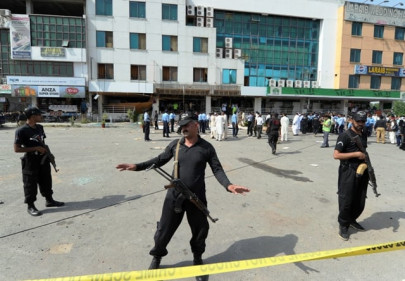
Islamabad I-8 Blast AFP Security personnel cordon off the scene of a suicide bomb attack on a bank building in Islamabad on June 13, 2011. PHOTO: AFP 59
Cartography: Tech enthusiasts gear up to map up Karachi http://tribune.com.pk/story/186442/kartography-tech-enthusiasts-gear-up-to-map-up-karachi/ Sat, 11 Jun 2011 01:40:41 +0000 http://tribune.com.pk/?p=186442

KARACHI: 

Tech enthusiasts, Google fans and development workers gathered at the Institute of Business Administration (IBA) city campus computer lab on Friday to learn how to use Google maps to map their neighbourhood and city.

Led by Google country representative Badar Khushnood and a trio who are the most active map makers of Pakistan, the workshop enlightened around 40 participants about the importance of having a complete mapping interface for the country, guiding them through the process of mapping out their city and neighbouhood online.

Khushnood related how Google maps, in addition to its commercial uses and benefits, has been used for disaster management and relief work. He cited the example of the Attabad lake disaster and last year’s floods to emphasise the need to have a well-developed map interface to mobilise and expedite humanitarian initiatives.

Khushnood narrated the incident of a local resident who had helped map various points of disaster and mark needs at the time of the Attabad lake flooding by text messaging updates to Faraz Ahmed, one of the active map makers, who would then plot them. Another website, local.com.pk, launched by the trio of Faraz Ahmed, Omer Sheikh and Gibran Rafique used the Google interface to map out and speed up relief work during the 2010 floods and create a cloud cover layer on the map which could forecast where the rain and subsequent floods would come next.

Faraz, Gibran and Omer are among the 50 top mappers on Google Map Maker in the world and they have collectively contributed around 700 points of interest on the maps. What is interesting is that both Gibran and Faraz are not even based in Pakistan but continue to contribute to its Google maps from abroad.

“A major benefit of the internet is that it provides a level playing field for everyone,” said Khushnood.

At the time of the launch of Google maps in 2008, Pakistan was nowhere on the world map interface. But only a year into the launch, Pakistan had topped the Google Maps experiment. Pakistani web users were able to post more localised content to the maps than any of the 160 countries simultaneously taking part in the global search leader’s experiment.

“We started from four people and we have now increased to 40 to 50 people,” said Faraz Ahmed.

Map data is often available for download for non-profit use and is often used by organisations to produce helpful resources for humanitarian purposes. Saeed Ghani, the associate dean at the Faculty of Computer Sciences at IBA, spoke about how he and a group of students used the Google map interface to set up a separate Sindh Maps website to help with disaster management and relief and development activities throughout the province.

Map data is also available as satellite imagery set to possible real-time coordinates and is based on data provided by external organisations such as Nasa. Street views however, said Khushnood, would take some time to come to Pakistan. Currently, the process of map making and the speed with which the update is added to the map after moderation by other users also takes some time due to the requirement of each edit having to be approved by another user. Anybody can add an edit to a map and plot points of interest by logging in through their Gmail account. The edit is then approved or rejected by another user and then by Google before it goes up live. Google Map Maker however, does not allow users to add personal data.

The need for such community initiatives was voiced by the participants as well. “I work in the development sector and after I worked for flood relief I realised the importance of having this kind of interface where you can coordinate such humanitarian activities,” said Zahra Khan, a participant. “I therefore felt the need to come and learn how to use Google map maker.” Omer Sheikh added, quite aptly, “The idea is to get the participants started in the hope that they will continue mapping in the future.” It seems like there’s no stopping them now.

How to make a map on Google Map Maker

1. Sign in through your Gmail log-in and log on to <http://www.google.com/mapmaker>

2. Select an area where you want to plot a point of interest.

3. Select satellite view and zoom in on the area.

4. Click on add a point in the tabs on the left of the map. Select a preferred language, a category (restaurant, café, shopping centre or university etc), add in street address, contact information and description. You can also link a photo by adding a photo URL.

5. Save edit and wait for approval by other users.

6. You can also draw a road, railway, river, flyover etc by marking point A and B for the beginning and the end and adding details like the name and attributes of the road.

7. There are different forums where Pakistani map makers can also discuss issues and problems faced when making maps for example <http://www.groups.google.com/mappingpakistan> and <http://geography.pk>

Published in The Express Tribune, June 11th, 2011.

Correction: June 12, 2011

Due to an editing error, an earlier version of this story was titled ‘Kartography: Tech enthusiasts gear up to map up Karachi’. This has been revised to ‘Cartography: Tech enthusiasts gear up to map up Karachi’.


]]>
Image A screenshot of Google Pulse, a feature of Google Map maker, showing a map being drawn in real time. 5
Twitter Alert: Shock, horror at Rangers killing http://tribune.com.pk/story/185418/twitter-alert-shock-horror-at-rangers-killing/ Thu, 09 Jun 2011 10:52:02 +0000 http://tribune.com.pk/?p=185418

KARACHI: Twitter erupted in shock and fury as news about the extra-judicial killing of a youth by Rangers personnel in Karachi surfaced. Pakistan’s Twitterati voiced their dismay, horror, and anger, at the same time raising questions about the ability of the government and judiciary to deliver justice.

Here is a round-up of the top tweets:

Aamna Taseer

I get sadder and sadder as the days go by. Will we ever get justice? Or is that for the selected few?

AK Chishti

What happened today in Karachi has been happening in Balochistan for years – difference? Media is not allowed to show that genocide.

Shaheryar Mirza

For those asking, probably the only reason the video made it out was because his brother was a journalist.

Sabahat Zakariya

All the more convinced that my staunch opposition of gun and violence glamourizing kids at school was valid and the right cause.

Munizae Jahangir

I hang my head in shame as a Pakistani. I will sleep tonight with a heavy heart, knowing the law of the jungle prevails. We are all prey.

Faizan Lakhani

Sialkot, Kharotabad and Karachi – we’re heading towards dehumanization of society.

Ammar Yasir

Just watched the Samaa footage and I feel like throwing up. This happened in Karachi, imagine the extra-judicial murders in Balochistan.

Omar Waraich

Would be very interesting to see how many inquiries Rehman Malik has ordered, and how many of them have been completed.


]]>
rangers killing 2 Screenshot of the boy pleading with the Rangers personnel to let him go. 11
Good times: Port Grand finally makes a grand opening http://tribune.com.pk/story/177989/good-times-port-grand-finally-makes-a-grand-opening/ Sun, 29 May 2011 05:38:48 +0000 http://tribune.com.pk/?p=177989

KARACHI: 

The whiff of putrid sea air that hits you as you near the entrance of the highly anticipated Port Grand Food and Entertainment Complex is forgotten once you step inside the metal gate. The newest addition to Karachi’s nightlife promises to offer visitors a world of its own in an enclosed area cut off from the craziness of city life.

“A lot of people thought this was going to be another Burns Road, but this is a different cup of tea all together,” said Managing Director Shahid Firoz of Grand Leisure Corporation. “We hope this project will lend a bit of positivism to this city and country.”

Port Grand formally opened on Saturday in a festive mood with Governor Dr Ishratul Ebad as the chief guest.

Port Grand expects to attract 4,000 to 5,000 people daily. Currently, 40 outlets are up and running and more are expected to open soon. The first thing you notice once inside is the shopping mall that houses a number of brands, including shops for gifts, clothes and accessories and books.

Towards the left of the mall was the much-talked about Napier’s Tavern. With its historic architecture and fine dining, the lodge is expected to serve as a setting for the city’s corporate crowd. The lodge was built right under a one-hundred-year-old banyan tree where Charles Napier is believed to have built a tavern. The builders used the same stones and wood extracted from the demolished bridge to salvage the heritage.

Further left, stretches the food enclave for a kilometre. Men, women and children were strolling about the concrete path along the 19th century Native Jetty bridge that connects the Karachi Port Trust to Keamari. Live cartoon characters were waiting to start their act to entertain the young visitors and loud music blared across the food street as organisers, waiters and construction workers added some of the finishing touches to the outlets and stalls — that offered a wide array from fast food and desi food to Thai cusine. Unfortunately, many of them were still being set up. The organisers announced that the complex would open for the public from Sunday evening.

The food enclave runs along the port where you can view the sea while sitting on green benches lined across the fresh green turf. The three spaced-apart metal barriers from the water could, however, be tempting for adventurous children. You can even see the cargo being loaded and unloaded from the ships that arrive from all over the world. The food street ends close to a point where you can see ships harboured at the KPT Boat Wharf.  The land for the project was leased by the KPT for 30 years on a Build Operate and Transfer (BOT) agreement. Work on the billion-rupee project started in 2005 and it was expected that it would be completed by 2009. However, Grand Leisure Corporation claimed that the delay was caused by the need to completely revamp the Native Jetty bridge which was in bad shape. This caused expenses to shoot up. “Better late than never,” said Firoz. “If we wish to do things the right way there might be a delay but the end product will be something positive.”

KPT has provided double fencing around the complex for security and privacy and KPT guards also patrol the bridge. Entry has been made secure and security personnel have been put in place from the PNC building. KPT Acting Chairman Iqbal Umer said that the corporation was providing for most of the security itself.

“We have provided state of the art security,” said Nazneed Shahid, Firoz’s daughter, who has been involved in the project. “The area is no more unsafe than any other place like Boat Basin, for instance.”

Phase two includes a food court with more traditional foods like paani puri, bhel puri, shawarma, etc. “We hope to make this place a cultural hub,” said Nazneen.

Published in The Express Tribune, May 29th, 2011.


Watch a slideshow of pictures from Port Grand here.


]]>
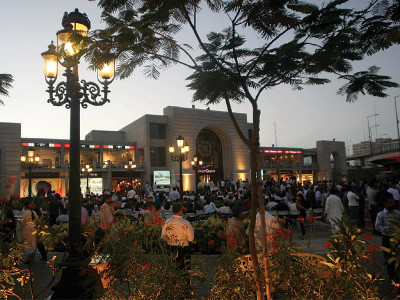
Port Grand- PHOTOS-Athar Khan-express The Port Grand, a space for cultural activities aimed at promoting the city’s heritage, was inaugurated on Saturday. PHOTOS: ATHAR KHAN/EXPRESS 23
Twitter alert: Questions surround Karachi Navy base attack http://tribune.com.pk/story/174271/twitter-alert-questions-surrounding-the-karachi-navy-base-attack/ Mon, 23 May 2011 08:40:18 +0000 http://tribune.com.pk/?p=174271

At least 12 people, including Navy and Rangers personnel, were killed late Sunday when more than 10 terrorists attacked the PNS Mehran base on Shahrah-e-Faisal Road, Karachi.

The attack created a buzz on Twitter with Pakistan’s popular Twitteratti not only tweeting and retweeting minute by minute updates of the incident, but also analysing the motives and implications of the attack and raising important questions.

Here is a round-up of some of the tweets:

Farahnaz Ispahani

The attack in Karachi is one more brutal example of the enemy with in being financed by the brotherly enemy outside. Wake up Pakistan

Mosharraf Zaidi

Not really too interested in empathy from abroad. I am interested in answers from within Pakistan.

Ayesha Tammy Haq

Time for Pakistanis to throw their weight behind the civilian government: no more military involvement. Slash the defence budget and spend it on citizens.

Raza Rumi

Many of us had been warning about Karachi as the new epicentre for al Qaeda operations. Sad that political parties and the Army did not pay much heed.

Sami Shah

Went to sleep to my city under siege. Woke up to it under siege. Weirdest part is the rest of us just go to office and keep working.

Ejaz Haider

Why has the attack on PNS Mehran become PMS India?

Farieha Aziz

What good do public ‘condemnations’ and announcements that we have ‘taken notice’ of such events do? Does it ever lead to anything?

Afia Salam

Operation at PNS Mehran over. Will Operation TRUTH now begin?


]]>
pns mehran attack afp 2 Flames and smokes rise from a Karachi's naval air base following an attack by militants.PHOTO: AFP 15
Firefly: Spreading smiles http://tribune.com.pk/story/169139/spreading-smiles/ Sun, 15 May 2011 15:48:07 +0000 http://tribune.com.pk/?p=169139

KARACHI: 

If you are the type that prefers personalised gift items over those that though heavy on the wallet say very little, chances are you have come smack in the face of a dead end in the local market. There are very few options for the Pakistani gift shopper.

Varah Musavvir, an enterprising young textile design student at the Indus Valley School of Arts and Architecture (IVSAA), realised this gap in the market and set out to launch Firefly — a home-based business that one of her customers described as the “Hallmark” of Pakistan.

One year since its launch, Firefly has grown to heights Musavvir says she had never imagined before. The project started randomly in March 2010 when she was doodling habitually and came up with a design and idea for a wallet card. A few sifts through the pages of her prized journal after which her brand is named and a few doodles later, Musavvir had come up with the character Sue that adorns some of her designs and cards along with taglines and quotes she had written in her journal herself. The next step was to post pictures on Facebook and tag her friends and voila — orders started coming in.

Firefly offers a variety of products ranging from wallet cards on PVC (a concept unique to Pakistan), key chains on PVC, notebooks, bookmarks, digital CD printing, laptop skins, scrap books and other papercraft.

“I like coming up with my own messages and taglines on my products,” says Musavvir. “I have seen what is already available and I didn’t want to just take that. I wanted Firefly to be my own. It’s funny that people can automatically relate to a lot of what I write and make. They see that it is heartfelt because they see that it is coming from someone who has probably gone through or seen it all. They can click with it, so they usually don’t ask me to change it.”

But when people do want customisations, Musavvir is ready to make them at an added price. Sometimes people ask for personalised messages and text or a personalised look to the characters or a different colour. And part of the reason behind her success is that Musavvir can cater to all of these requests.

Musavvir does not have a creative department or an operations director. She runs the business alone with a little help from her younger brother and manages to balance it along with her studies. Orders are received via email, sent out and picked up in batches from her trusted printer twice a week and subsequently picked up from her college where the gatekeeper helps handout the orders.

“When I started, it was just friends, then it was friends of friends and then friends of friends of friends and then I just lost track,” she says. Firefly’s Facebook page now  has over 1,500 fans. “Till now, it has been solely marketed through Facebook. I did have invitations to school melas etc, so that was a bit of added publicity but most of it has been marketed online. I have also had bulk orders when friends ordered stuff for their organisations or for fundraising. Firefly goes like hotcakes for fundraising because people can put their logos on them or their personalised messages on them.”

Customers often come up with their own innovative ideas for customisations or ways of presenting the gifts. Firefly has also seen orders from abroad — from the United States and United Kingdom to Saudi Arabia and Dubai.

In the future, when she has more time, Musavvir plans on expanding Firefly into textiles. She envisions Firefly to become a complete collection of gift items.

“Firefly is not just a business, it’s not just a brand,” she says. “It’s something that is spontaneous and part of my journal. It’s just what I like doing. Like a firefly, it glows wherever it goes. It is about spreading smiles.”

Like its slogan (The forecast is whimsical, with a chance of rainbows), Firefly is an attempt to add the essential dose of optimism we often find missing in our lives.

ACCESSORIES

Items available at Firefly

Wallet cards

Key chains

Magnets

Book marks

Notebooks

CD prints

Laptop skins

Papercrafts

Published in The Express Tribune, May 16th, 2011.


]]>
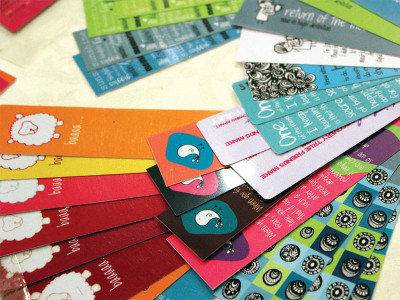
Card-01-PHOTO-PUBLICITY Marketed primarily through Facebook, Firefly has earned 1,500 fans within a year. PHOTO: PUBLICITY 15
AKU lecture series: Humanitarian calls for a ‘bloody revolution’ http://tribune.com.pk/story/149619/aku-lecture-series-humanitarian-calls-for-a-bloody-revolution/ Thu, 14 Apr 2011 21:03:58 +0000 http://tribune.com.pk/?p=149619

KARACHI: 

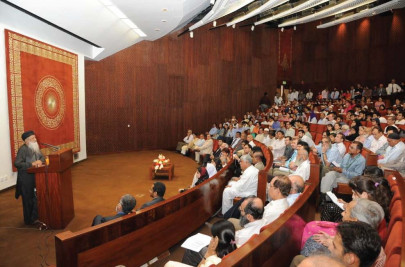
When you hear calls for a revolution from the most humanitarian of philanthropists in the country, you know for sure that the revolution narrative has seeped deep into the public psyche. Abdul Sattar Edhi, who was introduced by the host as a “welfare state in and of himself”, stressed the need for a bloody revolution to set things right in the country.

Edhi, the founder of Pakistan’s largest welfare foundation, was speaking on Thursday at the Aga Khan University in a special lecture series on emergency management during disasters. When probed about his statement, however, he said the government should be allowed to complete its term and that any revolution would last longer if it came from the people.

“We are tax thieves. We are Zakat thieves,” he said, “our politicians are also thieves.”

But he was still positive and hopeful. “People ask me whether Pakistan will live and I tell them it will indeed live and it will live forever.”

Answering a question about how to deal with disillusionment, Edhi advised that a life of simplicity, honesty and hard work was the key.

Around 700 men and women from different walks of life attended the lecture and most of them were eager to speak to and take pictures with the elderly philanthropist after the event ended.

“I am not a maulana,” Edhi pointed out after the host introduced him as Maulana Abdul Sattar Edhi. “I do not have any formal education… what use is education when we do not become human beings [after being educated]? My school is the welfare of humanity.”

Edhi’s jibes at medical students who “thought they became doctors by earning degrees and wearing good clothes” drew giggles from across the auditorium.

“In reality, we have gone very far from becoming humane. We have lost our identity,” he said.

“The greatest religion is to love humanity,” he said, earning a round of loud applause.

“I am a Muslim. I believe in Allah and I offer my obligations as a Muslim,” he said. “When your intention is good, God helps you too. I rarely make appeals but even without that, people come forward to help in many ways. Allah keeps creating ways and helps you when you intend to help someone.”

Edhi described how he had always found Pakistanis helpful, adding that he only made appeals for donations to Pakistanis and that he often found all he needed here.

The philanthropist spoke about the difficulties and criticism he and his family had faced, but said he had never let that stop him because allegations are always made against people who set out to do good.

Advising young students on how to play their role, Edhi said they should develop a humanitarian approach from the beginning. When asked how one should deal with the menace of beggary and reports of mafia being behind it, Edhi said, “if your intentions are good, you should help them. Allah will look at your intentions.”

Edhi said his unparalleled network of welfare work is now being managed by his children and that he only provides them with advice when needed.

Published in The Express Tribune, April 15th,  2011.


]]>
Edhi-PHOTO-EXPRESS Edhi addressing people at AKU. PHOTO: AKU 15
YouTube video of the day: The 'education emergency' in our schools http://tribune.com.pk/story/131584/youtube-video-of-the-day-the-education-emergency-in-our-schools/ Sat, 12 Mar 2011 11:25:54 +0000 http://tribune.com.pk/?p=131584

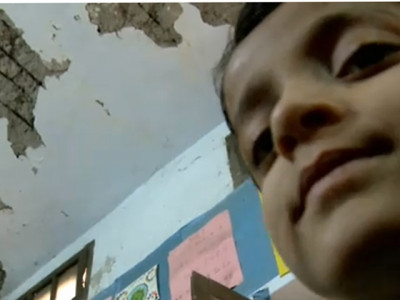
A recent video by the March for Education campaign highlights the dilapidating state of the City District Government Junior Model School in Lahore.

The film takes viewers inside the school and shows the children studying under roofs with loose cement and washrooms with overflowing pipelines. The school has an enrollment of 500 children but only three teachers. The video also features interviews with teachers speaking about the precarious condition of the school infrastructure and the problems they face.

March for Education is a recently launched campaign the Pakistan Education Task Force, a body set up in 2009 by the federal government to offer recommendations on how to implement education policies.

The campaign aims to end the “education emergency” in the country and seeks to make March the month that Pakistan talks about only two things: education and cricket. It aims to initiate a national debate to push education to the top of the political agenda.

Video rating: Two thumbs up!

Do you have a YouTube video you wish to have reviewed by The Express Tribune? Submit your url with a brief description to web@tribune.com.pk. Only local content will be considered for review.


]]>
march for education Screen capture of the video showing a child sitting under a crumbling roof. 2
Online immortality: Living on in the digital afterlife http://tribune.com.pk/story/127627/online-immortality-living-on-in-the-digital-afterlife/ Fri, 11 Mar 2011 09:25:58 +0000 http://tribune.com.pk/?p=127627

Many of us cannot imagine our lives without the digital identities that we have built around ourselves. Facebook, Twitter, MySpace, blogs, Gmail, Flickr, YouTube — all have come to play an essential role in the person we define ourselves to be. But how many of us can imagine our digital identities living on after we have left this world?

Thanks to the World Wide Web and social media, it is now easier to live on in more than just people’s memories. Social forums like Facebook and Twitter serve as a much more tangible and accessible legacy than anything out there in the real world.

Hundreds of photos, thousands of tweets and status updates, hundreds of blogs and YouTube videos — these are just some of the things we leave off in the digital trail, like public virtual scrapbooks. They may provide solace to family and friends of the deceased who like living over memories of their loved ones. For others, they may just be painful reminders that keep popping up as they make their way around cyberspace.

And it is these divergent reactions that have helped social networking websites and service providers develop policies to deal with their dead. Let’s take a look at how different websites deal with a person’s digital assets after they die:

Facebook

After complaints of deceased people showing up on Facebook’s automatically generated suggestions section of people to “reconnect” with, the social-networking giant set out its policy of dealing with dead users. Heirs of a user can request that an account be deleted or “memorialised”. Memorialising a profile entails that the wall of the user will be open for family and friends to pay their respects, while future attempts to log-in will be sealed. Heirs can contact Facebook to delete or memorialise an account by notifying the company and showing a death certificate or news article indicating the user’s death.

Twitter

Twitter followed the footsteps of Facebook by adopting a policy for the dead whereby relatives and friends of a user can request the deletion of the profile or the back-up of the user’s public tweets. Twitter too asks heirs of the deceased user to submit a link to an obituary, along with information about their relationship, before the account is deleted or backed up. Twitter, however, does not allow relatives access to an account nor does it disclose other non-public information regarding it.

Yahoo

Yahoo, which owns Flickr, does not allow any right of survivorship in its terms and conditions and is non-transferable. Upon receipt of a death certificate, the company terminates a user’s account and all contents therein are deleted.

Gmail

Gmail allows heirs to access deceased users e-mail accounts in some cases. It provides a list of instructions in its help documents outlining the procedure that allows a heir to gain access to a deceased user’s account which includes proof of death and proof that the person in question is a lawful representative of the deceased’s estate, among other documentation.

YouTube

YouTube also allows for transfer of account after a person’s death upon the provision of documentation which includes a copy of the death certificate of the user and of a document that gives one Power of Attorney over the YouTube account.

Dealing with digital legacy

Realising the need to have a proper method of dealing with a person’s digital legacies after death, a number of companies and advisors have cropped up that help users plan what happens to their online content after they die. Considering that a lot of our most important communication happens online and many a times, our financial and property information is also stored online, advisors like those who manage the website www.thedigitalbeyond.com emphasise on having a digital executioner or a proper plan to handle one’s digital belongings after death.

Published in The Express Tribune, March 6th, 2011.


]]>
Logo How many of us can imagine our digital identities living on after we have left this world? 2