<?xml version="1.0" encoding="UTF-8"?>
<rss version="2.0"
	xmlns:content="http://purl.org/rss/1.0/modules/content/"
	xmlns:wfw="http://wellformedweb.org/CommentAPI/"
	xmlns:dc="http://purl.org/dc/elements/1.1/"
	xmlns:atom="http://www.w3.org/2005/Atom"
	xmlns:sy="http://purl.org/rss/1.0/modules/syndication/"
	xmlns:slash="http://purl.org/rss/1.0/modules/slash/"
	xmlns:media="http://search.yahoo.com/mrss/"
	>

<channel>
	<title>The Express Tribune &#187; Anam Mansuri</title>
	<atom:link href="http://tribune.com.pk/author/649/anam-mansuri/feed/" rel="self" type="application/rss+xml" />
	<link>http://tribune.com.pk</link>
	<description>Latest Breaking Pakistan News, Business, Life, Style, Cricket, Videos, Comments</description>
	<lastBuildDate>Thu, 23 May 2013 09:50:47 +0000</lastBuildDate>
	<language></language>
	<sy:updatePeriod>hourly</sy:updatePeriod>
	<sy:updateFrequency>1</sy:updateFrequency>
	<generator>http://wordpress.org/?v=3.5.1</generator>

		<item>
		<title>Accessories: Colour pop for your clutches</title>
		<link>http://tribune.com.pk/story/447560/accessories-colour-pop-for-your-clutches/</link>
		<pubDate>Fri, 05 Oct 2012 19:18:20 +0000</pubDate>

		<guid isPermaLink="false">http://tribune.com.pk/?p=447560</guid>

		<description>
		<![CDATA[
			<a href="http://tribune.com.pk/story/447560/accessories-colour-pop-for-your-clutches/">
				<img src="http://i1.tribune.com.pk/wp-content/uploads/2012/10/447560-ColourpopPHOTOAdeelaBAdshahoutfitZariFaisalandAbeer-1349459042-663-160x120.JPG" width="160" height="120" alt="" />
			</a>
			<p><div><strong class='location'>KARACHI:&nbsp;</strong>
<p><strong>“If you can’t buy it, just make it,” says handbag designer Sidra Nasir. The 24-year-old is a fashion design graduate from the Asian Institute of Fashion Design (AIFD) and a former event and PR manager.</strong></p>
</div>
<p>Frustrated with constantly having to order trendy accessories from friends and family who were returning from trips abroad, one day Nasir stared at her favourite hot pink Aldo clutch that she had anxiously waited for days to arrive. “It was so simple but beautiful and I wondered, with such a quality leather production industry and affordable labour in the country, why couldn’t I just buy a bag like that in Pakistan?” she says, “and then I decided, I would just do it myself.”</p>
<p>Nasir then started experimenting with clutches — exploring fabrics and shapes. The first two lines she designed were not exactly the kind of bags she would buy for herself, but ones that retailed well — petite clutches with embellishments, screen printing and a range of different textures.  This month, however, Nasir launches her third collection, creating a line of accessories that are true to her own style.</p>
<p>This time she completely immersed herself in every little aspect of bag production, from beginning to end.  “I searched extensively for the kind of leather I wanted to use, got them dyed in colours they weren’t readily available in and then created a small setup at home where I employed an artisan and worked with him on the stitching of every single piece.”</p>
<p>The 27 new creations of Nasir are a mix of pure leather and leatherite. They are bold and attention-grabbing in bright pops of colour and edgy shapes following international trends, for something extra, all with surprise linings inside. They are available in a range of prices starting from Rs2,500 to Rs8,000.</p>
<p>To grab one of these limited goodies, check out her exhibition on Saturday in Karachi between 4 to 9pm or visit her Facebook page: Sidra Nasir Handbag Exhibition.</p>
<p><em>Published in The Express Tribune, October 6<sup>th</sup>, 2012.</em></p>
<p>Like Life &amp; Style on <a href="https://www.facebook.com/ETLifeandStyle">Facebook</a> and follow at <a href="https://twitter.com/ETLifeandStyle">@ETLifeandStyle</a> for the latest in fashion, gossip, entertainment</p>
</p>
			<br clear="all"/>
		]]>
		</description>

		<media:content width="424" height="318"
							isDefault="true" medium="image" url="http://i1.tribune.com.pk/wp-content/uploads/2012/10/447560-ColourpopPHOTOAdeelaBAdshahoutfitZariFaisalandAbeer-1349459042-663-640x480.JPG">
			<media:title>Colour pop-PHOTO-Adeela BAdshah-outfit-Zari Faisal and Abeer</media:title>
			<media:description>Nasir’s 27 new designs follow international trends. PHOTO: ADEELA BADSHAH, OUTFIT: ZARI FAISAL AND ABEER </media:description>
			<media:thumbnail url="http://i1.tribune.com.pk/wp-content/uploads/2012/10/447560-ColourpopPHOTOAdeelaBAdshahoutfitZariFaisalandAbeer-1349459042-663-160x120.JPG" width="160" height="120" />
      </media:content>

		<wfw:commentRss></wfw:commentRss>
		<slash:comments>0</slash:comments>
	</item>
		<item>
		<title>Chillin’ with a capital &#039;C&#039;</title>
		<link>http://tribune.com.pk/story/435436/chillin-with-a-capital-c/</link>
		<pubDate>Sun, 16 Sep 2012 06:44:32 +0000</pubDate>

		<guid isPermaLink="false">http://tribune.com.pk/?p=435436</guid>

		<description>
		<![CDATA[
			<a href="http://tribune.com.pk/story/435436/chillin-with-a-capital-c/">
				<img src="http://i1.tribune.com.pk/wp-content/uploads/2012/09/435436-Detox-1347455815-274-160x120.jpg" width="160" height="120" alt="" />
			</a>
			<p><p><strong>Once considered the ideal spot to move to after retirement, Islamabad’s sleepy pace has recently sped up to a more active one. If you’re health-conscious, this sterile town that has been the abode of kooky politicians, overworked journalists and self-obsessed development-sector employees is probably the next destination you should be packing your bags for if you need to detox.</strong></p>
<p>Offering activities that are physically challenging, help you find your spiritual centre and also offering some fresh produce straight from the lush <em>khaits</em> of Punjab, Islamabad will leave the high-strung Lahori and over-worked Karachiites pleasantly surprised and possibly rejuvenated! With an array of wellness options to choose from, and a small but hip cultural scene, Islamabad offers a commitment-phobic “big city addict” the best of both worlds — a wi-fi connection with a view.</p>
<p>So break a sweat while tackling one of its seven hiking trails and while away the evening sipping fresh plum juice at one of the cafés smack in the centre of the city. Here is our guide on how to ‘detox’ while in Islamabad:</p>
<p><strong><em>What to Eat?</em></strong></p>
<p><strong>The Monal:</strong></p>
<p>Besides its stunning views and cooler temperatures, this local and tourist hotspot offers a large range of grilled Barbeque entrées that are perfect for a high-protein diet, and a number of vegetarian dishes, including spicy <em>palak paneer </em>and the indulgent cheese <em>naan</em>. This is a good spot to go to when you are in the mood to clear your mind and appreciate the scenery, maybe even pick up a cultural keepsake or gifts for loved ones from one of the stalls nearby.</p>
<p><strong>Table Talk:</strong></p>
<p>Table Talk is located in Kohsar Market, a busy downtown shopping area that stays buzzing throughout the day. Their menu offers some of the tastiest salads in the city, including a Thai Prawn Salad, Nicoise Salad and the Chicken Sesame Salad. If you want to go completely vegetarian, try their crunchy Mediterranean Salad or Caprese. And make sure you wash your meal down with their refreshing summer fruit juices.</p>
<p><strong>Nana’s Kitchen:</strong></p>
<p>Nana’s Kitchen started as a successful Facebook page that became a local hit for its red velvet cupcakes. Although the cupcakes are still Nana’s specialty, the menu has gone on to provide some unique and delicious options for local foodies at its brick and mortar outlet in Cloud 9. A few of their distinctive salad recipes and the popular tofu burger are some of the healthier options to balance out that cupcake indulgence. The cozy ambience and the personal touch of having the owners present behind the counter gives it that warm, fuzzy family business feel that most other cafés lack.</p>
<p><strong><em>What to Do?</em></strong></p>
<p><strong>Breathe life into life:</strong></p>
<p>The Art of Living Organisation, a popular movement started by Sri Sri Ravi Shankar in 1982, is practiced in over 150 countries worldwide and has garnered a large following. In Pakistan, the organisation was spearheaded by Shanaz Minallah, who introduced the movement in Lahore, Azad Kashmir, Karachi and some parts of interior Sindh, making Islamabad her home base. The programme aims to alleviate stress and help bring contentment to one’s life by teaching people to focus on their breathing patterns. In the basic course, which is the only one available in Pakistan, instructors teach the ‘Sudharshan Kriya’ — a series of breathing exercises that attempt to dispel negative emotions from the body. The Art of Living sessions take place on Peach Street in Bani Gala, in a large space by the river called the Peace Centre.</p>
<p><strong>Get out of your comfort zone:</strong></p>
<p>Atif Sajjad Abbasi introduced the Zen Wellness Club in Islamabad around six months ago, after working with the Art of Living as their country coordinator for eight years. The mission of the group is to offer activities that foster physical and mental wellness. So become a member and sign up for their weekly complimentary programmes such as trekking, hiking, horse riding and adventure cooking or clear your schedule for their longer trips that take place once every three months. Recently, the group travelled to Fairy Meadows in the northern areas where they practiced yoga and meditation at Nanga Parbat under instructor Saima Altaf. This year they plan to head to Hunza, Kaghan and India. So make sure you are in time for those therapeutic travels.</p>
<p><strong>Take a hike:</strong></p>
<p>There’s no better way build your stamina than an uphill hike and if you haven’t done this before, Islamabad is a good place to start. The Margalla Hills surrounding Islamabad offer a range of man-made trails that lead up to the top of the first ridge. These trails begin in various parts of the city to wind up at Monal. Many of these trails have numerous resting spots along the way, and the trail is pretty busy during the evenings when people come to run and bike. The hike can be a bit challenging so make sure you are mentally prepared for a sweaty two- to three-hour-long climb, with water at hand. It will also be wise to drag along someone who may be a little more familiar with the trails or gather a group of friends and family to come along. For novices, it is a good idea to first head to Fatima Jinnah Park in F9 and practice on the gentle trails there.</p>
<p><strong>Rough it out:</strong></p>
<p>If you want all of these activities rolled into one exhilarating experience of a complete detox, check out Extreme Manoeuvre Adventure Club’s (EMAC) weekend camping packages. Say goodbye to appliances and a functioning sewage system and prepare for a two-day trip to Khanpur Lake near Islamabad, where activities include night caving, rock climbing, cliff diving and paragliding, other than the usual bonfire and BBQ setup. The club provides the group with camp leaders, tenting equipment, healthy meals and beginner’s courses for all its activities so that you can have a thoroughly enjoyable experience.</p>
<p><strong>Get a massage:</strong></p>
<p>Not cut out for the hills? To detox in true big-city style, hit up one of Islamabad’s most popular spas. Nirvana offers some serious sensory indulgence with its toe-curling massages, facials and wraps. Their Dead Sea Salt Glow promises to detoxify your skin of impurities with a custom-blended formula of sea salts and essential oils. Their Mud Wrap claims to be a deeply purifying treatment that decongests and stimulates the body system to generate new skin cells for toned skin. Their most popular treatments though are their massages, often cited by locals as “Islamabad’s crowning glory.” Try out their deep-tissue back massage to relax those muscle knots, or their Ayurvedic or Chakra Balance treatment if you’re in the mood for something exotic. Otherwise, there is always the option of sticking to their popular Swedish massage and enjoying 60 minutes of bliss provided by their certified masseuses.</p>
<p><em>Published in The Express Tribune, Sunday Magazine, September 16<sup>th</sup>, 2012.</em></p>
<p>Like Express Tribune Magazine on <a href="https://www.facebook.com/pages/Express-Tribune-Magazine/496571717038735">Facebook</a> and follow at <a href="https://twitter.com/ETribuneMag">@ETribuneMag</a></p>
</p>
			<br clear="all"/>
		]]>
		</description>

		<media:content width="424" height="318"
							isDefault="true" medium="image" url="http://i1.tribune.com.pk/wp-content/uploads/2012/09/435436-Detox-1347455815-274-640x480.jpg">
			<media:title>Detox 06</media:title>
			<media:description>Does your mind and body need a break? Learn the suprising reasons that may make you head to the federal capital of Islamabad to get renewed and rejuvenated!. PHOTO BY MYRA IQBAL AND EXTREME MANEUVERS ADVENTURE CLUB</media:description>
			<media:thumbnail url="http://i1.tribune.com.pk/wp-content/uploads/2012/09/435436-Detox-1347455815-274-160x120.jpg" width="160" height="120" />
      </media:content>

		<wfw:commentRss></wfw:commentRss>
		<slash:comments>11</slash:comments>
	</item>
		<item>
		<title>It’s getting hot in here</title>
		<link>http://tribune.com.pk/story/431802/its-getting-hot-in-here/</link>
		<pubDate>Sun, 09 Sep 2012 06:16:36 +0000</pubDate>

		<guid isPermaLink="false">http://tribune.com.pk/?p=431802</guid>

		<description>
		<![CDATA[
			<a href="http://tribune.com.pk/story/431802/its-getting-hot-in-here/">
				<img src="http://i1.tribune.com.pk/wp-content/uploads/2012/09/431802-Meesha-1346851629-851-160x120.jpg" width="160" height="120" alt="" />
			</a>
			<p><p><strong>Meesha Shafi is one sexy b****. “Sexy” because she just can’t help it — put an attay ki bori on her lean frame and dump a pail of dirty water over her head and Shafi will still manage to look like she’s posing for a high fashion editorial. “B****” because she’s good at almost everything she does and she knows it. Also, she makes the rest of us look bad by comparison.</strong></p>
<p>As far as interviews go, this one just doesn’t seem to be working for me. We’re sitting on a lovely terrace in Shafi’s Lahore home, sipping on coffee as birds chirp in the background. But in contrast to the idyllic surroundings, the chemistry between us is awkward to say the least.</p>
<p>Our introduction to each other does not contain any extraneous social niceties, no flowery language or complimenting of each others’ clothes. She stares at me with a steely gaze as she sips her coffee, daring me to begin questioning her.</p>
<p>When I do, many of my open-ended questions about Shafi’s career warrant a demand to be more specific, upon which answers are produced down to the factual tee, devoid of any funny anecdotes, endearing neuroses or silly regrets that might give me colour for my story. ‘Oh boy,’ I think, ‘this is going to be fun.’</p>
<p>I had been forewarned about this: her stand-offish nature, no-nonsense attitude and blunt statements — an impression that doesn’t really fit in with the cute bob haircut, MnM tattoo on her arm and colorful wardrobe choices that stand out in her photographs or at social events.</p>
<p>Apparently, this is how Shafi is, and always has been — take it or leave it. I take it, because while this situation may be uncomfortable, it is surprisingly refreshing.</p>
<p>Her attitude certainly seems to have worked in her favour. Most of what she has dabbled in has hit it big. Really big.</p>
<p>From her first ever acting stint at 17, as Jawad Ahmed’s girlfriend in the video <em>Bin Teray Kya Hai Jeena</em> which was nationally adored, to her singing performance in <em>Coke Studio</em> with Arif Lohar, a video that two years later remains the most watched <em>Coke Studio</em> song ever, with 10 million views crossed just last week.</p>
<p>Her foray into modelling has resulted in countless ramp shows, a brand ambassador-ship for L’Oreal Paris, magazine covers and editorials in international publications as high brow as <em>L’Officiel </em>and <em>Vogue India</em>.</p>
<p>What would be a career high point for most others is only the beginning for Meesha and she is now about to appear in four (yes, four) movies.</p>
<p>In addition to the Hollywood production <em>The Reluctant Fundamentalist</em>, directed by award-winning filmmaker Mira Nair, that recently launched the Venice Film Festival, Shafi is also waiting for the release of <em>Waar</em>, a Lollywood film directed by Bilal Lashari.</p>
<p>Then she is also currently filming for a Bollywood movie titled <em>Bhaag Milkha Bhaag</em>, directed by Rakesh Om Prakash Mehra of <em>Rang De Basanti </em>fame. Here, she plays one of the love interests of legendary Olympic runner Milkha Singh, who in turn is being played by Farhan Akhtar.</p>
<p>She has also just signed on to a Hollywood production <em>The Tournament of Shadows</em>, a biopic set in the 1800s and directed by Jamil Dehlavi.</p>
<p>All this means that Shafi, a Pakistani model/singer who has just hit 30, is a mom and has never acted in a film before is attracting the kind of attention professional actors would sell their souls for.</p>
<p>Best of all, these opportunities seem to have simply walked up to her doorstep and presented themselves. “I don’t agree with the idea of approaching people and recommending myself. I think it’s kind of awkward and cheap,” she says firmly.</p>
<p>After hearing what Shafi had to offer during her stint with instrumental band Overload, “Coke Studio” producer Rohail Hyatt invited her to sing for the show’s third season, where he paired her up with famed folk singer Arif Lohar.</p>
<p>Her androgynous voice coupled with an unabashed sexuality catapulted Shafi into unprecedented fame both in Pakistan and beyond.</p>
<p>It is this solo success that is rumoured to have caused serious tension between Shafi and her former Overload bandmate Farhad Humayun, which turned into an ugly legal battle and left scars that might still be a little raw.</p>
<p>“If I’m not as experienced as you and I overtake you, are you going to hate me for that?” she questions.</p>
<p>With <em>The Reluctant Fundamentalist</em>, Shafi was selected without an official audition, despite not having much acting experience save the handful of TV dramas and theatre that she experimented with earlier on.</p>
<p>“Mira invited me to meet her when she was in Lahore scouting for actors. At that time I didn’t even know what I was going to meet her for,” she says.</p>
<p>But once the role was offered to her, Shafi did not hesitate in taking it up. “Opportunity comes, and I’ve been very lucky with that,” she says, “but after that your work begins.”</p>
<p>While Shafi lists her filmography, and I fervently jot it down on my notepad, she pauses and then breaks into giggles. I look up in shock to find her staring lovingly at her daughter who has waddled up to a net screen partition that divides the inside of her home from her terrace.</p>
<p>The one-year-old is smiling at her mother, tiny hands clutching the screen. From here onwards the interview gets much easier.</p>
<p>The screen opens and the baby stumbles onto the terrace. “I cut her fringe today and even all the help in the house were like ‘what have you done?’! She’s got a dumb and dumber fringe now,” she says, laughing.</p>
<p>“Sorry for making you look like a little idiot,” says Shafi, baby-talking to her little daughter, who giggles in pleasure. “Being a mom is the toughest and most rewarding job,” says Shafi, holding her daughter in her arms.</p>
<p>“But having your own baby around is the best way to distract you from anything … in a positive way,” she says. “It’s a great pick me. It really cheers you up.”</p>
<p>This is obvious with Shafi’s immediate shift in tone and demeanour. Her tiredness escapes her face, her stiff front breaks and all of a sudden Super Shafi starts talking about her feelings. Phew.</p>
<p>Leaving her daughter, then seven months old, in Lahore to film <em>The Reluctant Fundamentalist</em> for a spell of three weeks was one of the most difficult things Shafi has ever had to do.</p>
<p>“That is one thing I’ll never forget,” she says, with a pang of sadness in her voice. It is not difficult to see that this is an issue that Shafi struggles with, especially as career demands skyrocket and new roles take her to various parts of the globe.</p>
<p>“No matter how hard you work, most of the time the guilt that a mother feels when she leaves her child and goes to work … you cannot explain [that] to someone.”</p>
<p>The fact that Shafi herself is a product of a working mother, celebrated actress Saba Parvez, makes it easier for her to deal with this situation. “My mother’s work always kept her in Karachi.</p>
<p>She was a workaholic, but I know she had to do it because she was also the breadwinner. I’m not resentful for her absence at all and I never have been.”</p>
<p>When it came to her own childhood, Shafi found comfort in the joint family system she lived in. She was always shadowed by her grandparents and a horde of aunts, uncles and cousins. With her daughter however, it’s quite different.</p>
<p>“Still, something that a friend told me a while back has stuck with me. She asked me ‘Do you want to be the kind of mother that your daughter grows up to respect and admire or do you want to stay at home, grow fat and hear her tell you to leave her alone and give her some space and get off her back?’. I would definitely want to be the former.”</p>
<p>Despite the agony of having to leave loved ones and baby behind, the experience of working with some of the most talented and creative actors was worth the sacrifice.</p>
<p>The cast was collecting at Delhi, a location that poses as the Lahore in which Mohsin Hamid’s <em>The Reluctant Fundamentalist</em> is set. Hamid worked extensively with director Nair on the screenplay, which has been adapted to make it more exciting for the screen.</p>
<p>The cast includes a mix of high profile Hollywood and Bollywood actors, including Shabana Azmi, Om Puri, Keifer Sutherland, Liev Schreiber and Nelsan Ellis, who plays Lafayette on HBO’s <em>True Blood</em>.</p>
<p>The movie stars Riz Ahmed, a British-Pakistani actor who also played the lead in Chris Morris’s black comedy <em>Four Lions</em>. Here, He plays Changez, a young Pakistani in New York, who tries to chase the American Dream but gets disillusioned in the process and returns to Lahore, eventually becoming the fundamentalist of the book title. Shafi plays his sister, Bina, a role that fits her like a glove.</p>
<p>“Riz was the first person I met from the cast and most of my work was with him,” says Shafi.” It was uncanny to me how much he looked like my brother, and it was uncanny to him how much I looked like his sister.” The two actors clicked instantly and immediately developed a weird sibling-like connect.</p>
<p>“That chemistry that siblings do have it’s hard to get with some random stranger but it was just there,” she says, “and it made our jobs very easy.”</p>
<p>Shafi spent hours talking to Riz about Lahori culture and telling him about her family in order to aid his research on his character. Riz, who was born in Karachi was raised in England where he went to school and now lives, fell right back in love with Shafi: “She’s a cutting-edge, multi-talented artist at the forefront of pushing boundaries in film and music in South Asia. She has a huge following both inside and outside the region. As a strong woman and someone who defies typecasting, it seems to me her success is an important indicator of the region’s continued artistic growth,” he says, “and to top it all off she is ridiculously cool, fun and smart.”</p>
<p>Riz may have had to do his homework, but Shafi practically played herself. “I play a Lahori girl, very close to where I come from, so it was comfortable that way. The kind of family I belong to is very cultured and educated — old money but not rich, pre-colonial house, lots of art and books in the home, father is a poet, thinker and intellectual. That kind of stuff was easy for me to relate to. The values, the environment and the atmosphere, I could understand that.”</p>
<p>Shafi was herself raised in true Lahori fashion by the Punjabi side of her family. Despite the liberal background she comes from, her family was very in touch with their Lahori roots inculcating in her a deep love for the city she grew up in. “I’m a Lahori through and through — born and bred,” she says. “This city has given so much art, literature, theatre and music to our cultural heritage. From midnight swims in the famous Lahore Canal to breakfast in the walled city at dawn, Lahore is my past, present and hopefully, a big part of my days to come. Home is where the heart is. And my heart will always be in Lahore.”</p>
<p>The true Lahori girl in her came out during the last night of filming<em>The Reluctant Fundamentalist</em> in Delhi. One of Nair’s trademark wedding scenes was being shot, this time in a Lahori fashion. During the rehearsals for the scene, Shafi noticed the professional dancers in the background practicing their moves. “They were very <em>pakka </em>and they had very <em>pakka</em> dance moves,” she recalls, laughing. “And it’s not like that when you go to a wedding. The <em>dulhan’s</em> own friends are just doing something <em>dheela</em>. They’re plain simple girls just dancing for a good time.” Shafi then ended up making the dances for the scene, and helping the choreographers unlearn their skills and just let loose.</p>
<p>That doesn’t come as a surprise, as it is obvious from her history that Shafi is a very talented individual when it comes to art, performance or otherwise. She first tried her hand at fashion designing at Pakistan School of Fashion Design in Lahore, but only briefly. “That just bored the bajeezes out of me. I like fashion but I don’t want to make clothes for the market here. The kind of stuff I wanted to do or enjoy doing, there’s no market for that here. I mean I’ve always wanted to go into retail. Even at this point I’m really tempted to start maybe a thrift boutique or a vintage thing like collect stuff from around the world and throw it into a shop, but I don’t think people will understand it. That can be my retirement plan though,” she adds, smiling.</p>
<p>After a two-and-a-half year break, she enrolled in the National College of Arts and realised that that was where she was meant to be. It was also here that she met her now husband, musician Mehmood Rahman. The two got married after graduation and a little baby girl soon followed.</p>
<p>“Being pregnant was a little frustrating because till then I was just going with the flow. I didn’t imagine how overwhelming the response to those few projects I did was going to be. By the time people started noticing and counter projects followed, I was very pregnant,” says Shafi. But after a short hiatus, she was on her toes again. She is currently in the thick of filming <em>Bhaag Milkha Bhaag</em> in various parts of Indian Punjab and is extremely excited about <em>The Tournament of Shadows</em>.</p>
<p>While everything seems to be going more than perfectly, the only thing that bothers her is how Pakistani audiences might brush her off for the screen time she has in these films. “Are you the heroine?”, “Do you get the guy?” and “Is it a big role?” are some of the questions that Shafi constantly gets from people in Pakistan. “Everybody is kind of stuck on these questions and frankly it’s become a pet peeve of mine because I’ve gotten scripts for four boy-meets-girl movies which are commercial cinema from across the border and I could do those and answer these questions with a <em>haanji main </em>heroine <em>hun</em>. But frankly, 99 per cent of them are so mediocre,” she says. “I have no confusions or regrets of whether I would do a lead role in a B-grade movie or a smaller role in an A-grade movie. And I do feel that people don’t that understand here. I don’t want to be a part of a movie that even I couldn’t go and watch.”</p>
<p><em>Correction: The article erroneously named actor Riz Ahmed as Riz Khan. The error is regretted. </em></p>
<p><em>Published in The Express Tribune, Sunday Magazine, September 9<sup>th</sup>, 2012.</em></p>
</p>
			<br clear="all"/>
		]]>
		</description>

		<media:content width="424" height="318"
							isDefault="true" medium="image" url="http://i1.tribune.com.pk/wp-content/uploads/2012/09/431802-Meesha-1346851629-851-640x480.jpg">
			<media:title>Meesha 01</media:title>
			<media:description>Where there’s smoke, there’s the smoking hot Meesha Shafi! Anam Mansuri catches up with the globetrotting starlet for a behind-the-scenes look at the ladywho has set the world of showbiz on fire. PHOTO : ATHER SHEHZAD
</media:description>
			<media:thumbnail url="http://i1.tribune.com.pk/wp-content/uploads/2012/09/431802-Meesha-1346851629-851-160x120.jpg" width="160" height="120" />
      </media:content>

		<wfw:commentRss></wfw:commentRss>
		<slash:comments>30</slash:comments>
	</item>
		<item>
		<title>The real Mahira</title>
		<link>http://tribune.com.pk/story/336863/the-real-mahira/</link>
		<pubDate>Sun, 19 Feb 2012 07:30:42 +0000</pubDate>

		<guid isPermaLink="false">http://tribune.com.pk/?p=336863</guid>

		<description>
		<![CDATA[
			<a href="http://tribune.com.pk/story/336863/the-real-mahira/">
				<img src="http://i1.tribune.com.pk/wp-content/uploads/2012/02/336863-Mahira-1329317294-183-160x120.jpg" width="160" height="120" alt="" />
			</a>
			<p><p><strong>Actress Mahira Khan writes obsessively. Everyday she fills page after page of her journal, writing letters to her two and a half-year-old son Azlan…just in case she dies, you know. “You never know what can happen” she says.</strong></p>
<p>In her journal she chronicles the thoughts that spill out of her head at an excessive, incontrollable rate. It is in these pages this former bubbly VJ, and now breakthrough star of the most popular drama serial in Pakistan, is struggling to figure out what on earth is going on.</p>
<p>“These days the pages have so many emotions crammed in them,” says the actress, sitting in a cosy café in Zamzama on a chilly Karachi evening. “But I think one that really stands out, is that I’m desperate… willing to do almost anything to find an answer to the questions that I have.”</p>
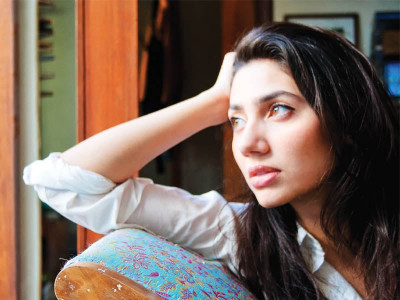
<p>Mahira is seated in a corner booth, her clear hazel eyes scanning the menu. Despite her raw beauty, she is just not the kind of celebrity who demands to be noticed, someone who sits with the air of entitlement one would assume an immensely popular actor would have. In fact, she almost seems to shrink into her clothes, a seven-year-old peach-pink georgette kurta. She is smiling, but there is something startlingly vulnerable about her. She is not one of those women who look as if they’ve just stepped out of a salon: her long hair is uncombed, she doesn’t have a speck of makeup on her porcelain skin, and her eyebrows are still trade markedly un-plucked. She still looks stunning.</p>
<p>She says she’s starving, and orders the first sandwich the waiter recommends — all she wants to know is whether there will be ample fries with her meal. He assures her there will, and scurries off with a goofy smile on his face.</p>
<p>For the first few minutes of our conversation, it is obvious that Khan goes through a silent struggle with herself, of whether she should talk about what she “should”, the way Pakistani girls do to convince boys they are good girls, parents that they are innocent, and journalists that they are cool and confident. Or to just shed the facade and tell it how it really is — which is, in all honesty, not that great. Luckily, today the truth wins.</p>
<p>&nbsp;</p>
<p>“The past year has been nuts,” she explains with a sigh. “I’ve lost two very special people in my life and I’ve seen two friends go through the worst times of their lives because of it. I’ve been struggling to give time to my family, and I’ve seen this sudden fame which I just can’t really sort of enjoy,” she says.</p>
<p>A pretty heavy statement coming from someone who has recently hit a career jackpot most actors can only dream about.</p>
<p>Mahira has struck it big with her latest drama serial “Humsafar”, based on a novel written by Farhat Ishtiaq and directed by Sarmad Khoosat, creator of sitcom “Shashlick”. And we’re not talking about just any big, but instant-recognition-by-Pakistanis-world-over, Bollywood-offers-on-the-table, moral-policing-aunties-scrutinising-her-every-move big. For most people,<br />
Mahira is simply Khirad, the small town girl with stellar principles that she portrays in “Humsafar”.</p>
<p>&nbsp;</p>
<p>It was the kind of success she hadn’t anticipated, especially because she had already worked in much larger productions like Shoaib Mansoor’s blockbuster <em>Bol</em>, and with award winning directors like Mehreen Jabbar, on drama serial “Neeyat”. While making “Humsafar”, Mahira and the director never spoke about the people who would watch it, and whether they would like it or not. When the show swept the ratings, Khan was in shock. “I still call up Sarmad or Fawad or my producer and we laugh,” she says with a smile, “and we’re like ‘Dude! Can you imagine? Can you actually imagine?’”</p>
<p>Before “Humsafar”, Mahira was lost as an actor. On the sets of <em>Bol</em>, Shoaib Mansoor didn’t give her much direction, preferring to let her be. Mehreen Jabbar taught her how to discipline herself as an actor, but it was Khoosat who gave her the faith. “He would sit with me during the times I would doubt myself, and tell me, ‘You have no idea what you can do’.”</p>
<p>Despite all this support and encouragement, the months spent shooting the serial were some of the most trying for Khan personally. If it’s true that Pakistani drama ratings are derived from how hard someone can cry, Mahira was the best choice for the role of Khirad. Besides losing loved ones, the burden of constant shoots and media attention took a toll on her family life as well. “When all my time is being spent out shooting or on the phone, that’s when the problem comes in and yes, that has had an effect on my closest relationships.”</p>
<p>For the irrepressible former VJ, trying to get into the character of the reticent, almost stilted, Khirad was a constant personal battle. At a time when Khan could only think about defending her right to spend so much time at work because it was something she really wanted to do, she just couldn’t wrap her head around why Khirad embodied a tattered punching bag in the first half of the serial. “I would wonder: ‘Who is she yaar?’” she says with an annoyed and quizzical look. “When will she stand up for herself?”</p>
<p>The cosmopolitan actress is a far cry from the poor country cousin she portrays in the drama serial. Possibly the worst financial crisis that Mahira has dealt with in her real life was during her time at college in the US when she worked two jobs to meet ends meet, but as the shooting progressed, Khan took Khirad’s character and made it her own. “I kept her herself, very desi and chup chaap, but then Khirad became me. And I’m going to take a little credit for that,” she adds smiling.</p>
<p>According to a regular drama critic, ‘Drama Buff’ who writes for dramapakistani.net, Khan’s performance in “Humsafar” was far superior to her acting in any of her previous roles, where it was at times labeled “wooden” and her presence disparaged simply as the “eye-candy” of the production. Drama Buff says, “In “Humsafar” Mahira was great for the role because she looks innocent and is a strong, independent woman at the same time, this way she played the “victim” well and could also stand up for her character.” He adds, “Still some scenes were difficult for her to pull off, but if she continues working with good directors and tries to emote more she is on her way to becoming a really talented actress.”</p>
<p>And Khan is willing to do all it takes to get there. She reads every single review that is published or posted online, and is extremely self critical, “If I find a piece where there are 10 good things about me and one bad, I obsess about the bad,” she explains. Mahira, more than anybody else, is aware that she has a long way to go. “When they introduce me on talk shows, they always say something to the effect: ‘Now please welcome the very pretty Mahira Khan,’” she shouts, her voice booming in a parody of the announcer’s stage voice. “I won’t be happy until they say ‘Now please welcome the brilliant actor Mahira Khan.’”</p>
<p>The curse of beauty is something Khan has been compensating for her entire life. Ever since she was in school, and had blossomed into a beauty — one that boys, girls and teachers alike were smitten by — Khan tried to downplay her flawless magnetism. “Even when I was young I was always conscious about it,” she explains, “I always felt that if I downplay my looks I can prove myself in other ways.”</p>
<p>Fellow students remember her in her Foundation Public School uniform, her thin sash of a dupatta trailing on the floor behind her, hair strands straying out of her pony tail in disarray, and her pillowy lips chapped in the dry winter air. Even then, she stood out amidst rows of other girls in the monotony of beige, white and pony tails.</p>
<p>As she grows older though, she has begun to question this resentment. “How can I be embarrassed by myself, and something that I have? I should be embarrassed about other things that I lack. I’m not proud of my Urdu, so I should work on that, but I shouldn’t consciously remove the makeup from my face so I can look real in front of the camera. I am coming to terms with the fact that I have to stop being apologetic.”</p>
<p>And maybe she has. The pink kameez she’s wearing is shorter than the cut off length fashion trends today would dictate. Mahira, who is usually on trend, explains that it holds sentimental value: it was something she wore when she had a fight with her now husband, Ali Askari, 7 years ago, when both of them were in college.</p>
<p>She may be one of the most adored actresses in the country right now , whose childlike innocence, girly sophistication and flawless looks many look forward to watching in the evenings in order to forget the tribulations of their day. More so than before, many are also supporting her struggle, as she evolves serial-by-serial, film by film, into a mature actress, and a strong human being. Mahira is grateful for this, but has decided not to pretend that she knows what she is doing. “I had it all figured out a while ago,” she says. “Now I’m trying to find it again. I am at a point where I am reassessing everything in my life. I’m full on with my hands in the <em>keechur</em>, trying to figure out things, you know?”</p>
<p><em>Published in The Express Tribune, Sunday Magazine, February 19<sup>th</sup>, 2012.</em></p>
</p>
			<br clear="all"/>
		]]>
		</description>

		<media:content width="424" height="318"
							isDefault="true" medium="image" url="http://i1.tribune.com.pk/wp-content/uploads/2012/02/336863-Mahira-1329317294-183-640x480.jpg">
			<media:title>Mahira 01</media:title>
			<media:description>Despite her raw beauty, she is just not the kind of celebrity who demands to be noticed.</media:description>
			<media:thumbnail url="http://i1.tribune.com.pk/wp-content/uploads/2012/02/336863-Mahira-1329317294-183-160x120.jpg" width="160" height="120" />
      </media:content>

		<wfw:commentRss></wfw:commentRss>
		<slash:comments>53</slash:comments>
	</item>
		<item>
		<title>Airblue: The boy who lived</title>
		<link>http://tribune.com.pk/story/218439/airblue-the-boy-who-lived/</link>
		<pubDate>Sun, 31 Jul 2011 08:53:20 +0000</pubDate>

		<guid isPermaLink="false">http://tribune.com.pk/?p=218439</guid>

		<description>
		<![CDATA[
			<a href="http://tribune.com.pk/story/218439/airblue-the-boy-who-lived/">
				<img src="http://i1.tribune.com.pk/wp-content/uploads/2011/07/218439-Watch-1311777206-542-160x120.jpg" width="160" height="120" alt="" />
			</a>
			<p><p><strong>Shamas-ur-Rehman Alvi should be dead. But he isn’t. This evening he sits uneasily in his Karachi living room as he remembers the morning that he got a second chance at life. The six foot tall, slim twenty-five year old runs his free hand through his hair nervously before he painstakingly begins to recreate the events of a day that he has tried hard to forget, simply for the sake of moving on with his life — a life that should have been cut short, but miraculously continues.</strong></p>
<p>On 28th July last year, at 7:50 am, Alvi was scheduled to be on board Air-Blue flight ED-202, on his way to Islamabad to attend the last session of the Youth Parliament of Pakistan. At 9:25 am, the flight, which carried 152 passengers including five children, two infants and six crew members, crashed near Islamabad in the Margalla Hills. There were no survivors.</p>
<p>When the flight’s passenger list became public, Alvi’s name began surfacing on news channels and websites. He was included in the list of victims of the crash, and everyone thought he was dead.</p>
<p>It seems like Alvi still finds it difficult to accept that he isn’t. “I have calculated the odds of not boarding a flight that is going to crash again and again and again. They are close to zero,” says Alvi slowly. “The probability is less than getting attacked by a shark and surviving.</p>
<p>The night before the crash, Alvi sat with his parents, talking about the session of the Youth Parliament of Pakistan he was flying to Islamabad to attend along with nine of his fellow parliamentarians. It was going to be an exciting session, this last one, since it was to be attended by some of the country’s most prominent ministers and ambassadors, including prominent politicians such as Ahsan Iqbal, Shahbaz Sharif and Raza Rabbani.</p>
<p>But Alvi couldn’t shake an odd feeling about his trip to the capital, a feeling he’d been having ever since he first received his ticket in the mail two days before the flight. “I had such a strong feeling that I wasn’t going to take this flight,” he says. “I was hesitant, hesitant to the point that… I don’t know how I can describe this… but I just knew I wasn’t going to take that flight,” says Alvi, “In fact I kept on telling myself : ‘I can’t take it’.”</p>
<p>Looking back, he feels like he kept inventing reasons to stay in Karachi. He didn’t want to leave his father, who is also his boss at Alvi Petroleum, to handle their family business by himself. “But he insisted I had to go. ‘Don’t worry about work, just get on that flight’,” he told me,” says Alvi.But fate had other plans.</p>
<p>The morning of the crash, Alvi opened his eyes at 8 am. He realised he had missed his flight and was sure that he would start getting calls at noon from his friends at the parliament session when they noticed he was missing.  On his way to work he grabbed his plane ticket and put it in his pocket. Alvi reached work at 9:30 am and logged onto a news website, only to see a item about a plane crash near the Margalla Hills.</p>
<p>“I was shocked, but not even for a second did I consider that this could be the same plane I had missed,” he says. The very next minute, his phone rang, and it was Khizer Pervaiz, a fellow parliamentarian who had also missed his flight to attend a meeting. “He heard my voice and started to cry,” says Alvi. “I remember exactly what he said, very clearly: ‘They’re all dead!’” All of Alvi’s fellow parliamentarians, along with the other hapless passengers on that flight, had become victims of a deadly plane crash.</p>
<p>After taking Pervaiz’s call, Alvi went straight home. He walked into his house to find his father a tearful mess, muttering apologies amidst his sobs. “He remembered how he kept insisting that I board the flight,” recalled Alvi, “and it broke my heart to see him like that.”</p>
<p>For Alvi, the next few days were a bit like dying but coming back to attend his own funeral. “My close friends said they did not have the courage to pick up the phone and call me and see if I would answer or not,” he says, “and I kept thinking about what my parents would have gone through if I had died.”</p>
<p>But this was not the only conflict Alvi had to deal with. While he was being strong for his friends and family, Alvi was also dealing with survivor’s guilt and grief for his friends’ deaths. Alvi was painfully aware that he was alive, perhaps, for no other reason than that he could afford to miss his flight that day.</p>
<p>“The tickets were free for us, sent to us by the government. If we wanted to change our dates or work around our schedule, we had to pay an additional Rs1,200. If you deliberately missed a flight, you had to pay for the cost of the ticket out of your own pocket as a penalty. I come from a wealthy family; I didn’t really care about how much I would have to pay if I missed the flight, but the others didn’t have that luxury. In fact, I remember that once Bilal Jung’s trip was clashing with his exams, and he went out of his way to get his exam dates changed so that he would not have to miss the flight and pay the penalty fee.”</p>
<p>A couple of months ago, Alvi made his way to the Karachi Marriott, where the Youth Parliament held a memorial for those who had lost their lives in the crash. He knew that the parents of his deceased friends would be attending. He was soberly dressed and had an excellent speech prepared, but as he got closer to the venue, fear overtook him. How many of these parents would wonder, when they looked at him, why Alvi got to live and their child didn’t? As he entered the room, Alvi’s eye fell on the stage, where six photographs hung against the backdrop, and a row of parents sat before them. Alvi knew that his own picture could easily have been up there, and his own parents could have been seated on that platform.</p>
<p>However, when he met his friends’ parents, they were very warm to him, and told him that they had heard all about him from their children. Realising that he had benefited from knowing his friends, even for a short time, helped release some of Alvi’s grief, even though the emotion, along with anger, still resurfaces now and then.</p>
<p>“I don’t know what I’m angry at,” says Alvi. “But I am just so angry. Angry at a force I cannot control, some call it fate, some say it’s the pilot’s fault and some call it an error.”</p>
<p>Alvi is silent for a while and then adds: “I’ve lost six friends. I’m angry because it wasn’t their fault. I’m angry because they were harmless, upstanding bright Pakistanis who believed in a better Pakistan. I felt this desire emanate from them because I worked with them, and this anger will not subside for a while.” <em></em></p>
<p><em>Published in The Express Tribune, Sunday Magazine, July 31<sup>st</sup>,  2011.</em></p>
</p>
			<br clear="all"/>
		]]>
		</description>

		<media:content width="424" height="318"
							isDefault="true" medium="image" url="http://i1.tribune.com.pk/wp-content/uploads/2011/07/218439-Watch-1311777206-542-640x480.jpg">
			<media:title>Watch</media:title>
			<media:description>Sometimes, life give us a second chance — something this lucky young man  is still coming to terms with</media:description>
			<media:thumbnail url="http://i1.tribune.com.pk/wp-content/uploads/2011/07/218439-Watch-1311777206-542-160x120.jpg" width="160" height="120" />
      </media:content>

		<wfw:commentRss></wfw:commentRss>
		<slash:comments>42</slash:comments>
	</item>
		<item>
		<title>Fashion Week: Tribal ties</title>
		<link>http://tribune.com.pk/story/81188/fashion-week-tribal-ties/</link>
		<pubDate>Wed, 01 Dec 2010 10:54:30 +0000</pubDate>

		<guid isPermaLink="false">http://tribune.com.pk/?p=81188</guid>

		<description>
		<![CDATA[
			<a href="http://tribune.com.pk/story/81188/fashion-week-tribal-ties/">
				<img src="http://i1.tribune.com.pk/wp-content/uploads/2010/11/C-071-160x120.jpg" width="160" height="120" alt="" />
			</a>
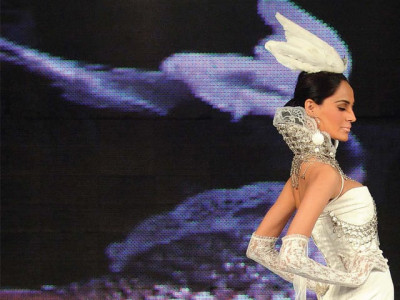
			<p><p><strong>From New York to Milan, if anyone can rock the tribal trend on the catwalk… it’s us! This <a href="http://tribune.com.pk/story/76946/fashion-week-creativity-finally-shines-through/" target="_blank">PFDC fashion week</a>, held in Karachi from the 10th-13th of November, Pakistani designers took the global tribal trend to a whole different local level. Recent fashion school graduate Akif focused on the extravagantly outfitted Kalash tribe from Chitral, while Ali Xeeshan zeroed in on the embellishments that adorn the Sindhi Kohli tribe. Kamiar Rokni plucked his favourite folk crafts and cultural influences from all over Pakistan and released them as one big burst of fabulous colour, and finally, Fahad Hussayn managed to make the Thar Desert’s sun-baked metallic look street chic. Here are some of the best collections, accessories and beauty looks of PFDC Sunsilk fashion week 2010.</strong></p>
<p><strong>TRIBAL INFIDELITY — Akif Mahmood</strong></p>
<p>The Kalash, or “infidel” tribe, hailing from the Chitral district in Khyber Pakhtunkhwa have historically been shunned by the country’s more conservative elements — what with their polytheistic beliefs and wine-making. But last week these “siah poshed kaafirs” added some serious oomph to the Land of the Pure’s fashion scene. And it is now safe to declare: Ladies and Gentleman — Tribal is the new black!</p>
<p>Akif approached the Kalash theme earlier this year in Januray when he had to decide what would inspire his final year thesis collection at the Pakistan Institute of Fashion Design. Although warned by his professors that the Kalash-inspired look was overdone, Akif was determined to do justice to the vibrant colours and ranges of style he believed the Kalash have to offer. He also decided that authenticity would be the essence of his collection, so he used pretty much the exact same color scheme and embroidery that the Kalash are famous for. He simply added practical summer fabric, such as cottons and linens, and some fun cuts to the mix: “I just wanted it to be a neat clean prêt line with pieces that any girl could pick up and pair with whatever she wanted to.”</p>
<p>Akif’s decision to stay true to the culture probably worked in his favour, since the Kalash style is making waves in fashion trends both locally and abroad. “I didn’t plan to follow any trends when I started, but it all luckily worked in my favour,” Akif explained. “The tribal colours and the loose kaftan look are so in now, and that is exactly how the people of Kalash dress.”</p>
<p><strong>TRIBAL FUNK — Ali Xeeshan</strong></p>
<p>Nobody does desi funk better than Ali Xeeshan. His neon fabrics and psychedelic motifs made us want to slip into one of his flowy kaftans and get jiggy to ‘danay pay dana’ all night long. Besides mastering the art of meshing traditional motif with funky cut and colour, Ali Xeeshan’s real glory lies in his impeccable styling. That is why in the past three fashion weeks Ali Xeeshan was a hit, though critics simultaneously questioned the practical wearability of his clothes. This time, however, Xeeshan impressed them too.</p>
<p>“I didn’t want to use ready made accessories this time, because they had nothing new to offer- so I made everything on my own,” said Xeeshan. Xeeshan used local Sindhi mirror work as inspiration for his jewelry; intricate but cost-effective pieces that accentuated the colour palette of the collection. He used the regular kara as an inspiration for anklets, and used black cloth as the primary material in construction. He also transformed the stacked white bangles worn by the Sindhi local women into sleeves, with white satin and foam sandwiching them together. All in all, Xeeshan produced one of the most impressive collections of the week.</p>
<p><strong>TRIBAL ROCK — Fahad Hussayn</strong></p>
<p>Fahad Hussayn’s collection was fusion at its finest — feminine and gentle white chiffons paired with silver chains and chunky kaam. The same makeup theme caught the audience’s eye as models sporting the rock-desert inspired beauty look strutted down the runway. Ultra matte faces with a hint of brick bronzer, pale lips and dark lined eyes with gigantic metal naths and hoops, and colourful tassles — characteristic of the women of the Thar dessert. The hair was smoothly slicked back into a neat bun and finished the look.</p>
<p><strong>TRIBAL FOLK — Kamiar Rokni</strong></p>
<p>Here is tribal with a twist: Folk. Kamiar Rokni’s ‘Folkistan’ collection, inspired by Pakistani rural motifs and folk crafts has already been labeled the ‘Best collection of Fashion Week’ by critics across the board. In this collection colour exploded to perfection and checkered and striped local fabrics experimented with rounder, even brighter images. Almost every piece that was shown put a smile on the audience’s face.</p>
<p>Rokni himself had a great time designing the collection, particularly with the motifs — “I got really into them especially the one of the parrot,” he said. “I had never used the bird motif before and here the challenge was also how to make the done to death truck-art theme new and fresh.” While Rokni and his design partner Tia Noon had a great time designing the collection, for the first time their workers had a ball too! The tailors and embroiders were excited to work with these local cultural and tribal references: “It was the first time they were working on something they could relate to. They loved it.”</p>
<p><em>Published in The Express Tribune, November 28<sup>th</sup>, 2010.</em></p>
</p>
			<br clear="all"/>
		]]>
		</description>

		<media:content width="424" height="318"
							isDefault="true" medium="image" url="http://i1.tribune.com.pk/wp-content/uploads/2010/11/C-071-640x480.jpg">
			<media:title>C-07</media:title>
			<media:description></media:description>
			<media:thumbnail url="http://i1.tribune.com.pk/wp-content/uploads/2010/11/C-071-160x120.jpg" width="160" height="120" />
      </media:content>

		<wfw:commentRss></wfw:commentRss>
		<slash:comments>0</slash:comments>
	</item>
		<item>
		<title>Nariman Ansari: Candid Camera</title>
		<link>http://tribune.com.pk/story/68004/nariman-ansari-candid-camera/</link>
		<pubDate>Tue, 02 Nov 2010 09:42:12 +0000</pubDate>

		<guid isPermaLink="false">http://tribune.com.pk/?p=68004</guid>

		<description>
		<![CDATA[
			<a href="http://tribune.com.pk/story/68004/nariman-ansari-candid-camera/">
				<img src="http://i1.tribune.com.pk/wp-content/uploads/2010/10/Camer03-160x120.jpg" width="160" height="120" alt="" />
			</a>
			<p><p><strong>“You can’t pay people enough to shoot children,” says photographer Nariman Ansari, who specialises in child and family photography. She is also the first photographer to do maternity and pregnancy portraits. As she leans back on the warm green couch in the living room of her Karachi apartment, frames of all shapes and sizes cram the wall behind her.</strong></p>
<p>She chuckles as she remembers Kulsum, a two-year-old fireball who was brought to her studio a few months ago by her mother Marzia, to get photographs taken. “That girl gave me a gym session I will never forget!” Ansari remembers the day when Kulsum ran out of Ansari’s home studio, outside into the living room, jumping behind their huge sofa, and then running round and round the dining table, and back into the studio with Ansari chasing behind her with the camera and Marzia trailing after, her hands flailing, expression aghast and a stream of hopeless apologies pouring out of her mouth. “There was a moment where Kulsum was running towards me really fast, her hair flying and pink dress fluttering and her eyes full of a delirious kind of joy, and I was running backwards, away from her clicking my camera. I just had to capture the moment.”</p>
<p>Ansari, 31, one of a handful of child and family photographers in the country, started Firefly Fotoworks out of her one-room home studio in November last year. Before that, the young Indus Valley graduate dove headfirst into directing right after she finished university, giving her photography minor a backseat. For two years she assisted director Saqib Malik with high profile commercial music videos like Fuzon’s “Khamaj”, Ali Azmat’s “Na re Na” and even the India-based “Ghoom Tana” featuring actress Nandita Das. She worked for a couple of production firms and briefly directed a Pakistani sitcom called “Minglish”, until she gave birth to her son Izdeyar. It was not until the beginning of last year that she decided to pick up her camera again and start a business from home.</p>
<p>“I spent about two to three years feeling like a failure because I wasn’t directing, something I had wanted to do ever since I was 12. I thought that by now I would’ve directed a serial. It felt even worse because people had had so many expectations of me because of who my parents were,” she says referring to her mother, popular TV personality Bushra Ansari, and her producer/director father Iqbal. “And then I had to make a decision. I couldn’t keep feeling sorry for myself. I decided to make the most of what I had — if my lifestyle was giving me the opportunity to do this, with my children, or with my yummy mummy friends who had children, who was I to say no? It was time I accepted who I was and stopped trying to be someone I thought I was going to be.”</p>
<p>It was Ansari’s newfound appreciation of her relationship with her husband and son which inspired her to take up this kind of photography. She remembers trying to get her son Izdeyar’s picture taken at Jimmy’s studio, and how nerve-racking it was. Izdeyar simply would not allow the man take a decent picture. “There was no chemistry between them,” explains Ansari, “the photographer was a sombre old bearded man waving a ganda sa khilona in front of Izdeyar and nothing was happening. There was no magic.”</p>
<p>It was then that Ansari returned home, took out her studio lights and her digital camera and started setting up a studio space in her home. She called over her neighbour Maroosh and her twin daughters and held a trial photoshoot. “I needed to see if I really had the chemistry I thought I did with kids. I had to see if I could bring magic.” The pictures turned out great. And that’s hardly surprising given Ansari’s playful nature and comforting look. The cuddly yummy mummy has short curly hair, a sweet coaxing voice and lots and lots of patience. It is with this gentleness that she slowly wins the trust of the fussy divas that visit her studio, and once they feel comfortable they allow her in, and she gets her picture.</p>
<p>While photographing, it is relationships in their rawest most natural forms that continue to intrigue Ansari; relationships between a mother and daughter, husband and wife or grandfather and grandson. She captures moments that are as natural as they can get, be it anger, sadness or utter joy.</p>
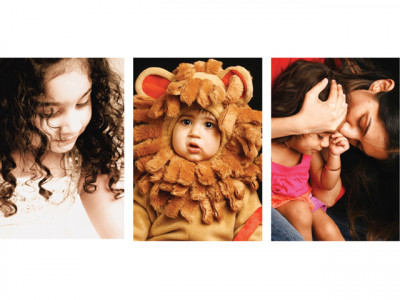
<p>She clicks away with her camera for hours on end if she has to, never directing. “You cannot direct children, they are not going to listen you because they don’t even listen to their moms.” Ansari simply allows her subjects to interact; interact with their families, their surroundings and themselves. Some of Nariman’s favourite pictures include a little girl, Leena playing with her long curly hair, and another one that she took of the fireball Kulsum in between her fits of energy when she’s rubbing her eyes and her mother is kissing her head, or the one of baby Haadi flashing a smile with his eyes twinkling so mischievously they seem like they’re on fire.</p>
<p>“It is so important to cherish those moments,” says Ansari, “I wish I had somebody take pictures like that of me when I first met my husband as opposed to those emotionless wedding portraits that have been photoshopped to death. They aren’t memorable at all!” She then gets up from her seat to show me a photograph that hangs on her living room wall, a picture of four generations of Ansari women, Nariman holding little Izdeyar, her mother Bushra, Bushra’s mother and grandmother, in two rows of two, with the top row standing and bottom sitting, staring straight at the camera with forced smiles. “This just documents what we look like, but it doesn’t capture what we had between us,” she says sadly, “and for this we went all the way to Lahore to get the photograph taken with my great grandmother. I would make this sort of effort for a photograph…and I would want to cherish the magic that existed between all of us.”</p>
<p><em>Published in The Express Tribune, October 31<sup>st</sup>, 2010.</em></p>
</p>
			<br clear="all"/>
		]]>
		</description>

		<media:content width="424" height="318"
							isDefault="true" medium="image" url="http://i1.tribune.com.pk/wp-content/uploads/2010/10/Camer03-640x480.jpg">
			<media:title>Camer03</media:title>
			<media:description></media:description>
			<media:thumbnail url="http://i1.tribune.com.pk/wp-content/uploads/2010/10/Camer03-160x120.jpg" width="160" height="120" />
      </media:content>

		<wfw:commentRss></wfw:commentRss>
		<slash:comments>0</slash:comments>
	</item>
		<item>
		<title>The wedding planner</title>
		<link>http://tribune.com.pk/story/32409/the-wedding-planner/</link>
		<pubDate>Sun, 01 Aug 2010 07:03:43 +0000</pubDate>

		<guid isPermaLink="false">http://tribune.com.pk/?p=32409</guid>

		<description>
		<![CDATA[
			<a href="http://tribune.com.pk/story/32409/the-wedding-planner/">
				<img src="http://i1.tribune.com.pk/wp-content/uploads/2010/07/C-021-160x120.jpg" width="160" height="120" alt="" />
			</a>
			<p><p><strong>Six months ago 25-year-old Salwa Qadir paid her wedding planner a hefty down payment for her wedding, expecting a grand and flawless celebration. To her surprise, it was… just okay. </strong></p>
<p>The sound system was horrible, the venue had mosquitoes (some even spotted a rat), and the waitresses dropped her wedding cake. Qadir felt exploited, and thought that she would probably be returned some of the money. Recently, she received a call from her planner who claimed that Qadir owed her an additional one lakh rupees, and emailed her a list of unpaid bills to prove it. Reluctantly Qadir paid her off and was just glad the whole experience was over with.</p>
<p>“I definitely could have done it without her,” says the disappointed bride. “She made things a little easier but I didn’t need her at all.”</p>
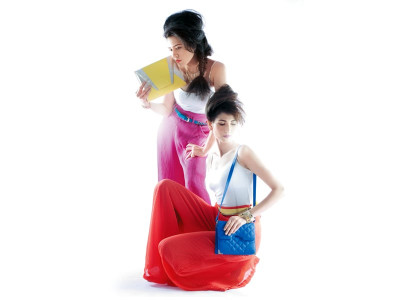
<p>Of late, many Pakistani weddings have become more then just a celebration.  Rather, they are ostentatious displays of wealth, with caviar, belly dancers, streams of wine and exclusive song nights with Rahat Fateh Ali. While some can afford to outdo every other sugar mill/media company owning family out there, most of us don’t have that option. So what do we do? Here is a breakdown on where to skimp and where to save at your wedding:</p>
<p><strong>Decorations:</strong></p>
<p>“While it’s important to make everything look good, you don’t have to spend a lot on décor if you know exactly where you can save,” says Reema Siddiqui, a popular Karachi wedding planner and TV host. “The key is to think local.” Themed events, which are increasingly popular nowadays, can range anywhere from a baroque European theme to Bollywood night &#8211; and that decision can cost you.  “If you come up with a chic international flair like a French Château theme for example, then it’s obviously not going to be cheap getting the material for it,” explains Siddiqui, “but if you go for ‘truck art’ or even an elegant mughlai theme then everything that we need can be bought much easily and at half the price.” For a truck art themed mehndi Siddiqui planned just a week ago, she visited Shireen Jinnah Colony in Karachi where she picked up huge reflective chakors (the bird that is a staple embellishment on every truck), colourful lanterns and reflective stickers in bulk for very little money compared to other wedding decorations. “We made a huge banner saying ‘Dekh magar Pyaar say’, and it put a smile on the faces of everyone attending, both young and old.”</p>
<p>Another good idea would be to recycle the flowers and reuse them for more then one event. “You can choose a sturdy flower such as the gladiola or the local tube rose, as well as motias which retain their texture and heavenly smell for a couple of days,” explains Siddiqui, “just make sure you choose a subtle colour and arrange them in a different way for the next event.” Roses for example might look beautiful but wither very easily. They are also used at every Pakisani wedding, and trying out something different can make your decorations look unusual, adding more character to your event.</p>
<p>Again, getting things constructed or specially ordered makes things a lot more expensive then simply renting them. More fabric, platforms and woodwork for your decorations will cost more in terms of order as well as labour. Try to use accessories such as vases, mirrors etc that you can easily rent and return.</p>
<p><strong>the setting:</strong></p>
<p>While some people think they struck lucky by asking one of their relatives if they could use their gigantic garden or empty plot as a venue free of cost…it’s not that simple. “Outdoor weddings are always more expensive then indoor ones,” explains Siddiqui, “for outdoor weddings, marquees need to be created, fake walls need to be put up for the décor, the carpet needs to be arranged as well as a generator for the lights. For summer weddings, air conditioners often need to be installed as well.”</p>
<p>You also need to absolutely sure of what kind of space you want to allocate. Larger spaces are more expensive and often not completely utilised. A lounge portion, with sofas and comfortable seating can cost a lot more then round tables and chairs.</p>
<p><strong>the dress:</strong></p>
<p>Luckily, Pakistani women have begun to realise that every bridal joda doesn’t have to overdose on kaam. Let it breathe ladies, and let yourself breathe in the process. More and more women are investing in something a little more practical then the Umrao Jan inspired one-time wear joda that will have the aunties buzzing for the next few months.</p>
<p>“Now people come to me asking for something that has value for their money,” explains high-end bridal wear designer Rizwan Beyg, who has been noticing a changing trend in what some of his clients ask for. “They tell me ok this is my budget, and tell me what you can make for it that will last me two generations, so my daughters and their daughters can wear it too.”</p>
<p>While some designers cater exclusively to customers with a budget of five lakh and above, most good designers will never turn their backs on you. “We are the cheapest bridal designers in the country,” claims Safinaz Muneer from the popular Sana Safinaz designer duo, which has somewhat of a cult following amongst Pakistani women worldwide. “We will work with whatever your budget may be, and that’s what tests our creativity as designers.”</p>
<p>According to <em>Women’s Own</em>’s fashion editor Sherazade Khan, girls have also increasingly started using their mothers and grandmothers’s shaadi joras for their own weddings. “Wearing your mother’s wedding jora, or even just the gharara or dupatta, paired with a modern top does not only have sentimental but is also an effective way of curbing the already mammoth expenses,” she explains. “Regardless of how well kept joras are, in Pakistan’s eclectic climate and excessive humidity the work, especially that done last century, with real silver and often gold, tends to weather. Exposed bits go black, whereas those better hidden stay shiny but duller than they should be. A good dry cleaning is usually good enough to shake off the antique look, but otherwise there are people that specialise in cleaning the kaam on old garments. “</p>
<p><strong>planning in advance:</strong></p>
<p>Face it. If you need to get something good ASAP, chances are you’ll get ripped off. In order to avoid getting exploited, and find the best possible price for the best material, you have to start planning your wedding at least four to six months in advance. “If somebody comes to me earlier to plan their wedding and tell me they have budgetary restraints, I am more likely to give them a discount,” says Siddiqui, “but if somebody comes to me at the last minute, when both my time and materials are more precious then I will charge them more.” The same goes for tent and lighting vendors. Approaching them earlier and doing your research will help you figure out who is both good and economically viable.</p>
<p><strong>food:</strong></p>
<p>As a culture we do not RSVP. If one has a more concrete idea of how many people out of the hundreds they have actually invited are going to show up, a lot of money can be saved. Try adding a separate RSVP note, that may give you a better idea, or at the very least a number where they can call and confirm their attendance. In case that doesn’t work, always under order. It is very safe to assume that if you invite 500 people, around a hundred will not show up, so order food accordingly. Also, a lot of times, especially during wedding season, people will prefer to wedding hop, stopping at your event only to make an appearance and then jet to another soiree, in which case they will probably not eat.</p>
<p><strong>party favours:</strong></p>
<p>Recently Pakistan has seen a real outpouring of specialised party favours and invitation designers, who do a good job but charge just as much. You want to save money? Time to call in your girl friends.</p>
<p>A girl who got engaged four months ago in Lahore invited all her friends over for a slumber party and laid out tons of materials to make goody boxes for her guests. They bought ready-made boxes, decorated them with pearls and ribbons they bought from a nearby lace shop, and used tissue to make tiny roses. “The result was spectacular,” she says, “We were all so proud of ourselves.”</p>
<p>According to her, there are immense resources and materials available in large quantities at very cheap prices, especially if you know where to get them. Some areas include Khajoor or Bori bazaar in Karachi. “You can find all sorts of eclectic stuff such as ribbons, laces and beautiful embellishments to accessorised boxes,” she explains, “other than that you can also find a nice fabric that you like and ask your local darzi to make you batwas, which you can custom embroider with the couples’ initials or anything else you desire.”</p>
<p><em>Published in The  Express Tribune, August 1<sup>st</sup>, 2010.</em><em></em></p>
</p>
			<br clear="all"/>
		]]>
		</description>

		<media:content width="424" height="317"
							isDefault="true" medium="image" url="http://i1.tribune.com.pk/wp-content/uploads/2010/07/C-021-640x480.jpg">
			<media:title>C-02</media:title>
			<media:description>budgetary brides trends in bridal wear too are changing  </media:description>
			<media:thumbnail url="http://i1.tribune.com.pk/wp-content/uploads/2010/07/C-021-160x120.jpg" width="160" height="120" />
      </media:content>

		<wfw:commentRss></wfw:commentRss>
		<slash:comments>1</slash:comments>
	</item>
		<item>
		<title>An artist of  the floating world</title>
		<link>http://tribune.com.pk/story/25243/an-artist-of-the-floating-world/</link>
		<pubDate>Sat, 03 Jul 2010 20:22:29 +0000</pubDate>

		<guid isPermaLink="false">http://tribune.com.pk/?p=25243</guid>

		<description>
		<![CDATA[
			<a href="http://tribune.com.pk/story/25243/an-artist-of-the-floating-world/">
				<img src="http://i1.tribune.com.pk/wp-content/uploads/2010/07/34-to-36-2Profile-80x45.jpg" width="160" height="120" alt="" />
			</a>
			<p><p>Yousuf Bashir Qureshi is a walking, talking dichotomy. A contradiction, a split, a disunion, maybe in the most beautiful kind of way. Go back 20 years and his father ships him to a cadet boarding school  outside Karachi. He is the macho kid, the athletic, soccer playing angry boy who beats up anyone who dares stand up to him. He is also the proud president of the Biological Collections Club, a group of testosterone-filled boys who catch, kill and stuff animals.  In his free time though, Qureshi makes flowers out of silk, crepe, glass, anything beautiful he can find. Boys laugh at him, but he still goes on to start his own flower-making club. Fast forward 10 years and Qureshi is a sophomore in college, where he collects weapons, breeds snakes in his dorm room and woos women. In the evenings though, he dons a pair of tights and heads to a ballet class to practice his pirouette. One summer he tours all over the US with his ballet group when a local newspaper takes a picture of him prancing across stage. He cuts the article out and mails the picture to his father, a tough Punjabi landlord. Five years after that, Qureshi, who has started designing clothes, moves to Santa Monica, L.A, where he is discovered by Sheryl Crow, Rachel Hunter and Madonna. He is pursued by high-end labels like Givenchy and Christian Lacroix, but comes running back home to help his father govern their lands and farm. Come back to present day Karachi and you will see that like his personality, everything that surrounds him mirrors his contradictions. On one side of his chic boutique is a rack lined with striking kurtas in bold strips of colour, and on the other are simple, elegant outfits all in the same shade of white.</p>
<p>His office reminds me of a swanky New York apartment. In his fingers, intertwined between the many large metallic cocktail rings is a slim beeri, from which wafts a dreamy, smoky smell all over his modern space. Qureshi loves Pakistan. That fact is hard to miss with his extravagant getup, photographs that clutter his desk and the books that line his wall. He claims that is also why he came back the minute he was summoned. He knew that with his degree in farming he could help his family manage their lands, and on the side create a space to do what he loves: designing and photography.</p>
<p>He ended up creating the YBQ Concept Studio, which is located in the Artists Commune. The large warehouse space that he owns near Karachi’s industrial centre has been transformed into a powerhouse of sorts. It contains the commune, a space for events, art exhibitions, performances etc. It includes the YBQ design studio, where he designs everything from logos to furniture, the YBQ printing press, the YBQ photo studio and a salon run by Nabila. “Everything I need, or want or desire is here,” explains Qureshi walking me through the large space, “I hate being dependent on anyone but myself for anything so here it is. Now we’re only missing a restaurant, a production house, an editing suite and a boutique hotel.” As we walk by his boutique he picks up metal coins he designed himself, somewhat like the old 10 paisa ones, except these say Pakistan on one side and the other says Proudly Made in Pakistan with a YBQ logo.</p>
<p>YBQ first made his presence felt in the Pakistani fashion scene a year ago. His first fashion show was a short film, which he directed and produced himself, an intriguing visual display of his clothes worn by two celebrities who flaunted his designs with their movements, every one of which had a meaning. “A lot of people loved it but most of them didn’t get it,” he explains. “ They wanted the girls, the ramp…they told me this isn’t a fashion show.” When he designed his next collection, Holey, people were surprised at the lack of embroidery on his clothes. “My clothes are sculptural pieces, I don’t do embroidery and people were like ‘what the hell is this?” The mannequins you see hanging from the ceilings of his Karachi studio aren’t just the typical everyday mannequins that you would see in a storefront. They, like his clothes, are sculptural works of art. “They are body casts of real women that I know, that I have made with plaster and fibre glass. It wasn’t easy to find women who would do it, but I didn’t want the petite model to be the one who displayed my clothes.” Not surprisingly he has garnered a reputation for eccentricity, of which is he is aware of but not at all ashamed.</p>
<p>Twice a week Qureshi goes to this ancestral village of Mirpur Sakro passing judgements on land disputes and gang rapes, doing rounds of the lands on his horse, planting trees and listening to qawalli with the village men at night. The rest of the week  he is at the Commune, guiding students, artists and designers; practically anyone who wants to learn. He works on his collections, caters to his clients and returns home to his wife who wears a burqa and a veil. “We’re two poles apart,” he says about his wife who runs a charity hospital in Lalukhait, “we don’t see eye to eye religiously but again she respects what I believe in and I respect what she believes in.”  He admits laughingly that when he attempts to design clothes for her she often puts them down claiming they are too nanga, but he tries anyway.</p>
<p>Does he ever get confused? “Since I’ve discovered myself in my late twenties, I’ve been pretty clear,” he explains, “I’m still discovering, but I know what my heart desires and I know what I’m thinking. I’ve kept them separate.” YBQ though is comfortable in each aspect of his life, in every role that he plays. He switches states of mind like a chameleon and is fully present in every moment of his life. This quality, of owning different roles is also visible in the work he does. While his clothes are cut and sewn flawlessly, his sculptures too are works of art, like the headgear he designed for his friend Shakeel Saigol for fashion week, which made waves across the fashion world. His photographs have been published in Vogue and National Geographic, while his art work has graced the covers of Pakistani books.</p>
<p>“To me the idea of an artist was once a foreign idea,” Qureshi explains, “ but these experiences have helped me recognise the artist that was always within me. Inside of me I know what I am and who I am. I am an artist.”</p>
<p><em>Published in The Express Tribune, July 4<sup>th</sup>, 2010.</em></p>
</p>
			<br clear="all"/>
		]]>
		</description>

		<media:content width="424" height="236"
							isDefault="true" medium="image" url="http://i1.tribune.com.pk/wp-content/uploads/2010/07/34-to-36-2Profile-448x249.jpg">
			<media:title>34 to 36 2Profile</media:title>
			<media:description>  </media:description>
			<media:thumbnail url="http://i1.tribune.com.pk/wp-content/uploads/2010/07/34-to-36-2Profile-80x45.jpg" width="160" height="120" />
      </media:content>

		<wfw:commentRss></wfw:commentRss>
		<slash:comments>1</slash:comments>
	</item>
		<item>
		<title>Web wizard</title>
		<link>http://tribune.com.pk/story/16663/web-wizard/</link>
		<pubDate>Sat, 29 May 2010 20:54:59 +0000</pubDate>

		<guid isPermaLink="false">http://tribune.com.pk/?p=16663</guid>

		<description>
		<![CDATA[
			<a href="http://tribune.com.pk/story/16663/web-wizard/">
				<img src="http://i1.tribune.com.pk/wp-content/uploads/2010/05/Images-022-80x45.jpg" width="160" height="120" alt="" />
			</a>
			<p><p>About six months ago, a painfully funny video was making the rounds online. Even if every single Pakistani on the planet had not seen it, they had heard about it, even the ones who didn’t quite understand what the internet was. The clip shows the rehearsal of an interview being conducted by popular film star Meera, in which she struggles to speak in English to a shell-shocked Tapu Javeri, the high profile fashion photographer. “Vee vill be the back,” she stammers, “after right shot break!” She then looks around, smiling uncomfortably, seeking reassurance from Javeri and her crew members.</p>
<p>While the clip remains popular and might very well retain its legendary status for years to come, another discovery caught the attention of the viewers: ChaltaTV.com, the website that originally uploaded this video. Not only was Chalta TV the first video-sharing site where this video could be accessed, it was a treasure trove of other Pakistani videos, from old advertisements to the latest news clips and interviews. It was everything a Pakistani video junkie could dream of. Irfan Ahmad, the creator and owner of the website, thoroughly enjoyed the time the Meera video first went up. “I would put an ad of the clip up on Facebook, targeting people from Pakistan, and five minutes later my site would crash,” he says, laughing. Chalta, with its 100,000 viewers a month, is not the only brainchild of the internet guru. His recently launched Chutti.pk, is Pakistan’s first ever travel website and he is currently working on his third venture, Khabristan.com, a website for financial news from Pakistan.</p>
<p>Ahmad, 53, admits that his family thinks he’s kind of nuts doing what he does. He laughs when he thinks about it. Physically, he is exactly what one would expect of a computer geek, with long, thick hair, a beard and glasses — except he’s at least 20 years too old. When one imagines someone breaking ground in internet technology in a third world country, you think young. Maybe a 20-something with baggy jeans and headphones. “That,” Ahmad explains, “is a digital native, someone who grows up with the internet in his life. I would be classified as a ‘digital immigrant’, a person who grew up with print and TV and then went into the world of the internet.” Though, he adds with a smirk, “I probably know more about it then a digital native does.”</p>
<p>Ahmad got his Ph.D in Economics from Boston University and joined the family advertising sales business. He was also a member of the Prime Minister’s Task Force on Export Promotion and did his “mulk aur qoum ki khidmat” bit for three years and then decided to concentrate on running a business. In 1999, combining his advertising sales background with his fascination for the internet, Ahmad became the pioneer of online advertising sales in Pakistan. He became the exclusive advertising sales representative for Pakistan and the Middle East for Yahoo! and continues to represent them to this day. His day job is what “gets food on the table.”</p>
<p>Chalta TV was a spur of the moment idea. While Ahmad was working on creating Chutti.pk during November 2007, former president Pervez Musharraf declared an emergency and blocked all news channels. Ahmad, who was in Dubai at the time, was inundated by phone calls from his Pakistani friends asking about the latest news. It was then that Ahmad decided to create a site where Pakistanis could watch news clips from various channels. He found a YouTube archetype online, bought it for a couple of hundred dollars, tweaked it according to his requirements and Chalta TV.com was up and running in less than a week. And that’s where its name came from: “Everything else was bund, but our TV was on. It was chalta TV!” Initially he uploaded 10 to 15 clips everyday, from various news channels including Geo, ARY, CNN and BBC. To respect copyright infringement laws he took only two to three minute excerpts and put them up on the site with the channel’s logo on the clip. The immediate response was overwhelmingly positive. “ Within three weeks of launching the site we had to change the server and move to a bigger one to handle the huge traffic we were generating,” recalls Ahmad. “We used to get requests for more frequent updates of the news and we hired several people to constantly update videos.”</p>
<p>Even though Ahmad and his team later added entertainment and advertisement videos, and viewers now have the option to view 12 different categories of clips, his philosophy remains the same: to show people what they should be allowed to see. Chalta TV’s ‘About Us’ section states:  “Let the spirits soar. Let freedom percolate. Let there be unrestrained speech. May the people of Pakistan always be blessed with freedom of thought and action! May we live in a world where the oppressed can voice their opinion. And be heard…TV Chalta Rahay!”</p>
<p>While Chalta was an effort to advocate freedom, Chutti, Ahmad admits, was purely a business decision. “ I knew two Danish guys who settled in the Middle East and made a PR website which they sold for $29 million,” he remembers. “ I saw this company grow, I and I was like…if these people can do it I should be trying something similar.” This motivated Ahmad to pursue a venture other than selling ads for Yahoo! and doing something on his own.  He got his travel-related clients from Yahoo! to advertise on Chutti.</p>
<p>Chutti does not sell tickets or generate money. The most it does is allow travellers to book hotels through the site. What Chutti really wants to do is simply provide a Pakistani traveller with information. What is different about it is that it also caters to Muslim travelers. It tells them where mosques are located or how many halal restaurants a city has. Very soon the site will be accessible through mobile devices and GPS will allow a person to access directions to the closest mosque or halal restaurant, wherever they might be in the world. Ahmad and his team are also working on sections that will be promoting domestic tourism.</p>
<p>Chutti and Chalta, both give Pakistanis something they have never seen before. While Chutti assists the Muslim traveler, Chalta provides content related to Pakistan, “Admittedly it is a me-too kind of site but unlike some other local video sites we do not allow uploading of entire programmes and avoid culturally sensitive content.”</p>
<p>Ahmad’s work keeps him satisfied.  “If I did not enjoy doing this I would not have spent my time, effort and money on ideas which do not have a high track record of success. Besides, Chutti’s travel articles section also provides me with an outlet to indulge in my passion for writing &#8211; which had so far only been used for writing proposals for advertising on Yahoo!”</p>
<p><em>This article has been revised to reflect the following correction:</em></p>
<p><strong><em>Correction: May 30, 2010</em></strong></p>
<p>An earlier version of this article incorrectly spelt Mr Irfan ahmad&#8217;s name as Imran Ahmad.</p>
<p><em>Published in the Express Tribune, May 30th, 2010.</em></p>
</p>
			<br clear="all"/>
		]]>
		</description>

		<media:content width="424" height="237"
							isDefault="true" medium="image" url="http://i1.tribune.com.pk/wp-content/uploads/2010/05/Images-022-448x250.jpg">
			<media:title>Images 02</media:title>
			<media:description>    </media:description>
			<media:thumbnail url="http://i1.tribune.com.pk/wp-content/uploads/2010/05/Images-022-80x45.jpg" width="160" height="120" />
      </media:content>

		<wfw:commentRss></wfw:commentRss>
		<slash:comments>1</slash:comments>
	</item>
	
</channel>
</rss>
<!-- Performance optimized by W3 Total Cache. Learn more: http://www.w3-edge.com/wordpress-plugins/

Page Caching using apc
Database Caching 12/41 queries in 1.964 seconds using memcached
Object Caching 1428/1591 objects using apc

 Served from: tribune.com.pk @ 2013-05-23 14:58:45 by W3 Total Cache -->