<?xml version="1.0" encoding="UTF-8"?>
<rss version="2.0"
	xmlns:content="http://purl.org/rss/1.0/modules/content/"
	xmlns:wfw="http://wellformedweb.org/CommentAPI/"
	xmlns:dc="http://purl.org/dc/elements/1.1/"
	xmlns:atom="http://www.w3.org/2005/Atom"
	xmlns:sy="http://purl.org/rss/1.0/modules/syndication/"
	xmlns:slash="http://purl.org/rss/1.0/modules/slash/"
	xmlns:media="http://search.yahoo.com/mrss/"
	>

<channel>
	<title>The Express Tribune &#187; Anaam Raza</title>
	<atom:link href="http://tribune.com.pk/author/2933/anaam-raza/feed/" rel="self" type="application/rss+xml" />
	<link>http://tribune.com.pk</link>
	<description>Latest Breaking Pakistan News, Business, Life, Style, Cricket, Videos, Comments</description>
	<lastBuildDate>Tue, 21 May 2013 15:05:53 +0000</lastBuildDate>
	<language></language>
	<sy:updatePeriod>hourly</sy:updatePeriod>
	<sy:updateFrequency>1</sy:updateFrequency>
	<generator>http://wordpress.org/?v=3.5.1</generator>

		<item>
		<title>Boycott, divest, sanction</title>
		<link>http://tribune.com.pk/story/472162/boycott-divest-sanction/</link>
		<pubDate>Sun, 02 Dec 2012 09:34:02 +0000</pubDate>

		<guid isPermaLink="false">http://tribune.com.pk/?p=472162</guid>

		<description>
		<![CDATA[
			<a href="http://tribune.com.pk/story/472162/boycott-divest-sanction/">
				<img src="http://i1.tribune.com.pk/wp-content/uploads/2012/11/472162-israelboycottbarcode-1354440693-421-160x120.JPG" width="160" height="120" alt="" />
			</a>
			<p><p><strong>Apartheid is defined by the UN as “inhuman acts committed for the purpose of establishing and maintaining domination by one racial group of persons over any other racial group of persons and systematically oppressing them.” While this definition was created specifically in the context of South Africa, many feel that the Israeli occupation of Palestinian territories is the modern incarnation of that odious regime.</strong></p>
<p>It’s of no small significance that South Africa’s ruling party, the African National Congress (ANC), declared their support for the “Boycott, Divestment and Sanctions” (BDS) campaign targeting Israel last month. To them, the hallmarks of Israeli occupation: the checkpoints, the arbitrary imprisonments, the separation Wall, the Israeli-exclusive roads and the destruction of property mirrored what they had themselves suffered during minority white rule for so many decades.</p>
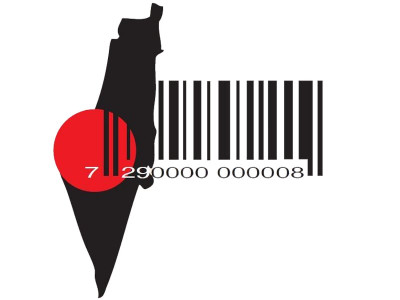
<p>Launched by Palestinian activists in 2005, BDS is an international movement with a three-pronged approach: to ‘Boycott’ both Israeli and international products that profit from the occupation; to practice ‘Divestment’ from corporations complicit in the violation of Palestinian rights; and to levy ‘sanctions’ to demonstrate disapproval for Israel’s actions until Palestinian rights are recognised in accordance with international law.</p>
<p><img src="http://pullquotesandexcerpts.files.wordpress.com/2012/11/barcaord-01.jpg?w=625" alt="Barcaord 01" /></p>
<p>It comes as no surprise that the BDS movement has found fertile ground and strong support in the United Kingdom, given that Britain is home to some of the most active international Palestinian support groups.</p>
<p>Earlier this year, the UK’s fifth biggest food retailer, the Co-operative Group, became the first major European supermarket group to end trade with companies that export produce from illegal Israeli settlements. While it stops short of calling it an outright boycott (It continues to use other suppliers from Israel that do not source from settlements), its decision nevertheless impacts contracts worth some £350,000.</p>
<p>Praising the initiative, Sarah Colborne, director of the Palestine Solidarity Campaign says: “The Co-op Group, in extending the implementation of its Human Rights and Trade Policy of not sourcing produce from Israeli companies who trade illegal settlement goods, sends a clear message to the Israeli government that it will not profit from its persistent defiance of international humanitarian law and the Geneva Conventions. We hope that this move will impress the rest of the retail food sector to do likewise — in trading ethically and listening to your consumers/members, and acting in solidarity with the Palestinians.”</p>
<p><img /></p>
<p>In addition to this, the National Union of Students (NUS), Britain’s largest confederation of students, have unanimously  agreed to work with local student  unions to lobby universities to cancel contracts with Eden Springs, an Israeli mineral water company which extracts water from Golan Heights, a Syrian territory occupied by Israel since 1967.</p>
<p>Ahmad el Enany, secretary general of Youth of the Egyptian Social Democratic Party who was attending a National Youth Conference in Ramallah says, “We compare Israel’s illegal occupation with the apartheid era. The refusal to buy South African produce in supermarkets were acts of conscience which sent a powerful message of solidarity as well as impressing on the South African regime that the world would not finance their power. For the same reason British people of conscience will not buy Israeli produce until Palestinians are free to resume life as a sovereign people with their own state.”</p>
<p>Although there has been a 16% drop in Israel’s exports to the EU, it is still Israel’s biggest trading partner, making up 33% of its total global exports.</p>
<p><img src="http://pullquotesandexcerpts.files.wordpress.com/2012/11/barcaord-03.jpg?w=625" alt="Barcaord 03" /></p>
<p>A recent report, in which twenty two charities including Christian Aid have called on the EU to ban products made by Jewish communities in the West Bank, also urged clearer labeling rules to help consumers identify the origin of produce as is already done in Denmark and Britain. But the NGOs said a more effective solution would be to impose a ban on all settler products, a move that only one EU member state, Ireland, has so far asked for.</p>
<p>Israeli settler produce has already resulted in divided opinions between the US and the United Nations. On Oct 25, the UN’s special rapporteur Richard Falk called for a boycott of companies linked to Israeli settlements, but a US representative at the United Nations called the statement “irresponsible.”</p>
<p>But brave and objective voices are not to be silenced, like the voice of Sonja D Zimmerman, a member of the Nederlands Palestina Committee. “If the governments would take a stronger stance or the United Nations would say ‘enough is enough,’ then we as citizens wouldn’t have to go through all this effort. But right now it’s the other way round as we have to push our government to start doing something sensible. It’s a bit funny and feels a bit like a merry-go-round but we are trying to galvanise our government, supermarkets and the EU into action,” says Zimmerman.</p>
<p><img src="http://pullquotesandexcerpts.files.wordpress.com/2012/11/barcaord.jpg?w=625" alt="Barcaord" /></p>
<p>Getting support for the BDS movement in Holland may prove difficult, for reasons of history. “The Dutch people are not ready to accept the fact that Israeli settlements are illegal, and that therefore the products coming from that place are illegal too,” says Casper van der Heijden, professor of Political Science at University of Amsterdam.</p>
<p>But the battle is not going to be easy. “Amsterdam was the second place after Germany to have mass killings of Jews and there is still collective guilt both on the part of the government and the people,” says Van der Heijen. You have to remember that the Jewish community as a whole has been marginalised throughout centuries and now they have learnt to fight back. I personally just don’t see the point of blanket boycott as it doesn’t really gain anything. The boycott should be targeted.”</p>
<p>“It’s my personal view that once people start to say that we’re not going to buy any products in any way related to  Israel, then we have a problem on our hands because it’s like knitting — you end up getting more than you bargained for. Now, the world’s largest semi-conductor and microprocessor producer Intel is based there. How do you avoid any contact with that? I also think that having a list saying ‘these are Israeli products’ just does not work. Because one can’t go shopping thinking, I won’t buy this or I won’t buy that,” says Zimmerman.</p>
<p>A spokesperson for the Fatah Youth International Group says that “Palestinians and civil society in Britain have campaigned for this kind of boycott for years in the face of governments’ refusal to act in compliance with international human rights norms.”</p>
<p>Of course, the Israelis aren’t taking this lying down, and the Israeli Knesset passed the ‘Law to Prevent Harm to the State of Israel by Means of Boycott’ last year. This law allows the targeted companies and producers to sue anyone advocating a boycott. Widely criticised, even within Israel, this law could conceivably even target opinion writers published by the Israeli media itself. Of course, what impact this will have on the people behind the BDS movement is unclear, to say the least.</p>
<p><em>Published in The Express Tribune, Sunday Magazine, December 2<sup>nd</sup>, 2012.</em></p>
<p>Like Express Tribune Magazine on <a href="https://www.facebook.com/pages/Express-Tribune-Magazine/496571717038735">Facebook</a> and follow at <a href="https://twitter.com/ETribuneMag">@ETribuneMag</a></p>
</p>
			<br clear="all"/>
		]]>
		</description>

		<media:content width="424" height="318"
							isDefault="true" medium="image" url="http://i1.tribune.com.pk/wp-content/uploads/2012/11/472162-israelboycottbarcode-1354440693-421-640x480.JPG">
			<media:title>israel boycott barcode1</media:title>
			<media:description>Many feel the Israeli occupation of Palestinian territories is apartheid.</media:description>
			<media:thumbnail url="http://i1.tribune.com.pk/wp-content/uploads/2012/11/472162-israelboycottbarcode-1354440693-421-160x120.JPG" width="160" height="120" />
      </media:content>

		<wfw:commentRss></wfw:commentRss>
		<slash:comments>0</slash:comments>
	</item>
		<item>
		<title>The lord from Lucknow</title>
		<link>http://tribune.com.pk/story/439108/the-lord-from-lucknow/</link>
		<pubDate>Sun, 23 Sep 2012 06:38:18 +0000</pubDate>

		<guid isPermaLink="false">http://tribune.com.pk/?p=439108</guid>

		<description>
		<![CDATA[
			<a href="http://tribune.com.pk/story/439108/the-lord-from-lucknow/">
				<img src="http://i1.tribune.com.pk/wp-content/uploads/2012/09/439108-loard-1348061352-445-160x120.JPG" width="160" height="120" alt="" />
			</a>
			<p><p><strong>How many people do you know who have been bestowed high national civilian awards by two countries that, to put it mildly, don’t like each other very much? Not many, for sure.</strong></p>
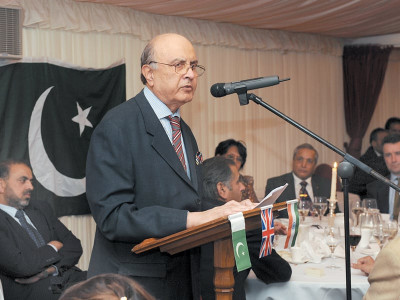
<p>But when those two countries are Pakistan and India, then the number of people so honoured could probably be counted on the fingers of one hand. Well, Baron Khalid Hameed of Hampstead is one such person, being the recipient of India’s Padma Bhushan, as well as Pakistan’s Sitara-e-Quaid-i-Azam and Hilal-e-Quaid-i-Azam.</p>
<p>We are meeting in his office in London’s Harley Street, which is world famous for being at the forefront of medical science and for attracting pioneering medical specialists from all over the world.</p>
<p>He’s not out of place in the caduceus crowd either. Trained as a doctor in his hometown of Lucknow, 71-year-old Hameed is the chairman of the Alpha Hospital Group and CEO of the London International Hospital. Previously, he was also the executive director of London’s Cromwell hospital, famous for treating affluent Middle Easterners, the likes of former Manchester United footballer George Best and the Iron Lady, former British prime minister Margaret Thatcher, herself.</p>
<p>As I introduce myself to him, I keep wondering why so few people know about him. There is practically no mention of him in the Pakistani press, even though he’s essentially doing the same job as Lord Nazir Ahmed. “I’m a professional you see,” responds Hameed. “I don’t like wasting too much time on these things because what tends to happen is that the task at hand often gets delayed,” he says in an extremely measured tone, choosing his words carefully.</p>
<p>In February 2007, Hameed was made a non-party political life peer, giving him a seat in the House of Lords, and in 2009, he received the Padma Bhushan, one of India’s highest civil award for his services to the medical profession. He has also received the Sitara-e-Quaid-i-Azam and the Hilal-e-Quaid-i-Azam for his services to medicine in Pakistan.</p>
<p>But he’s not interested in talking about these awards or the more recent ‘Freedom of the City of London’ award he received. Instead, he wants to stick to what is obviously his cause celebre: promoting inter-faith understanding in his role as the chair at the Woolf Institute of Abrahamic faiths.</p>
<p>“My interest in the field developed after 9/11 when Islam was being painted as a religion for brutes and uncivilised people who do not know how to live in the modern world,” says Hameed.</p>
<p>“And at that time, I was looking for somebody to come forward, take responsibility and stand up and say Islam is a religion of peace. Nobody did.”</p>
<p>Of course, that didn’t stop Hameed from standing up and saying his piece. “The Prophet Muhammad (pbuh) himself had very good relations with non-Muslim tribes living in his area. There is an incident in which he stood up in respect as a Jewish man’s funeral was passing by, and later when people asked him if he knew the man was Jewish, he replied: ‘Of course!’” says Hameed.</p>
<p>As the conversation continues, I realise it isn’t just Islam that he talks about with utmost respect and positivity, but all Abrahamic faiths. I then make the mistake of saying as much.</p>
<p>“You shouldn’t just talk about ‘Abrahamic’ religions because there are one billion Hindus in the world,” he says as he gently rebukes me. “You can try and ignore them but they still exist. Similarly, Sikhs are formidable in terms of influence, so you have to include all of the other religions in this discussion too. The more I read other scriptures, the more I realise what excellent books they are, as all of them tell you to be kind, to help those who are in need and to be good citizens. Not a single religion teaches us to be negative or destructive; they are all different channels of water merging into the same sea,” he says with sage-like wisdom.</p>
<p>I try to steer the conversation away from my faux pas and back to his topic of choice: What exactly does working for inter-faith harmony entail? I ask. And in particular, what does it mean Muslims should be doing?</p>
<p>“[It means] we don’t need to be swept away by emotion,” he says. “It doesn’t mean that you should convert to my religion or that I should convert to yours. Instead, we should discuss and at least agree on some things. The more you talk, the more you realise that there are more similarities than differences between us.”</p>
<p>Sadly, Hameed feels that the Muslim community in the UK is becoming increasingly isolated and ghettoised. But if that’s something he finds worrying, how then does he view the radicalisation and ‘religious’ violence taking place back in Pakistan?</p>
<p>“These people say that they are doing God’s work but the Quran clearly prohibits killing another human being. And as Muslims, all of us believe in an afterlife so why don’t we leave it for God to decide? What’s the hurry? And if they don’t agree [with this] they should tell us that the Quran is not true,” he argues.</p>
<p>He believes that Muslims and non-Muslims alike misconstrue the word ‘<em>jihad</em>’. “The word literally means ‘to strive’ and the greater <em>jihad</em> is to improve oneself and the secondary and lesser <em>jihad</em> is to defend yourself when you’re attacked. These days most Muslims seem to forget the primary meaning and instead just focus on the auxiliary meaning,” he says.</p>
<p>Other than trying to foster goodwill in a multicultural city, his passion is helping young people fulfil their potential, which is why he chairs the Commonwealth Youth Exchange Council and is the governor of the International Students House.</p>
<p>“The young people of today are the guardians of our civilisations, but Muslim youngsters in particular are at the bottom of the league in comparison to the rest of the country. They have the highest numbers in prisons and they have the worst health profile,” he says.</p>
<p>He is at pains to point out that Indians are doing better than Pakistanis in the UK. He refers to a survey done in Yorkshire, which claims that the majority of Muslims and Pakistanis aim to become taxi drivers so that they can start earning some quick cash. “Not that there is anything bad in being a taxi driver, but [they want] nothing more than to be a taxi driver,” he says.</p>
<p>When I ask him how this situation can ever change, he replies: “The goal should be to create an educated generation and the change will have to come from the home and the parents.”</p>
<p>He blames himself and me, the people upon whom God has bestowed all the luxuries of life, who own motor cars, have wardrobes full of clothes, eat (at least) three square meals a day and are yet too ‘busy’ to contribute to the community.</p>
<p>“It is well-to-do Muslims like you and me who need to build academic institutions like medical and engineering colleges and not just mosques, because that is what will benefit the community in the long run.”</p>
<p>I ask him if the goal seems achievable, and he replies with his customary passion: “Very much so. People are willing to embrace you if you prove your mettle. When I first came here, I wanted to get ahead and so I worked over 50 hours a week. I had no time for Sunday <em>biryanis </em>or anything like that. First, you have to work hard and then you can seek blessings from God.”</p>
<p>This affable and refined man who despises extremists seems to have a view on everything, so I ask him what he thinks of his birth country’s next door neighbour: Pakistan.</p>
<p>“I’ve been to Pakistan several times to attend weddings and I have a lot of friends there. One of the things I’d still like to achieve is to open a hospital in both Karachi and Lucknow.”</p>
<p>I wonder out loud if he plans to start something like Imran Khan’s Shaukat Khanum Memorial Hospital, but he clarifies that he doesn’t want to open a specialist hospital but rather a general hospital that can cater to the poor populations of Pakistan and India.</p>
<p>Still, with a peership, the inter-faith harmony project and the stewardship of no less than two hospitals, how on earth will he find the time and energy to devote to this project?</p>
<p>As if reading my mind, he recites a couplet that sums up his philosophy of life and the secret of his success:</p>
<p><em>Khuda taufeeq deta hai jinhain, samajhtey hain woh</em></p>
<p><em>Khud hi apne hathon se buna karti hain taqdeeren</em></p>
<p>&nbsp;</p>
<p><em>Correction: The story erroneously called Padma Bhushan the highest civil award in India. It is, in fact, one of the highest. A correction has been made. We regret the error. </em></p>
<p><em>Published in The Express Tribune, Sunday Magazine, September 23<sup>rd</sup>, 2012.</em></p>
<p>Like Express Tribune Magazine on <a href="https://www.facebook.com/pages/Express-Tribune-Magazine/496571717038735">Facebook</a> and follow at <a href="https://twitter.com/ETribuneMag">@ETribuneMag</a></p>
</p>
			<br clear="all"/>
		]]>
		</description>

		<media:content width="424" height="318"
							isDefault="true" medium="image" url="http://i1.tribune.com.pk/wp-content/uploads/2012/09/439108-loard-1348061352-445-640x480.JPG">
			<media:title>loard</media:title>
			<media:description>Honoured by both Pakistan and India, London-based Baron Khalid Hameed works quietly to heal the sick and promote inter-faith harmony.</media:description>
			<media:thumbnail url="http://i1.tribune.com.pk/wp-content/uploads/2012/09/439108-loard-1348061352-445-160x120.JPG" width="160" height="120" />
      </media:content>

		<wfw:commentRss></wfw:commentRss>
		<slash:comments>7</slash:comments>
	</item>
		<item>
		<title>Who u gonna call?  Ghostbusters!</title>
		<link>http://tribune.com.pk/story/431818/who-u-gonna-call-ghostbusters/</link>
		<pubDate>Sun, 09 Sep 2012 06:49:21 +0000</pubDate>

		<guid isPermaLink="false">http://tribune.com.pk/?p=431818</guid>

		<description>
		<![CDATA[
			<a href="http://tribune.com.pk/story/431818/who-u-gonna-call-ghostbusters/">
				<img src="http://i1.tribune.com.pk/wp-content/uploads/2012/09/431818-gost-1346852097-615-160x120.jpg" width="160" height="120" alt="" />
			</a>
			<p><p><strong>“It’s almost as if they want forgiveness. They say that they are aware of what they did during their time and it probably wasn’t the best thing to do but they were acting in the best interest, and that earth was a very different place then. </strong></p>
<p>It’s thrilling and exciting because there is nothing like it and, although we’re delving into the unknown, when you have that first experience [with a spirit] you’re left pretty much speechless.”</p>
<p>You’d be forgiven for thinking that this is a snippet from the latest installment of <em>Paranormal Activity </em>or else a conversation with a ‘Bengali baba’ who claims to be able to banish evil spirits. But the people speaking these words are, in fact, a team of ‘ghostbusters’ in London, perhaps one of the world’s most modern cities, who are chasing phantoms from the past.</p>
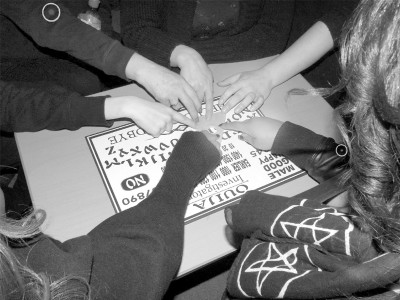
<p>Mike Gocol, Louise Rouche, Gemma Pugh and Shilan Jaff are the North London Paranormal Investigators (NLPI) who seek out restless spirits and claim to help them ‘move on’.</p>
<p>We meet in a dimly-lit pub, The Gatehouse, which Mike tells me may possibly be one of the most haunted places in Britain. Chilling apparitions have been sighted here, he says. “I can feel activity all around me. It is as if there are ping pong balls everywhere.”</p>
<p>I fidget in my chair uncomfortably and he senses my unease. “Well, not all ghosts are bad, you know,” he assures me. “And not all families want to get rid of them. Our job is to simply help the two communicate with each other and find out exactly what’s going on.”</p>
<p>The NLPI has been working on all things paranormal, including witches, werewolves, demons and vampires, since 2010 and say they have never had a negative encounter with a spirit. But their biggest claim to fame these days is that they stole the limelight away from George Michael, one of the biggest pop stars from the 1980s, when they recently passed by his £8 million Highgate mansion in full ghostbusting gear and reportedly gathered a crowd that could put the superstar’s own fan following to shame.</p>
<p>Prior to meeting them, I thought ghosthunting was the domain of Asians, and in particular Pakistanis, where phony exorcists fool gullible clients by claiming to get rid of the spirits who are the source of all their woes. Clearly, I was wrong.</p>
<p>I’m intrigued by what they do and ask them how they do it. “Firstly, we set some ground rules — like they [the spirits] ought to limit their connection to the kitchen or garden and steer clear of areas of privacy such as bedrooms and bathrooms,” explains Mike, enthusiastically.</p>
<p>Gemma, the medium — someone who claims she can sense the presence of spirits — adds: “Activity usually happens when they want to be heard, and once they’ve said it they’re at peace. The spirits are just like everyone else. Once they’ve spoken to someone, gotten it off their chest, they calm down.”</p>
<p>Unconvinced by their explanation, I probe further as to why the spirits would necessarily listen to them? Instead, they dodge the question and tell me they can send the spirits “elsewhere” if they don’t listen to the team. And, of course, the spirits wouldn’t want that.</p>
<p>I want to know where they send ‘them’ and how. “At first we ask them [to leave] politely, and if they refuse then we use our spirit guise and the energy of all our loved ones who have passed away, and give them a firm push out the door.”</p>
<p>The thought of someone trying to push an ethereal ghost out of the door is a little hard to believe, so I press on. But the conversation seems to be moving in circles now as the group consistently contrives a way around my questions. I give up.</p>
<p>Mike is clearly the leader in this group of paranormal enthusiasts. He is charming and very passionate when he talks about his work. It works well around his female colleagues, most of whom are young volunteers. Every time I ask them a question, the impressionable twenty-something girls look towards Mike for an answer. That alone is enough for a sceptic like me to doubt their version of how they deal with recalcitrant ghosts.</p>
<p>But then they also assert that there is a scientific side to the whole nifty exercise too. They show me an electromagnetic field (EMF) metre, a digital recorder, a thermometre and a full spectrum camera. Theories in the paranormal field suggest that ghosts have the ability to manipulate EMF, which can then be used to document potential communication. “A spirit usually needs electrical energy to manifest itself. Otherwise, it is just there, invisible and ethereal. At times we ask them to make the light flash, and then the EMF starts to buzz constantly, which tells us that there is some strong energy nearby,” explains Mike.</p>
<p>He moves on to the next gadget: “The voice recorders help us record electronic voice phenomena (EVP) so we can ask questions and get intelligent responses. Sometimes, we ask their name and get responses like Adam, John, Peter. But other times, it is just taps or other audible disturbances.”</p>
<p>All those sounds and static on your radio set could give away the presence of a ghost nearby, according to Mike, who explains how they use their digital radio device to detect paranormal evidence. “We don’t really know how it works but it simply sweeps through radio frequencies very quickly (approximately 12 radio stations per second) and when we ask questions, we usually get a unique response,” he says. “Hearing a sentence [over the radio] would mean that somebody would have to be speaking over multiple radio stations, which is effectively impossible.” This rules out the possibility of a human voice, and establishes the likelihood of it belonging to some paranormal source.</p>
<p>My research, however, tells me that a radio scanner, more commonly known as a ‘ghostbox’ in the paranormal world, provides raw audio which are bits of static, human speech, music and noise created by tuning the radio electronically across its range. So what you hear on this is what you’d hear if you had an old radio with an analogue dial that you swiftly moved up and down across frequencies — and you may end up interpreting this jumble of sounds as words.</p>
<p>Still many like Louise, Mike’s pregnant girlfriend and fellow ghostbuster, remain convinced. “That is when you wonder, ‘How are they able to do that?’ You just can’t explain it!” she says excitedly.</p>
<p>After getting the technical stuff out of the way, I move on to the hazardous nature of their occupation. As an untrained amateur, it seems potentially perilous. Aren’t they scared?</p>
<p>“You’re scared of the unknown, aren’t you? What we’re doing is finding out the truth and once you accept this, there is nothing left to be scared of,” says Shilan. “We know we’re not going to get hurt because we’ve learnt that there is no way they can harm us. So now it’s become more of a thrill, a bit like a rollercoaster ride.”</p>
<p>I remind them that they had said that all spirits aren’t bad, which means some spirits are.</p>
<p>“No, even the bad and negative ones can’t harm us because we are fully protected through our minds. If you think you’re scared, then you are. If you show your weakness then it gets to you. It’s more about believing in yourself and being positive,” explains Shilan.</p>
<p>All this stuff about positivity sounds great, but really, for Mike to be running this not-for-profit organisation and employing volunteers full time for next to nothing, is a bit of a stretch. After all, the pursuit of the ethereal is impossible without tending to temporal money-making concerns, and they need human resources and equipment to run their operations. They must have some means of income.</p>
<p>A long pause later, Mike just about manages to say that they find a way. “We are a bit like the paramedics. If they see somebody having a heart attack, they’ll step in without any guarantee of being paid. We work in the same way. And until we can prove the work we’re doing is valid, we can’t apply for any funds and that’s why we can’t afford an office. We know what we’re doing is the truth and hopefully somebody out there will notice.”</p>
<p>The analogy of a ghostbuster to a paramedic is amusing, and as I get ready to respond, Mike cheekily adds: “The offer of a TV show will be greatly accepted.”</p>
<p>The paranormal investigative team runs ghosthunting events for £35 a pop and invites members of the public to haunted houses for a firsthand experience. But they do this in collaboration with other ghosthunting groups because that is the only way they are able to rent haunted mansions for several hundred pounds. “I assure you if there was any money in the kitty, we’d have our volunteers wearing NLPI printed hoodies, which cost £30 each,” he says.</p>
<p>When asked about competitors, Mike seems crabby. “There are a lot of people who are making a hell of a lot of money out of this,” he says, claiming that other groups charge £70-£100 to clients for a night in a haunted house — twice or more the amount than the NLPI — and only allow them to take pictures. On the other hand, the NLPI gives their clients some training, a walkie talkie, full spectrum cameras and lets them wander around the area on their own while maintaining audio visual contact with them at all times.</p>
<p>“This is a real shame because they’re making all the profits and preventing genuine groups like ours from even buying equipment or visiting clients,” he complains. Thus, though the NLPI needs a small fortune to employ ‘scientific means’ in their investigations, they end up charging less — the only way to undercut a market where bigger, more established groups already have an presence.</p>
<p>“We can either stick with our scientific research and hope that our following will gradually grow, or abandon it altogether and just do what others are doing,” says Mike, “but I’d rather do this my way.”</p>
<p>I wonder if the UK government could start funding the group. But, of course, in times when people would much rather have the government furnish their retirement dues, the idea is too absurd to be taken seriously. The team agrees. “Of course, there are always those ones [who discredit us], but they are the best ones too. Because when we show them things, they are left speechless!” says Mike.</p>
<p>If that were the case, of the three girls I met that day, why are two of them no longer associated with the NLPI (as I write this)? Mike just isn’t convincing me.</p>
<p>This man has spent six years in the metropolitan police, where he always wanted to be a crime scenes officer, and is trained in the art of investigative techniques. By running ghost hunting missions, Mike is probably pursuing this lost dream. If in that, he has to believe in the unbelievable and take it with a pinch of salt, it’s worth it. And if a few lost souls happen to find peace along the way, well, so much the better.</p>
<p><em>Published in The Express Tribune, Sunday Magazine, September 9<sup>th</sup>, 2012.</em></p>
</p>
			<br clear="all"/>
		]]>
		</description>

		<media:content width="424" height="318"
							isDefault="true" medium="image" url="http://i1.tribune.com.pk/wp-content/uploads/2012/09/431818-gost-1346852097-615-640x480.jpg">
			<media:title>gost 01</media:title>
			<media:description>Meet London’s answer to Bengali Baba!. PHOTO : ANAAM RAZA
</media:description>
			<media:thumbnail url="http://i1.tribune.com.pk/wp-content/uploads/2012/09/431818-gost-1346852097-615-160x120.jpg" width="160" height="120" />
      </media:content>

		<wfw:commentRss></wfw:commentRss>
		<slash:comments>1</slash:comments>
	</item>
		<item>
		<title>God’s law man’s world</title>
		<link>http://tribune.com.pk/story/370221/gods-law-mans-world/</link>
		<pubDate>Sun, 29 Apr 2012 05:42:34 +0000</pubDate>

		<guid isPermaLink="false">http://tribune.com.pk/?p=370221</guid>

		<description>
		<![CDATA[
			<a href="http://tribune.com.pk/story/370221/gods-law-mans-world/">
				<img src="http://i1.tribune.com.pk/wp-content/uploads/2012/04/370221-Sadak-1335448885-130-160x120.JPG" width="160" height="120" alt="" />
			</a>
			<p><p><em><strong>Fiery preachers and random Muslim youths were making all sorts of bellicose assertions about the Sharia. People who wanted to be angry with them  were assuming that the Sharia meant what they said. Noise rather than information, was rushing to fill a void, while critical questions  were not only going unanswered but also unasked. Where was the Sharia written down? To what extent was it accepted that its rules had been crafted by human beings? And what gave the men who were so loudly invoking God’s law the right to speak in its name?</strong> &#8211; Excerpt from Heaven On Earth</em></p>
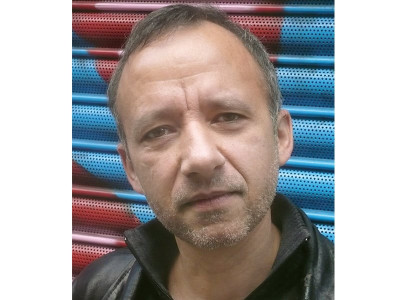
<p>When I first meet Sadakat Kadri, I have trouble believing he’s the man I’m here to see. He doesn’t seem to fit the image I had in mind. He is of medium built, has salt and pepper hair and beard and is wearing a rumpled coat. I was hoping for something sharper and more intense, something as profound as his achievements.</p>
<p>Kadri is a lawyer, author, travel writer and a journalist. I know all this because Wikipedia told me so but a bit more research reveals that this may be an understatement. Half-Finnish and half-Pakistani, Kadri is the son of the first British Muslim QC (Queens Counsel) Sibghatullah Kadri. After graduating from Cambridge with a degree in history, Kadri went on to pursue a Masters at Harvard Law School to become a member of the bar both in England and New York. He is also a human rights barrister who used to write regularly for the <em>New Statesman</em>.</p>
<p>We are meeting to talk about his new book, <em>Heaven on Earth</em>. I say new because this is the second one. The first one was <em>The Trial: A History from Socrates</em> <em>to O J Simpson</em>, which outlines the development of the criminal trial in the West. This time he’s turned his attention to the East and has written about the history of Sharia law.”I’ve always been interested in the Islamic legal world and, after the furore over the 7/7 London bombings, the issues pertaining to what the Sharia says about jihad, extremists and criminal law became even more relevant,” he explains.</p>
<p>“I tried talking to my dad about it and he didn’t know, I spoke to other Muslims and they didn’t have a clue and so I thought that there must be something worth saying about this,” he explains. “I’m not a theologian and it’s not like I’m going to explain to you what the Sharia is, because I couldn’t do that. I’m just trying to find out the answers.”</p>
<p>I’m curious to know if he found the answers after spending three years writing and three months travelling from his father’s birthplace in Northern India to Pakistan, Iran, Turkey, Syria, Lebanon and finally Egypt.</p>
<p>“My conclusion is that I don’t feel that Sharia is set in stone as people often say it is but there are important arguments that need to take place without too much anger and passion.”</p>
<p>I’m sceptical if that is even possible. Sharia is a topic that interests everyone and Kadri realised this when he attracted quite some attention the first time he spoke about it publicly. All he had said was that Islamic law can be compatible with the toughest human rights legislation in the UK and that the so-called ‘Sharia courts’ such as the Muslim Arbitration Council could serve the wider community too. But not everyone agreed.</p>
<p>“My point wasn’t that Sharia should be allowed to compete with English law. For me the concept of ‘the rule of law’ is broad enough to incorporate other systems.If people wish to have their disputes decided by Muslim scholars according to the Quran and Sunnah, there should be a provision in English law which allows them to do that, just as it allows people from other religions to do so. However, what I’m not saying is that there should be Sharia courts which have the power to rule over criminal courts.”</p>
<p>For me, one of the most notable points he makes in the book is that modern Islam is becoming more intolerant and suffocating the religion’s great traditions. I’m curious to know what made him reach this conclusion, and ask him as much.</p>
<p>“One of the great things about writing this book was finding out how confident Islam has been for so many centuries,” he replies. “This is why it did not worry about the small things because it knew exactly where it was going.”</p>
<p>Of course, things have changed since those halcyon days, and not for the better.</p>
<p>“Pakistan is a classic example. The idea that Islam may be threatened by a poor Christian woman in a village is ludicrous. Islam cannot be reduced to this. It must be bigger than that and in fact Islam has always been bigger than that. My opinion is that Islam should be building upon its great traditions rather than sentencing a woman to death for blasphemy. It is a disaster because it serves to justify all sorts of hostility at best and oppression at worst for Muslims worldwide.”</p>
<p>He justifies his viewpoint by referring to personal experience, “During my travels, I was visiting most of these countries for the first time but I’ve been going to Pakistan throughout most of my childhood and it is the country I’m most familiar with, so I can see the changes that have taken place. Pakistan has become a more difficult place for everybody. At the same time society has become more intolerant and violent but intolerance is not a function of Islam,” he notes.</p>
<p>Iran on the other hand was quite an eye opener for Kadir. “Iran has its own share of serious problems which are connected to religion just like Pakistan but the air there, it just felt freer to breathe in.”</p>
<p>I draw his attention towards Saudi Arabia because of its religious and geopolitical importance and also because this is where the strictest interpretations of Islamic law are enforced. Surely Mecca and Madina would have been the best places to visit when starting to write a book about Sharia law and its origins. Why then would he omit such an important destination?</p>
<p>Sadakat replies that he did seriously think about it, but in order to present a balanced picture he would have had to meet both critical as well as orthodox thinkers, and would have had to be transparent about the fact that he was working on a book on Sharia law. Had he admitted as much, he claims he would never have been given a visa.</p>
<p>As we talk, it becomes increasingly apparent that Sadakat’s journey was in part a personal journey as well. “I’m half-Finnish and half Pakistani but I’ve always been more interested in my sub-continental and Pakistani heritage. When I was growing up in the late 1970s, there was a lot of racism so I think my identity was formed in response to that.”</p>
<p>He seems to have an answer for just about every question, but when I ask him if he is a believer, his face scrunches up whilst he ponders and reflects at the precise choice of words for his answer. “I’m a believer but I have my doubts and I have my problems with faith but I’ve never called myself anything but a Muslim and I probably never will,” he replies at last.</p>
<p>I then ask him if the book will matter in the days to come and this time the reply is automatic as well as empathic:</p>
<p>“It matters to me!” he says and with this he bursts into laughter. “I really don’t know, but I’m glad I’ve written it and it’s out there. However I don’t claim that the book is going to change the world or win or change the terms of the debate. It’s merely a contribution to the debate.”</p>
<p><em>Published in The Express Tribune, Sunday Magazine. April 29<sup>th</sup>, 2012.</em></p>
</p>
			<br clear="all"/>
		]]>
		</description>

		<media:content width="424" height="318"
							isDefault="true" medium="image" url="http://i1.tribune.com.pk/wp-content/uploads/2012/04/370221-Sadak-1335448885-130-640x480.JPG">
			<media:title>Sadak</media:title>
			<media:description>Kadri realised his interest in Sharia when he attracted quite some attention first time he spoke about it publicly.</media:description>
			<media:thumbnail url="http://i1.tribune.com.pk/wp-content/uploads/2012/04/370221-Sadak-1335448885-130-160x120.JPG" width="160" height="120" />
      </media:content>

		<wfw:commentRss></wfw:commentRss>
		<slash:comments>12</slash:comments>
	</item>
	
</channel>
</rss>
<!-- Performance optimized by W3 Total Cache. Learn more: http://www.w3-edge.com/wordpress-plugins/

Page Caching using apc
Database Caching 17/32 queries in 0.025 seconds using memcached
Object Caching 758/845 objects using apc

 Served from: tribune.com.pk @ 2013-05-21 20:19:45 by W3 Total Cache -->