<?xml version="1.0" encoding="UTF-8"?>
<rss version="2.0"
	xmlns:content="http://purl.org/rss/1.0/modules/content/"
	xmlns:wfw="http://wellformedweb.org/CommentAPI/"
	xmlns:dc="http://purl.org/dc/elements/1.1/"
	xmlns:atom="http://www.w3.org/2005/Atom"
	xmlns:sy="http://purl.org/rss/1.0/modules/syndication/"
	xmlns:slash="http://purl.org/rss/1.0/modules/slash/"
	xmlns:media="http://search.yahoo.com/mrss/"
	>

<channel>
	<title>The Express Tribune &#187; Imran Yusuf</title>
	<atom:link href="http://tribune.com.pk/author/29/imran-yusuf/feed/" rel="self" type="application/rss+xml" />
	<link>http://tribune.com.pk</link>
	<description>Latest Breaking Pakistan News, Business, Life, Style, Cricket, Videos, Comments</description>
	<lastBuildDate>Thu, 23 May 2013 00:57:19 +0000</lastBuildDate>
	<language></language>
	<sy:updatePeriod>hourly</sy:updatePeriod>
	<sy:updateFrequency>1</sy:updateFrequency>
	<generator>http://wordpress.org/?v=3.5.1</generator>

		<item>
		<title>Brighter horizons</title>
		<link>http://tribune.com.pk/story/379628/brighter-horizons/</link>
		<pubDate>Sun, 20 May 2012 08:31:57 +0000</pubDate>

		<guid isPermaLink="false">http://tribune.com.pk/?p=379628</guid>

		<description>
		<![CDATA[
			<a href="http://tribune.com.pk/story/379628/brighter-horizons/">
				<img src="http://i1.tribune.com.pk/wp-content/uploads/2012/05/379628-earth-1337177790-548-160x120.JPG" width="160" height="120" alt="" />
			</a>
			<p><p><strong>Saima Mohsin has gone from fronting the flagship show on Pakistan’s first English-language news channel to munching stir-fried locusts in the Netherlands.</strong></p>
<p>In normal circumstances, this would be a gross image of catastrophic career decline. In Saima’s case, it represents another steep step in her upward trajectory through the international media landscape. As co-host for the new series of Horizons on <em>BBC World News</em>, her locust-crunching will be viewed by up to 300 million viewers around the world.</p>
<p><strong>Not bad for a desi girl from south London. So how did she end up working for the <em>BBC</em>?</strong></p>
<p>“It’s come full circle. I started with the <em>BBC</em>, working for radio.” Her route back to the beeb took in Channel 4 News (UK) and PBS (US). In Pakistan she is best-known as the presenter and arch-inquisitor on NewsEye, the prime-time show on <em>DawnNews</em> when the channel was in English.</p>
<p>Saima looks back on this fondly and beams with pride when people still ask her who was on the NewsEye team. Her direct style won many fans — and just as many detractors, who didn’t quite know what to make of this ballsy, no-nonsense young woman with an accent. “On NewsEye I got to be cheeky, a bit harsh at times &#8230; but that was the aim.”</p>
<p>Asked if she had to tone down her natural personality for the <em>BBC,</em> she argues horses for courses. “It’s the nuances. The art of being a presenter is doing something that’s right for the programme, but doing it in a way that’s still you.”</p>
<p>But what defines ‘you’? “I like to call myself a pick-and-mix Pakistani. My upbringing was very split, between being very British in certain ways and very Punjabi and Pakistani in others.” Living in Karachi also opened her eyes to the country’s diversity. “Where I grew up, I only had knowledge of Pakistan through a Punjabi perspective.”</p>
<p>In person, Saima is self-deprecating in the British tradition. She is also friendly and open, traits more likely to come from her Punjabi side. Her persona on NewsEye was generally markedly different, often verging into the confrontational. This, one assumes, was the deliberate journalistic persona she adopted for the programme, but on Horizons she can “have more fun.”</p>
<p>The twenty-part series will look at “businesses that are developing solutions for the future.” With the world population expected to reach a staggering nine billion in a few decades’ time, feeding and housing the world have become the central questions for development economics. Horizons, which is essentially a business programme, looks at the inspired innovations which might solve these problems.</p>
<p>“Some of them are very basic, some of them incredibly high tech, but they will really change the way we live and work,” Saima says. Surely though, like most people, she has a wearied, pessimistic approach to ‘saving the world’ when confronted with the doom-and-gloom statistics which seem to point a much more likely way to apocalypse rather than utopia.</p>
<p>She shared this view at first, “but after the very first shoot, the team and I sat down at dinner … and we said, there really is hope.” Her experiences in countries such as Scotland, the Netherlands and Kenya ranged from the “mind-blowing” to the “heart-rending” and I sense this is more than marketing so that we watch her show. My word, the hard-nosed journalist has become a believer!</p>
<p>In San Francisco, she found a company turning human waste into plastic. Saima doesn’t elaborate on the secret alchemy — we will have to watch the show — but does thank her years in Karachi as preparation for surviving the smell.</p>
<p>In Kenya, the focus was more basic, but still capable of revolutionising lives. In terms of water usage, mobile money solutions can make root-and-branch changes in the economic structure, so that wells are better maintained and there is secure accountability — thus allowing those who previously had to walk twenty, thirty kilometres to get water to now receive it in their own village. “I met a woman who went back to college and is now a social worker.” Previously, the woman had spent all day walking miles and miles to fetch water and then walking the long journey back to bring it back home.</p>
<p>Telling these stories from these different locations sounds daunting. “I’ve never done a feature programme before, or a specific business show before. It’s a huge challenge, but I’m working with a professional organisation … it’s phenomonal to have that massive machine that works behind you.”</p>
<p>After this environment of expertise and professionalism, could she ever work in Pakistan again?</p>
<p>“Working for the <em>BBC</em> is a real privilege.” But she also acknowledges that Pakistan is, in many ways, where it’s at. After all, after the Osama bin Laden raid in May 2011, Saima found herself on six different networks, telling the story to people around the world. “Pakistan, as my friend says, is the story that keeps on giving.”</p>
<p>Her freelance career has allowed flexibility, after she let go of a staff job for the first time in her career. “Sometimes you have to feel the fear and take that leap of faith.” Things have worked out well, but will she return to Pakistan on a permanent basis?</p>
<p>“I have lots of plans for Pakistan,” she says with deliberate enigma. Does she mean politics? After laughter and thought for perhaps a beat too long, she replies with a firm no. “Once a journalist, always a journalist.”</p>
<p>And now to those locusts. In the Netherlands, scientists are figuring out alternatives to conventional farming, as a way of countering food scarcity. “They’re making the world’s most expensive burger,” Saima says, estimating the cost at 250,000 Euros. The reason for the colossal price? They’re making it out of a test-tube. “I did ask if it was halal,” Saima jokes.</p>
<p>And then they made her eat locusts — which are a great source of protein. How are they prepared? “You can have them dry, or in a stir-fry which is how I had them.” They weren’t bad, apparently.</p>
<p>Saima, who was off to India that night for the final leg of shooting, says she believes in being the best one can be, as “that’s what my family taught me”. For some Pakistanis, that will be more than good enough, as they tune in to watch what sounds like a fascinating series. For others, for whom Saima is not their cup of tea, well, they can always hope the ban on <em>BBC World News</em> comes back into action.</p>
<p><em>Published in The Express Tribune, Sunday Magazine, May 20<sup>th</sup>, 2012.</em></p>
</p>
			<br clear="all"/>
		]]>
		</description>

		<media:content width="424" height="318"
							isDefault="true" medium="image" url="http://i1.tribune.com.pk/wp-content/uploads/2012/05/379628-earth-1337177790-548-640x480.JPG">
			<media:title>earth</media:title>
			<media:description>Being a presenter is doing something that’s right for programme, but doing it in way that’s still you: Saima Mohsin.</media:description>
			<media:thumbnail url="http://i1.tribune.com.pk/wp-content/uploads/2012/05/379628-earth-1337177790-548-160x120.JPG" width="160" height="120" />
      </media:content>

		<wfw:commentRss></wfw:commentRss>
		<slash:comments>4</slash:comments>
	</item>
		<item>
		<title>Short story: The odour of in-flight entertainment   </title>
		<link>http://tribune.com.pk/story/377166/short-story-the-odour-of-in-flight-entertainment/</link>
		<pubDate>Thu, 10 May 2012 19:51:56 +0000</pubDate>

		<guid isPermaLink="false">http://tribune.com.pk/?p=377166</guid>

		<description>
		<![CDATA[
			<a href="http://tribune.com.pk/story/377166/short-story-the-odour-of-in-flight-entertainment/">
				<img src="http://i1.tribune.com.pk/wp-content/uploads/2012/05/377166-Manto-1336679368-256-160x120.JPG" width="160" height="120" alt="" />
			</a>
			<p><div>
<p><strong>Randhir boarded the plane and thought, <em>flying to Lahore is a refresher course in Pakistan</em>.</strong></p>
</div>
<p>He was pressed in at kissing distance, toxified by the cabin’s cocktail of biryani breath and anxious perspirations. His ears popped to medieval Arabic, infant cries, ringtones of lukewarm pop, the whispered sighs of an air hostess. He touched someone and did not need to say sorry. He stared into a soul and saw a sexagenarian foetus, dancing bhangra to the honks of small cars.</p>
<p>Among the passengers were old men in pyjamas and sweaters. Chubby families with bulging hand-luggage, thin on conversation. Ageing women with a fragrance you could bottle and brand ‘the wardrobe of melancholy’. Earnest MBAs, long since closed off to the mess beyond their noses, dreaming of a quiet air-conditioned patch. Over-groomed young women who glide above them all on the magic carpet of birthright. And so many young men, watching and internalising without articulation.</p>
<p>And this time there was Randhir, returning to the country he neither loved nor hated nor prayed for. It was enough to live there.</p>
<p>Randhir walked to his aisle seat in the middle row but found it filled by a woman. She wore a burqa, which did not concern Randhir. What did concern him was the man sat next to her whose eyes beamed out with menace like a car’s headlights in the dark.</p>
<p>“I think this is my seat,” Randhir said to the woman.</p>
<p>“Sir here, young man,” said the man, nodding at the empty seat on his other side.</p>
<p>“Sorry, uncle, but I asked for an aisle seat.”</p>
<p>“Sorry, son, but she is a woman.”</p>
<p>A silent stand-off ensued while the pre-flight chaos raged around them. The flight attendants were too busy. The nearby passengers watched but pretended not to. The diplomats were in first class.</p>
<p>After a while Randhir told the man, “Look, I can have the aisle seat and she can sit next to me and you can budge up,” but his failing words trailed off in their impotence. Somehow it was impossible to use other words like <em>I am a man like you. I mean no more harm to your woman than you do. You do not need to be a buffer between your woman and the world. Not today, not here. I need the aisle seat because I have air sickness and need a quick exit route. The only threat I pose to your woman is projectile vomiting and with your actions you only increase this threat.</em></p>
<p>Randhir took a lap of defeat and entered the row from the other side. He nudged past the man in the far aisle seat, who had thoroughly enjoyed the scene, and tucked in next to the man with the beaming eyes.</p>
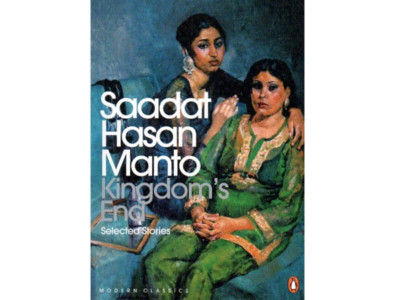
<p>Just before chai was served Randhir reached for his bag and took out a book. It was the Penguin Modern Classics edition of the <em>Selected Stories of Saadat Hasan Manto</em>. He read for a while and sensed the man scanning the book over his shoulder.</p>
<p>It seemed the man was looking at the front cover rather than the words so Randhir angled the book to provide a better view. It had a painting by Iqbal Hussain of two prostitutes whose beauty and melancholy enhanced each other. The man was now staring. His wife was snoring through her burqa.</p>
<p>Randhir put down the book. “Sir, are you looking at something?”</p>
<p>The man’s nose crinkled. “Yes, that woman,” he said. “On the left.”</p>
<p>Randhir looked at the cover and then at the man. He searched the man’s face and found nothing. “Do you like her?”</p>
<p>“I think I know her,” said the man</p>
<p>“This is a painting on the cover of a book!”</p>
<p>“It was a long time ago, after the monsoons had come, and the rain would fall on the leaves of the peepal tree outside my window.”</p>
<p>Randhir looked at the woman in the painting. “What happened to her?”</p>
<p>The man breathed deeply. “What do you think?”</p>
<p>“She became your wife?”</p>
<p>At this the man looked at Randhir with the same expression as the woman in the painting, his eyes like two pots of dark ink which had run dry.</p>
<p>Landing at dawn, the plane’s doors flung open to a stairway to asphalt and Randhir breathed in the odour of Pakistan. In one whiff you could trace whatever you were looking for.</p>
<p>He was back on the soil of the country he neither loved nor hated nor prayed for. It was enough to live there.</p>
<p><em>Published in The Express Tribune, May 11<sup>th</sup>, 2012.</em></p>
</p>
			<br clear="all"/>
		]]>
		</description>

		<media:content width="424" height="318"
							isDefault="true" medium="image" url="http://i1.tribune.com.pk/wp-content/uploads/2012/05/377166-Manto-1336679368-256-640x480.JPG">
			<media:title>Manto</media:title>
			<media:description></media:description>
			<media:thumbnail url="http://i1.tribune.com.pk/wp-content/uploads/2012/05/377166-Manto-1336679368-256-160x120.JPG" width="160" height="120" />
      </media:content>

		<wfw:commentRss></wfw:commentRss>
		<slash:comments>5</slash:comments>
	</item>
		<item>
		<title>Nadhim Zahawi, Part 2/2: The son of Iraqi Kurds who now represents Shakespeare country </title>
		<link>http://tribune.com.pk/story/375727/nadhim-zahawi-part-22-the-son-of-iraqi-kurds-who-now-represents-shakespeare-country/</link>
		<pubDate>Tue, 08 May 2012 07:21:32 +0000</pubDate>

		<guid isPermaLink="false">http://tribune.com.pk/?p=375727</guid>

		<description>
		<![CDATA[
			<a href="http://tribune.com.pk/story/375727/nadhim-zahawi-part-22-the-son-of-iraqi-kurds-who-now-represents-shakespeare-country/">
				<img src="http://i1.tribune.com.pk/wp-content/uploads/2012/05/375727-NadhimZahawi-1336461564-331-160x120.jpg" width="160" height="120" alt="" />
			</a>
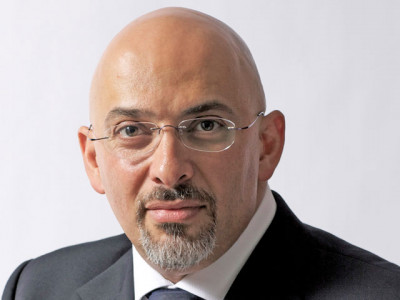
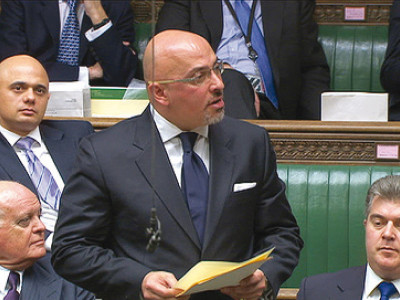
			<p><p><strong><strong class='location'>LONDON:&nbsp;</strong>Nadhim Zahawi looked a fresh face for the Conservative party when he won his seat in the 2010 general election. This was particularly so because he became the Member of Parliament for Stratford-on-Avon, where, by his own admission, most people were not sure how to pronounce his name.</strong></p>
<p>In truth, Nadhim has been a party member for decades. “I became an activist in the fundamental years of Margaret Thatcher,” he says, referring to the former prime minister’s privatisation programme and epic battles with the unions.</p>
<p>It’s a similar situation now: the Conservatives have embarked on a massive reform agenda. Nadhim points out areas such as education, energy and welfare, where his party “are seen to be much more in tune with where the nation is at.”</p>
<p>This may be true in some quarters, but in others the cuts to public spending have drawn furious indignation. Nadhim defends his party’s tough decisions, even keeping a portrait of Thatcher above his desk, “to remind me how radical she had to be to get this country working again.”</p>
<p>Some have accused the government of doing too much too quickly. “One thing you learn about this business is that it’s such a massive machine,” he says, looking around the large atrium, where a few tables away the former foreign secretary David Miliband is chatting amiably. “The momentum that you have as the new government … you really have to try and drive through as much of your agenda as you can. Otherwise you are pulled back down by the inertia of the machine.</p>
<p>Further afield, Iraq still holds a passionate place in his heart (his parents are Kurdish and he was born in Baghdad). Although Nadhim stresses that he doesn’t speak for the foreign office, he takes a firm yet long-term view on politics in the region.</p>
<p>“It’s important to send a clear message to those who believe in the rules of democracy, i.e. that when you’re elected, you’re elected on a manifesto, and if you don&#8217;t deliver and are voted out, you need to let someone else have a go.</p>
<p>&#8220;We are on the side of those parties that want to enhance and grow democratic institutions – the judiciary, an independent media, the rule of law, the whole thing. We will absolutely stand against those parties who use democracy to subvert the process, those who use democracy to destroy it.”</p>
<p>His perspective, it seems, is grounded in a study of history and also an awareness of the ground realities: both that the energy of the Arab Spring needs legitimate outlets, and that religious parties are unavoidable in the short term.</p>
<p>“The popes 500 years ago ruled Europe with an iron fist in a velvet glove. The same thing is happening in parts of the Middle East.</p>
<p>“Initially, people who aren’t used to using the ballot box to change their community and their country will vote for the person they think can protect them or put food on the table. We’re going to have to take a very long view on this. It took us 713 years go from the Magna Carta to having a fully functional democracy in this country, in 1928. I don’t think it will take the region 713 years but it will take a while.”</p>
<p>Back home, he clearly enjoys the buzz of Westminster and says he still pinches himself when walking its halls. “I just hope I can do some good,” he says, but what are his political ambitions?</p>
<p>“I&#8217;d like to be famous for being the secretary of state for Stratford-on-Avon.” This seems to be his priority, with his business career largely on hold. When Parliament sits, Nadhim spends Monday to Thursday in London. On Friday he travels to his constituency to meet the people he represents, returning to the capital on Monday morning.</p>
<p>In the House of Commons, he sits a few rows back from the Prime Minister, right next to Father of the House, Sir Peter Tapsell, who was a junior speechwriter for Winston Churchill and has been a great friend, raconteur and guide for the ‘new boy’ MP. Will Nadhim one day edge closer to the despatch box, as part of the cabinet or perhaps even in the main job itself? It’s early days, but as he says his goodbyes with the warm handshake possessed by those with the natural touch for politics, one can say one thing for sure: Nadhim Zahawi is one to watch. Remember the name – and learn how to pronounce it.</p>
<p><em>Part 1 can be read <a href="http://tribune.com.pk/story/372855/nadhim-zahawi-part-12-meet-britains-first-middle-eastern-origin-mp/">here</a>.</em></p>
</p>
			<br clear="all"/>
		]]>
		</description>

		<media:content width="424" height="318"
							isDefault="true" medium="image" url="http://i1.tribune.com.pk/wp-content/uploads/2012/05/375727-NadhimZahawi-1336461564-331-640x480.jpg">
			<media:title>Nadhim-Zahawi</media:title>
			<media:description>Nadhim Zahawi, from a Kurdish background, is MP for Stratford-on-Avon. PHOTO: THE CONSERVATIVE PARTY</media:description>
			<media:thumbnail url="http://i1.tribune.com.pk/wp-content/uploads/2012/05/375727-NadhimZahawi-1336461564-331-160x120.jpg" width="160" height="120" />
      </media:content>

		<wfw:commentRss></wfw:commentRss>
		<slash:comments>0</slash:comments>
	</item>
		<item>
		<title>Nadhim Zahawi, Part 1/2: Meet Britain’s first Middle Eastern-origin MP</title>
		<link>http://tribune.com.pk/story/372855/nadhim-zahawi-part-12-meet-britains-first-middle-eastern-origin-mp/</link>
		<pubDate>Wed, 02 May 2012 04:50:27 +0000</pubDate>

		<guid isPermaLink="false">http://tribune.com.pk/?p=372855</guid>

		<description>
		<![CDATA[
			<a href="http://tribune.com.pk/story/372855/nadhim-zahawi-part-12-meet-britains-first-middle-eastern-origin-mp/">
				<img src="http://i1.tribune.com.pk/wp-content/uploads/2012/05/372855-photo-1335904226-187-160x120.JPG" width="160" height="120" alt="" />
			</a>
			<p><p><strong><strong class='location'>LONDON:&nbsp;</strong>To be Britain’s first Member of Parliament of Middle Eastern origin is a big deal in itself. In the geopolitical context of the 21<sup>st</sup> century, it has potentially epochal significance.</strong></p>
<p>But Nadhim Zahawi, unlike many ethnic minority politicians before him, does not exploit his family background for professional gain. He thinks those who dwell on such issues are outdated and out-of-touch. On the ground, he argues, Britain is now by and large a post-racial society.</p>
<p>“People in this country are truly colour-blind,” Nadhim tells <em>The Express Tribune</em> in Portcullis House, the parliamentary office building connected to the House of Commons by an underground tunnel, circumventing the gaping tourists at street-level. “Put aside my own selection, but I got 51% of the vote in an eight-horse race. Before that election, they couldn&#8217;t pronounce my name.”</p>
<p>This is a reference to the 2010 general election when he stood for the Conservative party in Stratford-on-Avon, an overwhelmingly white, middle-class constituency. One might already think of such a place as symbolising the heart of England; that it houses the birthplace of William Shakespeare lends further weight. It’s a wonderful British story that the new local MP is the son of Iraqi Kurds.</p>
<p>Yet over the last few years there has also been angst of Hamlet-like proportions over the meaning and application of multiculturalism in Britain. Nadhim remains unhappy with the previous government’s lax approach to immigration. “If you are going to settle in this country, as my parents did, then by definition you must like something about that country. Therefore it can only be right that you attempt to integrate, not necessarily by acting against your own religious or cultural beliefs, but you can marry the two, so you are part of the society that has welcomed you in the first place.</p>
<p>&#8220;We went too far down the road of segregation almost, not asking anyone to do anything that may in some way offend them &#8230; that was a terrible indictment of the Labour government.”</p>
<p>Government has its role to play but, true to classical liberal principles, Nadhim ultimately calls on the individual to take responsibility for himself. It’s easy to see why. He himself radiates a can-do attitude. In addition to serving his constituency and sitting on the Business, Innovation and Skills select committee, he recently co-authored a book, <em>Masters of Nothing</em>, about how understanding human behaviour is the key to ensuring no repeat of the global financial crisis.</p>
<p>For this he may have drawn on his biggest achievement to date, building the on-line market research and polling business YouGov over eleven years. Does he think a strong business background is good preparation for life as an MP?</p>
<p>“In business there is a predictability to your life. There is very little structure in this place, you very quickly have to cancel your whole diary because of events in the chamber. I quite like it because of the challenge.</p>
<p>“I took a start-up and failed, then had a start-up which succeeded, taking it all the way to the public market. So I learnt about access to finance, retaining human resources … it was a fantastic learning curve to the whole cycle of business. But the time I spent in local government was also very useful, because it’s a mini version of this place.”</p>
<p>In many ways, Nadhim grew up in the Conservative party, in Conservative politics. He became a member at university in the early 1980s. His main concerns till this point had been, like most young men, partying, and, like very few young men, equestrianism.</p>
<p>But in his first week at college he encountered someone from the Socialist Workers Party handing out magazines outside the University of London Union. “I politely rejected it, at which point he decided he was going to beat me up.” The man had clocked Nadhim as a bourgeois enemy – even though, as it happens, Nadhim’s family was going through a very rough financial patch at the time – and so he decided “to find out what the other side thought.”</p>
<p>In tomorrow’s second part, we’ll find out how Nadhim then went on to ‘grow up’ in the Conservative party, his views on democracy in Muslim countries, and the scale of his political ambitions.</p>
<p><em>Part 2 can be read <a href="http://tribune.com.pk/story/375727/nadhim-zahawi-part-22-the-son-of-iraqi-kurds-who-now-represents-shakespeare-country/">here</a>.</em></p>
<p><em>Published in The Express Tribune, May 2<sup>nd</sup>, 2012.</em></p>
</p>
			<br clear="all"/>
		]]>
		</description>

		<media:content width="424" height="318"
							isDefault="true" medium="image" url="http://i1.tribune.com.pk/wp-content/uploads/2012/05/372855-photo-1335904226-187-640x480.JPG">
			<media:title>photo</media:title>
			<media:description>Nadhim Zahawi presents the St George’s Day bill to Parliament. PHOTO: UK PARLIAMENT
</media:description>
			<media:thumbnail url="http://i1.tribune.com.pk/wp-content/uploads/2012/05/372855-photo-1335904226-187-160x120.JPG" width="160" height="120" />
      </media:content>

		<wfw:commentRss></wfw:commentRss>
		<slash:comments>0</slash:comments>
	</item>
		<item>
		<title>Mobile world congress: The future will be lived in loudspeaker mode  </title>
		<link>http://tribune.com.pk/story/351749/mobile-world-congress-the-future-will-be-lived-in-loudspeaker-mode/</link>
		<pubDate>Sun, 18 Mar 2012 20:02:41 +0000</pubDate>

		<guid isPermaLink="false">http://tribune.com.pk/?p=351749</guid>

		<description>
		<![CDATA[
			<a href="http://tribune.com.pk/story/351749/mobile-world-congress-the-future-will-be-lived-in-loudspeaker-mode/">
				<img src="http://i1.tribune.com.pk/wp-content/uploads/2012/03/351749-peoplePHOTOREUTERS-1332084621-771-160x120.jpg" width="160" height="120" alt="" />
			</a>
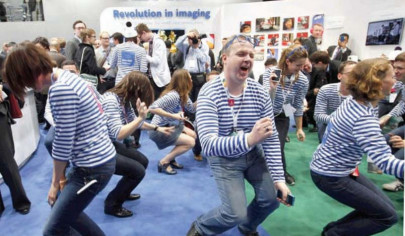
			<p><div><strong class='location'>BARCELONA / KARACHI:&nbsp;</strong>
<p><strong>The central issue was clear to me at 8:30am on the first day of the <a href="http://tribune.com.pk/story/350964/geek-guide-mobile-world-conference-review-2012/">Mobile World Congress, the top annual conference for mobile phones and related technology</a> which was held in Barcelona last month.</strong></p>
</div>
<p>Hundreds of journalists had assembled in the Nokia hall, at which the Finnish giants would announce their award-winning 41-megapixel camera phone to much fanfare. Before all that we waited mutely, watching a slideshow.</p>
<p>The series of images were all highly likeable – in the Facebook sense. Achingly cool dudes and dudettes were doing fun stuff, from partying to rock-climbing to … posing. The accompanying music was intended to convey adventure, spirituality and connectedness: think Moby in a good mood. The message was clear. These were experiences, this was life and Nokia was the enabler.</p>
<p>The power of mobile as enabler, the consequences of mobile as enabler, were the thrilling issues over the four-day conference.</p>
<p>The first thing to realise was that all the decisive work was being done elsewhere, in tech labs far far away. This place was largely just front and suits.</p>
<p>Around 67,000 people flew in for the conference and most were literally wearing a suit, as most were men. Several booths – there were 1,400 exhibitors – were manned by women, but, as an investment banker from London confirmed, most of these not-quite-models were hired specially for the event. All of this gave the impression that for much of the time this was four days of boys with their toys.</p>
<p>And when boys get to play, they make their own language. In every industry, language takes on a dialect of its own, but because mobiles are penetrating our lives with such intensity, the words matter more. Soon they will be as much a part of our kitchen-table conversations as ‘pass the butter’.</p>
<p>For example, when a Nokia executive says the “mission is to create a third ecosystem”, he is not suggesting a revolutionary programme for tree-planting. What’s more, it is always  ‘consumers’, never ‘people’. The forms, however, are very human: the power of narrative obsesses the mobile marketers. I heard at least three execs press home the key point in gaining competitive advantage: “Who is telling the most compelling story?” is what they wanted to know. The best stories will win the most consumers.</p>
<p>The stories at the MWC were varied, as each company elbowed out the other to show they were different, and by extension better.</p>
<p>Asus had their phone which also slots into a tablet, like a docking station. Samsung were highly visible with their Galaxy Note 10.1, setting up marquees in which artists-for-rent drew sketches with their new high-tech pens. Bang &amp; Olufsen had a phone which doubled up as your hi-fi remote, with gesture controls allowing you to change volume or track with a twirl of your fingers. Samsung also revealed their Galaxy Beam, which projects images onto walls, meaning a powerpoint presentation is always there, ready, lingering in your pocket.</p>
<p>Meanwhile, Fujitsu want you to know their phones are waterproof. Employees dropped mobiles in aquariums before taking them out and talking without hindrance. This is not just to protect phones from rain or spilled drinks, by the way, as waterproof phones, one learnt, are a huge market in Japan, where women love to dial in the shower.</p>
<p>Mobiles will also change the way we drive. Bill Ford, the great grandson of Henry Ford, spoke about how we need to view “vehicles on the road the same way we look at smart phones, laptops and tablets – as pieces of a much bigger, richer network.” This was the first time I would hear of ‘artificial intelligence’ but not the last. This is the vision: that more brainy devices will make life easier as they ‘read’ what we like and what we do.</p>
<p>In traffic terms, this can reduce congestion and even, some day, create self-driving cars. The changes will bring about a “fundamental transformation for the future of our children,” said one automobile exec. What those are and who will make them, as I would discover continually, nobody can say for sure.</p>
<p>Medical advancements are another big area for mobiles. Biometrics will be able to diagnose many of our health concerns, with some developers confirming their vision for sci-fi to enter the mainstream – more specifically the bloodstream – with devices under our skin, monitoring our blood pressure and other health indicators.</p>
<p>Less disturbing is the idea of reminders via SMS for vaccinations, ultrasound imaging, and apps alerting others of signs of distress in elderly patients.</p>
<p>Over <em>patatas bravas</em> in one of the conference’s outdoor dining areas, a developer at a leading mobile firm told me that even the size of our hands could change, as man and mobile become interlinked. Leaving aside evolutionary changes which could take millennia, the question of suitable size and form for phones still lingers.</p>
<p>The mobile companies seem torn between tablet and phone; Nokia itself seems to have an actual strategy of blurring the lines between feature phones and smartphones. In short, some think, everything is gradually merging to become one: business and pleasure, friends and strangers, mind and body and mobile.</p>
<p>But prior to all this, there are advances within parameters we already know about. Winner of the MWC’s ‘Best New Mobile Handset, Device, or Tablet’ was the Nokia 808 PureView, for one reason only: its whopping 41 megapixels cameraphone.</p>
<p>The gushing, the whoops, the breathless excitement when Nokia announced the magic 41 number was perhaps the most animated moment of the conference. Nokia are an interesting case study. As they work on their transfer to Windows mobile, the company has essentially started from scratch, building on their history but accepting that they require a whole new approach of innovation to keep up with Apple and the rest.</p>
<p>The Canadian Stephen Elop, the first non-Finn to be CEO of Nokia, said that with “smarter mobile phones and an array of new services, we are demonstrating that we can change the clock speed of Nokia.”</p>
<p>Watching the smiling, confident Finnish duo who did most of the development on the PureView celebrate the launch, he could be right. They look busy; more so, they look like they’re thoroughly enjoying it.</p>
<p>But then, carried away on megapixels, one was also reminded of the outside world. The four-day event brought in more than 300 million Euros to the Catalan economy, but this will not be enough, judging by the violent protests which reached the gates of the MWC on the third day.</p>
<p>Riot police had to be called in as students protested austerity cuts in the education services, a reminder that for a majority of people, none of this matters. In Spain, youth unemployment is at 50%. These people don’t want a smartphone, they want a job.</p>
<p>The executive chairman of Google, Eric Shmidt, was certainly aware of this, reminding the congress in his keynote address that for five out of seven billion humans, “the web is still a scarce resource.”</p>
<p>Yet still, the congress was awed when Spain’s Telefonica operator turned on an LTE network in Barcelona. Fourth generation (4G) technology is imminent and will be based on this LTE technology. Companies realise, however, that the real market expansions are in developing counties, markets such as Pakistan where for most people the digital revolution has not arrived, but may do before the information revolution arrives. One executive foresaw a cashless society, where all our banking, all our transactions, would be mobile.</p>
<p>In 1907, the French writer Charles Peguy said that despite all the miraculous inventions in the communications sphere, “it will always be only the temporal earth … it will always be the carnal earth.”</p>
<p>After the Mobile World Congress, one can no longer say if he was correct. The truth is that neither can the mobile phone makers. Nobody knows anything for certain, other than we are moving, at rapid speed, into an ultra-mobile future.</p>
<p><em>Published in The Express Tribune, March 19<sup>th</sup>, 2012.</em></p>
</p>
			<br clear="all"/>
		]]>
		</description>

		<media:content width="424" height="318"
							isDefault="true" medium="image" url="http://i1.tribune.com.pk/wp-content/uploads/2012/03/351749-peoplePHOTOREUTERS-1332084621-771-640x480.jpg">
			<media:title>people-PHOTO-REUTERS</media:title>
			<media:description>Employees of Finnish mobile company Nokia show off their new phones. PHOTO: REUTERS
</media:description>
			<media:thumbnail url="http://i1.tribune.com.pk/wp-content/uploads/2012/03/351749-peoplePHOTOREUTERS-1332084621-771-160x120.jpg" width="160" height="120" />
      </media:content>

		<wfw:commentRss></wfw:commentRss>
		<slash:comments>0</slash:comments>
	</item>
		<item>
		<title>The new Europeans: Trimming beards and selling beer in Barcelona </title>
		<link>http://tribune.com.pk/story/346097/the-new-europeans-trimming-beards-and-selling-beer-in-barcelona/</link>
		<pubDate>Tue, 06 Mar 2012 01:08:37 +0000</pubDate>

		<guid isPermaLink="false">http://tribune.com.pk/?p=346097</guid>

		<description>
		<![CDATA[
			<a href="http://tribune.com.pk/story/346097/the-new-europeans-trimming-beards-and-selling-beer-in-barcelona/">
				<img src="http://i1.tribune.com.pk/wp-content/uploads/2012/03/346097-barca-1330995189-915-160x120.jpeg" width="160" height="120" alt="" />
			</a>
			<p><div><strong class='location'>BARCELONA:&nbsp;</strong>
<p><strong>Ask the Pakistanis of Barcelona why they chose this city over other European options and two answers dominate. Firstly, it’s warmer and brighter than the pale-skied Anglo-Saxon north of the continent. Secondly, of more significance, it takes three years for a Pakistani to get a full work permit.</strong></p>
</div>
<p>A fair amount of time, but having your ‘papers’ means you’re set, including full entitlement to state benefits. The trouble, as I found out from a lonesome Pakistani, aged thirty and too embarrassed to want his name printed, is how to survive the three years as an illegal worker.</p>
<p>At midnight on a week day, the man was on the street selling cans of beer to those keen on prolonging their merriment through swerving walks around town going from bar to club. His body and face sagged, but his eyes were alert predators: watching for customers and, with more animation, the police. It could be worse, he said, telling of friends who had worked in sweat shops on the city’s periphery. “The situation at home is so bad. This is bad too but it will be better in the future,” the beer-seller said, swinging his four-pack like the pendulum of a clock.</p>
<p>During the day in El Raval, the central part of Barcelona which is home to many Pakistanis, time seemed to stand still. It was perhaps siesta time. Prostitutes waited with bare-faced boredom, underemployed men stood about holding up the walls, Pakistani immigrants sat in barbershops, talking.</p>
<p>S Ali, 25, said he “would love to go home” though he might be forced to for reasons unforeseen when he moved here a few years ago. Business has steadily declined since the financial crash and everyone is feeling the pinch. Ali is struggling to pay his bills. Rents are about 550 Euros for a two-bedroom flat, which is often shared by four to six men.</p>
<p>He’s also furious with PIA, who despite running two direct flights in and out of Barcelona every week, are still more expensive than other airlines, in his view. They are prohibitively expensive, Ali says; thus he has not been able to go home and see his family.</p>
<p>The other characters gathered in the barbershop are also unhappy with the Pakistani Consulate in Barcelona, specifically set up to deal with the growing numbers in the city. For one, a 58-year-old man who has full legal status and sings the praises – indeed, dances flamenco – when he speaks about the Spanish government, it is like “being back in a piece of Pakistani land” with its inefficiency and bureaucracy.</p>
<p>There’s less indignation, more incomprehension, about the 2008 raids in the city in which a dozen Pakistanis were arrested for suspected involvement with al Qaeda. Four years on, the community feels that its image took a big blow – but this was only temporary. There are five small mosques in the area and, considering the tilt towards Islamophobia in Europe, Pakistanis in Barcelona seem very comfortable in practicing their faith and customs. Those around them, by and large, seem equally at peace.</p>
<p>El Raval is, ever so slowly, becoming gentrified. At a chic café, the owner, a Spaniard in her fifties, says she likes and respects the Pakistani community, but can’t say she really knows them. “They work and they stick to themselves.” In a generation, this partition might perhaps have been eroded. For now, peaceful if not intermingled coexistence is surely good enough.</p>
<p>Meanwhile, Jagjeet Singh, 30, says that in Barcelona it is as if Partition never happened, describing the life of Indians and Pakistanis in El Raval. His is a modern epic, though to many immigrants in Western Europe it is as banal as it is typical and horrible.</p>
<p>Five years ago, as a poor man “who had nothing in the world”, Jagjeet left his native Faridkot in Indian Punjab for Delhi. He took a flight to Ethiopia. From there he made his way to West Africa, and from there to Tenerife, an island belonging to Spain. Trying his hand at street-hawking for sheer survival, he was arrested for working illegally. Released four months later, he flew to Barcelona and started the long journey to legality. He now owns two barbershops in El Raval – I can testify that he trims a beard with the care of a man who has had more than a few scrapes in his life.</p>
<p>For Jagjeet, “everyone is together here, Indian, Pakistani, Punjabi, Kashmiri.” Pointing to a man he was just bantering with in Punjabi, he says: “Look at him, he is from Pakistan.” The friend laughs and says, in accented Spanish, “I am from Barcelona.” They high-five as men from the subcontinent do when sharing a joke, before carrying on their lives as the new Europeans.<br />
<em></em></p>
<p><em>Published in The Express Tribune, March 6<sup>th</sup>, 2012.</em></p>
</p>
			<br clear="all"/>
		]]>
		</description>

		<media:content width="424" height="318"
							isDefault="true" medium="image" url="http://i1.tribune.com.pk/wp-content/uploads/2012/03/346097-barca-1330995189-915-640x480.jpeg">
			<media:title>barca</media:title>
			<media:description>Pakistanis in Barcelona seem very comfortable in practicing their faith and customs. Those around them, by and large, seem equally at peace. PHOTO: AFP</media:description>
			<media:thumbnail url="http://i1.tribune.com.pk/wp-content/uploads/2012/03/346097-barca-1330995189-915-160x120.jpeg" width="160" height="120" />
      </media:content>

		<wfw:commentRss></wfw:commentRss>
		<slash:comments>18</slash:comments>
	</item>
		<item>
		<title>Los Pakistaníes de Barcelona</title>
		<link>http://tribune.com.pk/story/345632/los-pakistanies-de-barcelona/</link>
		<pubDate>Mon, 05 Mar 2012 00:31:54 +0000</pubDate>

		<guid isPermaLink="false">http://tribune.com.pk/?p=345632</guid>

		<description>
		<![CDATA[
			<a href="http://tribune.com.pk/story/345632/los-pakistanies-de-barcelona/">
				<img src="http://i1.tribune.com.pk/wp-content/uploads/2012/03/345632-PoeplePHOTOFILE-1330895723-238-160x120.jpg" width="160" height="120" alt="" />
			</a>
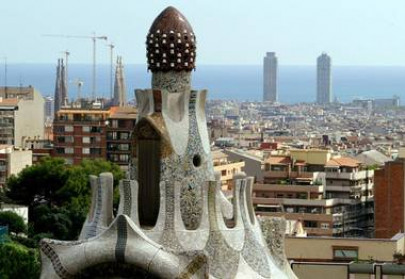
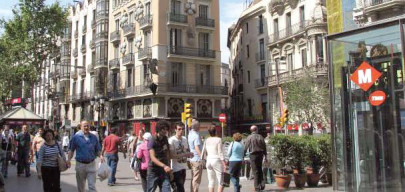
			<p><p><strong><strong class='location'>BARCELONA:&nbsp;</strong>El Raval is in <em>el centro</em> of town but it’s the one area avoided by tourists in Barcelona. What a timid creature is the modern sightseer, for El Raval is a fascination, packed as it is with pimps, prostitutes, peddlers of drugs and doner kebabs, and Pakistanis.</strong></p>
<p>Of this last sector, official statistics put the number between 15,000 and 35,000. Either way, this gives Barcelona the largest Pakistani population in any city in Europe outside the UK. Most of them live or work (or both) in El Raval and their main businesses are barbershops, fast food, mobile phones, net cafes and minimarts.</p>
<p>The pimping and peddling of less halal services is done by everyone else: the Morrocans, East Europeans, Romanians and others of seemingly untraceable origin. Not everyone is an immigrant; on the pavement outside a Pakistani butcher stood a Spanish woman. She was also in the meat business, advertising her goods to all male passersby with a word and a wink.</p>
<p>Ehsan Butt, 42, says that despite different attitudes to work, life, love and the universe, everyone gets along in El Raval. He says that there was more local violence five years ago, but tougher policing has forced it out. Butt feels there is ‘thora bohut’ racism in Barcelona, but passes this off as something you’ll find in every country – in fact, much more so in Pakistan, he admits.</p>
<p>Butt has just set up his own doner kebab shop and been in Spain for almost a decade, yet he still feels his destiny is joined to Pakistan. He spends all his leisure time watching news channels from back home on satellite TV. “Inshallah we will go back to Pakistan one day,” he says, before unleashing a well-rehearsed tongue-lashing against the Pakistani media for sensationalism and manipulation. He then moves on to the politicians and the army and, <em>naturalmente</em>, the cricket team. You can take the Pakistani out of Pakistan … and so on.</p>
<p>Margarita, an interpreter who said <em>adios</em> to her native Sweden 30 years ago after falling instantly for Barcelona’s numerous charms, thinks Pakistanis are much-loved by everyone in the city. Her reason is far from romantic, though it is credible for its honesty: “They keep their shops open even on Sundays, all day, when there’s nowhere else to buy bread and milk.” Ehsan Butt substantiated her praise, saying his countrymen also opened for business on Eid. You can take the Pakistani out of Pakistan … and very often he will thrive.</p>
<p>Mohammad Arif, 38, seems to be doing just that. His MSc in Physics and MBA from colleges in Lahore couldn’t land him a decent job in Pakistan. In Barcelona life has been better for the Gujrat native, judging from the steady stream of customers in and out of his mobile phone shop.</p>
<p>Asked about his location, Arif says the rent is relatively cheap and its proximity to the centre is an advantage. Although this is a bright mid-afternoon, a lady of the night totters by with a dishevelled customer hurrying behind her. “Where there is gandi there is opportunity,” Arif says.</p>
<p>He then turns to a Spanish man attempting an unreasonable bargain with one of the shop assistants. Arif says <em>Que pasa, tio</em>? (what’s happening, uncle?) with an aggressive laugh and the price is soon fixed.</p>
<p>Arif’s motive for moving is shared by all. “We came here out of necessity,” a young barber says. He is unmarried but those with families are facing tougher times. “The costs of living have gone up but we are earning less, so many who wanted to bring their children now cannot, as it will be too expensive,” says S Ali, 25, in a thick Punjabi accent.</p>
<p>Most of the Pakistanis in Barcelona are Punjabis. And most of these are from the district of Gujrat. The spirit of community is strong. In the barbershop, a white man with a dirt-covered face and tattered clothes poked his head around the door and asked if anyone had a cigarette. By the time the Pakistanis had all said no the man had found a discarded cigarette on the floor and lit up, grinning. The broad, proud, moustachioed 58-year-old barbershop owner said that “our people would never do this. Whatever happens, our people help each other out and we stay dignified.”</p>
<p>In tomorrow’s concluding part, we will see how that dignity was tested during raids in El Raval for suspected al Qaeda terrorists in 2008. We will also hear complaints about the Pakistani Consulate, a Spanish café owner’s lament that the community sticks to itself, and why a furious young man wants all of us here to know that PIA, who fly direct to Barcelona twice a week, “are a bunch of terrible, terrible people.”</p>
<p><em>Published in The Express Tribune, March 5<sup>th</sup>, 2012.</em></p>
</p>
			<br clear="all"/>
		]]>
		</description>

		<media:content width="424" height="318"
							isDefault="true" medium="image" url="http://i1.tribune.com.pk/wp-content/uploads/2012/03/345632-PoeplePHOTOFILE-1330895723-238-640x480.jpg">
			<media:title>Poeple-PHOTO-FILE</media:title>
			<media:description>Barcelona has the largest Pakistani population in any city in Europe outside the UK. PHOTO: FILE 
</media:description>
			<media:thumbnail url="http://i1.tribune.com.pk/wp-content/uploads/2012/03/345632-PoeplePHOTOFILE-1330895723-238-160x120.jpg" width="160" height="120" />
      </media:content>

		<wfw:commentRss></wfw:commentRss>
		<slash:comments>18</slash:comments>
	</item>
		<item>
		<title>Intimacy in Karachi: The twelve pleasures of Hanif Kureishi</title>
		<link>http://tribune.com.pk/story/340652/intimacy-in-karachi-the-twelve-pleasures-of-hanif-kureishi-26-02-2012/</link>
		<pubDate>Sun, 26 Feb 2012 06:11:33 +0000</pubDate>

		<guid isPermaLink="false">http://tribune.com.pk/?p=340652</guid>

		<description>
		<![CDATA[
			<a href="http://tribune.com.pk/story/340652/intimacy-in-karachi-the-twelve-pleasures-of-hanif-kureishi-26-02-2012/">
				<img src="http://i1.tribune.com.pk/wp-content/uploads/2012/02/340652-Hanif-1330006680-892-160x120.jpg" width="160" height="120" alt="" />
			</a>
			<p><p><strong>The pleasure principle runs through Hanif Kureishi’s body of work like a fractured spine. Characters in his stories pursue pleasure to its bleakest ends; it is the purpose of all adventure; it gets them into trouble; it is the only consolation.</strong></p>
<p>The British writer, who visited Pakistan for the Karachi Literature Festival, seems to have spent his whole working life trailing the effect of our own pleasure on other people, charting its agency in self-discovery and agonising over how much pleasure is too much pleasure.</p>
<p><strong>Drinking         </strong></p>
<p>Kureshi was already sipping a drink when I met him in the Avari Hotel’s business centre on his last night in town. The cityscape lit up the windows. He spoke with a generosity of spirit and the nimbleness of a man with a plane to catch. Watching him project his brand of articulate cool from a white leather sofa, it struck me that here, tonight, this business centre is transformed: it is the closest Karachi gets to a bar.</p>
<p><strong>Writing</strong></p>
<p>Fifteen minutes into our conversation, the photographer arrived. Kureishi half-jokingly asked the British Council aide if he looked alright, then turned to me and said: “That’s all that remains as the years go by: vanity … and jealousy.”</p>
<p>“What about writing?”</p>
<p>“Oh yeah, that never goes.”</p>
<p>He is working on a screenplay, a few essays and a novel about an old Indian writer living in the British countryside. The themes? “Ageing, women and class. And writing.”</p>
<p><strong>Reading</strong></p>
<p>Even so, there are times when nothing comes. What gets him going on a slow day in the study? Does he reach for one of his old favourites from the bookshelf? Graham Greene? Proust? Baldwin?</p>
<p>“Freud.”</p>
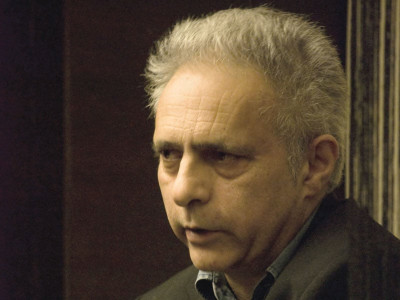
<p>Kureishi says his fiction-reading days are behind him. That was his adolescence, his twenties and thirties: long afternoons of serious reading on the sofa. These days he prefers history, politics and most of all psychology. Time is running out; understanding appears as far away as ever.</p>
<p><strong>Women</strong></p>
<p>Why have you had such an effect on particular types of Karachiite (from what I can tell, the well-off bluestockings and mirthful homosexuals)? He played dumb. I told him I’d heard things I couldn’t repeat. “Oh go on, tell me all about it.” Women, even the dour type, the kind who have taught literature to three generations of Karachiites, had wanted to jump him all weekend. “That’s so great. Lovely to hear.” Is it the way he writes about women and desire? “I can’t say … I can’t elaborate on my charms, I can’t do that.”</p>
<p>But he can say that “writers like women.” And women like writers. Judging by his old pal Rushdie, looks are secondary: “Salman, look at him, he gets loads of women.”</p>
<p><strong>Football</strong></p>
<p>How’s this for irony: while Karachi’s literary groupies were lusting after Kureishi on Saturday early evening, he was sprawled out on his hotel room bed, alone with a bottle of beer, watching Manchester United versus Liverpool on TV. “Oh, it’s great here, you get ESPN, Star Sports, you get everything.”</p>
<p><strong>Cities</strong></p>
<p>Kureishi is an archetypal flaneur. His visit here made him think, “What do I like about a city, what do I like about Paris, about London?” What does he like about Karachi?</p>
<p>He says Karachi is “a fascinating place” but it resembles New York in the 1970s. After a while, he’d feel compelled to “just walk about.” His family would try to stop him: “My cousins, who were born and brought up here, were telling me, ‘we don’t go here, we don’t go there, especially at this time’ … it’s a real shame.”</p>
<p>“What’s really great about cities is multiculturalism … but everyone in Karachi is a Pakistani … that’s not the way the world’s going, the world’s becoming more and more mixed up.”</p>
<p>I told him, defensively, that Karachi was an ethnically diverse city. He talked about culture. “Places which are monocultural have far less energy.” Karachi has energy, but it isn’t his kind. Kureishi is post-Freudian; he has no time for gang warfare; there’s more than enough conflict for him at the kitchen table.</p>
<p><strong>Children</strong></p>
<p>He writes fondly — and honestly — of parenthood. Does he want to show his boys Karachi and Bombay one day, to give them a sense of their father’s roots? He smiles. “I kept thinking, driving around town in the car with the driver and the security guard with his AK-47, I wish my boys could see this … but their mothers won’t allow them to come.”</p>
<p><strong>Music</strong></p>
<p>Music streams through the pages of his fiction. He even edited The Faber Book of Pop. Does he still like music? “I like white indie music. The Killers, The Arctic Monkeys.” What about gangsta rap? “Oh no … what’s that new thing? Grime? My boys love it, I keep telling them that ‘this music is for white middle-class private-school boys like you, it’s expressly designed for you.’ It gives me a headache.”</p>
<p><strong>Humour</strong></p>
<p>Kureishi loves to laugh. More than this, he loves to make others laugh. Sometimes his jokes make the point quicker and better than a thousand-word essay. Other times they are a deflection; you want him to plunge through the surface but he refuses. It depends on his mood and whether you can spin a familiar subject to interest him sufficiently.</p>
<p><strong>Politics</strong></p>
<p>He is still sufficiently interested in politics and was impressed by the level of discourse in Pakistan. “Conversation is much more frivolous in London.” I asked him if he felt a perverse sense of envy here: words matter so much you can get killed for them; politics is more urgent; life is heightened. “I would have before the fatwa. That changed things.”</p>
<p>Rushdie came up a lot this weekend. At his first session at the literature festival, Kureishi called him “the most important writer in the world.” By the time of his closing speech, there was no more Salman and nothing negative about Pakistan. “Yeah, that was my Nelson Mandela moment. I decided not to say anything frivolous or mention Rushdie.”</p>
<p>One wishes he had. For all the talent of the current stars of Pakistani literature in English, how many of them would take on the very basis of the state of Pakistan. “Why would you want a society where everyone is the same?” Kureishi asked. And I had no answer.</p>
<p><strong>Conversation</strong></p>
<p>A word on his voice. It is unique among British writers. It is not the boxer’s rat-a-tat of Tony Parsons or the posh drawl of Martin Amis. It has something extra, it has traces of all his origins and interests: clipped in some places, stretched out in others. There is the Bromley street, a history of violence; there are melodious feminine tones which verge on the aristocratic; there is something from his father, from all our fathers who were immigrants in Britain in the ‘70s. It is a modern British voice — it is a pleasure to hear.</p>
<p><strong>Stories</strong></p>
<p>I let him know that I was a London boy from the suburbs.</p>
<p>“Really? You’re like me.”</p>
<p>His questions sliced to the heart of me: he wanted a form, a structure to the person sitting opposite, a narrative he could work with. He thought it bizarre and fascinating that someone from London could make a life in this city he found interesting but was happy to leave. As I told him of my love and hate for the city, he said the only hope for me was to write a novel.</p>
<p>Literature: still the greatest pleasure in the life of Hanif Kureishi.</p>
<p><em>Published in The Express Tribune, Sunday Magazine, February 26<sup>th</sup>, 2012.</em></p>
</p>
			<br clear="all"/>
		]]>
		</description>

		<media:content width="424" height="318"
							isDefault="true" medium="image" url="http://i1.tribune.com.pk/wp-content/uploads/2012/02/340652-Hanif-1330006680-892-640x480.jpg">
			<media:title>Hanif02</media:title>
			<media:description>Kureishi says his fiction-reading days are behind him.</media:description>
			<media:thumbnail url="http://i1.tribune.com.pk/wp-content/uploads/2012/02/340652-Hanif-1330006680-892-160x120.jpg" width="160" height="120" />
      </media:content>

		<wfw:commentRss></wfw:commentRss>
		<slash:comments>2</slash:comments>
	</item>
		<item>
		<title>The Frenchwoman who fell for the dancing girls of Lahore</title>
		<link>http://tribune.com.pk/story/341470/the-frenchwoman-who-fell-for-the-dancing-girls-of-lahore/</link>
		<pubDate>Fri, 24 Feb 2012 23:06:21 +0000</pubDate>

		<guid isPermaLink="false">http://tribune.com.pk/?p=341470</guid>

		<description>
		<![CDATA[
			<a href="http://tribune.com.pk/story/341470/the-frenchwoman-who-fell-for-the-dancing-girls-of-lahore/">
				<img src="http://i1.tribune.com.pk/wp-content/uploads/2012/02/341470-HiraMindi-1330112340-780-160x120.jpg" width="160" height="120" alt="" />
			</a>
			<p><div><strong class='location'>KARACHI:&nbsp;</strong>
<p><strong>Claudine Le Tournier d’Ison met her now-husband Cyril in 1989. He was fascinated by Afghanistan and she was fascinated by India. They did what every couple who stay together do: they compromised mid-way. Thus, they embarked on a five-month journey through Pakistan, eventually settling in Lahore for an extended stay.</strong></p>
</div>
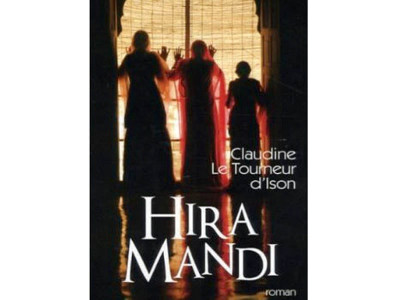
<p>Living in the Old City, Claudine became an entranced observer of the customs, culture and characters of the ‘diamond market’. She started dreaming about writing a book set in the place. As she said at the book launch of her novel, <em>Hira Mandi</em>, at the Alliance Francaise on Friday, “it took me 15 years to achieve my dream.”</p>
<p>Hira Mandi tells the story of a painter, starting from his experience as a 10-year-old boy at Partition and leading all the way to 2003. As her partner on stage, Asif Noorani pointed out, the life story of this character bears a more than passable resemblance to artist Iqbal Hussain, who in addition to painting women from heera mandi, owns the famous Cuckoo’s Den restaurant right opposite Badshahi mosque.</p>
<p>Claudine admitted that she knew Hussain and they had spent many an evening in conversation. She was “so impressed by his life” and evidently Hussain felt the same way, as he gave up a lot of his time explaining heera mandi to Claudine: the history of the place and also the mentality of its residents.</p>
<p>She was eager, though, to convince Noorani that the book was a novel, not a biography. In a thick French accent but with flawless English, Claudine spoke about the smells and sights which had captivated her, and memorable women she interviewed, such as one called Pinky who always wore pink clothes and pink make-up and entertained clients in a completely pink room, from floor to ceiling. “I picked up some things,” she said, but her imagination did the rest.</p>
<p>It seems, though, that she has not exoticised her experiences. Having travelled extensively through the region, and seen the red light districts of other cities, she could say with authority that, “it was different to what I saw in Cairo or Bombay.” In comparison to these flesh-markets, Lahore’s atmosphere was “very poetic, well-decorated, with beautiful girls &#8230; it was a beautiful world.”</p>
<p>But this was 1989. Claudine has spent some time in Pakistan in the past two years, and says almost with longing that “heera mandi doesn’t exist anymore.” Perhaps those who wish it did will find a warm embrace in her book, which for the sheer novelty of being written by a Frenchwoman, with broad areas of expertise and interest, based on a travel experience in 1989, seems well worth a look.</p>
<p>However, a much more interesting book might be Asif Noorani’s tales about Chowk, the equivalent of heera mandi in a Lucknow which is now, alas, dead and buried. While Claudine compared heera mandi favourably to Cairo and Bombay, Noorani said that Chowk was streets ahead in terms of decorum, ethics, culture and poetry. In a memorable aside, he said that a dancing girl in Lucknow would never go to bed with a man if she had gone to bed with his father. What other stories might Mr Noorani have: wouldn’t we like to know.</p>
<p><em>Published in The Express Tribune, February 25<sup>th</sup>, 2012.</em></p>
</p>
			<br clear="all"/>
		]]>
		</description>

		<media:content width="424" height="318"
							isDefault="true" medium="image" url="http://i1.tribune.com.pk/wp-content/uploads/2012/02/341470-HiraMindi-1330112340-780-640x480.jpg">
			<media:title>Hira Mindi</media:title>
			<media:description>The journalist, novelist and Egyptologist wrote a novel based on her travels in the late 80s.</media:description>
			<media:thumbnail url="http://i1.tribune.com.pk/wp-content/uploads/2012/02/341470-HiraMindi-1330112340-780-160x120.jpg" width="160" height="120" />
      </media:content>

		<wfw:commentRss></wfw:commentRss>
		<slash:comments>8</slash:comments>
	</item>
		<item>
		<title>Keynote speech: Kureishi says khuda hafiz   </title>
		<link>http://tribune.com.pk/story/335624/keynote-speech-kureishi-says-khuda-hafiz/</link>
		<pubDate>Mon, 13 Feb 2012 04:56:39 +0000</pubDate>

		<guid isPermaLink="false">http://tribune.com.pk/?p=335624</guid>

		<description>
		<![CDATA[
			<a href="http://tribune.com.pk/story/335624/keynote-speech-kureishi-says-khuda-hafiz/">
				<img src="http://i1.tribune.com.pk/wp-content/uploads/2012/02/335624-HanifKureishiPHOTOATHARKHANEXPRESS-1329079474-330-160x120.jpg" width="160" height="120" alt="" />
			</a>
			<p><div><strong class='location'>KARACHI:&nbsp;</strong>
<p><strong>Something happened to Hanif Kureishi on Saturday night. A few possibilities follow.</strong></p>
</div>
<p>1, He was abducted by terrorists and threatened with a life teaching their children English in North Waziristan unless he said extremely complimentary things about Pakistan. 2, He fell in love with a dusky local beauty and, realising his life now lay here, decided to put a positive spin on the place. 3, He raided one of Karachi’s ‘wine shops’ and went on a mind-blowing bender.</p>
<p>This third option could also explain why Kureishi, the keynote speaker at the Karachi Literature Festival’s closing ceremony on Sunday evening, had not actually written a speech.</p>
<p>Any of the three could explain why he spoke with such delight about his time in Karachi, enthusiastically heralding a new generation of writers from the country and expressing that he was “very impressed with people’s desire to speak.”  Above all, Kureishi had felt a rare ‘buzz and excitement’ at the festival.</p>
<p>It helped that he was talking to someone he clearly liked and respected, someone who understands the writer and his work. This someone, Susie Nicklin (Director Literature at the British Council), joined Kureishi on stage and said the writer had opted for a conversation over a speech because it would be ‘fresh and vibrant’. This was more than an excuse for not doing his homework; it turned out to be true.</p>
<p>In his short time in the country, Kureishi has grasped that “everybody here knows that politicians are liars.” Literature offers a space without such manipulation; a story is “one place someone speaks from the heart.” Karachi has re-energised this sense in Kureishi: “You come to a festival like this … you get a sense that the writer matters.”</p>
<p>Naming Mohsin Hamid and Mohammed Hanif as examples, he said Pakistan was producing ‘important writers’ who would ‘start the ball rolling’ for a new batch. Perhaps Kureishi has formed this impression because Pakistan is a ‘highly politicised country’ which needs its writers, who ‘begin the argument’ and fulfill that most useful of functions in a democracy: being a ‘nuisance’.</p>
<p>He also stood up for the very notion of a literature festival. Agreeing that writers – and readers – are solitary creatures, he said nevertheless that ‘no writer exists on his own’ and argued that “you have to get a sense of a living culture, what others are doing.”</p>
<p>Yes: a living culture. Speakers and moderators at this festival, too often, had given the impression that literature was a dead thing and they were its earnest undertakers. Kureishi sparkles in print and in person because his words are always alive, whether they punch you, kiss you, or just ask you in for a cup of tea.</p>
<p>Kureishi also thinks we’re funny, describing Karachiites as people with ‘a good sense of humour’, something which has stood us in good stead given our political history, for ‘dictators don’t like jokes.’</p>
<p>He ended with gratitude, saying it was a ‘real honour’ to be at the festival, which he predicted would get ‘bigger and bigger … and more significant’ as the years pass on. Ultimately, Kureishi had felt ‘a real sense of love’ at the festival.</p>
<p>So that explains it: it was option number two.</p>
<p><em>Published in The Express Tribune, February 13<sup>th</sup>, 2012.</em></p>
</p>
			<br clear="all"/>
		]]>
		</description>

		<media:content width="424" height="318"
							isDefault="true" medium="image" url="http://i1.tribune.com.pk/wp-content/uploads/2012/02/335624-HanifKureishiPHOTOATHARKHANEXPRESS-1329079474-330-640x480.jpg">
			<media:title>Hanif Kureishi-PHOTO-ATHAR KHAN-EXPRESS</media:title>
			<media:description>Hanif Kureishi shares his experience of the Karachi Literature Festival 2012. PHOTO: ATHAR KHAN/EXPRESS
</media:description>
			<media:thumbnail url="http://i1.tribune.com.pk/wp-content/uploads/2012/02/335624-HanifKureishiPHOTOATHARKHANEXPRESS-1329079474-330-160x120.jpg" width="160" height="120" />
      </media:content>

		<wfw:commentRss></wfw:commentRss>
		<slash:comments>4</slash:comments>
	</item>
	
</channel>
</rss>
<!-- Performance optimized by W3 Total Cache. Learn more: http://www.w3-edge.com/wordpress-plugins/

Page Caching using apc
Database Caching 21/48 queries in 0.027 seconds using memcached
Object Caching 1421/1608 objects using apc

 Served from: tribune.com.pk @ 2013-05-23 06:09:37 by W3 Total Cache -->