<?xml version="1.0" encoding="UTF-8"?>
<rss version="2.0"
	xmlns:content="http://purl.org/rss/1.0/modules/content/"
	xmlns:wfw="http://wellformedweb.org/CommentAPI/"
	xmlns:dc="http://purl.org/dc/elements/1.1/"
	xmlns:atom="http://www.w3.org/2005/Atom"
	xmlns:sy="http://purl.org/rss/1.0/modules/syndication/"
	xmlns:slash="http://purl.org/rss/1.0/modules/slash/"
	xmlns:media="http://search.yahoo.com/mrss/"
	>

<channel>
	<title>The Express Tribune &#187; Dr Humayon Dar</title>
	<atom:link href="http://tribune.com.pk/author/2755/dr-humayon-dar/feed/" rel="self" type="application/rss+xml" />
	<link>http://tribune.com.pk</link>
	<description>Latest Breaking Pakistan News, Business, Life, Style, Cricket, Videos, Comments</description>
	<lastBuildDate>Sat, 18 May 2013 05:24:06 +0000</lastBuildDate>
	<language></language>
	<sy:updatePeriod>hourly</sy:updatePeriod>
	<sy:updateFrequency>1</sy:updateFrequency>
	<generator>http://wordpress.org/?v=3.5.1</generator>

		<item>
		<title>Changing tracks: ‘Time multiple counter loans’</title>
		<link>http://tribune.com.pk/story/395064/changing-tracks-time-multiple-counter-loans/</link>
		<pubDate>Sun, 17 Jun 2012 15:24:11 +0000</pubDate>

		<guid isPermaLink="false">http://tribune.com.pk/?p=395064</guid>

		<description>
		<![CDATA[
			<a href="http://tribune.com.pk/story/395064/changing-tracks-time-multiple-counter-loans/">
				<img src="http://i1.tribune.com.pk/wp-content/uploads/2012/06/395064-intest-1339943210-439-160x120.JPG" width="160" height="120" alt="" />
			</a>
			<p><div><strong class='location'>LONDON:&nbsp;</strong>
<p><strong>Some initiatives have been taken around the world which attempt to offer interest-free loans to programme participants.</strong></p>
<p>One such initiative is the Swedish JAK Medlemsbank (translated as Members’ Bank), which also has operations in Ireland. There are other banks that attempt to help the charity sector grow, and have contributed to the development of social enterprises in their respective jurisdictions. Charity Bank and CAF Bank in the UK are two such examples. If studied, such initiatives can potentially influence and benefit the banking sector in Pakistan – where interest free loans are still a dream for many – and its role in developing and supporting social enterprises in the country.</p>
</div>
<p>A novel approach was suggested by a Pakistani economist, the late Sheikh Mahmud Ahmad, in this regard in the 1970s to the State Bank of Pakistan (SBP). Although he failed to convince the SBP leadership at the time, his thoughts, nevertheless, are worth revisiting. His basic proposition centred on what he termed as Time Multiple Counter Loans (TMCL).</p>
<p>The idea can be summarised with the help of two concepts: a vertical loan and a horizontal loan. A vertical loan is a large amount borrowed for a short period, while a horizontal loan is small, but borrowed for a longer period. A vertical loan and a horizontal loan are considered equal in value if their amount-period values are the same. For example, a loan of Rs1,000 for 30 days (a horizontal loan) is equal in value to a loan of Rs30,000 for one day (a vertical loan).</p>
<p>A banking system based on TMCL allows banks to offer interest-free vertical loans against interest-free horizontal deposits. For example, someone applying for an interest-free loan of Rs100,000 for one year will have to deposit a sum of Rs10,000 for 10 years or a sum of Rs5,000 for 20 years. While the customer returns the loan after one year, the bank uses the money deposited by the customer for a longer period for its own benefit.</p>
<p>The system is more just and equitable than the existing interest-based banking model. Comparing the two models will explain the differences: suppose an interest-based bank offers a loan of Rs100,000 to a borrower at a 10% rate of interest for a period of three years. If simple non-compound interest is applied, the borrower returns Rs100,000 and Rs30,000 interest over a period of 36 months in monthly instalments of Rs3,611.11. On the other hand, a TMCL of Rs100,000 for three years would require the borrower to make a horizontal deposit of Rs15,000 for 20 years. The borrower can return the money in one go at the end of the three years or, preferably, in 36 monthly instalments of Rs2,777.77.</p>
<p>The total cost of borrowing from an interest-based bank would therefore be Rs30,000; while a borrower on the basis of TMCL would forego the use of Rs15,000 for a period of 20 years (his net cost of borrowing would be Rs15,000 minus Rs2,229.65, which equals Rs12,770.35 – if we consider the present value of Rs15,000 and assume a discount rate of 10% for a period of 20 years).</p>
<p>It can be shown that a banking system based on TMCL is not only more just for borrowers, but also reasonably profitable for the banks. For example, when the customer receives his Rs15,000 back at the end of 20 years, the bank will have earned a profit of Rs85,912 from the investment of the 20-year deposit (assuming an annual rate of return of 10%).</p>
<p>Although the interest-free bank seems worse off as compared to an interest-based bank, it would receive a number of other benefits which the former would not enjoy. Customer loyalty is on top of the list. In an environment where an interest-based bank charges significantly more upfront (or in instalments), comparatively, the interest-free bank would have a huge competitive advantage over the former. The deposit-base of the interest-free bank would be fixed and long-term as compared to an interest-based bank.</p>
<p>If the TMCL model is combined with some of the characteristics of the Swedish JAK Medlemsbank, it is expected that this hybrid model will help in improving savings amongst its customers. While conventional banks may be reluctant to adopt the TMCL model, it has profound implications for the further development of Islamic banking in Pakistan.</p>
<p>A smart application of TMCL in Islamic banking will raise the image of Islamic banking as more responsible, more just and a more equitable form of banking as compared to conventional banking. The latter is fast losing credibility in the world – especially in the Western world – where a visible social movement against exploitative practices of banking and finance has emerged over the last few years.</p>
<p>THE WRITER IS AN ECONOMIST AND A PHD FROM CAMBRIDGE UNIVERSITY</p>
<p><em>Published in The Express Tribune, June 18<sup>th</sup>, 2012.</em></p>
</p>
			<br clear="all"/>
		]]>
		</description>

		<media:content width="424" height="318"
							isDefault="true" medium="image" url="http://i1.tribune.com.pk/wp-content/uploads/2012/06/395064-intest-1339943210-439-640x480.JPG">
			<media:title>interest free loan</media:title>
			<media:description>The innovative concept – which operates on interest-free loans –may change the face of banking forever. ILLUSTRATION: JAMAL KHURSHID
</media:description>
			<media:thumbnail url="http://i1.tribune.com.pk/wp-content/uploads/2012/06/395064-intest-1339943210-439-160x120.JPG" width="160" height="120" />
      </media:content>

		<wfw:commentRss></wfw:commentRss>
		<slash:comments>3</slash:comments>
	</item>
		<item>
		<title>Encouraging captive power generation  </title>
		<link>http://tribune.com.pk/story/361648/encouraging-captive-power-generation/</link>
		<pubDate>Sun, 08 Apr 2012 22:58:57 +0000</pubDate>

		<guid isPermaLink="false">http://tribune.com.pk/?p=361648</guid>

		<description>
		<![CDATA[
			<a href="http://tribune.com.pk/story/361648/encouraging-captive-power-generation/">
				<img src="http://i1.tribune.com.pk/wp-content/uploads/2012/04/361648-Energy-1333898465-964-160x120.jpg" width="160" height="120" alt="" />
			</a>
			<p><p><strong><strong class='location'>ESSEX:&nbsp;</strong>Heavy power cuts, electricity break downs, fluctuations and blackouts in the country and apparent general acceptance of these (albeit with pain) by households and businesses provide an excellent opportunity to the government to initiate full-scale privatisation of power production and distribution in Pakistan.</strong></p>
<p>Given the increasing use of generators to cope with the power cuts, the use of diesel-run engines by farmers to irrigate their crops and fields, and now the use of small power generating units in the manufacturing industry, privatisation of the power generation has already taken a new turn. Households, farmers and some industrial units have now started producing electricity for their own use on a limited scale. If the power cuts continue, it is expected that this emerging trend will give rise to thousands of small units producing power to meet household and industrial demand for electricity on a local level. A parallel example of such kind of development can be traced in the emergence of cable operators’ networks and the emergence of private television channels in Pakistan. A similar example is in the form of mushrooming of the business of mobile phones, the Internet and related services.</p>
<p>From this development, the government must come up with a policy to develop local grids that must on one hand side be linked to the national grid and on the other hand side should be linked to the households and small producers of power. This would work effectively with the development and promotion of solar energy on a household level. In phase one, in big cities like Karachi, Lahore, Rawalpindi etc., households can be encouraged to install solar panels (on the roof tops) and other small plants for renewable energy for their own consumption and possibly for supplying to the national grid through local grid stations. In developed countries like Germany, this model has successfully been implemented, and there is a need to develop a similar model for Pakistan.</p>
<p>One possible route that the government may take is to turn a blind eye on the small-scale production of electricity in the private sector. This will allow a new business to emerge in the country without any additional costs to the government. This certainly has implications in terms of environmental impact, if the private sector uses oil and gas for the production of electricity. Moreover, there will be major efficiency losses due to diseconomies of scale. These environmental costs, however, must be ignored in the short to medium run to reduce the current crisis-like situation in the power production sector. However, in the long run, an environment friendly model could be developed to use solar and renewable energy.</p>
<p>The real benefit of this pre-regulation period would start emerging when the solar and renewable energy producing companies enter into the retail market. There are scores of companies (small, medium and large) that contemplate entering the Pakistani market, but are unsure about the viability of their investments due to political instability, lack of clarity of policy on part of the government and almost non-existence of incentives for the entry.</p>
<p>The government must develop a clear policy and regulatory guidelines to ascertain the interested investors who are otherwise not sure if their investments will be safe and economically worthwhile in case the government continues with its own control and monopolistic position in the production and specially distribution of power.</p>
<p>A clear policy towards this sub-sector must be developed and adopted. Let us not waste our time and energy on the projects like Kalabagh Dam that has seen decades of lack of political consensus and, hence, remains a distant reality that may actually never come into existence.</p>
<p><em>The writer is an economist and PhD from Cambridge University.</em></p>
<p><em>Published in The Express Tribune, April 9<sup>th</sup>, 2012.</em></p>
</p>
			<br clear="all"/>
		]]>
		</description>

		<media:content width="424" height="318"
							isDefault="true" medium="image" url="http://i1.tribune.com.pk/wp-content/uploads/2012/04/361648-Energy-1333898465-964-640x480.jpg">
			<media:title>Energy</media:title>
			<media:description>Households can be encouraged to install solar panels on rooftops. PHOTO: FILE
</media:description>
			<media:thumbnail url="http://i1.tribune.com.pk/wp-content/uploads/2012/04/361648-Energy-1333898465-964-160x120.jpg" width="160" height="120" />
      </media:content>

		<wfw:commentRss></wfw:commentRss>
		<slash:comments>6</slash:comments>
	</item>
		<item>
		<title>Shariah compliance and public sector borrowing</title>
		<link>http://tribune.com.pk/story/342100/shariah-compliance-and-public-sector-borrowing/</link>
		<pubDate>Mon, 27 Feb 2012 03:25:08 +0000</pubDate>

		<guid isPermaLink="false">http://tribune.com.pk/?p=342100</guid>

		<description>
		<![CDATA[
			<a href="http://tribune.com.pk/story/342100/shariah-compliance-and-public-sector-borrowing/">
				<img src="http://i1.tribune.com.pk/wp-content/uploads/2012/02/342100-Shariah-1330313098-853-160x120.jpg" width="160" height="120" alt="" />
			</a>
			<p><p><strong>As the debate on public sector borrowing intensified in the wake of the recent US debt crisis, and before that the adverse budgetary situations in a number of European countries, including but not limited to Greece and Ireland, led to political debate on the issue, it would be instructive to look into Shariah guidelines for public debt.</strong></p>
<p>The issue is also relevant to a number of Muslim countries, including Pakistan, where Shahid Kardar, the former governor of the State Bank of Pakistan, resigned perhaps because of disagreement over the government’s stance over public debt.</p>
<p>Public sector borrowing has direct implications for inflation and for private capital accumulation (if the government borrows either from the private sector or its central bank).</p>
<p>One of the greatest Islamic economists of the present times, Dr Umer Chapra, lists four reasons for excessive borrowing by the Muslim states of the past and present: corruption and wasteful spending, price subsidies, large and inefficient public sector, and defence expenditure. It appears as if all these factors exist in today’s Pakistani economy, contributing to excessive public sector borrowing. It would help to see what a country like Pakistan should do to reduce its public sector borrowing requirement.</p>
<p>Monzer Kahf, another leading contemporary Islamic economist, lists three basic functions that the early Islamic governments performed: defence, judiciary and what was known as society’s management (internal social/tribal affairs and foreign relations). Social goods (health, education, drinking water etc) were provided through philanthropic actions and Auqaf. Therefore, the first and foremost action that Pakistan should undertake is to reduce public sector output. If the state limits itself to the provision of defence and internal security, judicial sustenance, and the running of national politics and international relations, a lot of expenditure that the government now incurs could either be shifted to the private sector or not-for-profit sector, also known in Islamic economics as the third sector.</p>
<p>The government must stop subsidising certain goods and services. The experience of the recent past of subsidising petroleum products has resulted in the on-going energy crisis in the country in addition to worsening the budget deficit and increasing the public sector borrowing requirement. The government must also not pay cash to support lower-income families and business units. This does not result in any increase in the productive capacity in the economy.</p>
<p>Shariah guidelines with regards to public sector borrowing are simple. These guidelines clearly state that the government must not borrow in order to provide goods and services that the private sector or the third sector has otherwise ability to produce and supply. Therefore, there is no point of keeping on borrowing to run such corporations like Pakistan Railway, Pakistan International Airlines, and similar corporations.</p>
<p>These guidelines also state that borrowing for meeting the non-developmental expenses of the government cannot be justified. If a government fails to collect enough taxes to meet its current expenses, it is certainly an incompetent authority that must not be allowed to borrow.</p>
<p>Under Shariah guidelines borrowing from the central bank for meeting current expenses should not be allowed. It is an act of injustice on the present and future generations who must pay the price of subsequent increase in inflation.</p>
<p><em>The writer is an economist and PhD  from Cambridge University</em></p>
<p><em>Published in The Express Tribune, February 27<sup>th</sup>, 2012.</em></p>
</p>
			<br clear="all"/>
		]]>
		</description>

		<media:content width="424" height="318"
							isDefault="true" medium="image" url="http://i1.tribune.com.pk/wp-content/uploads/2012/02/342100-Shariah-1330313098-853-640x480.jpg">
			<media:title>Shariah</media:title>
			<media:description>The government needs to limit its role to defence, judiciary and management.</media:description>
			<media:thumbnail url="http://i1.tribune.com.pk/wp-content/uploads/2012/02/342100-Shariah-1330313098-853-160x120.jpg" width="160" height="120" />
      </media:content>

		<wfw:commentRss></wfw:commentRss>
		<slash:comments>2</slash:comments>
	</item>
		<item>
		<title>Kosher finance: Effective governance needed to grow Islamic banking </title>
		<link>http://tribune.com.pk/story/335407/kosher-finance-effective-governance-needed-to-grow-islamic-banking/</link>
		<pubDate>Sun, 12 Feb 2012 22:38:20 +0000</pubDate>

		<guid isPermaLink="false">http://tribune.com.pk/?p=335407</guid>

		<description>
		<![CDATA[
			<a href="http://tribune.com.pk/story/335407/kosher-finance-effective-governance-needed-to-grow-islamic-banking/">
				<img src="http://i1.tribune.com.pk/wp-content/uploads/2012/02/335407-safeCREATIVECOMMONS-1329060123-320-160x120.jpg" width="160" height="120" alt="" />
			</a>
			<p><div><strong class='location'>KARACHI:&nbsp;</strong>
<p><strong>One point needs to be made clear from the outset regarding the ongoing growth of Islamic banking in Pakistan. If it is to prosper, maintain competitiveness, ensure sustainability, preserve efficiency and remain profitable, then external and internal regulatory and governance frameworks must be strong, effective, transparent and stringent. </strong></p>
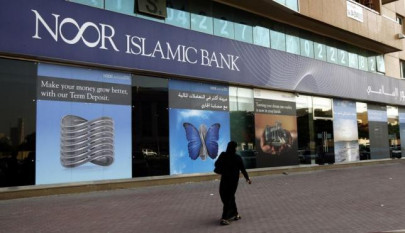
<p><strong></strong>In Pakistan, there are five fully-fledged Islamic banks with another 13 conventional banks offering Islamic banking services. The share of Islamic banking in the sector now exceeds 7.5%, and there are prospects for future growth in this area. While Islamic banking is expanding rapidly, misconceptions about Islamic banking remain widespread. This calls for a coherent and comprehensive framework for Shariah governance for Islamic banks.</p>
</div>
<p>At present, the State Bank of Pakistan (SBP) is responsible for assuring that the banks offering Islamic banking services comply with Shariah requirements. However, there are areas in which there is need for further improvement. This article makes some practical recommendations for the improvement of the authenticity of Shariah advice and its implementation by individual banks.</p>
<p>Central to regulation of Islamic financial services is an effective Shariah governance framework, in the absence of which the confidence of the general public may deteriorate in this alternative form of banking and finance. Leaving Shariah assurance to market forces may lead to the dilution of quality of Shariah applications to banking and finance, and may in some cases result in the development of products that offer no distinct value unique to Islamic banking. In Pakistan, the SBP conducts annual Shariah audits of the banks offering Islamic banking to ensure that the principles of Shariah are upheld.</p>
<p>Shariah governance can be defined as a system in a given financial jurisdiction ensuring that all institutions offering Islamic financial services, which include both fully-fledged Islamic financial institutions and conventional financial institutions involved in Islamic banking through their window operations, comply with the internationally (or nationally) recognised Shariah requirements in developing, offering and executing Islamic financial products and services, as part of their operations.</p>
<p>There are two important pillars of Shariah governance, control and management.</p>
<p>Shariah control comprises the following:</p>
<p>1. Development of Islamic financial regulation by financial regulator;</p>
<p>2. Recognition of Shariah advisory function as a part of Islamic               financial regulation;</p>
<p>3. Compilation of Shariah opinions and creation of Shari’a standards       by an independent body, preferably set up by government; and</p>
<p>4. Development of an independent Shariah audit framework for the          institutions offering Islamic financial services.</p>
<p>Shariah management comprises the following:</p>
<p>1. Assurance of compliance with Shariah requirements by the banks      offering Islamic banking services; and</p>
<p>2. Development of human resources on all levels of management.</p>
<p>An effective Shariah governance framework includes benefits like assurance of Shariah authenticity and promotion and protection of the rights of all stakeholders among others.</p>
<p>Shariah control requires an active role of the government in creating a legislative framework for the functioning of Islamic banking in a country. It requires legislative developments, which would be implemented by financial regulators.</p>
<p>An effective Shari’a control function must include a legal framework in the form of an act or equivalent legislation allowing Islamic banking to operate in the country as well as the setting up of a central Shariah supervisory body in the form of a national Shariah advisory board. It also includes, or must include the development of Shariah standards either on a national level or subscription to international Shariah standards (eg Shariah Standards of Accounting from the Bahrain-based Auditing Organisation for Islamic Financial Institutions – AAOIFI).</p>
<p>In Pakistan, it is only the SBP that plays an active role in assuring that individual players achieve Shariah compliancy. Given the growing size and importance of Islamic banking in the country, it is now important that an Islamic Banking Act is promulgated, which would galvanise the government to be more involved in Islamic banking.</p>
<p>The role of the Ministry of Religious Affairs and Auqaf should be expanded to bring Shari’a governance under its umbrella of activity.</p>
<p><em>The writer is an economist and PhD  from Cambridge University.</em></p>
<p><em>Published in The Express Tribune, February 13<sup>th</sup>, 2012.</em></p>
</p>
			<br clear="all"/>
		]]>
		</description>

		<media:content width="424" height="318"
							isDefault="true" medium="image" url="http://i1.tribune.com.pk/wp-content/uploads/2012/02/335407-safeCREATIVECOMMONS-1329060123-320-640x480.jpg">
			<media:title>safe-CREATIVE COMMONS</media:title>
			<media:description>An Islamic banking ordinance must be promulgated if this sector is to thrive. CREATIVE COMMONS
</media:description>
			<media:thumbnail url="http://i1.tribune.com.pk/wp-content/uploads/2012/02/335407-safeCREATIVECOMMONS-1329060123-320-160x120.jpg" width="160" height="120" />
      </media:content>

		<wfw:commentRss></wfw:commentRss>
		<slash:comments>3</slash:comments>
	</item>
	
</channel>
</rss>
<!-- Performance optimized by W3 Total Cache. Learn more: http://www.w3-edge.com/wordpress-plugins/

Page Caching using apc
Database Caching 15/30 queries in 0.023 seconds using memcached
Object Caching 760/842 objects using apc

 Served from: tribune.com.pk @ 2013-05-18 11:56:43 by W3 Total Cache -->