<?xml version="1.0" encoding="UTF-8"?>
<rss version="2.0"
	xmlns:content="http://purl.org/rss/1.0/modules/content/"
	xmlns:wfw="http://wellformedweb.org/CommentAPI/"
	xmlns:dc="http://purl.org/dc/elements/1.1/"
	xmlns:atom="http://www.w3.org/2005/Atom"
	xmlns:sy="http://purl.org/rss/1.0/modules/syndication/"
	xmlns:slash="http://purl.org/rss/1.0/modules/slash/"
	xmlns:media="http://search.yahoo.com/mrss/"
	>

<channel>
	<title>The Express Tribune &#187; Faiza Rahman</title>
	<atom:link href="http://tribune.com.pk/author/2338/faiza-rahman/feed/" rel="self" type="application/rss+xml" />
	<link>http://tribune.com.pk</link>
	<description>Latest Breaking Pakistan News, Business, Life, Style, Cricket, Videos, Comments</description>
	<lastBuildDate>Thu, 20 Jun 2013 09:35:45 +0000</lastBuildDate>
	<language></language>
	<sy:updatePeriod>hourly</sy:updatePeriod>
	<sy:updateFrequency>1</sy:updateFrequency>
	<generator>http://wordpress.org/?v=3.5.1</generator>

		<item>
		<title>1973 Constitution: Imran opposes repeal of Ahmadi laws </title>
		<link>http://tribune.com.pk/story/543862/1973-constitution-imran-opposes-repeal-of-ahmadi-laws/</link>
		<pubDate>Fri, 03 May 2013 05:32:33 +0000</pubDate>

		<guid isPermaLink="false">http://tribune.com.pk/?p=543862</guid>

		<description>
		<![CDATA[
			<a href="http://tribune.com.pk/story/543862/1973-constitution-imran-opposes-repeal-of-ahmadi-laws/">
				<img src="http://i1.tribune.com.pk/wp-content/uploads/2013/05/543862-ImranKhanRIAZAHMED-1367559130-371-160x120.jpg" width="160" height="120" alt="" />
			</a>
			<p><div><strong class='location'>KARACHI:&nbsp;</strong>
<p><strong>In a widely accessed video message, the Pakistan Tehreek-e-Insaf (PTI) chief Imran Khan said that he would neither revise nor repeal any current laws pertaining to the Ahmadi community, since these were in consonance with his personal beliefs.</strong></p>
</div>
<p>Article 260-3 of the 1973 Constitution declares Ahmadis “non-Muslims”. Furthermore, Article 298-B, amongst other things, prevents an Ahmadi from referring to his/her place of worship as a ‘masjid’ or referring to his/her call for prayers as ‘azaan’.</p>
<p>The PTI chief’s message came as a clarification to another popular video in which a woman named Nadia Ramzan Chaudhry, introducing herself as a PTI office bearer, approached the spiritual leader of the Ahmadi community in Britain to encourage his community to vote for the PTI.</p>
<p>In response, the PTI chief made it clear that he had not asked anyone from his party to enlist support from the Ahmadi community, adding that the removal of the stated clauses of the constitution was “not part of PTI’s agenda.”</p>
<p>The PTI chief said that those who do not believe that the Holy Prophet (PBUH) was the last prophet of Islam cannot be Muslims. However, Shireen Mazari, the party’s information secretary, quickly clarified that this does not mean that Imran “sanctions violence against minorities”.</p>
<p>Political analyst Rasul Baksh Rais is of the view that Imran’s personal belief will do little to add to the Ahmadi community’s plight. “The community is indeed suffering, but it is suffering because of clauses in the constitution.”</p>
<p>“If Imran seeks to repeal these laws, it would lead to more violence against the Ahmadis.”</p>
<p>Meanwhile, the PTI gathering at Shakargarh was marked with a routine hitting out against the Pakistan Muslim League –N (PML-N). This time round, the Sharif family’s heavy security deployment came under fire.</p>
<p>“Up to 1260 security personnel at the expense of Rs 200 million are being engaged for one family’s security,” said Imran to a crowd in the city of Narowal District, Punjab.</p>
<p><em>(With additional input from online)</em></p>
<p><em>Published in The Express Tribune, May 3<sup>rd</sup>, 2013. </em></p>
</p>
			<br clear="all"/>
		]]>
		</description>

		<media:content width="424" height="318"
							isDefault="true" medium="image" url="http://i1.tribune.com.pk/wp-content/uploads/2013/05/543862-ImranKhanRIAZAHMED-1367559130-371-640x480.jpg">
			<media:title>Imran-Khan-RIAZ AHMED</media:title>
			<media:description>Pakistan Tehreek-e-Insaf Chairman Imran Khan. PHOTO: RIAZ AHMED/EXPRESS</media:description>
			<media:thumbnail url="http://i1.tribune.com.pk/wp-content/uploads/2013/05/543862-ImranKhanRIAZAHMED-1367559130-371-160x120.jpg" width="160" height="120" />
      </media:content>

		<wfw:commentRss></wfw:commentRss>
		<slash:comments>29</slash:comments>
	</item>
		<item>
		<title>Lawn hater</title>
		<link>http://tribune.com.pk/story/513872/lawn-hater/</link>
		<pubDate>Mon, 04 Mar 2013 11:35:09 +0000</pubDate>

		<guid isPermaLink="false">http://tribune.com.pk/?p=513872</guid>

		<description>
		<![CDATA[
			<a href="http://tribune.com.pk/story/513872/lawn-hater/">
				<img src="http://i1.tribune.com.pk/wp-content/uploads/2013/02/513872-image-1362063590-806-160x120.JPG" width="160" height="120" alt="" />
			</a>
			<p><p><strong>Why lawn-snobs spend thousands on more or less similar prints every year is a complete mystery to some of us</strong></p>
<p>Start with a surplus of women on gigantic billboards, throw in a ballroom at a five-star hotel, then unleash a stampede of bored aunties — and there you go. That’s a lawn exhibition for you. Ever been to one? No? Well then, you’ve successfully spared yourself from being prodded in the back by a hundred blood-tinted talons. Not to mention saved your patience and courtesy from being trampled upon by pointy stilettos, and your anger management skills from being tested most exhaustively.</p>
<p>To begin with, please stop calling them ‘lawn’ exhibitions. They would more readily qualify for being called Iman Ali exhibitions. Or Ayyan exhibitions.</p>
<p>Say hello to the most conniving forms of advertising, and send your love to dear old Marx. The ‘exhibition’ of lawn upon the slick body of a lady, bursting with the allures of youth and beauty (read: surgery and starvation) is the ugliest gimmick you’ll come across, and something you would want to shelter your daughter from. It’s like this: see how pretty that painted face is. See how beautifully the cloth falls upon that liposuctioned, tummy-tucked-after-being-starved-for-years torso of hers. Develop a crippling inferiority complex and spend bizarre amounts of money on the most grotesque prints of the most commonplace fabric to join the rat-race to elusive beauty. Thoughtless conformism is your new god.</p>
<p>My advice to you is to remember that there is nothing extraordinary about the product being advertised. This excellent, excellent variety of fabric can be purchased more cheaply and worn much more modestly. If you must buy designer lawn prints, remember that these labels come out every year. With new prints, ornaments and accessories. Which means that most lawn-snobs would rather die than wear a lawn suit for more than a year. Which also means that they will moronically trot off to exhibitions every year and spend absurd amounts of hard-earned money on over-priced cloth. Why they do so remains a complete mystery for many of us.</p>
<p><img alt="" src="http://pullquotesandexcerpts.files.wordpress.com/2013/02/2360.jpg?w=625" /></p>
<p>Because, you see, it’s more or less the same deal every single year. The same repetitive prints by most of the labels: the florals, the geometricals and the ethnics. Splash a magnified version of the same print on the dupatta, and finish off with a gigantic border in the most ridiculous of colors. Make sure the colour of the border is not present anywhere else in the ensemble, so that you can get full marks for incongruity. Cloud your aesthetic shortcomings by justifying the absurdity as ‘contrast’. Hang it upon the bare shoulders of your ‘exhibit’. Splash teasing images of her on billboards all over the city. And there you go. Now you can make your millions.</p>
<p>Alternatively, do several suits in black and white. Design an entire black-and-white range. Philosophise. Confuse them. “Oh, you see, my lawn is a portrayal of the status-quo in Afghanistan. The black stands for Nato forces, and the white for the Taliban. The blue lace stands for the UN. My inspiration comes from flowing water, flying birds, the art training I never got, and all the newspapers you never read.”</p>
<p>Oh, and the billboards! Yes, those billboards which add to nothing but car maintenance bills, with men gawking at the models instead of the road. The most destructive kind of ‘creativity’ let loose on yards of Panaflex and thrust in the faces of clueless masses. Though the photography is often brilliant, surely there are more sensible ways of displaying lawn than having yards of cloth draped around a woman whose expression portends complete gastric breakdown any second? Or a damsel wearing a scintillating dupatta over bare shoulders, while sprawled dreamily upon the sands of a shore. Try that on Clifton Beach on a Sunday, why don’t you?</p>
<p>Do you think the marketing techniques used by lawn-makers accentuate social divides? See what other readers think and take our survey on www.tribune.com.pk</p>
<p><em>Published in The Express Tribune, Ms T, March 3<sup>rd</sup>, 2013.</em></p>
<p><i>Like </i><a href="https://www.facebook.com/TribMagazineMsT"><i>MsT on Facebook </i></a><i>for your dose of girl talk.</i></p>
</p>
			<br clear="all"/>
		]]>
		</description>

		<media:content width="424" height="318"
							isDefault="true" medium="image" url="http://i1.tribune.com.pk/wp-content/uploads/2013/02/513872-image-1362063590-806-640x480.JPG">
			<media:title>1</media:title>
			<media:description></media:description>
			<media:thumbnail url="http://i1.tribune.com.pk/wp-content/uploads/2013/02/513872-image-1362063590-806-160x120.JPG" width="160" height="120" />
      </media:content>

		<wfw:commentRss></wfw:commentRss>
		<slash:comments>4</slash:comments>
	</item>
		<item>
		<title>Muslim rule: The other side of the story</title>
		<link>http://tribune.com.pk/story/509495/the-other-side-of-the-story/</link>
		<pubDate>Sun, 24 Feb 2013 07:03:52 +0000</pubDate>

		<guid isPermaLink="false">http://tribune.com.pk/?p=509495</guid>

		<description>
		<![CDATA[
			<a href="http://tribune.com.pk/story/509495/the-other-side-of-the-story/">
				<img src="http://i1.tribune.com.pk/wp-content/uploads/2013/02/509495-image-1361283371-812-160x120.JPG" width="160" height="120" alt="" />
			</a>
			<p><p><strong>A forgotten fairytale must be told. It is a fairytale set amidst opulent palaces in which lived people from different lands and different beliefs. Palace courtyards echoed with strums of harps, lush gardens were redolent of citrus fruits, velvet lawns speckled with fresh water fountains, and libraries bosomed a wealth of rare knowledge.</strong></p>
<p>The fairytale is the history of Muslim rule in southern Europe, remembered as ‘al-Andalus’. It is a story which remains unwritten in books that are blind towards an era epitomising a love for knowledge, for alien peoples, and for celebrating differences and contradictions. Indeed, Muslim rule in the Iberian Peninsula from 718 to 1031 AD painted a breathtaking picture of ethnic pluralism, religious tolerance and cultural sophistication.</p>
<p>Today, it is difficult for many to understand that Islamic rule helped pave the way for “Western values” to reach the West. Alas, the history of Muslim rule in al-Andalus remains stubbornly unread. The era is discounted as just another of the several Muslim expansions which ascended the ladder of glory and withered away into nothingness. But Muslim expansion in Europe left anything but a withering legacy. It provides answers which may serve as antidotes to the surmounting hostility between Islam and the West.</p>
<p>Muslim expansion into Europe has been the subject of many squabbling controversies. There are claims, for instance, that Islam was spread primarily by the sword, and was driven by a greed for land and wealth. But a peek into history adds much nuance to the conventional narratives, debunking prejudices held by those in the West as well as in the Muslim world. Islam did not make inroads into Europe purely on the basis of spiritual appeal, or conversely, on the basis of brutal military assaults. Rather, Islam’s stronghold in Europe was established through a combination of military prowess, competent governance and a flourishing exchange of ideas pertaining to the theological as well as the secular domain.</p>
<p><img alt="" src="http://pullquotesandexcerpts.files.wordpress.com/2013/02/wood.jpg?w=625" /></p>
<p>Historian Mahmoud Makki from the University of Cairo writes that Tariq Bin Ziyad’s military intervention in Southern Europe in 711 AD was welcomed by the governor of a Spanish city (Ceuta) to curb the power of a hostile Visigothic king. In the documentary <i>When the Moors ruled in Europe</i>, Bettany Hughes, an Oxford historian, says: “The traditional explanation is that society collapsed when the Arabs invaded Iberia. However, society collapsed during Gothic rule. Recopolis, which was the royal city of the Visigoths, has been thoroughly excavated by archaeologists. No evidence of violence was found after Muslim invasion. On the other hand, Muslims started to build a new society here.”</p>
<p>That Muslim expansion was welcomed by locals is understandable once the on-ground crisis in Iberia — and the rest of Europe — is taken into context. Europe was a wreck when the Western Roman Empire breathed its last in the late third century. As Roman authority dwindled, barbarian tribes<b> </b>(Visigoths, Ostrogoths, Vandals and Franks) parceled away territory, plundered the lands and menaced the local population. Lands which were spared remained in the possession of Byzantine kings, who played the card of religion (Orthodox Christianity) to salvage power at home. The Byzantine king was the ‘viceroy of God’ and heterodox Christians and Jews were persecuted by the authorities. Dogma remained the order of the day.</p>
<p><img alt="" src="http://pullquotesandexcerpts.files.wordpress.com/2013/02/no-evidence.jpg?w=625" /></p>
<p>At a time when Europe was steeped in ignorance, Muslims had consolidated land and crossed intellectual milestones in Asia and Africa. As followers of a religion whose first dictate was to “read”, they applied themselves hungrily to new ideas.  This expansion was not a colonialist venture in the modern sense, motivated by territorial hunger at the expense of the natives, as many in the West would have us believe. There was no ‘other’ homeland to which resources or ‘booty’ could be siphoned. Muslim conquerors settled alongside locals to share resources, as builders and settlers, and integrated their culture with their own. Borrowing technology from bustling Islamic metropolises like Baghdad and Damascus, the dilapidated Iberian cities of Cordoba, Seville, Granada and Toledo were given elaborate irrigation and sewage systems. Caliph Abdur Rahman set in place a remarkable system of share-cropping in which locals were allowed to hold their lands, use it to grow food, and forfeit a percentage of the produce as tax. The revenue was used to build libraries, mosques, palaces and gardens and turn al-Andalus into the pinnacle of contemporary human civilisation. So magnificent was the medieval capital of Cordoba that it was described by several historians as the ‘Ornament of the World.’</p>
<p>The magnetic charm of this civilisation could not help but woo dilapidated Europe. Secular knowledge poured into the conflict-ridden continent straight from the busy learning centers of Fez, Cairo and Baghdad. Bounties of science, philosophy, poetry and medicine were channeled into al-Andalus’s Cordoba, Toledo, Seville and Granada. The freedom to learn, to acquire knowledge, embrace foreign ideas and tolerate diverse opinions were the defining features of the intellectual culture in al-Andalus.</p>
<p><img alt="" src="http://pullquotesandexcerpts.files.wordpress.com/2013/02/the-intellectual.jpg?w=625" /></p>
<p>New knowledge led to fresh skepticism. Ideas were debated and comparisons were made. Science remained the darling of Islam. While Europe regarded science as a challenge to religious authority, Muslims had little choice but to apply themselves to it, as studying science was essential to sustain both empire and religion. Advanced mathematical problems, such as locating the Kaaba’s direction for prayers from newly conquered lands, calculating exact dates for Ramazan and Eid, travelling long distances in the quest for Hadith, and formulating dimensions for new mosques, made it impossible for Muslims to avoid scientific inquiry.</p>
<p>Today, the ‘defenders’ of faith may do all they like to posit Islam as a religion which shies from arguments and is mistrusting towards non-Islamic learning, but the tradition of Islam in al-Andalus stands out as a refreshing refutation. It was the culture of openness in al-Andalus which drew throngs of Christians and Jews to the lands of Islam. The works of Thodosius, Arichemedes, Euclid and most importantly, Aristotle, were translated into Arabic at the learning centers of Toledo. Christian, Jewish and Muslims scholars united to debate ideas and relish an environment which was miles ahead of the mistrusting conservatism that prevailed over the rest of Europe. The city of Toledo is particularly significant because of its startling multiculturalism. The intellectual wealth of different faiths and cultures was exchanged via a glorious symbiotic liaison between Muslims, Christians and Jews, which remains unsurpassed by any other civilisation of the medieval era.</p>
<p>For centuries, Europe has basked in the glory of the Renaissance — a grand period of scientific advancements stretching from the 14<sup>th</sup> to the 17<sup>th</sup> century. Little thought is given to what sponsored the grand European leap from the fierce conservatism of Byzantine rule to an insatiable fancy for classical learning. A link seems to be missing. If Greek works were not secured and developed by any scholars during the European Dark Ages, how was this previously shunned body of knowledge ‘rediscovered’ to sponsor the Renaissance in Italy?</p>
<p>Indeed, it was through the welcoming borders of Toledo that the classical texts were flown off secretly to kick-start the intellectual stir known as the Renaissance. Historian Maria Menocal writes that the prime motive to ignore Muslim contribution towards the Renaissance is to glamourise Europe. Clearly, it was a shame for the ‘West’ to entertain an explanation that said it was indebted to the ‘non-Western’, she writes. Quite interestingly, one of history’s most paradigm-shifting discovery is that the famed Renaissance philosopher-theologian Thomas Aquinas was the direct student of Cordoba born scholar Ibn-e-Rushd. As several of Aquinas’ theological positions reek of Ibn-e-Rushd’s philosophy, they problematise the stubborn ‘Europeanness’ of the Renaissance.</p>
<p>Lamenting ignorance towards the Muslims’ contributions to Western glory, eminent Pakistani historian Dr Nomanul Haq says, “We live in a colonial hangover. Sadly, the history of the world has been ideologically reconstructed to weed out unpalatable details. Unlike what is generally believed, Islam is not an ‘Eastern’ phenomenon since no aspect of Western life is devoid of the influences of Islam. The fates of Islam and the West are but tied.”</p>
<p>Muslims did not simply transfer classical legacy back into Europe, but also furthered it with their own independent contribution. The same classical legacy forsaken by Byzantine kings was revived by Muslim scholars, debated and developed at the learning centers of al-Andalus. While Greek works were being rendered into Arabic, Muslim scholars added to them their own findings. For example, Ibn-e-Rushd’s translations of Aristotle included his independent works on the philosophy of the human soul and origins of the universe which were absorbed into the original. A simple exercise of compare and contrast reveals some other startling findings: thanks to Aristotle’s <i>Arithmetica </i>and Euclid’s <i>Elements, </i>the classical world was well aware with the mathematics of algebra and geometry. However, the fusion of these two mathematical disciplines was a purely Muslim contribution, giving rise to the branch of trigonometry. The ensuing liberality and love for knowledge from different cultures led Muslim scholars to pick up intellectual challenges from one tradition, and apply solutions belonging to another. In this way, many Indian questions were given Greek solutions, and vice versa.</p>
<p>“It was nothing but a remarkable example of cross-fertilisation,” says Dr Haq while elaborating on Muslim mathematical contributions, “The Muslims of Spain did not simply transfer classical knowledge back into Europe as dead wood, but carved it most ornately. It must not be assumed that the translation of classical texts into Arabic was a simple exercise of replication. Translation is a complex procedure. An Arabic translation would mean that the entire work was being looked at from an ‘Arab lens’. ”</p>
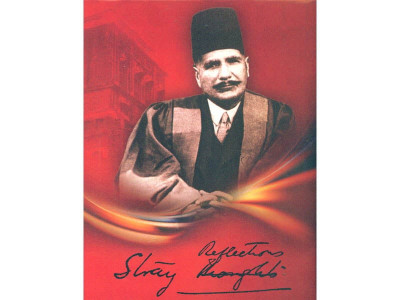
<p>In a <i>nazm </i>dedicated to the Mosque of Cordoba, Allama Iqbal writes:</p>
<blockquote><p>“<i>Ah, woh mardaan-e-haq, woh Arabi shah-e-sawaar…jin ki nigahon ne ki tarbiyat-e-shaq-o-gharb. Zulmat-e-Europe mein thi jin ki khirad raahbeen</i></p>
<p>(Ah! Those men of Truth! Those Arab cavaliers! Their insights have trained the East and the West, their reasoning was the guiding force in the darkness of Europe.)</p></blockquote>
<p>Today, the Muslim scholars of al Andalus are denied due credit. The writing of history must give recognition to stories which are buried deep beneath the debris of biases. Tolerating contradictions, relishing differences and cherishing knowledge were the very values which allowed the people of al-Andalus to reach the unprecedented pinnacle of civilisation. These values are not ones which the Muslims of al-Andalus contrived to suit their circumstance. Rather, these were values which had been made possible by Islam. In a lamentable turn of fate, the West, which benefitted from them, and the East, eager to distance itself from everything ‘Western’,  have disowned their own values. Differences have now been frozen into permanence. Books only scream out narratives of violence and bloodshed when telling the history of Islam.</p>
<p><i>Published in The Express Tribune, Sunday Magazine, February 24<sup>th</sup>, 2013.</i></p>
<p><i>Like </i><a href="https://www.facebook.com/ETribuneMag"><i>Express Tribune Magazine on Facebook</i></a><i> to stay informed and join the conversation. </i></p>
</p>
			<br clear="all"/>
		]]>
		</description>

		<media:content width="424" height="318"
							isDefault="true" medium="image" url="http://i1.tribune.com.pk/wp-content/uploads/2013/02/509495-image-1361283371-812-640x480.JPG">
			<media:title>image 02</media:title>
			<media:description>Our minds grow closed, our books remain unread and our true history is forgotten. But there exists a glorious past, the example of which can erase the shadows of the present and illuminate our future. ILLUSTRATION: JAMAL KHURSHID</media:description>
			<media:thumbnail url="http://i1.tribune.com.pk/wp-content/uploads/2013/02/509495-image-1361283371-812-160x120.JPG" width="160" height="120" />
      </media:content>

		<wfw:commentRss></wfw:commentRss>
		<slash:comments>11</slash:comments>
	</item>
		<item>
		<title>Karachi Literature Festival: History lesson leaves many squirming in their seats </title>
		<link>http://tribune.com.pk/story/508544/karachi-literature-festival-history-lesson-leaves-many-squirming-in-their-seats/</link>
		<pubDate>Sun, 17 Feb 2013 06:14:54 +0000</pubDate>

		<guid isPermaLink="false">http://tribune.com.pk/?p=508544</guid>

		<description>
		<![CDATA[
			<a href="http://tribune.com.pk/story/508544/karachi-literature-festival-history-lesson-leaves-many-squirming-in-their-seats/">
				<img src="http://i1.tribune.com.pk/wp-content/uploads/2013/02/508544-AGNooraniJAhmedAndreyDemidovHamidaKhuhroPHOTOEMAANIS-1361081565-694-160x120.JPG" width="160" height="120" alt="" />
			</a>
			<p><div><strong class='location'>KARACHI:&nbsp;</strong>
<p><strong>An emotive voice resonated in Room 007 of the Beach Luxury Hotel in Karachi on Saturday. “We were exploited by him!” said Indian constitutional expert and historian A G Noorani, when somebody mentioned Quaid-e-Azam Muhammad Ali Jinnah. “We don’t know this because we’ve been taught not to question.”</strong></p>
</div>
<p>The session titled ‘Does History Matter in Pakistan?’ held on day two of the fourth Karachi Literature Festival left many audience members squirming in their seats. Others made no effort to hide their frowns.</p>
<p>“The problem is that we aren’t ready to sacrifice the sacred cows,” thundered an aging Noorani, obviously upset by what he termed as the “exploitation of Indian Muslims at the hands of Jinnah.”</p>
<p>A lady from the audience stood up in a huff and called out, “This is Jinnah’s Pakistan, sir. And that’s the end of it.” A gentleman chimed in and said, “Spare the Quaid, please!”</p>
<p>“It isn’t just about the Quaid,” responded Noorani. He counted Jawaharlal Nehru, a central figure in Indian politics of the 20th century, and the much revered Mohandas Gandhi, among such “sacred cows”. Historian and academic Hamida Khuhro seemed to agree with Noorani, but with some caution. “Indeed, the Quaid himself was not a true democrat.” More frowns, more squirming, some angry whispers.  “The problem is that facts are hidden. The problem is that the truth is caged. There are things nobody can question, and so nobody can tell you exactly what happened in the past,” she said. “People get punished for asking certain questions. Hence, the closure of research is no surprise. Neither are unfounded beliefs.”</p>
<p>Having taught history in universities all over Sindh, Khuhro said she is very dissatisfied by the research which trickles down to classrooms. “There are just too many taboos. Teaching suffers because you have to be chary of ideologies all the time. The bigger problem is that Pakistan’s ideology is contested. It has not been defined properly, and yet it holds you prisoner.”  The panel, which included Khuhro, Noorani, and Russian diplomat Andrey Demidov, agreed with what Khuhro pointed out as a “rather skewed” approach to Pakistan’s history.</p>
<p>“The narrative of history which people buy is an example of ‘official historiography’ &#8211; a version of history written to favour those in power. In both India and Pakistan, the most popular version of history is of this kind,” said Noorani.  Having been posted to Pakistan only recently on a diplomatic assignment, Demidov finds the current scholarship on the country’s history lacking both detail and depth. “There is no shortage of books on the Partition. But what about Mohenjo Daro and Taxila?”</p>
<p>Being interested in the histories of various civilisations which left their mark on Pakistan’s soil, the diplomat is forced to refer to foreign scholarship. There are hardly any good historians in Pakistan who have researched the “glorious intermingling of the Greek and South Asian cultures which happened in Taxila in around 5 BCE” or the “impact of the Mughals &#8211; a people of art, beauty and philosophy.”<em></em></p>
<p><em>Published in The Express Tribune, February 17<sup>th</sup>, 2013.</em></p>
</p>
			<br clear="all"/>
		]]>
		</description>

		<media:content width="424" height="318"
							isDefault="true" medium="image" url="http://i1.tribune.com.pk/wp-content/uploads/2013/02/508544-AGNooraniJAhmedAndreyDemidovHamidaKhuhroPHOTOEMAANIS-1361081565-694-640x480.JPG">
			<media:title>AG Noorani, J Ahmed, Andrey Demidov, Hamida Khuhro- PHOTO EMA ANIS</media:title>
			<media:description>(From left to right) AG Noorani, J Ahmed, Andrey Demidov and Hamida Khuhro. PHOTO: EMA ANIS/ EXPRESS</media:description>
			<media:thumbnail url="http://i1.tribune.com.pk/wp-content/uploads/2013/02/508544-AGNooraniJAhmedAndreyDemidovHamidaKhuhroPHOTOEMAANIS-1361081565-694-160x120.JPG" width="160" height="120" />
      </media:content>

		<wfw:commentRss></wfw:commentRss>
		<slash:comments>27</slash:comments>
	</item>
		<item>
		<title> Provinces, promises and Maulana Azad</title>
		<link>http://tribune.com.pk/story/478297/provinces-promises-and-maulana-azad/</link>
		<pubDate>Tue, 11 Dec 2012 17:06:44 +0000</pubDate>

		<guid isPermaLink="false">http://tribune.com.pk/?p=478297</guid>

		<description>
		<![CDATA[
			<a href="http://tribune.com.pk/story/478297/provinces-promises-and-maulana-azad/">
				<img src="http://i1.tribune.com.pk/wp-content/uploads/2012/12/478297-FaizaRahmanNew-1355243232-881-160x120.JPG" width="160" height="120" alt="" />
			</a>
			<p><p>The Hazara and South Punjab provinces are the <a href="http://tribune.com.pk/story/475394/electioneering-ppp-mulls-strategy-for-south-punjab-province/">newest political jackpots</a>. For rival parties, the promise of these provinces is synonymous with electoral gain. For the Hazara and Seraiki ethnicities, these provinces will afford a split from a national identity, which alienates and intimidates them. As the clamour of provincial slogans pierces right through the fabric of tolerance and national wholeness, one can’t help but reminisce of Maulana Abul Kalam Azad.</p>
<p>Though his controversial autobiography remained banned for years and his references carefully weeded out of history textbooks, <a href="http://tribune.com.pk/story/120353/maulana-abdul-kalam-azad-a-single-man/">Azad’s legacy remains timeless</a>. A devout Muslim leader, who served as president of the Indian National Congress during the turbulent times of World War II, Azad predicted the failure of the Pakistani state narrative to serve as a binding force and the consequent rise of disparate identities, just when the zeal of independence was running wild in the veins of the All India Muslim League. Fearful of the Partition’s aftermath, he knew that the diverse people of northwest India were much more than just ‘Muslim’, whose sub-nationalities could not be fused under a whole new, artificially-constructed national identity — specially an identity whose foundations rested on nothing but a common faith. Dreading the chaos, bloodshed and suppression that he foresaw as Pakistan’s future, Azad opposed the partition of India.</p>
<p>In 1940, a belligerent segment of population decided to detach from India and carve out a whole new identity to define itself. The story of <em>Tehrik-e-Pakistan</em> (Pakistan Movement), told as the glorifying beginnings of freedom, was perhaps the portent of lifelong turmoil for millions of Indian Muslims. Quite unsurprisingly, the movement failed to produce a durable identity for Indian Muslims to unite under. Its religious slogan failed to overpower people’s cultural distinctiveness.</p>
<p>It can’t be denied that several Muslims nursed political grievances against the Congress and the British, however, a territorial separation was perhaps unnatural, unneeded and also unjust. Furthermore, quite unlike what history textbooks tell, such a separation won qualified support. In his autobiography titled <em><a href="http://www.amazon.com/India-Wins-Freedom-Maulana-Kalam/dp/8125005145">India Wins Freedom</a></em>, Azad writes, “I have said that the Muslim League enjoyed the support of many Indian Muslims but there was a large section in the community which had always opposed the League.”</p>
<p>While Hindus dreaded losing a part of India, many Muslims dreaded the daunting task of chalking up a national identity from scratch. For Azad, the solution to communal hostilities was simple: Hindu-Muslim unity within a stringently secular India. He believed that the decision of a territorial divide was in itself un-Islamic, which challenged the Islamic merits of Pakistan’s nationhood most glaringly. Furthermore, military rule, an incompetent democracy and the rise of ethnic groups were some of the vices he said would plague the new country.</p>
<p>Is Azad’s legacy any relevant to the current demand for new provinces? Yes, it is. It must be understood that the demand for Hazara and South Punjab provinces is being made by two distinct ethnic groups. Though the purely ‘administrative’ purpose of these future provinces has been regularly underscored, one must question their very ethnic nature. As <a href="http://tribune.com.pk/story/475213/minorities-rights-level-of-intolerance-on-the-rise-in-pakistan/">intolerance runs amok and alienation of minorities</a> reaches whole new heights every day, appropriation of authoritative powers from the centre becomes necessary for a people to salvage security, public utilities and basic rights. History stands embarrassed as the demand for new provinces proves that, today, sub-nationalities take precedence over Pakistani nationhood. As Azad predicted, the many ethnic identities of northwest India have not fused into Pakistan’s wavering and dubitable nationhood.</p>
<p><em>Published in The Express Tribune, December </em><em>12<sup>th</sup>, 2012.</em></p>
</p>
			<br clear="all"/>
		]]>
		</description>

		<media:content width="424" height="318"
							isDefault="true" medium="image" url="http://i1.tribune.com.pk/wp-content/uploads/2012/12/478297-FaizaRahmanNew-1355243232-881-640x480.JPG">
			<media:title>Faiza Rahman  - New</media:title>
			<media:description>The writer is a sub-editor for the National pages of The Express Tribune and holds a BSc (Hons) in political science from LUMS
faiza.rahman@tribune.com.pk</media:description>
			<media:thumbnail url="http://i1.tribune.com.pk/wp-content/uploads/2012/12/478297-FaizaRahmanNew-1355243232-881-160x120.JPG" width="160" height="120" />
      </media:content>

		<wfw:commentRss></wfw:commentRss>
		<slash:comments>50</slash:comments>
	</item>
		<item>
		<title>The water-kit hoopla: No shortcuts in innovation, says Hoodbhoy</title>
		<link>http://tribune.com.pk/story/460147/the-water-kit-hoopla-no-shortcuts-in-innovation-says-hoodbhoy/</link>
		<pubDate>Sat, 03 Nov 2012 04:40:49 +0000</pubDate>

		<guid isPermaLink="false">http://tribune.com.pk/?p=460147</guid>

		<description>
		<![CDATA[
			<a href="http://tribune.com.pk/story/460147/the-water-kit-hoopla-no-shortcuts-in-innovation-says-hoodbhoy/">
				<img src="http://i1.tribune.com.pk/wp-content/uploads/2012/11/460147-DrPervezPHOTOSARAHMUNiR-1351887716-247-160x120.JPG" width="160" height="120" alt="" />
			</a>
			<p><div><strong class='location'>KARACHI:&nbsp;</strong>
<p><strong>The appeal of ‘crackpot’ science is soaring in a country which spends a monstrous budget on scientific research, but still witnesses immense following for quacks like Agha Waqar who popularise incorrect concepts of science, said Dr Pervez Hoodbhoy.</strong></p>
</div>
<p>Speaking at a gathering of students and science enthusiasts at The 2nd Floor (T2F), Karachi, Dr Hoodbhoy said that Agha Waqar’s fame is the direct result of neglect towards science. Waqar, an ‘inventor’ from Khairpur, had earlier claimed to produce a ‘fuel replacement’ for cars, which allows one to supplant fossil fuels with water. In a furious confrontation on national television, he had debunked Waqar’s claims.</p>
<p>Dr Hoodbhoy has repeatedly said that such a fuel replacement goes against the Second Law of Thermodynamics. “Crackpots like Agha Waqar are in every country. However, never has such a fraud won backing from the government,” he said. “Imagine cabinet ministers and the president himself endorsing such an invention. The comedy, however, is the country’s top-rated scientists are championing the ‘invention’ without a thorough investigation.”</p>
<p>In the past seven to eight years, the Higher Education Commission has sponsored an overwhelming number of research projects and PhDs in science subjects, Dr Hoodbhoy added. However, this serves as a poor indicator of scientific progress, as much of the produced research is shoddy and plagiarised. “An approved PhD thesis [on the quantitative study of chromotherapy], supervised by a leading faculty member of a country’s prominent university, was reviewed with shock by physics Nobel laureate Steven Weinberg, who said that the candidate hardly deserved a doctorate,” said Hoodbhoy.</p>
<p>Throwing money towards science was not the solution to widespread ignorance, rather emphasis should be laid on fine-tuning teaching practices at schools and colleges, Dr Hoodbhoy claimed. He added that crackpot science will win attention when there is aversion towards scientific rationality, and the problem could only be nipped in the bud through education.</p>
<p>Lamenting Waqar’s fraudulence, Dr Hoodbhoy said that as a people, Pakistanis were constantly in search of extraordinary solutions to problems. “We are desperate for miracles. We are desperate for anything which might ease things for us, even if it comes in the form of nonsensicalities. Scientific solutions don’t come through shortcuts, instead, they come through years of rigorous training and hard work.”</p>
<p><em>Published in The Express Tribune, November 3<sup>rd</sup>, 2012.</em></p>
</p>
			<br clear="all"/>
		]]>
		</description>

		<media:content width="424" height="318"
							isDefault="true" medium="image" url="http://i1.tribune.com.pk/wp-content/uploads/2012/11/460147-DrPervezPHOTOSARAHMUNiR-1351887716-247-640x480.JPG">
			<media:title>Dr Pervez-PHOTO-SARAH MUNiR</media:title>
			<media:description>Dr Pervez Hoodbhoy speaking at a gathering of students and science enthusiasts at The 2nd Floor (T2F) in Karachi on Friday. PHOTO: SARAH MUNiR</media:description>
			<media:thumbnail url="http://i1.tribune.com.pk/wp-content/uploads/2012/11/460147-DrPervezPHOTOSARAHMUNiR-1351887716-247-160x120.JPG" width="160" height="120" />
      </media:content>

		<wfw:commentRss></wfw:commentRss>
		<slash:comments>25</slash:comments>
	</item>
		<item>
		<title>Labyrinth of imagination: The Urdu works of Qurratulain Haider</title>
		<link>http://tribune.com.pk/story/448676/labyrinth-of-imagination-the-urdu-works-of-qurratulain-haider/</link>
		<pubDate>Mon, 08 Oct 2012 17:30:08 +0000</pubDate>

		<guid isPermaLink="false">http://tribune.com.pk/?p=448676</guid>

		<description>
		<![CDATA[
			<a href="http://tribune.com.pk/story/448676/labyrinth-of-imagination-the-urdu-works-of-qurratulain-haider/">
				<img src="http://i1.tribune.com.pk/wp-content/uploads/2012/10/448676-UrduliteraturePhotopublicity-1349712978-271-160x120.JPG" width="160" height="120" alt="" />
			</a>
			<p><div><strong class='location'>KARACHI:&nbsp;</strong>
<p><strong><em>‘Tu samnay hai, kis tarha tujhay dekhun, nazara darmiyan hai’</em></strong></p>
</div>
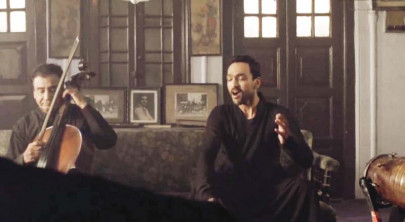
<p>On Saturday evening, The Second Floor (T2F) was packed with enthralled readers absorbed in the masterful dramatic recital of Qurratulain Haider’s short-story <em>Nazara Darmiyan Hai</em>. The story is nothing short of a deep plunge into the quandary of human emotions. Punctuated by tastefully selected instrumentals, the dramatic reading of this <em>afsana </em>was yet another triumph for Zambeel Dramatic Readings — the trio of Saife Hasan, Asma Mundrawala and Mahvash Faruqi, which holds regular readings from notable Urdu works to rekindle interest and celebrate literature with a touch of theatrics.</p>
<p>Love devoid of union and a union devoid of love — this is the theme of Haider’s <em>Nazara Darmiyan Hai</em>. The poignant notes of a violin rang through the room as Khursheed Alam was reminded of Pahoja — the Parsi music teacher he met in Paris. She remained a part of his life after even her death; not as a woman who brightened his dreary days, but as a painful memory he could not rid himself of. He married Almaas Begum in a curious turn of fate. This duality of pleasure and pain has been orchestrated to perfection by the author.</p>
<p>Haider’s love affair with the pen only just begins here. She wrote short stories which rivaled those by Krishan Chander and Ismat Chughtai, but she mastered the novel like no Urdu writer ever did. <em>Aag Ka Darya</em>, her magnum opus, is the novel which is also known to be the crowning glory of Urdu literature. The plot is spine-tingling and simply genius. It traces the circumstances of a single human soul across four eras in history — the modern, the medieval, the pre-medieval, and the colonial. In these different eras, the soul materialises into different characters. Intrinsically, however, it remains the same.</p>
<p>It wouldn’t be wrong to assert that no Urdu writer has been able to pen down a plot as extensive as that of <em>Aag Ka Darya</em>. Asif Farrukhi, renowned writer and critic, invited to present his insight on the author’s work, told <em>The Express Tribune</em>: “Qurratulain Haider was a writer whose imagination knew no bounds. It was for this very reason that she attempted to write this novel. She needed several pages to put all that imagination into words.” Although Haider is best known for <em>Aag Ka Darya</em>, she has also written other novels including <em>Chandni Begum</em> and <em>Aakhir-e-Shab Ke Hamsafar</em>. The latter won her the Jnanpith Award, which is one of the highest literary honours in India.</p>
<p>The soaring tide of neglect towards Urdu literature has wiped away the rich legacy of Haider’s work, as Farrukhi said: “Literature used to be a household affair. People in Karachi used to flock outside their houses and discuss novels and poems by new writers. The enthusiasm for good writing is now dead, which is why hardly any Urdu writer proceeds with something as ambitious as a novel.”</p>
<p>Zambeel Dramatic Readings engages in the much-needed exercise of picking up dusty literary volumes from forgotten shelves, opening their yellowed pages and presenting them in a refreshing manner. Here’s to hoping that it continues to hold such readings.<em></em></p>
<p><em>Published in The Express Tribune, October 9<sup>th</sup>, 2012.</em></p>
<p>Like Life &amp; Style on <a href="https://www.facebook.com/ETLifeandStyle">Facebook</a> and follow at <a href="https://twitter.com/ETLifeandStyle">@ETLifeandStyle</a> for the latest in fashion, gossip, entertainment</p>
</p>
			<br clear="all"/>
		]]>
		</description>

		<media:content width="424" height="318"
							isDefault="true" medium="image" url="http://i1.tribune.com.pk/wp-content/uploads/2012/10/448676-UrduliteraturePhotopublicity-1349712978-271-640x480.JPG">
			<media:title>Urdu literature04-Photo-publicity</media:title>
			<media:description>Zambeel Dramatic Readings aim to revive the love for Urdu literature. PHOTO: PUBLICITY</media:description>
			<media:thumbnail url="http://i1.tribune.com.pk/wp-content/uploads/2012/10/448676-UrduliteraturePhotopublicity-1349712978-271-160x120.JPG" width="160" height="120" />
      </media:content>

		<wfw:commentRss></wfw:commentRss>
		<slash:comments>0</slash:comments>
	</item>
		<item>
		<title>Celebrating the afsana through Manto</title>
		<link>http://tribune.com.pk/story/434373/celebrating-the-afsana-through-manto/</link>
		<pubDate>Mon, 10 Sep 2012 16:27:42 +0000</pubDate>

		<guid isPermaLink="false">http://tribune.com.pk/?p=434373</guid>

		<description>
		<![CDATA[
			<a href="http://tribune.com.pk/story/434373/celebrating-the-afsana-through-manto/">
				<img src="http://i1.tribune.com.pk/wp-content/uploads/2012/09/434373-MantoIllustrationjamalkhurshid-1347293284-141-160x120.JPG" width="160" height="120" alt="" />
			</a>
			<p><div><strong class='location'>KARACHI:&nbsp;</strong>
<div>
<p><strong>Stories can do magic. They plunge us into different worlds, introduce us to new people and expose us to their predicaments. They allow us to think new thoughts and imagine new possibilities — especially if they are <em>afsanas</em> from Saadat Hasan Manto’s pen. </strong></p>
</div>
<p>The theatrical group Zambeel Dramatic Readings comprises of a trio that loves stories; Asma Mundrawala, Mahvash Faruqi and Saife Hasan hold reading sessions where texts from literary fiction are read out, complete with intonations and sound effects to suit varying climaxes. Their session on Saturday evening saw the main room of T2F bursting full of people who had come to listen to readings of Manto’s work.</p>
<p>The reading focused on stories which presented the most vivid picture of the partition of India. Commenting on the day’s selection, Faruqi said, “Man is the same. The scenes from Manto’s partition stories are the very scenes that unfold before us today. People kill people and have no idea why they kill them. Society is just as desensitised as it was. Hence, these stories are important.”</p>
<p>The turnout was spectacular. Some people from the audience leaned against bookshelves or sat cross-legged on the floor. It was delightful to see so many people thirsty for a recital in times when the trend of reading or listening to Urdu literature is, at best, dead.  It was even more heartening that instead of grey-haired aunties and uncles, there were several young people in the audience, which is indeed a rare observation in times when recreation is mostly limited to American TV shows and endless hours on Facebook — which hardly give exposure to the breathtaking richness of Indo-Pak literature.</p>
<p>The evening began with excerpts from <em>Siyah Hashiye</em> which is a set of 32 vignettes highlighting everyday life during the Partition.  This was followed by a marvelous audio performance on <em>Gurmukh Singh ki Wasiyat</em> — a story based around a family in Amritsar caught in the crossfire of growing animosity between Muslims and Sikhs.</p>
<p>Reading sessions like these are perhaps the best way to celebrate the writings of any author. The story is simply read out, so that listeners may freely appreciate whatever appeals to them, quite unlike the pedantic treatment of the academia which likes to pinpoint the ‘accurate interpretation’ of literature by analysing stories to death.</p>
<p>The performances were directed by Asma Mundrawala, and were masterfully done. It was not a surprise to learn that all three performers of Zambeel Dramatic Readings are accomplished actors with Sheema Kirmani’s famous theatre group, Tehrik-e-Niswan.</p>
<p>The stories read carried the usual charisma of Manto’s words: terse, vivid and telling. Apart from promoting the literary value of Manto’s partition tales, such dramatic readings sessions also allow the young generation to lend ears to some crisp Urdu, which is spoken with perfect delivery and flawless pronunciation.</p>
<p>Lamenting the aversion to Urdu amongst society’s younger lot, Asma Mundrawala says, “Quite sadly, literature in this language has a limited appeal. We hope that these stories help young people take an interest in Urdu.”</p>
<p>The trio has managed to make some success. Saife Hassan says, “We haven’t yet performed a show which wasn’t full house.”</p>
<p><em>Published in The Express Tribune, September 11<sup>th</sup>, 2012.</em></p>
<p><a href="https://www.facebook.com/ETLifeandStyle">Like Life &amp; Style on Facebook for the latest in fashion, gossip, entertainment</a></p>
</div>
</p>
			<br clear="all"/>
		]]>
		</description>

		<media:content width="424" height="318"
							isDefault="true" medium="image" url="http://i1.tribune.com.pk/wp-content/uploads/2012/09/434373-MantoIllustrationjamalkhurshid-1347293284-141-640x480.JPG">
			<media:title>Manto-Illustration=jamal khurshid</media:title>
			<media:description>Reading sessions are perhaps the best way to promote both Urdu language and literature. ILLUSTRATION: JAMAL KHURSHID</media:description>
			<media:thumbnail url="http://i1.tribune.com.pk/wp-content/uploads/2012/09/434373-MantoIllustrationjamalkhurshid-1347293284-141-160x120.JPG" width="160" height="120" />
      </media:content>

		<wfw:commentRss></wfw:commentRss>
		<slash:comments>2</slash:comments>
	</item>
		<item>
		<title>A dream fulfilled: College gates open for guard’s daughter</title>
		<link>http://tribune.com.pk/story/412265/a-dream-fulfilled-college-gates-open-for-guards-daughter/</link>
		<pubDate>Tue, 24 Jul 2012 05:18:53 +0000</pubDate>

		<guid isPermaLink="false">http://tribune.com.pk/?p=412265</guid>

		<description>
		<![CDATA[
			<a href="http://tribune.com.pk/story/412265/a-dream-fulfilled-college-gates-open-for-guards-daughter/">
				<img src="http://i1.tribune.com.pk/wp-content/uploads/2012/07/412265-education-1343107057-878-160x120.jpg" width="160" height="120" alt="" />
			</a>
			<p><div><strong class='location'>KARACHI:&nbsp;</strong>
<p><strong>The burly hands of Akhtar clutched the metal bar of the gate with amazing strength. The darkened edges of skin around his eyes told tales of the many nights he had spent staying awake, patrolling this very gate. Pride radiates his sun-burnt face as he says, “Finally there was a letter from Lums which said that my daughter had been selected for the National Outreach Programme (NOP).” </strong></p>
</div>
<p>After retiring from his services at the Fauji Foundation, Akhtar was positioned to guard one of the two main gates at the Lahore University of Management Sciences (Lums). A jovial temper afforded him strong friendships with several students. He spoke admiringly of the young students he met every day. He admired their poise, their enlightened minds, their seasoned interactions, their endless privileges, and most of all – their successes.</p>
<p>“I knew that this was where my daughter, Zarmeen, truly belonged.” For Akhtar, the NOP was a rare beacon of hope. The programme allowed students from less privileged backgrounds to enrol at the university on full scholarship.</p>
<p>Zarmeen spent her childhood in the crisp mountain air of Soon Sakesar Valley in Khushab district. Her gifted mind thrived on simple food and much exercise. The only school of note in the valley was the one associated with the Fauji Foundation. While Akhtar worked at the foundation, Zarmeen took her lessons at the school. Referring to the years she spent there, Zarmeen says, “I couldn’t imagine not going to school so there was no alternative but to enrol here. The other private schools of the area are mediocre, and there aren’t any public schools here.”</p>
<p>Consistently topping every class, Zarmeen is aware of the worth of good education, “There are very few opportunities for us here. I left the valley after finishing my Matric and am now enrolled at the Punjab College in Sargodha to complete my FSc. I live in the hostel here.”</p>
<p>She explains that for a long time, her father was the only breadwinner for the family and sometimes his income would fall short of her education expenses. At times like these the family would suffer, but there was no interruption in Zarmeen’s schooling.</p>
<p>With her fluent Urdu tinged with a Punjabi accent, Zarmeen throws in several words from English as she says, “I had seen some educated people from the city. The way they spoke, the way they carried themselves – it made me want to be like them.”  She adds proudly: “Besides, I want to be of some use to my country.”</p>
<p>Zarmeen explains that Akhtar convinced her to apply to Lums. He had taken some time off duty, and procured all the necessary forms. “It was partly because of my father’s insistence that I applied. I can’t wait to clear the NOP training session and join the BSc honors programme at the Suleman Dawood School of Business.”</p>
<p>However, Zarmeen exhibits a keen foresightedness by having a back-up plan ready in case she is not able to study at Lums. “I’m quite sure that I’ll live through the training session since the syllabus isn’t difficult. But if it doesn’t work out, then I’ll continue with medicine, become a doctor and serve in the army. I have a great love for our army.”</p>
<p>It was a sweltering summer night in Lahore. A bead of sweat trickles down Akhtar’s brow, and drips off his chin. His gaze is fixated afar as he says, “I have dreamt many dreams for my daughter, and I will work hard to fulfil them.” His clutch on the metal bars of the gate seems to tighten.</p>
<p><em>Published in The Express Tribune, July 24<sup>th</sup>, 2012.</em></p>
<p>&nbsp;</p>
</p>
			<br clear="all"/>
		]]>
		</description>

		<media:content width="424" height="318"
							isDefault="true" medium="image" url="http://i1.tribune.com.pk/wp-content/uploads/2012/07/412265-education-1343107057-878-640x480.jpg">
			<media:title>education</media:title>
			<media:description>Zarmeen is to enrol on a merit scholarship at LUMS, where her father patrols the entrance.</media:description>
			<media:thumbnail url="http://i1.tribune.com.pk/wp-content/uploads/2012/07/412265-education-1343107057-878-160x120.jpg" width="160" height="120" />
      </media:content>

		<wfw:commentRss></wfw:commentRss>
		<slash:comments>69</slash:comments>
	</item>
		<item>
		<title>A minute for Manto</title>
		<link>http://tribune.com.pk/story/408046/a-minute-for-manto/</link>
		<pubDate>Fri, 13 Jul 2012 19:16:20 +0000</pubDate>

		<guid isPermaLink="false">http://tribune.com.pk/?p=408046</guid>

		<description>
		<![CDATA[
			<a href="http://tribune.com.pk/story/408046/a-minute-for-manto/">
				<img src="http://i1.tribune.com.pk/wp-content/uploads/2012/07/408046-SaadatHasanMantophotofile-1342204444-426-160x120.JPG" width="160" height="120" alt="" />
			</a>
			<p><div><strong class='location'>KARACHI:&nbsp;</strong>
<p><strong>Local literary circles have declared 2012 as the year to celebrate Saadat Hasan Manto’s genius. The grand master of Urdu fiction, Intezar Hussain writes that this year of celebration, “Provides an opportunity to revive our memory about the writer, to make a re-assessment of his works and pay homage to him.”</strong></p>
</div>
<p>But should we really pay homage to a perverted alcohol addict who loved to write about sex? Yes, we must. We must halt our jargons on the Nato supply routes, the Higgs boson and Babar Awan’s juridical theatrics, to think for a moment as to what it really means to be human.</p>
<p>Man is but a quixotic heap of whimsicalities, alternating between happiness and sorrow.  Our tempers and humours do not adhere to state constitutions or party manifestos.  Every single day, we rattle bumpily along a mad roller-coaster of fluctuating tempers &#8211; quite independently of whether democracy survives, America declines or Zardari resigns.</p>
<p>Saadat Hasan Manto knew. He knew that human irrationality had a rationality of its own. He knew that it were not the state or the parliament that mattered. He knew that it weren’t these muddled ideologies or garbled theories that mattered. It was the erratic rattle of the roller-coaster that matter. It was all very surreptitious and bizarre.</p>
<p>He knew that the 20-something Salma nursed deep within her the womanly desire for love and validation. He knew that she was ashamed to admit this. It was this raging tempest within her subconscious that lured her to the bed of a strange man, after a girlfriend enticed her to seek a man’s company. “Bus Stand” is a story of weak resolves and strong impressionability. It is not Salma’s story. It is your story. It is the story of that time when the bastion of your promises and principles collapsed, and you were crushed within the ruins &#8211; severely disappointed in yourself, burdened with guilt, but gripped with a momentary feel of glee for having ventured thither.</p>
<p>Manto’s characters breathe within our very skins: the rashness of the demented Sikh detainee in “Toba Tek Singh”, the fresh, puberty-ridden sensitivities of young Masood in “Dhuaan”, Man Mohan’s obsession with the attractive voice of an anonymous female caller in “Badshahat Ka Khatma”, the bored and destitute Sultana’s yielding to the attentions of a shady Hindu man in “Kali Shalwar” – they all tell us our own stories. They slide your veneers away, mirror the demon within you, and render you attentive to your own selfishness, helplessness and whimsicalities.</p>
<p>Like Iqbal, Manto reached the pinnacle of fame posthumously. Manto’s genius, however, was celebrated secretly. His work could not be read or quoted in public gatherings without meriting the contempt of many men and women who hated his “obscenity”. His work was severely contested in literary circles for this “obscenity”, and some of his short stories like “Bu” and “Thanda Gosht” were censored by the state. It is but a wonder to note that Manto’s vivid display of the human, devoid of all the pretentions of affected language, is disdained upon as “obscene”.</p>
<p>Stories need not have a purpose, but one must remember that this was not the case with Manto’s stories. They had a purpose: to reveal the human, to instill empathy and expose the many variegations of human nature. He was not interested in catering to the pornographic pleasure of his readers. Had Manto aspired to the latter, he would never have sewn his plots in the political, social and cultural ramifications of his day. Besides, Manto was both a journalist and a script-writer. A very telling book on his life called “Manto Mera Dost”, written by Mohammad Asadullah, reveals that Manto was a man who read widely and spent many hours a day reflecting in quiet.</p>
<p>His writing endeavors begin with the Urdu translations of the works of Oscar Wilde and Anton Chekov. His insightful critiques on Russian literature lead to his christening as “Mahir-e-Roosiyaat”. He remained a journalist by profession for several years. He was thus a man of substance and intellect. To discount his great literary creativity as pure eroticism (and hence “obscene”) is hardly plausible.</p>
<p>But yes, Manto’s work is not for children. It is not for those whose religious sensibilities waver upon the description of a rape scene. It is not for those whose moral fibers weaken upon the sensual description of a woman’s body. It is for those who understand that these descriptions serve a higher purpose. They seek to shatter our impassiveness and prod awake our slumbering conscience.</p>
<p>It is perhaps time we take pride in this great writer and see to a Manto Chowrangi, a Manto Park and perhaps a Manto International Airport too.</p>
<p><em>Published in The Express Tribune, July 14<sup>th</sup>, 2012. </em></p>
</p>
			<br clear="all"/>
		]]>
		</description>

		<media:content width="424" height="318"
							isDefault="true" medium="image" url="http://i1.tribune.com.pk/wp-content/uploads/2012/07/408046-SaadatHasanMantophotofile-1342204444-426-640x480.JPG">
			<media:title>Saadat Hasan Manto-photo-file</media:title>
			<media:description>Saadat Hasan Manto knew that human irrationality had a rationality of its own. PHOTO: FILE</media:description>
			<media:thumbnail url="http://i1.tribune.com.pk/wp-content/uploads/2012/07/408046-SaadatHasanMantophotofile-1342204444-426-160x120.JPG" width="160" height="120" />
      </media:content>

		<wfw:commentRss></wfw:commentRss>
		<slash:comments>5</slash:comments>
	</item>
	
</channel>
</rss>
<!-- Performance optimized by W3 Total Cache. Learn more: http://www.w3-edge.com/wordpress-plugins/

Page Caching using apc
Database Caching 10/40 queries in 0.025 seconds using memcached
Object Caching 1414/1587 objects using apc

 Served from: tribune.com.pk @ 2013-06-20 14:43:30 by W3 Total Cache -->