<?xml version="1.0" encoding="UTF-8"?>
<rss version="2.0"
	xmlns:content="http://purl.org/rss/1.0/modules/content/"
	xmlns:wfw="http://wellformedweb.org/CommentAPI/"
	xmlns:dc="http://purl.org/dc/elements/1.1/"
	xmlns:atom="http://www.w3.org/2005/Atom"
	xmlns:sy="http://purl.org/rss/1.0/modules/syndication/"
	xmlns:slash="http://purl.org/rss/1.0/modules/slash/"
	xmlns:media="http://search.yahoo.com/mrss/"
	>

<channel>
	<title>The Express Tribune &#187; Naveen Naqvi</title>
	<atom:link href="http://tribune.com.pk/author/185/naveen-naqvi/feed/" rel="self" type="application/rss+xml" />
	<link>http://tribune.com.pk</link>
	<description>Latest Breaking Pakistan News, Business, Life, Style, Cricket, Videos, Comments</description>
	<lastBuildDate>Thu, 24 May 2012 09:41:21 +0000</lastBuildDate>
	<language>en</language>
	<sy:updatePeriod>hourly</sy:updatePeriod>
	<sy:updateFrequency>1</sy:updateFrequency>
	<generator>http://wordpress.org/?v=3.2.1</generator>

		<item>
		<title>The road less travelled</title>
		<link>http://tribune.com.pk/story/356410/the-road-less-travelled-4/</link>
		<pubDate>Sun, 01 Apr 2012 06:38:36 +0000</pubDate>

		<guid isPermaLink="false">http://tribune.com.pk/?p=356410</guid>

		<description>
		<![CDATA[
			<a href="http://tribune.com.pk/story/356410/the-road-less-travelled-4/">
				<img src="http://i1.tribune.com.pk/wp-content/uploads/2012/03/356410-cover-1332943853-649-160x120.JPG" width="160" height="120" alt="" />
			</a>
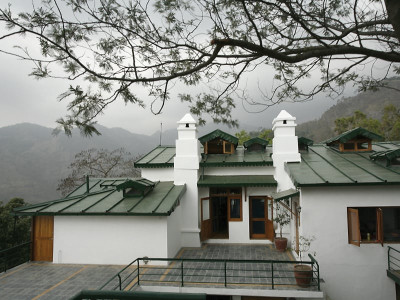
			<p><p><strong>Once you have been to Two Chimneys, the otherworldly boutique hotel, designed and run by Geetan Batra, and set in Gethia, a hill station in India’s Uttarakhand’s Nainital district, it will live in your heart forever.  Ever since we had first met, my friend Geetan and I had talked about the prospect of visiting Gethia and staying at Two Chimneys, her mountain resort. When she heard that I was traveling to India for a month of business, she demanded that I add Nainital to my ‘cities to visit list’ when applying for my Indian visa. One of the tit-for-tat diplomatic absurdities between the Pakistani and Indian states is the requirement of city-specific visas.</strong></p>
<p>Before work could begin, two days after I landed in Delhi, Geetan and I jumped into her red four-wheel-drive with destination Gethia on our minds. As I left the capital city, I had no sense of what was to come ahead.</p>
<p>While Delhi is historic, rich in culture and lush with foliage, it is also continually being reshaped, its bowels distending, rending, to reveal new bridges, buildings and subways. In the city, shopping malls and subway stations stand beside colonial architecture. The pace of development was more obvious in the outskirts as the haze of pollution from too many cars cleared from the midday sun to expose the scars and stains of progress in the shape of tenements, silos and factories. It looked like Karachi’s industrial area at first glance, but there was no Urdu script on the walls declaring political slogans, upcoming rallies or the ubiquitous deterrent to public urination in a country where there are no public toilets, “Dekho Kutta Paishaab Kar Raha Hai (Look, a dog is peeing here).”  Squat mud houses in fragrant, yellow mustard fields replaced high-rise homes. I was reminded of the Grand Trunk Road cutting across Pakistan’s Punjab, but here, the steel structures expelling ribbons of grey into the sky were unrelenting for the first half of the five-hour car journey. The traffic was constant, consisting largely of trucks, the back of each reading two words, Horn Please, which is what they did incessantly, calling to mind a gaggle of honking geese.</p>
<p>Women in royal blue, fuchsia pink and acid green worked the fields; I noticed that they were not singing like they do in the movies. There was another commonality — while the women tilled, the men sat in lazy circles, playing cards and smoking beedi. It may have been familiar, but it was not particularly reassuring. And then, just as the Dev Anand CD came to an end and we slipped in Geeta Dutt, the poplar plantations came into sight. Human beings have a knack for debasing the most sublime things and the poplar tree exemplifies this. When I saw the rows of spindly trunks rising out of clouds of mist hovering over the wintry soil, bare branches as frail as whiffs of smoke against the setting sun, I could not imagine that these statuesque trees were used mostly for plywood and boxes for packaging.</p>
<p>A railroad crossing allowed us to stretch our legs. The crawling blue (not green like the ones at Karachi Cantt Station) train crammed with people made me lament the state of Pakistan Railways. I wondered at the seemingly inconceivable prospect of the Pakistan Railways shutting down; luckily a few days later, it pulled back from the edge of ruin to drag its tired old bogeys along.</p>
<p>The next hour was spent passing through more towns before we hit the forest reserve where the temperature dropped by ten degrees. All eyes were intent upon spotting the elusive leopard that at least one person in the car claimed to have seen. But the shimmering spots across us were those of a deer, and my gaze was locked with its shining eyes until the car swerved, and the animal leapt into the trees.  The forest gave way to a winding road that revealed hills dotted with lights, a cluster of which at the highest point marked Nainital. Some distance below that, two warm yellow lights that are the beacons of Two Chimneys beckoned, making me sit at the edge of my seat in anticipation. I almost fell off it as we came face to face with a gigantic, garishly painted Hanuman placed incongruously in the midst of all that natural beauty by an ashram. To me, it didn’t seem very far from the Tariq Road roundabout and its centrepiece of a 20-foot-high, white, Pepsi-sponsored concrete monument that spells Allah — its hay pointing in a last flourish to one of the oldest and greenest graveyards in Karachi. However, both are dwarfed in comparison to the 120-foot-high Cristo Redentor statue in Rio de Janeiro. Ironically, the decidedly un-spiritual Pak-India border grows increasingly harder and much more militarised, and is now so brightly lit that it can be seen from space.  The path we were on was, given the frequency of travel on it, remarkably smooth and flat, even if it was spiralling in a (to me) particularly stomach-churning way. Geetan quietly rolled down her window a sliver out of consideration for my susceptibility to carsickness, claiming she needed the fresh air. Given that it was a chilly six degrees, I recognised the little white lie, and my faith in humanity was restored. A few minutes later, it was positively revivified. For the moment that you see Two Chimneys, it fills you with a sense of the profound.  It is the silence. Coming from the city, I’ll admit that my craving for quietude is in equal measure to my fear of it. It could go either way. Here, it embraced me, and unquestioning, I gave myself to it. It is the setting. At the edge of a cliff in the lower Himalayas, the property looks majestically down on valleys, slopes and steps cut out in mountains. The night sky was so thickly covered in stars that I could scarcely see the black; it was silver and aglow, shifting and expanding, pulling you in. Looking up at the constellations from a balcony at Two Chimneys, I had never been more acutely aware of my physical self as in that moment while also longing more than ever to be lifted out of myself.</p>
<p>It is the space. The window walls draw you into the liquid gold warmth of gleaming wood floors, lights and log fires without breaking the thread that binds you to the mountains, the night. You become a microcosm of your surroundings as they evoke a similar interiority in you — though my inner self may not have been quite so serene — while making you want to open yourself to the potentiality of the outside. Meta-conversations come easier in Gethia. It is the story. If you have read Tarun Tejpal’s The Alchemy of Desire set in Two Chimneys, the story may precede the space for you, although the space is what greets you from the cover of the book. Unknowingly, I chose the Willow Suite for its loft, its wide windows that face the fountain below and the swimming pool above, its door that opens onto the deck and the skylight over the bed. Each of the seven rooms has a wonderful view and, what is more difficult to achieve, its own distinctive character.</p>
<p>I later discovered that my room was the one in which the author had created night after night of erotic pleasure between the character, Catherine and her lover, Gaj Singh. There is also the other ‘true’ story of the European woman who built the original structure and, apparently, inhabited it even in death. As the tale goes, resentful of the new occupants, she beset renovation and construction with various obstacles until her name was engraved on a wooden plaque — Mme Durel’s Lodge, 1899 — and hung over the entrance. Her proprietary rights established, the spirit was appeased. I can tell you that my sleep in the bed of Mme Durel/Catherine was filled with dream, and I awoke with a sense of restless urgency.  And then there was the day. Geetan’s design of Two Chimneys with its decks, terraces, balconies, perches, levels, nooks, water bodies (swimming pool, fountain and pond), gardens and trees is ingenious. It reflects the landscape in its organic growth and preserves the integrity of the setting in ways that I did not immediately absorb — as layered as the place is — but discovered turn by turn, with every step I took. As the mountains took on ever-changing facades — splendid in sunbeam, shrouded in mist, rugged when overcast — so too did Two Chimneys offer itself anew in exploration.</p>
<p>All sections of Two Chimneys’ exterior are named — every name, each area worthy of comment. Watching the sun come up from the highest point, named the ‘Machaan’, the sky reddening, then paling, the silence filling with birdsong, a lone tractor ploughing the earth of the valley, the silver oak shimmering, true to its name, I felt overwhelmed. I was also inexplicably nostalgic — my ears searched for a familiar song, I was gripped by a longing for my parents, past and present loves drifted through my mind.</p>
<p>At the farthest point is ‘Land’s End’. I was told that during the monsoon months, you can see the mist rolling in as the bowl below fills to form a lake. On this winter’s day, I saw the young men of the town playing cricket. The words ‘Shabash, Shabash’ traveled up the mountainside much the same way they would have climed up the two floors of my seaside apartment back in Karachi. The front upper terrace named Charbagh has a fountain in its centre, a cosy sitting area and lush green trees — most planted personally by Geetan. Watching her plant a cluster of tomato saplings with tender yet strong hands, patting away at the soil with a kind of tough love, I was not surprised at how tall and firm those trees stand.</p>
<p>There are always levels at the lodge, and a few steps up from the terrace took me to an herb garden and a surface perfectly sized for two. The owners fondly refer to this nook as ‘Majnu ka Teela’ (Majnu’s Mound) for the pinkish light that slants across it at sunset, making it the perfect kissing spot. The counterpart of Charbagh at the opposing end is The Deck, a large terrace split in two with table settings, spectacular views of the mountains all around, a swimming pool running through it, and the sound of water falling from a fountain into a pond accentuating the serenity of the spot. In the day, this sound mingles with the chirping of birds and at night with the chirring of cicadas.  The day flows into night and night into day at Two Chimneys, and I floated along for the two days and three nights that I was there. On the third morning as the sun was coming up over Gethia, Delhi and Karachi too, the sky bringing in the blue, the birds beginning to sing, Kishore Kumar writing letters of love, I breathed in great big gulps partly out of sentimentality for the clean air and in some part to keep the carsickness down as we made our way down the winding road back to the city.</p>
<p><em>Published in The Express Tribune, Sunday Magazine, April 1<sup>st</sup>, 2012.</em></p>
</p>
			<br clear="all"/>
		]]>
		</description>

		<media:content width="424" height="318"
							isDefault="true" medium="image" url="http://i1.tribune.com.pk/wp-content/uploads/2012/03/356410-cover-1332943853-649-640x480.JPG">
			<media:title>cover 07</media:title>
			<media:description>The author goes to India, and finds a hidden sanctuary away from the hustle and bustle of urban Delhi.</media:description>
			<media:thumbnail url="http://i1.tribune.com.pk/wp-content/uploads/2012/03/356410-cover-1332943853-649-160x120.JPG" width="160" height="120" />
      </media:content>

		<wfw:commentRss></wfw:commentRss>
		<slash:comments>17</slash:comments>
	</item>
		<item>
		<title>Protesting against his release — but why?</title>
		<link>http://tribune.com.pk/story/134621/protesting-against-his-release--but-why/</link>
		<pubDate>Fri, 18 Mar 2011 19:33:15 +0000</pubDate>

		<guid isPermaLink="false">http://tribune.com.pk/?p=134621</guid>

		<description>
		<![CDATA[
			<a href="http://tribune.com.pk/story/134621/protesting-against-his-release--but-why/">
				<img src="http://i1.tribune.com.pk/wp-content/uploads/2011/03/Naveen-Naqvi-New11-160x120.jpg" width="160" height="120" alt="" />
			</a>
			<p><p>This morning when I looked out my window, I saw that the development along the beachfront was moving along at a good speed. There was now a wall of huge boulders that lined the shore. This made me think that if there were ever a cyclone or tsunami, those rocks would come hurtling onto my apartment building. When I looked to the left, I saw that the community of camel riders had increased. Despite the unprecedented 10 degree rise in temperature over the past few days, they were spending their days shelterless under the sun. I know that they had come to Karachi because there was little or no livelihood for them in their villages in interior Sindh.</p>
<p>When I left home, I drove along what used to be the main artery of our neighbourhood, and found that the route was blocked because the president was in town. Meanwhile, the fence that he was building in <a href="http://tribune.com.pk/story/127799/road-to-bilawal-house-will-take-2-months-to-complete/">the middle of the road</a> was coming along smoothly. My parents told me that it was almost impossible for them to get to their corner store because all the lanes behind his ‘house’ were blocked, and I did wonder at the brick wall that emerged overnight, blocking the mouth of their quiet lane. Coming back to the fence in the middle of the road, it has two layers of metal-plating and three layers of cement that separate our ‘fearless’ leader from us. I thought to myself that it must be a highly isolating experience, building that wall to keep himself from us. This made me conclude that things must be really bad, and if our president feels so paranoid, we do not stand a chance against whatever is out there that terrifies him so.</p>
<p>Further up, the policemen keeping our streets secure stopped a car, and asked the driver for Rs50, saying they hadn’t had tea the whole day. I know that people are particularly sympathetic to cops these days, but I must confess that I didn’t feel too bad.</p>
<p>As I kept going, I noticed that there were two new billboards selling lawn cloth, but at the same time there were at least 20 more people sleeping on the pavement along the shrine of <a href="http://tribune.com.pk/story/59617/twin-blasts-in-karachi/">Abdullah Shah Ghazi</a>. Some of them were heroin addicts, but most were families; mothers, fathers, grandparents and children. It occurred to me that the bulging stomachs of the children were caused by malnutrition, not because they were well-fed.</p>
<p>It was then that I heard about the protest at the press club against <a href="http://tribune.com.pk/story/133740/bon-voyage-raymond-davis/">the release of Raymond Davis</a>. Someone asked, “Well, what is the protest against? His release? His arrest? Is it that the families of those murdered by him allegedly took the money the Americans offered? Perhaps it’s that <a href="http://tribune.com.pk/story/134312/davis-release-rehearsed-one-day-earlier/">the deal was brokered by Shahbaz Sharif</a>, who is a bastion of Islam. Or maybe it is that the negotiation was done under the same Islamic laws that were responsible for the assassinations of Salmaan Taseer and Shahbaz Bhatti.”</p>
<p>Yes, this was certainly what we should be protesting, I thought.</p>
<p><em>Published in The Express Tribune, March 19<sup>th</sup>, 2011.</em></p>
</p>
			<br clear="all"/>
		]]>
		</description>

		<media:content width="424" height="318"
							isDefault="true" medium="image" url="http://i1.tribune.com.pk/wp-content/uploads/2011/03/Naveen-Naqvi-New11-640x480.jpg">
			<media:title>Naveen Naqvi New</media:title>
			<media:description>The writer is the co-founder and editor-in-chief of Gawaahi.com
naveen.naqvi@tribune.com.pk</media:description>
			<media:thumbnail url="http://i1.tribune.com.pk/wp-content/uploads/2011/03/Naveen-Naqvi-New11-160x120.jpg" width="160" height="120" />
      </media:content>

		<wfw:commentRss></wfw:commentRss>
		<slash:comments>39</slash:comments>
	</item>
		<item>
		<title>A camp for flood survivors</title>
		<link>http://tribune.com.pk/story/113644/a-camp-for-flood-survivors/</link>
		<pubDate>Thu, 03 Feb 2011 18:12:39 +0000</pubDate>

		<guid isPermaLink="false">http://tribune.com.pk/?p=113644</guid>

		<description>
		<![CDATA[
			<a href="http://tribune.com.pk/story/113644/a-camp-for-flood-survivors/">
				<img src="http://i1.tribune.com.pk/wp-content/uploads/2011/02/Naveen-Naqvi-New11-160x120.jpg" width="160" height="120" alt="" />
			</a>
			<p><p>In the Keamari Town Camp for <a href="http://tribune.com.pk/story/112215/post-flood-a-life-of-uncertainty-on-a-roadside/">flood survivors</a> relocated to Karachi, a woman with grey hair and strong hands sweeps the inside of her tent. It may be nothing more than a plastic sheet held down by four pegs, its makeshift doors flapping in the wind, but it is home. For now. Or perhaps forever. Her ever, at the very least. Girls collect sticks for the fire over which their mothers will cook dinner. A man, holding a knee-high metal stand that blooms in a bunch of fluorescent fabric flowers, waits outside a tent.</p>
<p>A camera dangling at his side, this is his mobile studio. He charges ten rupees for a photo, he tells me. A new bride pops out of her tent, a black bindi in the middle of her forehead, her dusky skin powdered and rouged. Are you ready, she asks the photographer, who holds up his flowery prop, indicating he is. I ask her if she will allow me to take her picture. He takes ten rupees; how much will you charge, she asks. When I explain that the picture I take will stay with me, she hides behind a wide smile and her tent, shakes her head, and says that it is not their tradition. Young men in groups saunter about aimlessly. Older men huddle together talking, on chairs placed in the shade of tents. A <a href="http://tribune.com.pk/story/111837/pakistani-children-haunted-by-images-of-flood-waters/">small child</a> sits at a makeshift store, selling packaged popcorn, sweets and candied sesame seeds.</p>
<p>This flood relief camp is one of many that have become home to the survivors, with daily routines sketched out for the hundreds of thousands of homeless who are unable to return to their villages. Those who have gone back regret it, the menfolk tell me, for their landlords, their feudal masters, are demanding a harvest of rice and wheat promised in exchange for seeds and fertiliser. The harvest that these rich <a href="http://blogs.tribune.com.pk/story/1546/exorcising-the-feudal/">‘agriculturalists’</a> are asking for never materialised because of the worst flood in Pakistan’s history. Our homes have dissolved into the earth, our fields destroyed, our animals dead or lost — what can we go back to, they ask.</p>
<p>Many of us have forgotten about the 20 million — a conservative estimate — that were affected. In a report titled “Six months into the floods”, Oxfam has reminded us of the urgent need to continue “a nationally led, pro-poor reconstruction programme&#8221;. In the <a href="http://www.dailytimes.com.pk/default.asp?page=20111\27\story_27-1-2011_pg7_26" target="_blank"><em>Daily Times</em>’ coverage of the story</a>, the paper points out that “the Pakistan government is due to stop emergency relief operations in most of the flood-affected areas from January 31.”</p>
<p>This would be a catastrophic move. As <a href="http://www.unicef.org/infobycountry/pakistan_57553.html">Unicef has revealed</a>, “a new humanitarian crisis: child malnutrition” has developed and “the crisis is the consequence of a combination of factors, including extreme poverty, poor diet, poor health, inadequate sanitation and hygiene, and a lack of education.”</p>
<p>We should try to reawaken some of that initial spirit that so many Pakistanis showed in the immediate aftermath of last year&#8217;s floods, and keep making any individual contribution we can.</p>
<p><em>Published in The Express Tribune, February 4<sup>th</sup> 2011.</em></p>
</p>
			<br clear="all"/>
		]]>
		</description>

		<media:content width="424" height="318"
							isDefault="true" medium="image" url="http://i1.tribune.com.pk/wp-content/uploads/2011/02/Naveen-Naqvi-New11-640x480.jpg">
			<media:title>Naveen Naqvi New</media:title>
			<media:description>The writer is a former morning TV show host 
naveen.naqvi@tribune.com.pk </media:description>
			<media:thumbnail url="http://i1.tribune.com.pk/wp-content/uploads/2011/02/Naveen-Naqvi-New11-160x120.jpg" width="160" height="120" />
      </media:content>

		<wfw:commentRss></wfw:commentRss>
		<slash:comments>4</slash:comments>
	</item>
		<item>
		<title>Fighting for a progressive Pakistan</title>
		<link>http://tribune.com.pk/story/101870/fighting-for-a-progressive-pakistan/</link>
		<pubDate>Mon, 10 Jan 2011 19:17:19 +0000</pubDate>

		<guid isPermaLink="false">http://tribune.com.pk/?p=101870</guid>

		<description>
		<![CDATA[
			<a href="http://tribune.com.pk/story/101870/fighting-for-a-progressive-pakistan/">
				<img src="http://i1.tribune.com.pk/wp-content/uploads/2011/01/Naveen-Naqvi-New11-160x120.jpg" width="160" height="120" alt="" />
			</a>
			<p><p>Ten years ago, <a href="http://blogs.tribune.com.pk/story/3850/pakistan-is-a-donkey-state/">Pakistan was a different place</a>. The country had many problems, as it has had since its very inception, but it was not somewhere a man would fire 40 bullets at an unarmed man’s back and be lauded as a hero. In the Pakistan of today there are rows of security checkpoints at every major street of the federal capital, and yet we feel unsafe — constantly asking for more police officers — who it seems will shoot us in our backs.</p>
<p>But then again, it was only 10 years ago that September 11 happened and the US waged two wars against Muslim majority countries, creating a world of increasing polarisation full of fear, suspicion and conspiracy. It also began the bombing of its most loyal ally, Pakistan, making drone attacks a daily occurrence.</p>
<p>Three decades ago, Pakistan was even more different, for the Soviet invasion of Afghanistan had not yet come to pass, leading to the propping of the brutal military dictator Ziaul Haq, who left us with<a href="http://blogs.tribune.com.pk/story/3794/burqa-bombs-and-intolerance/"> the absurd blasphemy laws</a> that exist now. Five decades ago, the pictures we see of this land bear no relation to the world outside my window. That was before 1971, when, through our own follies, we lost a chunk of ourselves and the nation was thrown into doubt over its very identity, the two-nation theory, the need for a separate homeland for Muslims. It was only after this that legislation was passed, during Zulfikar Ali Bhutto’s time, declaring Ahmadis ‘non-Muslims’.</p>
<p>All those things did happen and this is the Pakistan of today. However, it is also true that facts can change. In response to PPP MNA Sherry Rehman’s submission of a bill to amend the blasphemy laws, the religious parties announced two rallies — on December 31 and January 9. The turnout at the first was unimpressive and the strike ineffectual, especially in Lahore. According to news reports, the second attracted around 40,000 people. The glorification by Islamist parties and mainstream media outlets of Governor Salmaan Taseer’s assassin, Mumtaz Qadri, bolstered support<br />
for him.</p>
<p>As for those on the other side, those who want a change in the law, they know that they are vulnerable when they stand together and claim public space. They are painfully and mournfully aware of their vulnerability — but that has not stopped hundreds from coming out every day. We cannot believe that the possibility of a progressive Pakistan was laid to rest with the murdered politician. Certainly his daughter, Shehrbano Taseer, does not espouse that when she wrote in <em>The New York Times</em>, “We buried a heroic man, not the courage he inspired in others.” We cannot let his death<br />
go to waste.</p>
<p><em>Published in The Express Tribune, January 11<sup>th</sup>, 2011.</em></p>
</p>
			<br clear="all"/>
		]]>
		</description>

		<media:content width="424" height="318"
							isDefault="true" medium="image" url="http://i1.tribune.com.pk/wp-content/uploads/2011/01/Naveen-Naqvi-New11-640x480.jpg">
			<media:title>Naveen Naqvi New</media:title>
			<media:description>The writer is a former morning TV show host 
naveen.naqvi@tribune.com.pk</media:description>
			<media:thumbnail url="http://i1.tribune.com.pk/wp-content/uploads/2011/01/Naveen-Naqvi-New11-160x120.jpg" width="160" height="120" />
      </media:content>

		<wfw:commentRss></wfw:commentRss>
		<slash:comments>51</slash:comments>
	</item>
		<item>
		<title>Keep on pushing against the blasphemy law </title>
		<link>http://tribune.com.pk/story/93266/keep-on-pushing-against-the-blasphemy-law/</link>
		<pubDate>Wed, 22 Dec 2010 18:59:28 +0000</pubDate>

		<guid isPermaLink="false">http://tribune.com.pk/?p=93266</guid>

		<description>
		<![CDATA[
			<a href="http://tribune.com.pk/story/93266/keep-on-pushing-against-the-blasphemy-law/">
				<img src="http://i1.tribune.com.pk/wp-content/uploads/2010/12/Naveen-Naqvi-New11-160x120.jpg" width="160" height="120" alt="" />
			</a>
			<p><p>On November 25, 2010, former minister <a href="http://tribune.com.pk/author/1653/sherry-rehman/" target="_blank">Sherry Rehman</a> submitted a bill to the National Assembly seeking amendments to the blasphemy law. Since then, the religious parties of Pakistan have been in a tizzy. Aside from the announcement of two major rallies — one on December 31 and the other on January 8 — we see that the Council of Islamic Ideology (CII), or the ‘top Islamic body’ of Pakistan as it is known, has a response to <a href="http://blogs.tribune.com.pk/story/2576/here%E2%80%99s-to-you-sherry/" target="_blank">Rehman’s bill</a>.</p>
<p>I admit that I am wary of the Council. My scepticism stems from their reaction to what could have been a great achievement, the Domestic Violence (Prevention and Protection) Bill. Many claim that the legislature has not been implemented primarily because the Council <a href="http://tribune.com.pk/story/93167/shariat-court-terms-women-protection-act-clauses-repugnant/" target="_blank">labelled the bill as ‘discriminatory’</a> and argued that it would allow police to violate the ‘sanctity of the home,’ and lead to higher divorce rates. However, among other positive changes, it would have broadened the definition of abuse and created protection committees providing legal care and medical facilities to victims of abuse.</p>
<p>Interestingly, in October 2009 when the bill was moved in the Senate, it was a senior member of the Jamiat-e-Ulema-e-Islam (F), who raised the most vociferous objection to the Domestic Violence Bill. In November 2009, the same senior member of the JUI-F, Maulana Mohammed Khan Sheerani, was given the valued and influential position of the chairman of the CII.</p>
<p>I bring up all this to return to the matter of the blasphemy law and point out that while the CII’s watered down changes can be viewed as a counterproposal, they can also be seen as a <a href="http://blogs.tribune.com.pk/story/3271/on-blasphemy-clerics-and-intolerance/" target="_blank">major success for Rehman</a>. For it seems that those interested in maintaining the controversial laws sense a momentum for change that they cannot stop. To ensure a large turnout at the two rallies that I mentioned in the opening paragraph, the names of all their major players are being pushed. This includes all the leaders of ‘outlawed’ parties. Hafiz Saeed and his likes are ominously gathering in a show of strength under one banner. They could also find in this an opportunity to recover from the damage caused by the WikiLeaks cable that revealed Maulana Fazlur Rehman to have kowtowed to former US Ambassador Anne Patterson for power in government.</p>
<p>It may be true that most opponents of the blasphemy law, and I include myself in this, believe that the law should be repealed, scratched altogether. However, an amendment, specifically Sherry Rehman’s proposed amendments, can be a good start. At the very least, they will bring some change, some initiative, where there has been none for decades. As activist Beena Sarwar said to me, “politics is about compromise, dialogue and negotiation too.”</p>
<p>Rehman has also stated that she hopes this will be only the beginning. In this very newspaper, she wrote in moving words: “This is the time to push for repeal of the <a href="http://blogs.tribune.com.pk/story/3270/where-did-the-blasphemy-law-come-from/" target="_blank">blasphemy law</a> in the legislature. If that does not work, just like the Hudood repeal bills did not when we moved them, we need to build positions and craft laws that amend these laws so they become toothless&#8230;”</p>
<p>I say let us be roused by Rehman’s appeal to stand together to make things better in whatever way we each can. This could be that glimmer of hope for which we are constantly clamouring.</p>
<p><em>Published in The Express Tribune, December 23<sup>rd</sup>, 2010.</em></p>
</p>
			<br clear="all"/>
		]]>
		</description>

		<media:content width="424" height="318"
							isDefault="true" medium="image" url="http://i1.tribune.com.pk/wp-content/uploads/2010/12/Naveen-Naqvi-New11-640x480.jpg">
			<media:title>Naveen Naqvi New</media:title>
			<media:description>The writer is a former morning TV show host
 naveen.naqvi@tribune.com.pk</media:description>
			<media:thumbnail url="http://i1.tribune.com.pk/wp-content/uploads/2010/12/Naveen-Naqvi-New11-160x120.jpg" width="160" height="120" />
      </media:content>

		<wfw:commentRss></wfw:commentRss>
		<slash:comments>15</slash:comments>
	</item>
		<item>
		<title>Heal someone’s world </title>
		<link>http://tribune.com.pk/story/87064/heal-someones-world/</link>
		<pubDate>Tue, 07 Dec 2010 19:49:36 +0000</pubDate>

		<guid isPermaLink="false">http://tribune.com.pk/?p=87064</guid>

		<description>
		<![CDATA[
			<a href="http://tribune.com.pk/story/87064/heal-someones-world/">
				<img src="http://i1.tribune.com.pk/wp-content/uploads/2010/12/Naveen-Naqvi-New1-160x120.jpg" width="160" height="120" alt="" />
			</a>
			<p><p>In 2009, about three Pakistani children were sexually abused every day. A total of 2,012 reported cases of child sexual abuse were recorded from all over the country. To lend perspective to the figure revealed last year by the non-government organisation Sahil, let me add some numbers. <a href="http://blogs.tribune.com.pk/story/624/protecting-our-children/" target="_blank">Child abuse</a> is a global phenomenon. The Human Rights Watch World Report 2008 says that 150 million girls and 73 million boys around the world have experienced rape or other sexual violence. Most of it was perpetrated by members of their own family. The statistic does not necessarily mean there were more girls abused, although that is probable; it could indicate that many cases of abuse against boys go unreported, ironically for reasons of pride and honour.</p>
<p>Coming back to Pakistan and the Sahil report of last year, the type of abusers with the highest percentage was acquaintances at 81 per cent. The most vulnerable age group is from 11 to 15 years, while the second highest is 6 to 10. As these figures are those reported in newspapers, we <a href="http://blogs.tribune.com.pk/story/2713/women-in-fear-rape-cases-soar-across-pakistan/" target="_blank">cannot be sure</a> of how many cases go unreported to the police, media, or even guardians. Due to the shame attached to the act, abused children commonly blame themselves and remain silent. Given that, look again at the figure — 28 per cent of child abuse cases reported in Pakistan were of rape and sodomy. Fifteen per cent of the children were gang raped and gang sodomised.</p>
<p>I began thinking of this because of an e-campaign against child abuse that was meant to last till December 6. I came to know of the project while following the tweets of a young American Pakistani blogger — as she describes herself — named Mehreen Kasana. On Twitter, not only did she take on and down a few anti-activist bullies, she advised a well-known journalist on how to participate in the campaign and wrote about her own contribution. She spent the day at a government school teaching children how to draw and went on to say, “help children to draw, write and read. If they&#8217;ve been abused, give them the time and space for catharsis. You can heal someone&#8217;s world.”</p>
<p>Now I realise the limitations of Twitter, and I understand the problem with preaching to the choir and so on, but what I know from experience is that child abuse does not know class, race or religion. It is important to listen when young voices like that of <a href="http://blogs.tribune.com.pk/author/314/mehreen-kasana/" target="_blank">Mehreen Kasana</a> speak out against it. We all know that ‘no’ is the most frequently used word in the English language, but the way the world is progressing, it seems that ‘no’ may soon be ousted by ‘whatever.’ I find it heartening to see a young person choose the former.</p>
<p><em>Published in The Express Tribune, December 8<sup>th</sup>, 2010.</em></p>
</p>
			<br clear="all"/>
		]]>
		</description>

		<media:content width="424" height="318"
							isDefault="true" medium="image" url="http://i1.tribune.com.pk/wp-content/uploads/2010/12/Naveen-Naqvi-New1-640x480.jpg">
			<media:title>Naveen Naqvi New</media:title>
			<media:description>The writer is a former morning TV show host 
naveen.naqvi@tribune.com.pk
</media:description>
			<media:thumbnail url="http://i1.tribune.com.pk/wp-content/uploads/2010/12/Naveen-Naqvi-New1-160x120.jpg" width="160" height="120" />
      </media:content>

		<wfw:commentRss></wfw:commentRss>
		<slash:comments>8</slash:comments>
	</item>
		<item>
		<title>The downside of technology and the internet</title>
		<link>http://tribune.com.pk/story/81871/the-downside-of-technology-and-the-internet/</link>
		<pubDate>Thu, 25 Nov 2010 21:54:10 +0000</pubDate>

		<guid isPermaLink="false">http://tribune.com.pk/?p=81871</guid>

		<description>
		<![CDATA[
			<a href="http://tribune.com.pk/story/81871/the-downside-of-technology-and-the-internet/">
				<img src="http://i1.tribune.com.pk/wp-content/uploads/2010/11/Naveen-Naqvi-New1-160x120.jpg" width="160" height="120" alt="" />
			</a>
			<p><p>Today I learnt a new statistic. 95 per cent of aggressive behaviour, harassment, abusive language and degrading images in online spaces are <a href="http://blogs.tribune.com.pk/story/110/women-face-an-uphill-battle-in-the-corporate-world/" target="_blank">aimed at women</a>. This is a global phenomenon but one that can be, and is, overlooked. After all, when we think of violence, it is physical assault that comes to mind. What takes place in the worldwide web does not immediately seem as destructive as a blow on the head. Think again.</p>
<p>The United Nations Declaration on the <a href="http://www.un.org/depts/dhl/violence/" target="_blank">Elimination of Violence against Women</a> (VAW) defines VAW as &#8220;any act of gender-based violence that results in, or is likely to result in, physical, sexual or psychological harm or suffering to women, including threats of such acts, coercion or arbitrary deprivation of liberty, whether occurring in public or private life&#8221;. The virtual world, or reality as it is called, can be quite real. Let’s not forget that the definition of virtual is ‘being such in power, force, or effect, though not actually or expressly such.’</p>
<p>An example of virtual violence that comes to my mind from Pakistan is of a campaign launched a few months ago on Facebook and other sites on the internet targeting a few <a href="http://tribune.com.pk/story/71555/women-journalists-feel-abandoned/" target="_blank">female television news presenters</a>. The intention was obviously to discredit these women as journalists by making insidious insinuations about their ‘characters’. The campaign ran its misogynistic and racist life for a few months after which it fizzled. What endured was the performance of the women who were being attacked. They remain as successful and empowered.</p>
<p>I must confess that I too have faced similar harassment. All of this year, any time I was mentioned, interviewed or featured on a website, including my own blog, there was a barrage of abusive emails and comments that followed. It was a recurring message addressed to me and my hosts reminding me of my responsibilities as a Muslim woman. Another charming fellow chooses to maintain a site, <em>kakitv.com</em>, that discusses the physical attributes of women who appear on television. I mention the website knowing it could bring it more traffic, but also hoping that someone can help shut it down.</p>
<p>Thankfully, there are people who are addressing this issue. The disturbing statistic I mentioned in my opening came to my attention through a campaign called ‘<a href="http://www.takebackthetech.net/" target="_blank">Take Back The Tech!</a>’. According to the website, this is a collaborative campaign that takes place during the 16 Days of Activism Against Gender-based Violence  (from November 25, the International Day of Violence Against women, to December 10). It is a call to everyone, especially women and girls, to take control of technology and end violence against women.</p>
<p>In Pakistan, this dynamic group is led by Jehan Ara (president of Pakistan Software Houses Association), who believes that while technology can be employed by abusers, it can also be used by victims and survivors to connect, to organise and to speak out. On her blog, ‘<a href="http://jehanara.wordpress.com/" target="_blank">In the Line of Wire</a>,’ Jehan tells you how you can use technology to create awareness and participate in a type of activism that is available to everyone, even when at home. She shows you how an act as small as sending an SMS, something that is part of our daily lives, can make a difference in ridding the world of violence against woman. I don’t know about you, but I’ve got my phone in my hand.</p>
<p><em>Published in The Express Tribune, November 26<sup>th</sup>, 2010.</em></p>
</p>
			<br clear="all"/>
		]]>
		</description>

		<media:content width="424" height="318"
							isDefault="true" medium="image" url="http://i1.tribune.com.pk/wp-content/uploads/2010/11/Naveen-Naqvi-New1-640x480.jpg">
			<media:title>Naveen Naqvi New</media:title>
			<media:description>The writer is a former morning TV show host 
naveen.naqvi@tribune.com.pk </media:description>
			<media:thumbnail url="http://i1.tribune.com.pk/wp-content/uploads/2010/11/Naveen-Naqvi-New1-160x120.jpg" width="160" height="120" />
      </media:content>

		<wfw:commentRss></wfw:commentRss>
		<slash:comments>6</slash:comments>
	</item>
		<item>
		<title>Marginally less invisible </title>
		<link>http://tribune.com.pk/story/50305/marginally-less-invisible/</link>
		<pubDate>Wed, 15 Sep 2010 18:23:42 +0000</pubDate>

		<guid isPermaLink="false">http://tribune.com.pk/?p=50305</guid>

		<description>
		<![CDATA[
			<a href="http://tribune.com.pk/story/50305/marginally-less-invisible/">
				<img src="http://i1.tribune.com.pk/wp-content/uploads/2010/09/Naveen-Naqvi-New1-160x120.jpg" width="160" height="120" alt="" />
			</a>
			<p><p>When I was invited by activist and political blogger, Sana Saleem to talk to women at flood relief camps set up in <a href="http://tribune.com.pk/story/49463/eid-in-makli-from-thatta-with-love/" target="_blank">Thatta district</a>, I was quick to accept. I went around eight camps in one day as part of a team of about 20 professionals including dentists from Baqai Dental Hospital and a military entourage to ensure security and organised delivery of sustenance. Some camps housed as many as three hundred survivors. Another was less of a camp and more of a community — of 30 survivors huddled on a dry patch of flat land, taking shelter under their charpais.</p>
<p>There was one large camp that struck me as distinctive. However, this was not because of the camp itself, made of a couple of hundred tents, but the people who were there. There was quietness about them, a despair that reached beyond a month of suffering. In previous camps that we had visited, women were eager to talk, tell us their stories, and take what we may have to offer. At this particular camp, the manner of the survivors was completely different. It was not just in the way they talked, or what they did not say, but also in the posture, how they inhabited their space, how little of it they took up, and the way in which they inhabited it. At the farthest end of the row of tents, an older man sat on his haunches.</p>
<p>I asked him his name, but no answer. When I asked where he had come from, he replied ‘goth’. From the bag of clothes I had been given to distribute, I took out a few items. Unlike the other survivors who were eager to take what I held forward, this man did not move a finger. These are clothes, I said. Do you want them? He continued staring, and gave an almost imperceptible shrug. Do you understand Urdu, I asked the man, having come across mostly Sindhi speakers along the way. Yes, he said, looking at me for the first time. His eyes were grey and watery, the whites yellow. I put the clothes on the ground at his feet, and walked to the door of the tent. I had some biscuits and clothes for children, which I gave to the woman who also hesitated to take anything from my hand.</p>
<p>“First, it’s because they’re <a href="http://tribune.com.pk/story/40435/the-politics-of-relief-aliens-in-their-own-land/" target="_blank">not Muslims</a>; they’re scheduled caste peasants,” our military escort, a colonel, said to me. “Second, they have not owned anything ever in their lives or over the generations. Everything that you saw there, including the livestock, the few buffalo and goats are owned by the landlord of their area. These people keep them for him.” The colonel went on to explain the process to me of how a calf is given to a family to raise. While the family cares for the animal, 50 per cent of its produce, such as milk and fertiliser, is given as interest to the landlord. Once the buffalo or goat is of age, it is returned.</p>
<p>I just wish the media would give the state of these peasants more attention. It may not be too late. As an employee at a foreign donor agency said to me the floods might be an opportunity for some of these people who are otherwise forgotten to become marginally less invisible.</p>
<p><em>Published in The Express Tribune, September 16<sup>th</sup>, 2010.</em></p>
</p>
			<br clear="all"/>
		]]>
		</description>

		<media:content width="424" height="318"
							isDefault="true" medium="image" url="http://i1.tribune.com.pk/wp-content/uploads/2010/09/Naveen-Naqvi-New1-640x480.jpg">
			<media:title>Naveen Naqvi New</media:title>
			<media:description>The writer is a former morning TV show host
naveen.naqvi@tribune.com.pk</media:description>
			<media:thumbnail url="http://i1.tribune.com.pk/wp-content/uploads/2010/09/Naveen-Naqvi-New1-160x120.jpg" width="160" height="120" />
      </media:content>

		<wfw:commentRss></wfw:commentRss>
		<slash:comments>9</slash:comments>
	</item>
		<item>
		<title>Beyond the deluge</title>
		<link>http://tribune.com.pk/story/39339/beyond-the-deluge/</link>
		<pubDate>Sat, 14 Aug 2010 21:57:30 +0000</pubDate>

		<guid isPermaLink="false">http://tribune.com.pk/?p=39339</guid>

		<description>
		<![CDATA[
			<a href="http://tribune.com.pk/story/39339/beyond-the-deluge/">
				<img src="http://i1.tribune.com.pk/wp-content/uploads/2010/08/Naveen-Naqvi-New1-160x120.jpg" width="160" height="120" alt="" />
			</a>
			<p><p>When I was in Bonn, Germany in June for the Deutsche-Welle-arranged Global Media Forum (GMF) conference on climate change, one of the keynote speakers was a 12-year-old boy. Felix Finkbeiner of Plant for the Planet, a climate protection network for school-age children, acted on an idea he had three years ago to plant one million trees in Germany, succeeded, and has expanded his campaign to 70 countries. In his speech at the GMF, Finkbeiner claimed that in another 50 years, when he visits the museum with his children, he would be embarrassed to point out that the time of their grandparents (our present) would be called the ‘carbon age.’</p>
<p>With natural disasters unfolding in Pakistan, China and Russia, it appears that the young boy has more insight than heads of state. Although we cannot say immediately that the inexplicable weather patterns we have seen the past few days are due to climate change, it does seem to be more than a coincidence. Having read Kamila Shamsie’s brilliant piece in <em>The Guardian </em>in response to the floods crisis, blaming deforestation and a powerful timber mafia for the damage after the rains, I asked Professor Adil Najam if he could connect Pakistan’s floods to climate change. The Boston University-based environmental expert, who has contributed to Al Gore’s Nobel-winning paper on climate change, said: “It would be premature to say whether these floods have anything to do directly with climate change or not, but they are a good reminder for all of us of why we should be thinking of climate change&#8230; and fast. The rains are clearly a natural phenomenon. But there is nothing natural about the death and destruction these rains have brought. That is all human-manufactured. Our arrogant policies that have disregarded the ecological integrity of the natural systems we depend upon have magnified the fury of the torrents that have been sweeping across Pakistan. Deforestation in the north has robbed nature of its natural barriers and bad urban planning made streets in Nowshehra and elsewhere turn into torrential rivers. I hope we will learn from what we have been seeing and plan for a more sustainable development in the rebuilding process, and also realise that whether we &#8217;cause&#8217; climate change or not, it is we — and especially the poorest amongst us — who will suffer its gravest consequences.”</p>
<p>We cannot prevent the wrongs of the state that have already occurred, and have led to vast devastation in the rural areas of the country. As is quite common in third world nations, where the state leaves a void, it is non-government organisations and individuals who must fill it. While international contributions may not meet the standards that were set by disasters such as the Haitian earthquake and the Tsunami of 2004, and this is not surprising given how unpopular Pakistan is in the global media, people on the ground have rolled up their sleeves, and gotten to work.</p>
<p>Dr Nezihe Hussain, a voluntary worker with the Pakistan Medical Association, warned that flood relief efforts even by ordinary Pakistanis need to be sustainable. She said, “What is crucial is that people realise that donations should not stop after Ramazan or Eid. This is not just your annual zakat. The floods have caused inconceivable horrors, and those will not just continue but grow unless we keep on giving and helping.”</p>
<p><em>Published in The Express Tribune, August 15<sup>th</sup>, 2010.</em></p>
</p>
			<br clear="all"/>
		]]>
		</description>

		<media:content width="424" height="318"
							isDefault="true" medium="image" url="http://i1.tribune.com.pk/wp-content/uploads/2010/08/Naveen-Naqvi-New1-640x480.jpg">
			<media:title>Naveen Naqvi New</media:title>
			<media:description>The writer is a former morning TV show host
naveen.naqvi@tribune.com.pk</media:description>
			<media:thumbnail url="http://i1.tribune.com.pk/wp-content/uploads/2010/08/Naveen-Naqvi-New1-160x120.jpg" width="160" height="120" />
      </media:content>

		<wfw:commentRss></wfw:commentRss>
		<slash:comments>3</slash:comments>
	</item>
		<item>
		<title>Karachi — and Normandy</title>
		<link>http://tribune.com.pk/story/34065/karachi--and-normandy/</link>
		<pubDate>Tue, 03 Aug 2010 20:10:30 +0000</pubDate>

		<guid isPermaLink="false">http://tribune.com.pk/?p=34065</guid>

		<description>
		<![CDATA[
			<a href="http://tribune.com.pk/story/34065/karachi--and-normandy/">
				<img src="http://i1.tribune.com.pk/wp-content/uploads/2010/08/Naveen-Naqvi-New-160x120.jpg" width="160" height="120" alt="" />
			</a>
			<p><p>As Fatima Bhutto or @fbhutto said on Twitter on August 2: “And the president&#8230; off to Europe on a five-star jaunt. Typical. Violence hits Karachi this evening too.”</p>
<p>I would not put it in exactly the same words, and I am not a great fan of the author/aspiring Daughter of the East, but it must be said that she has a point. President Asif Ali Zardari’s trip to Europe is exactly the sort of thing that makes Pakistanis wary of their political leaders. That, and a massive unrelenting propaganda campaign vilifying politicians while glorifying the military, which can be traced to the establishment as far back as the seventies. But really, Mr President, was this trip necessary at this time?</p>
<p>To put things in perspective, Mr Zardari is not the only Pakistani head of state to have been bitten by the travel bug. His predecessor, General Pervez Musharraf, spent around Rs1.5 billion on foreign trips between January 2003 and February 2008 alone, with trips to 40 countries on 37 state visits. The reason we know this is because the information was made public by the present foreign minister, Shah Mahmood Qureshi. Hmm. Pot, kettle, black?</p>
<p>It does not help that when in France Mr Zardari will make a private visit to Normandy, and spend some time in his “family home”, the sixteenth-century Chateau de la Reine Blanche in the hamlet of Le Mesnil-Lieubray.</p>
<p>This could all be less of a faux pas were it not for the timing of this visit. One could argue that there could be no good time given Pakistan’s current condition but a series of unprecedented disasters has worsened the situation. Many are still traumatised after last week saw the unfortunate death of 152 people in one of the worst plane crashes in the history of this country. Pakistanis had scarcely recovered from the incident when the worst floods in memory have taken the death toll to over 1,500, the homeless to 500,000 and the affected to a mammoth three million people according to Unicef. These numbers are only expected to rise. In the midst of these troubles, violence has hit Karachi, and the only major city that had remained safe is burning.</p>
<p>Following the assassination of the MQM MPA, Raza Haider, at least 37 people were killed in riots in Karachi. The financial capital of Pakistan is made a ghost town with deserted streets, business at a standstill, and petrol pumps, offices and shops closed. It is not as though we could not have predicted the flare up of tension. After all, the target killings of MQM and ANP activists has been going on for quite some time in the city — and so has armed conflict between Muhajirs and Pathans, especially during the 1990s when such violence would frequently bring the city to a standstill. It was only a matter of time that the violence would engulf those in the parties, and that is what seems to have happened now (the MQM has blamed the ANP publicly — the latter has condoled Mr Haider’s death and denied that it is involved in it).</p>
<p>Granted Prime Minister Yousaf Raza Gilani is more active in daily affairs than Mr Zardari, but where most Pakistanis have been complaining about the long wait for governance, here is yet another opportunity missed. An increasing number of Pakistanis are questioning the sincerity of an already unpopular leader. Why would the president cancel his visit to Europe? Why would he stay with his people in their hour of need and weather the storm with them? The answer that seems to come most readily is that he does not care.</p>
<p><em>Published in The Express Tribune, August 4<sup>th</sup>, 2010.</em></p>
</p>
			<br clear="all"/>
		]]>
		</description>

		<media:content width="424" height="318"
							isDefault="true" medium="image" url="http://i1.tribune.com.pk/wp-content/uploads/2010/08/Naveen-Naqvi-New-640x480.jpg">
			<media:title>Naveen Naqvi New</media:title>
			<media:description>The writer is a former morning show host
naveen.naqvi@tribune.com.pk</media:description>
			<media:thumbnail url="http://i1.tribune.com.pk/wp-content/uploads/2010/08/Naveen-Naqvi-New-160x120.jpg" width="160" height="120" />
      </media:content>

		<wfw:commentRss></wfw:commentRss>
		<slash:comments>30</slash:comments>
	</item>
	
</channel>
</rss>
<!-- Cached page generated by Express Cache on 2012-05-24 14:48:14
     Time taken: 0.13s
-->