<?xml version="1.0" encoding="UTF-8"?>
<rss version="2.0"
	xmlns:content="http://purl.org/rss/1.0/modules/content/"
	xmlns:wfw="http://wellformedweb.org/CommentAPI/"
	xmlns:dc="http://purl.org/dc/elements/1.1/"
	xmlns:atom="http://www.w3.org/2005/Atom"
	xmlns:sy="http://purl.org/rss/1.0/modules/syndication/"
	xmlns:slash="http://purl.org/rss/1.0/modules/slash/"
	xmlns:media="http://search.yahoo.com/mrss/"
	>

<channel>
	<title>The Express Tribune &#187; Khurram Baig</title>
	<atom:link href="http://tribune.com.pk/author/1195/khurram-baig/feed/" rel="self" type="application/rss+xml" />
	<link>http://tribune.com.pk</link>
	<description>Latest Breaking Pakistan News, Business, Life, Style, Cricket, Videos, Comments</description>
	<lastBuildDate>Tue, 21 May 2013 09:55:29 +0000</lastBuildDate>
	<language></language>
	<sy:updatePeriod>hourly</sy:updatePeriod>
	<sy:updateFrequency>1</sy:updateFrequency>
	<generator>http://wordpress.org/?v=3.5.1</generator>

		<item>
		<title>Is the Black economy all that black? </title>
		<link>http://tribune.com.pk/story/551567/is-the-black-economy-all-that-black/</link>
		<pubDate>Sun, 19 May 2013 16:04:56 +0000</pubDate>

		<guid isPermaLink="false">http://tribune.com.pk/?p=551567</guid>

		<description>
		<![CDATA[
			<a href="http://tribune.com.pk/story/551567/is-the-black-economy-all-that-black/">
				<img src="http://i1.tribune.com.pk/wp-content/uploads/2013/05/551567-economyt-1368989822-834-160x120.jpg" width="160" height="120" alt="" />
			</a>
			<p><div><strong class='location'>KARACHI:&nbsp;</strong>
<p><strong>What exactly is the black economy, or the informal or illegal economy, or even parallel economy as it is called? Not all of these terms actually define this phenomenon accurately. The black economy is not necessarily illegal. For example a cobbler who sits on the roadside peddling his trade probably pays no taxes, and keeps no records about his turnover, so he is a part of the informal economy, but he is by no means doing something illegal.</strong></p>
</div>
<p>So, the parallel economy is not always a bad thing. A significant sector of the informal economy comprises entrepreneurs like the cobbler who operate out of the system but don’t necessarily do it just to avoid taxes or rip off the government. This is especially true of the Third World. However, this is not to say that a very large part of the undocumented sector actually is illegal activity like drug trafficking, human smuggling and arms trade and even smuggling of non-contraband that absolutely needs to stop.</p>
<p><img alt="" src="http://pullquotesandexcerpts.files.wordpress.com/2013/05/the-infe.jpg?w=625" /></p>
<p>Needless to say, the informal sector needs to be roped into the system and documented if the economy is to grow exponentially. Again, this is even more important for Third World countries where the informal economy as a percentage of the documented sector is usually much larger.</p>
<p>There is not a lot of research on this because it is a difficult subject to investigate. But two recent researches have indicated that while on the one hand documentation of the economy has picked up pace, it is has not been able to keep up with the growth in the undocumented trade that either originates in Pakistan or transits through Pakistan.</p>
<p><img alt="" src="http://pullquotesandexcerpts.files.wordpress.com/2013/05/table1.jpg" /></p>
<p>The research conducted by the Sustainable Development Policy Institute (SDPI) and United Nations Office on Drug and Crime (UNODC) coordinated by Dr Abid Suleri of the SDPI has estimated the size of Pakistan’s illegal economy at anywhere between 20-30 per cent of the formal economy. This report deals mainly with the darker side of the informal economy, like human smuggling, drug trade, arms trade and other hardcore crimes.</p>
<p>Another report on the subject was generated by the Pakistan Institute of Development Economics (PIDE), based on calculations by M Ali Kemal and Ahmed Waqar Qasim. This report, was released in 2012 and suggested that the size of the informal economy in Pakistan in 2008 ranged between 74 per cent to 91 per cent of the formal economy.</p>
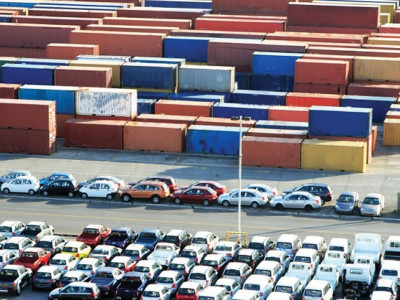
<p>Considering that the total size of Pakistan’s GDP is about $180 billion, this indicates that the informal economy is easily $160 billion. This also implies that the total size of Pakistan’s economy is almost $350 billion.</p>
<p><img alt="" src="http://pullquotesandexcerpts.files.wordpress.com/2013/05/considering.jpg?w=625" /></p>
<p>These are staggering numbers and the quantum of the informal economy is seen as growing, while, the regularly released figures by our financial managers already show us that the formal economy is in many ways, receding.</p>
<p>While Pakistan gets a lot of flak for its regulatory structure and failing to document the economy, numbers indicate that the informal economy is a global phenomenon.</p>
<p>In a shared world, the task of countering the illegal or informal economy is also a shared responsibility. And while there are constraints to any exercise or research that attempts to ascertain the size of the illegal economy, and there will always be a degree of doubt as to the veracity of the numbers, such studies are nevertheless useful and are a valuable tool in trying to determine the scope of this sector of the economy and its impact on the country at large.</p>
<p><i>Published in The Express Tribune, May 20<sup>th</sup>, 2013.</i></p>
<p><i>Like </i><a href="https://www.facebook.com/ETribuneBusiness"><i>Business on Facebook</i></a><i> to stay informed and join in the conversation.</i></p>
</p>
			<br clear="all"/>
		]]>
		</description>

		<media:content width="424" height="318"
							isDefault="true" medium="image" url="http://i1.tribune.com.pk/wp-content/uploads/2013/05/551567-economyt-1368989822-834-640x480.jpg">
			<media:title>economy</media:title>
			<media:description>Considering that the total size of Pakistan’s GDP is about $180 billion, this indicates that the informal economy is easily $160 billion. PHOTO:FILE</media:description>
			<media:thumbnail url="http://i1.tribune.com.pk/wp-content/uploads/2013/05/551567-economyt-1368989822-834-160x120.jpg" width="160" height="120" />
      </media:content>

		<wfw:commentRss></wfw:commentRss>
		<slash:comments>2</slash:comments>
	</item>
		<item>
		<title>Gadgets: Tech for Time Pass  </title>
		<link>http://tribune.com.pk/story/545586/gadgets-tech-for-time-pass/</link>
		<pubDate>Tue, 14 May 2013 05:50:25 +0000</pubDate>

		<guid isPermaLink="false">http://tribune.com.pk/?p=545586</guid>

		<description>
		<![CDATA[
			<a href="http://tribune.com.pk/story/545586/gadgets-tech-for-time-pass/">
				<img src="http://i1.tribune.com.pk/wp-content/uploads/2013/05/545586-target-1367936346-424-160x120.jpg" width="160" height="120" alt="" />
			</a>
			<p><p><strong>The pen is mightier than the rubber band</strong></p>
<p><img alt="" src="http://pullquotesandexcerpts.files.wordpress.com/2013/05/rubberband-shooter.jpg" /></p>
<p>This is a working pen that doubles as a surprisingly accurate rubber-band shooter. Continue working while you protect yourself from invading seniors all for just about $10.</p>
<p><img alt="" src="http://pullquotesandexcerpts.files.wordpress.com/2013/05/rubber-pen.jpg" /></p>
<p>&nbsp;</p>
<p>Of course, if you are a professional then you will need the Office Warrior, which can be loaded with 144 rubber bands and will equip you to take on the entire board of directors! It’s made of handcrafted wood and costs $900 from kleargear.com</p>
<p><strong>Fake it till you make it</strong></p>
<p><img alt="" src="http://pullquotesandexcerpts.files.wordpress.com/2013/05/001.jpg" /></p>
<p>And here is a contribution from the world of nerds and geeks to the world of haute couture. These funky tattoo sleeves will have you looking tough and macho or cool and radical in the blink of an eye. Just pull them on and go out and strut your stuff. They come in pairs, one with black tattoos and the other with colour motifs. Switch them around or wear one on each arm. We have seen them advertised on olx for Rs120 each.</p>
<p><strong>Shaken and stirred</strong></p>
<p><img alt="" src="http://pullquotesandexcerpts.files.wordpress.com/2013/05/stirring-mug.jpg" /></p>
<p>No self-respecting geek is worth her salt unless she is too lazy to get her own coffee. We believe even stirring it yourself is too much. Which is why we need the Self Stirring Mug! At a touch of the button in the handle, your beverage will begin to spin into a dizzying vortex. I am not sure if it is available anywhere here except online, and it’s not really cheap with prices starting at Rs1,000.</p>
<p><strong>Not for sale</strong></p>
<p><img alt="" src="http://pullquotesandexcerpts.files.wordpress.com/2013/05/anti-rape.jpg" /></p>
<p>Only the Japanese could come up with the anti-rape dress. We are not quite sure why. But the logic is that this skirt transforms the wearer into a vending machine. The idea is that the woman would be camouflaged and the would-be attacker or rapist would simply walk past her. We are not even sure where you could get one.</p>
<p><strong>Extreme sport</strong></p>
<p><img alt="" src="http://pullquotesandexcerpts.files.wordpress.com/2013/05/waboba-ball.jpg" /></p>
<p>The ball that bounces on water is already a well-known product the world over.</p>
<p>According to the MIT Tech Review, the Waboba (<i>wa</i>ter <i>bo</i>uncing <i>ba</i>ll) works because it is hollow and soft. The physics of shallow angles, bowl-shaped depressions and aquaplaning are involved. All we care about is that it’s fun. It comes in different versions with a variable bounce and even post-bounce accuracy so that it doesn’t change direction. Available online from various website for Rs1,500.</p>
<p><strong>Undercover policing</strong></p>
<p><img alt="" src="http://pullquotesandexcerpts.files.wordpress.com/2013/05/007.jpg" /></p>
<p>We like this invention for its sheer creativity. An Indian student has created an anti-rape bra that can deliver 82 electric shocks to the would-be perpetrator and is equipped with communication software that alerts the police and the girl’s family. It also has GPS so that the target can be located. It’s called SHE (Society Harnessing Equipment) and once the pressure sensors are activated, it can deliver up to 3,800 kilovolts. It is expected to be available soon.</p>
<p><i>Published in The Express Tribune, Sunday Magazine, May 12<sup>th</sup>, 2013.</i></p>
<p><i>Like </i><a href="https://www.facebook.com/ETribuneMag"><i>Express Tribune Magazine on Facebook</i></a><i> to stay informed and join the conversation. </i></p>
</p>
			<br clear="all"/>
		]]>
		</description>

		<media:content width="424" height="318"
							isDefault="true" medium="image" url="http://i1.tribune.com.pk/wp-content/uploads/2013/05/545586-target-1367936346-424-640x480.jpg">
			<media:title>target</media:title>
			<media:description>Need is subjective. ’Nuff said.</media:description>
			<media:thumbnail url="http://i1.tribune.com.pk/wp-content/uploads/2013/05/545586-target-1367936346-424-160x120.jpg" width="160" height="120" />
      </media:content>

		<wfw:commentRss></wfw:commentRss>
		<slash:comments>0</slash:comments>
	</item>
		<item>
		<title>No bed of roses: Building up political will biggest challenge</title>
		<link>http://tribune.com.pk/story/548288/no-bed-of-roses-building-up-political-will-biggest-challenge/</link>
		<pubDate>Sun, 12 May 2013 16:45:17 +0000</pubDate>

		<guid isPermaLink="false">http://tribune.com.pk/?p=548288</guid>

		<description>
		<![CDATA[
			<a href="http://tribune.com.pk/story/548288/no-bed-of-roses-building-up-political-will-biggest-challenge/">
				<img src="http://i1.tribune.com.pk/wp-content/uploads/2013/05/548288-graph-1368372290-680-160x120.JPG" width="160" height="120" alt="" />
			</a>
			<p><div><strong class='location'>KARACHI:&nbsp;</strong>
<p><strong>The fact that any new government that comes into power will face multiple challenges is quite obvious. It is no secret that the country faces multiple challenges on several fronts. Even if we don’t talk about the economy, there are issues like a depressing law and order situation, the less than adequate literacy rate and the equally dismal human rights situation.</strong></p>
</div>
<p>The picture is not very encouraging on the economic front either. Foreign exchange reserves have been declining, there is a looming balance of payments crisis and tax collection as a percentage of GDP has failed to grow.</p>
<p>So, any incoming government will have to get its priorities right if it hopes to get off to a flying start. Having said this, if there is enough political will, the government is not going to be taking over a country that is crippled or one that cannot be fixed.</p>
<p>There is no doubt that challenges exist. The biggest challenge will be to convince the IMF of giving Pakistan another package. There is no option but to go for this.</p>
<p>The winner of the elections will have access to just $6.7 billion of foreign reserves, compared to about $12 billion a year ago. And Pakistan needs more than that to avoid a balance of payments crisis.</p>
<p>So the first order of business will most probably be to try and convince the IMF to get back on board with a fresh package. This will not be any easy task though considering Pakistan’s dismal record with tax reforms, fiscal discipline and with power sector reforms, just some of the areas where the IMF feels we need to be making much better progress than we are.</p>
<p>So even if the IMF does agree to come back, the next challenge will be even bigger, that of good governance. The government will have to ensure that the stalled process of reforms is revived. This will involve measures like making the power generation and distribution companies more independent, doing away with subsidy and increasing power rates. And this might actually be the easiest of the measures that need to be taken</p>
<p>The next step will be much tougher. The government will have to commit itself to enhancing the tax base and tapping agriculture incomes as well. This will directly hit the political heartland of the country and will be a monumental achievement, if it happens. But it needs to be done if Pakistan is to rise from the abysmally low level where last year just 0.5% o the total population paid tax. The fact that Pakistan has one of the lowest tax-to-GDP ratios in the world is a big deterrent to financial assistance from foreign countries since their tax-payers demand to know their money is being directed to a country where people do not pay their due.</p>
<p>Then the power crisis is a very significant challenge. One the one hand the government needs to generate at least three million jobs a year, but it is in fact losing out on employment because of the power crisis that has hit industrial growth.</p>
<p>The challenges are not tough economically. The numbers suggest that while the situation is bad, it is not irreversible nor are the issues beyond recovery. The political will to address them is the key. This is perhaps the biggest challenge of all.</p>
<p><i>Published in The Express Tribune, May 13<sup>th</sup>, 2013.</i></p>
<p><i>Like </i><a href="https://www.facebook.com/ETribuneBusiness"><i>Business on Facebook</i></a><i> to stay informed and join in the conversation.</i></p>
</p>
			<br clear="all"/>
		]]>
		</description>

		<media:content width="424" height="318"
							isDefault="true" medium="image" url="http://i1.tribune.com.pk/wp-content/uploads/2013/05/548288-graph-1368372290-680-640x480.JPG">
			<media:title>graph</media:title>
			<media:description>The challenges are not tough economically. The political will to address them is key. PHOTO: FILE
</media:description>
			<media:thumbnail url="http://i1.tribune.com.pk/wp-content/uploads/2013/05/548288-graph-1368372290-680-160x120.JPG" width="160" height="120" />
      </media:content>

		<wfw:commentRss></wfw:commentRss>
		<slash:comments>1</slash:comments>
	</item>
		<item>
		<title>Who will bite the bullet?</title>
		<link>http://tribune.com.pk/story/541648/who-will-bite-the-bullet/</link>
		<pubDate>Sun, 28 Apr 2013 16:14:24 +0000</pubDate>

		<guid isPermaLink="false">http://tribune.com.pk/?p=541648</guid>

		<description>
		<![CDATA[
			<a href="http://tribune.com.pk/story/541648/who-will-bite-the-bullet/">
				<img src="http://i1.tribune.com.pk/wp-content/uploads/2013/04/541648-grapho-1367161273-284-160x120.JPG" width="160" height="120" alt="" />
			</a>
			<p><div><strong class='location'>KARACHI:&nbsp;</strong>
<p><strong>After much fanfare and a literally last-minute selection of a finance adviser, the Pakistan delegation had a series of meetings with International Monetary Fund officials in the US. Considering Pakistan’s looming balance of payments crisis, the general assumption was that the agenda would rotate around the request for a fresh IMF package. After all, that has usually been the reason for a meeting with any of the global lenders.</strong></p>
</div>
<p>What came as a surprise perhaps for many was that the IMF apparently offered $5 billion to Pakistan, but Pakistan said that it was not interested. This is all the more surprising considering that every government has gone to the IMF asking for some kins of an arrangement.</p>
<p>So why does the caretaker government want to pass on this offer by the IMF? Apparently the rationale behind it is that the interim government does not want to shoulder the responsibility of accepting any terms or conditions that will of course be linked to the IMF package. Putting it bluntly, the interim government does not want to make the tough decisions that are needed to rescue the economy, decisions that will not go well with the incumbent government.</p>
<p>The reforms most likely to be linked with any future agreement with the IMF will definitely include measures to increase the tax base, including implementing agriculture tax – a move that is strongly opposed by the rural elite – which stands to create a rift between urban and rural members of mainstream political parties.</p>
<p>The other key condition will be power reforms, including the complete phase out of power subsidies.</p>
<p><img alt="" src="http://pullquotesandexcerpts.files.wordpress.com/2013/04/it-is.jpg?w=625" /></p>
<p>It is easy to blame the IMF for the country’s problems – or the World Bank for that matter &#8211; but in reality the country’s problems stem from bad governance. A start-stop, one-tranche, multiple waivers, target re-set, abandon, rollback, cook-the-books approach to adjustment will not work. No economy can grow steadily under these unsettling and chaotic circumstances. If this paradigm does not change, Pakistan will lurch from one crisis to the next as it has done for more than six decades and fall further behind its regional peers and other developing countries many of whom faced similar, if not more severe, balance of payments difficulties. They accessed IMF resources, took bold measures to reform and restructure their economies, and moved on.</p>
<p>In any event, nothing is to be gained by placing all blame at the IMF’s doorstep, although countries are inclined to use the IMF as a political flack-jacket to deflect criticism and Pakistan is no exception. The IMF has not played a role in, nor contributed to, the many egregious examples of our incompetence, mismanagement, non-implementation, programme interruptions and programme failures. That has been entirely of our own doing.</p>
<p>It is clear the government wants a fresh IMF package, it needs a new IMF package, but does it have the political will to bite the bullet and make the tough calls?</p>
<p><i>Published in The Express Tribune, April 29<sup>th</sup>, 2013.</i></p>
<p><i>Like </i><a href="https://www.facebook.com/ETribuneBusiness"><i>Business on Facebook</i></a><i> to stay informed and join in the conversation.</i></p>
</p>
			<br clear="all"/>
		]]>
		</description>

		<media:content width="424" height="318"
							isDefault="true" medium="image" url="http://i1.tribune.com.pk/wp-content/uploads/2013/04/541648-grapho-1367161273-284-640x480.JPG">
			<media:title>grapho 02</media:title>
			<media:description>The never ending cycle of loans, restructuring and then new loans will lead Pakistan nowhere.</media:description>
			<media:thumbnail url="http://i1.tribune.com.pk/wp-content/uploads/2013/04/541648-grapho-1367161273-284-160x120.JPG" width="160" height="120" />
      </media:content>

		<wfw:commentRss></wfw:commentRss>
		<slash:comments>8</slash:comments>
	</item>
		<item>
		<title>Islamic finance as a viable alternative financial system</title>
		<link>http://tribune.com.pk/story/538575/islamic-finance-as-a-viable-alternative-financial-system/</link>
		<pubDate>Sun, 21 Apr 2013 18:41:28 +0000</pubDate>

		<guid isPermaLink="false">http://tribune.com.pk/?p=538575</guid>

		<description>
		<![CDATA[
			<a href="http://tribune.com.pk/story/538575/islamic-finance-as-a-viable-alternative-financial-system/">
				<img src="http://i1.tribune.com.pk/wp-content/uploads/2013/04/538575-graph-1366559555-956-160x120.jpg" width="160" height="120" alt="" />
			</a>
			<p><div><strong class='location'>KARACHI:&nbsp;</strong>
<p><strong>That’s a very difficult question to answer, but one that has been asked many times. The thing is this question can only be answered by financial professionals within the Islamic finance world, or people who practice conventional banking. The first obviously say that it is. After all, it’s their baby, why would they say it isn’t. The second group consists of people who don’t understand the concept enough to give an answer, or they brush it off by saying that there is very little different, it’s just interest under a different name.</strong></p>
</div>
<p>Whether it is different or not, really Shariah compliant or not, Islamic finance is gaining clout and influence every passing day. It is the fastest mode of finance in Pakistan and the world with assets and deposits growing faster than its conventional counterpart. It has now become a trillion-dollar industry worldwide and is expected to continue this growth as more and more Muslim countries climb the development ladder with rising incomes.</p>
<p>So this gives rise to another question. Is Islamic finance – considering its increasing clout – really a viable alternative financial system and solution? The answer would seem to be that yes it is.</p>
<p><img alt="" src="http://pullquotesandexcerpts.files.wordpress.com/2013/04/islamic.jpg?w=625" /></p>
<p>Let’s get one thing straight, the simplistic description that any zero-interest-rate system is Islamic is superficial. After all, this is the exact term used by mainstream central bankers when they talk about policies pursuing what they call ‘quantitative easing’, so it is not something exclusive to Islamic finance. Islamic finance is a lot more than just the absolute prohibition of interest. There is also the effort to maintain high moral and ethical standards on the part of lenders and borrowers. In fact, if practiced and implemented in letter and spirit, this is perhaps the key thing that sets Islamic finance apart from conventional finance.</p>
<p>And there can be no denying that there is definitely a lot of room for ethics in today’s financial world.</p>
<p>In fact there can be no greater argument or rationale for a zero-interest-rate system than the John Maynard Keynes’s The General Theory, and I quote:</p>
<p>“Provisions against usury are amongst the most ancient economic practices of which we have record … In a world, therefore, which no one reckoned to be safe, it was almost inevitable that the rate of interest, unless it was curbed by every instrument at the disposal of society, would rise too high to permit of an adequate inducement to invest.”</p>
<p>Keynes’s endorsement does not necessarily make this system right, but his analysis does suggest that it should be regarded as a serious proposition.</p>
<p>And the single greatest reason why I feel that Islamic finance, for what it’s worth, can work and can be a successful alternative to conventional systems is the fact that although interest is prohibited under Islamic finance, profit is not; the latter is derived from various arrangements that combine finance and enterprise. In essence, this is a profit-sharing and risk-sharing system that is based entirely on equity finance.</p>
<p><img alt="" src="http://pullquotesandexcerpts.files.wordpress.com/2013/04/if-in-the.jpg?w=625" /></p>
<p>This is the only area where I am not yet entirely convinced that there actually is equitable risk sharing. In theory, at least, Islamic finance contrasts with the current dominant system based on interest-bearing debt, in which risks are theoretically transferred to debt holders. I am not entirely sure if this is entirely the case in practice as well.</p>
<p>But this is where it gets tricky. One may agree that that if people adhere strictly to its ethical requirements, there would be fewer moral-hazard problems in Islamic banking. But we also know that whether any particular system is efficient in avoiding moral hazard is a matter of practice, rather than of theory. And if in the world of Islamic finance, this adherence to ethics cannot be guaranteed, there really is no need of it as a separate or alternative system.</p>
<p><i>Published in The Express Tribune, April 22<sup>nd</sup>, 2013.</i></p>
<p><i>Like </i><a href="https://www.facebook.com/ETribuneBusiness"><i>Business on Facebook</i></a><i> to stay informed and join in the conversation.</i></p>
</p>
			<br clear="all"/>
		]]>
		</description>

		<media:content width="424" height="318"
							isDefault="true" medium="image" url="http://i1.tribune.com.pk/wp-content/uploads/2013/04/538575-graph-1366559555-956-640x480.jpg">
			<media:title>graph 02</media:title>
			<media:description>The only thing that really and truly separates this from conventional 
systems is the required adherence to a stricter code of ethics. SOURCE: THE BANKER TOP 500 ISLAMIC FINANCIAL INSTITUTIONS SURVEY RESEARCH FINDINGS
</media:description>
			<media:thumbnail url="http://i1.tribune.com.pk/wp-content/uploads/2013/04/538575-graph-1366559555-956-160x120.jpg" width="160" height="120" />
      </media:content>

		<wfw:commentRss></wfw:commentRss>
		<slash:comments>2</slash:comments>
	</item>
		<item>
		<title>Challenges to the growth of the Islamic finance market</title>
		<link>http://tribune.com.pk/story/538576/challenges-to-the-growth-of-the-islamic-finance-market/</link>
		<pubDate>Sun, 21 Apr 2013 18:38:16 +0000</pubDate>

		<guid isPermaLink="false">http://tribune.com.pk/?p=538576</guid>

		<description>
		<![CDATA[
			<a href="http://tribune.com.pk/story/538576/challenges-to-the-growth-of-the-islamic-finance-market/">
				<img src="http://i1.tribune.com.pk/wp-content/uploads/2013/04/538576-graph-1366559575-543-160x120.jpg" width="160" height="120" alt="" />
			</a>
			<p><div><strong class='location'>KARACHI:&nbsp;</strong>
<p><strong>While Islamic financial institutions have passed the robustness test by exhibiting greater resilience during the recent global financial crisis, the crisis has also brought under the spotlight some important challenges the industry is currently facing. Going forward, the stakeholders of Islamic finance will need to address a broad spectrum of issues surrounding the industry.</strong></p>
</div>
<p>Highlighting the inherent strengths of Islamic finance, the recent global financial crisis coincided with the growing concerns over the possibility that excessive financial innovation might lead the Islamic finance products to bend certain key precepts of Muslim jurisprudence to breaking point. Perhaps the most prominent example is the Sukuk – sometimes even called the “Islamic bond” – as many Islamic Sukuks have gone too far in mimicking conventional, interest-bearing bonds, which are prohibited in Islam.</p>
<p><b>Diversifying assets</b></p>
<p>Since there is little room for diversification of assets, the risk management capabilities of the Islamic financial institutions are limited. A direct consequence of this was observed in the last financial crisis when large exposure to real estate of Islamic financial institutions resulted in falling asset values in many of these institutions operating in the OIC member countries, particularly in the MENA region. A study by Ernst &amp; Young (2011) reveals that the real estate concentration still remains a concern for Islamic finance industry and may affect its future growth.</p>
<p>The low penetration levels of Takaful (Islamic insurance) in OIC countries are posing another challenge for the Islamic finance industry. OIC member countries as key Takaful markets are characterised by low insurance penetration rates versus huge potential for rapid economic growth. Global Takaful premiums are estimated by Ernst &amp; Young (2011b) to have reached $16.5 billion in 2011. Moreover, Takaful premiums remain highly concentrated in Iran which generated almost 30% of the global Takaful premiums in 2011. Similar to the relative size of Islamic finance to the global financial industry, the Takaful market represents only 1% of the global insurance market at present (Ernst &amp; Young 2011c).</p>
<p><b>Regulation and standardisation</b></p>
<p>Another major impediment to the growth of Islamic finance industry is the weak Islamic finance enabling infrastructure in many OIC countries. Enabling infrastructure would include, among others, legislative, regulatory, legal, accounting, tax, human capital, and Shariah business frameworks. Although member countries such as Bahrain, Malaysia and UAE are among the major Islamic finance centres with developed infrastructures, in many others, an enabling environment is not in place. This, in turn, increases operational risks, including the risk of Shariah compliance.</p>
<p><img alt="" src="http://pullquotesandexcerpts.files.wordpress.com/2013/04/islamic-banks.jpg?w=625" /></p>
<p>Development of Islamic money and capital markets, provision of standardised liquidity management tools, improvement of the operational efficiencies of Islamic financial institutions, standardisation in products, synchronisation of regulatory frameworks, and human capital accumulation are other areas where the Islamic finance industry needs to take structural steps.</p>
<p><b>Broadening the skill base</b></p>
<p>The broadening of the global skills base in Islamic finance is desirable since the number of qualified practitioners, as well as Shariah scholars available for Shariah boards, is currently very low.</p>
<p>Representation of Shariah scholars on Shariah boards is highly concentrated. A survey by Funds@Work (2011) reveals that only the top 20 Shariah scholars hold 619 board positions which represent more than half of the 1,141 positions available.</p>
<p>All in all, with the challenges ahead, the growth of Islamic finance, free from interest and subject to high moral codes, will be slow in the long-run. And the slow growth of the industry would also slow down economic growth and wealth creation. However, the wealth created would be real, more equitably and profitably distributed, and would encourage spin-offs into real economy, creating jobs, increasing trade both domestically and internationally.</p>
<p><i>Published in The Express Tribune, April 22<sup>nd</sup>, 2013.</i></p>
<p><i>Like </i><a href="https://www.facebook.com/ETribuneBusiness"><i>Business on Facebook</i></a><i> to stay informed and join in the conversation.</i></p>
</p>
			<br clear="all"/>
		]]>
		</description>

		<media:content width="424" height="318"
							isDefault="true" medium="image" url="http://i1.tribune.com.pk/wp-content/uploads/2013/04/538576-graph-1366559575-543-640x480.jpg">
			<media:title>graph 05</media:title>
			<media:description>Interest-free and subject to high moral codes, growth will be slow in the long-run. SOURCE: QUARTERLY UNAUDITED ACCOUNTS</media:description>
			<media:thumbnail url="http://i1.tribune.com.pk/wp-content/uploads/2013/04/538576-graph-1366559575-543-160x120.jpg" width="160" height="120" />
      </media:content>

		<wfw:commentRss></wfw:commentRss>
		<slash:comments>0</slash:comments>
	</item>
		<item>
		<title>Gold registers biggest ever single-day fall, sheds Rs3,000 per tola </title>
		<link>http://tribune.com.pk/story/535909/gold-registers-biggest-ever-single-day-fall-sheds-rs3000-per-tola/</link>
		<pubDate>Mon, 15 Apr 2013 19:50:43 +0000</pubDate>

		<guid isPermaLink="false">http://tribune.com.pk/?p=535909</guid>

		<description>
		<![CDATA[
			<a href="http://tribune.com.pk/story/535909/gold-registers-biggest-ever-single-day-fall-sheds-rs3000-per-tola/">
				<img src="http://i1.tribune.com.pk/wp-content/uploads/2013/04/535909-gold-1366051521-786-160x120.jpg" width="160" height="120" alt="" />
			</a>
			<p><p><strong><strong class='location'>KARACHI:&nbsp;</strong>The price of gold fell Rs3,000 to Rs53,500 per tola according to the All Sindh Sarafa Association. While the price of gold has been sliding for almost two weeks this is the biggest ever fall to be recorded in one day.</strong></p>
<p>According to the All Sindh Sarafa Association, selling further gathered momentum as gold on the global front plunged to the lowest level since April 2011 on speculation that some central banks were selling and expectations of some economic recovery.</p>
<p>When prices started sliding late March, initial perceptions were that electoral controversy was a part of the reason. But now it is becoming more and more apparent that the fall in price is following a global and regional trend with prices seeing a similar decline across the border as well.</p>
<p>Gold prices on Monday tumbled by INR750 to INR27,600 per 10 grams to hit an over 15-month low in New Delhi due to persistent selling by stockists triggered by a heavy sell-off in global markets. Like Pakistan, gold prices in India also registered the biggest ever fall.</p>
<p>The price of gold in the international markets is also facing a two year low, trading at $ 1,386 per ounce after a sharp drop of almost $100 per ounce. The price of gold has decreased by 20% since it reached a record high in September 2011.</p>
<p>Analysts say investors are taking less interest in trading gold at this time as they expect an improvement in the global economy. With the improvement expected to continue, the fall in gold prices is also expected, and some even predict that it could go into free-fall.</p>
<p>According to local gold dealers the substantial reduction in gold price has brought the price to the lowest level in two years in the international market while it has brought down the gold price in Pakistan to the lowest in five years.</p>
<p>Analysts say that Cyprus’ economic problems, sales of huge quantity of gold reserves in the market and the trend on the part of international investors is the primary reason for continuous decline in gold prices.</p>
<p>In London, gold dropped by $90.70, or 6.14%, to $1,386.30 an ounce. Silver also fell by 10.5% to $23.13 an ounce.</p>
<p>With the overall improvement in the global economic climate, it seems gold is losing its value as a hedge instrument.</p>
<p><i>Published in The Express Tribune, April 16<sup>th</sup>, 2013.</i></p>
<p><i>Like </i><a href="https://www.facebook.com/ETribuneBusiness"><i>Business on Facebook</i></a><i> to stay informed and join in the conversation.</i></p>
</p>
			<br clear="all"/>
		]]>
		</description>

		<media:content width="424" height="318"
							isDefault="true" medium="image" url="http://i1.tribune.com.pk/wp-content/uploads/2013/04/535909-gold-1366051521-786-640x480.jpg">
			<media:title>gold</media:title>
			<media:description>The price of gold in the international markets is also facing a two year low, trading at $ 1,386 per ounce after a sharp drop of almost $100 per ounce. </media:description>
			<media:thumbnail url="http://i1.tribune.com.pk/wp-content/uploads/2013/04/535909-gold-1366051521-786-160x120.jpg" width="160" height="120" />
      </media:content>

		<wfw:commentRss></wfw:commentRss>
		<slash:comments>1</slash:comments>
	</item>
		<item>
		<title>A Grand offering from Samsung</title>
		<link>http://tribune.com.pk/story/535583/a-grand-offering-from-samsung/</link>
		<pubDate>Sun, 14 Apr 2013 19:02:26 +0000</pubDate>

		<guid isPermaLink="false">http://tribune.com.pk/?p=535583</guid>

		<description>
		<![CDATA[
			<a href="http://tribune.com.pk/story/535583/a-grand-offering-from-samsung/">
				<img src="http://i1.tribune.com.pk/wp-content/uploads/2013/04/535583-mobile-1365962415-681-160x120.jpg" width="160" height="120" alt="" />
			</a>
			<p><p><strong><strong class='location'>KARACHI:&nbsp;</strong>Sony rightfully claims that it added the word ‘walkman’ to the English language, and Samsung might just have pulled that feat off with its ‘phablet’. Regardless, the latter can definitely take credit for having created a new breed of devices that are a hybrid between phones and tablets.</strong></p>
<p>With the Galaxy Grand, Samsung is now trying to create another middle ground for people who do not want to have to break the bank for a large screen phone.</p>
<p>Of course, to do that, the Grand has had to cut a few corners, most obviously with its fairly low resolution display. It is also clear that the phone is aimed at emerging markets, given that Samsung has included a dual sim option.</p>
<p><b>Design and looks</b></p>
<p>The Galaxy Grand DUOS looks like a larger S III, or a smaller Note II. The unit is fairly comfortable to hold with one hand, considering the screen size, but hard to operate with just your thumb. The phone is somewhat hefty for today’s standards, with a weight of 162 grams; yet, keeping in mind the large screen size, it does not really feel thick and bulky.</p>
<p>The screen is a key factor when considering the phone. At 480&#215;800 and 187ppi pixel density, the Grand’s screen does not really look that good if you are used to the HD and Full HD screens of late. The resolution is not unusable, however: the Grand is a big-screen phone and you tend to hold it further from your eyes than usual, thus diminishing the low resolution effect somewhat.</p>
<p><b>Interface and functionality</b></p>
<p>Samsung seems to have cut no corners in this area at least. In terms of software and interface, you will definitely get the most advanced dual SIM device on the market.</p>
<p>The phone also makes great use of the large screen real estate. It lets you run two apps on the screen at any given time, and you can resize the space they occupy at will. Needless to say, the bigger the screen, the more useful this multi-window functionality mode. In that respect, the Galaxy Grand DUOS delivers.</p>
<p><b>Processor and memory</b></p>
<p>The phone is powered by a Broadcom processor, not an Exynos chip, and has one gigabyte of RAM. It is a dual-core 1.2 GHz ARM Cortex-A9, with a VideoCore IV GPU. The phone registers some decent benchmark scores.</p>
<p>All in all, as far as hardware specs go, the phone is no slouch.</p>
<p><b>Internet and connectivity</b></p>
<p>The phone can keep you connected with two carrier networks at once, and you can use up to 21 Mbps HSPA+ download speeds on one, for instance, while receiving an incoming call from the other SIM card. The phone also houses the usual suite of other wireless connectivity options – Wi-Fi, Bluetooth 4.0, A-GPS with Glonass support. About the only thing missing is NFC.</p>
<p><b>Camera</b></p>
<p>This is by far the feature that impressed me the most. An 8 megapixel camera unit with LED flash and zero shutter lag. The pictures turned out very good, even in low lighting with great colours and detail.</p>
<p>Videos are recorded in 1080 definition at 30 frames per second, and the camera is fast in both modes.</p>
<p>The Share Shot feature allows you to share photos with other users via Wi-Fi Direct. The Buddy photo share option lets you click and share photos with friends via face detection. However, it would have been easier to click pictures with a dedicated camera key owing to the sheer size of the device. Still, that is not really a deal breaker.</p>
<p><b>Call quality and battery life</b></p>
<p>The Grand Duos delivers good voice quality in the earpiece, with enough volume, and without any audible distortions. It doesn’t have a second mic for noise-cancellation, but the one it has worked well enough.</p>
<p>The device runs on a 2,100 mAh battery just like the Galaxy S III. The dual-standby capabilities of the phone, however, might take more than the usual toll on the battery life.</p>
<p><b>Conclusion</b></p>
<p>I did feel the low res display would be a huge disappointment, but in reality the phone is pretty usable for everyday tasks. The rest of the specs are adequate, as it has a decent dual-core processor, a well-performing 8 MP camera, and the ability to add storage via the microSD card slot.</p>
<p>If you have been longing for a large screen phone that manages two SIM cards at once, and are brand conscious, you will not find many alternatives to the Grand DUOS. Combine this fact with the chassis recognition and respect Samsung’s Galaxy line has earned lately, and the only variable in the success equation for the Grand DUOS market niche is its retail price.</p>
<p><i>Published in The Express Tribune, April 15<sup>th</sup>, 2013.</i></p>
<p><i>Like </i><a href="https://www.facebook.com/ETribuneBusiness"><i>Business on Facebook</i></a><i> to stay informed and join in the conversation.</i></p>
</p>
			<br clear="all"/>
		]]>
		</description>

		<media:content width="424" height="318"
							isDefault="true" medium="image" url="http://i1.tribune.com.pk/wp-content/uploads/2013/04/535583-mobile-1365962415-681-640x480.jpg">
			<media:title>mobile</media:title>
			<media:description>With the Galaxy Grand, Samsung is now trying to create another middle ground for people who do not want to have to break the bank for a large screen phone.</media:description>
			<media:thumbnail url="http://i1.tribune.com.pk/wp-content/uploads/2013/04/535583-mobile-1365962415-681-160x120.jpg" width="160" height="120" />
      </media:content>

		<wfw:commentRss></wfw:commentRss>
		<slash:comments>6</slash:comments>
	</item>
		<item>
		<title>Light at the end of the tunnel: We are not yet at the point of no return</title>
		<link>http://tribune.com.pk/story/535565/light-at-the-end-of-the-tunnel-we-are-not-yet-at-the-point-of-no-return/</link>
		<pubDate>Sun, 14 Apr 2013 18:41:40 +0000</pubDate>

		<guid isPermaLink="false">http://tribune.com.pk/?p=535565</guid>

		<description>
		<![CDATA[
			<a href="http://tribune.com.pk/story/535565/light-at-the-end-of-the-tunnel-we-are-not-yet-at-the-point-of-no-return/">
				<img src="http://i1.tribune.com.pk/wp-content/uploads/2013/04/535565-sstep-1365962422-867-160x120.jpg" width="160" height="120" alt="" />
			</a>
			<p><div><strong class='location'>KARACHI:&nbsp;</strong>
<p><strong>According to a recent report issued by the Asian Development Bank (ADB), the Pakistani economy is not doing great, and it is expected to do worse.</strong></p>
</div>
<p>The ADB has based the analysis on a number of factors and statistics. According to the ADB, inflation has continued and continues to rise over the past five years, investment inflows have continued to fall, and the previous government failed to show any clear direction in its economic policies and decisions. It has also been critical of the interim government in that it has also seemingly failed to take required initiatives in taking effective decisions.</p>
<p>The ADB also feels that with the worsening balance of payments position, any chances of a recovery are weak at best.</p>
<p>This is an extreme assessment, and while many of their contentions are true, also a little unfair. For example, their assessment that the previous government has failed to come up with a solid economic plan or show any direction in their policies is true. It is also true that such an approach can only lead to disaster.</p>
<p>Their assessment that the caretaker setup has failed to pick up the pieces and make the right decisions is right; but their expectations from the caretaker government are not entirely realistic. The caretaker setup has come in primarily with the mandate to conduct elections. Any direction that the economy needs or gets will be dependent on the policies of the incoming government.</p>
<p>The ADB, citing statistics, says that inflation has continued to rise over the past few years: this is not entirely accurate. Inflation did hit highs during the tenure of the outgoing government, but over the past two years it has been more or less under control. And even if one argues that the government’s numbers are flawed and they have changed the methodology of calculating inflation to come up with a more digestible number, core inflation, which is based on categories that the number cannot manipulate, has also fallen. It is still on the higher side, at a little over 9%, but is expected to stabilise this year if not actually fall. This was confirmed by the State Bank of Pakistan in recently released reports for the first and second quarter of fiscal 2013, which say that inflation should be under control for the medium term.</p>
<p>Yes, it is true that the foreign exchange position is under a bit of a threat; but not overly so, considering the fact that Pakistan’s external public debt actually fell by $1.9 billion during the first half of the current fiscal year.</p>
<p>The latest figures released by the government also point to an increase in imports, which may be a signal of an increase in activity on the local manufacturing front, another good sign for the economy. Textile exports should have a relatively good year because of the duty-free access granted to the EU, as well as the fact that China will maintain its voracious appetite for cotton yarn.</p>
<p>As far as worries about falling foreign reserves is concerned, there are two factors to keep in mind. The fall is for the most part temporary, due to loan repayments to the International Monetary Fund. Meanwhile, the steady rise in remittances has continued to shore up the domestic economy, posting inflows of $7.1 billion in the first half of fiscal 2013, compared to $6.9 billion the previous year.</p>
<p>While full-year remittances last fiscal year touched $13.2 billion, the State Bank is confident remittances will cross $14 billion this year. Given these estimates, I do believe that the ADB’s outlook is strongly influenced by perceived vulnerabilities in the external sector.</p>
<p>Construction activity has picked up in the country, and this could offset losses experienced by the agriculture sector after the floods. The increase in lending to the private sector is also expected to continue, especially considering the chances of a rate cut in the next monetary policy announcement.</p>
<p>The current situation, with a caretaker government in place, is to some degree responsible for the uncertainty on the economic outlook and the reluctance of investors in taking a long-term view. This does not mean, however, that the government does not need to set its priorities right and take measures to address issues like the energy crisis, the growing size of the informal economy and the narrow tax-base. What this means is, that if the right moves are made, there is light at the end of the tunnel.</p>
<p>According to government officials, the IMF also feels the same.</p>
<p><i>Published in The Express Tribune, April 15<sup>th</sup>, 2013.</i></p>
<p><i>Like </i><a href="https://www.facebook.com/ETribuneBusiness"><i>Business on Facebook</i></a><i> to stay informed and join in the conversation.</i></p>
</p>
			<br clear="all"/>
		]]>
		</description>

		<media:content width="424" height="318"
							isDefault="true" medium="image" url="http://i1.tribune.com.pk/wp-content/uploads/2013/04/535565-sstep-1365962422-867-640x480.jpg">
			<media:title>sstep</media:title>
			<media:description>While full-year remittances last fiscal year touched $13.2 billion, the State Bank is confident remittances will cross $14 billion this year.  DESIGN: KIRAN SHAHID
</media:description>
			<media:thumbnail url="http://i1.tribune.com.pk/wp-content/uploads/2013/04/535565-sstep-1365962422-867-160x120.jpg" width="160" height="120" />
      </media:content>

		<wfw:commentRss></wfw:commentRss>
		<slash:comments>2</slash:comments>
	</item>
		<item>
		<title>Tech advice: Stuff that pushes our buttons </title>
		<link>http://tribune.com.pk/story/533667/tech-advice-stuff-that-pushes-our-buttons/</link>
		<pubDate>Sun, 14 Apr 2013 09:24:04 +0000</pubDate>

		<guid isPermaLink="false">http://tribune.com.pk/?p=533667</guid>

		<description>
		<![CDATA[
			<a href="http://tribune.com.pk/story/533667/tech-advice-stuff-that-pushes-our-buttons/">
				<img src="http://i1.tribune.com.pk/wp-content/uploads/2013/04/533667-Mobilephotofile-1365931176-732-160x120.jpg" width="160" height="120" alt="" />
			</a>
			<p><p><strong>Men never grow up, or at least that is the common gripe. We are also accused of playing with toys. Actually, we do not play with toys. We <em>collect</em> action figures. We <em>use</em> gadgets and we <em>install</em> apps on our ‘smart’ phones. </strong></p>
<p>Some people argue that for a toy to be classified as a gadget, it has to be pretty much useless, but something you absolutely need to get. Here are a few new ones that we think are worth mentioning.</p>
<p><strong>Hovercraft golf cart</strong></p>
<p><img alt="e06" src="http://pullquotesandexcerpts.files.wordpress.com/2013/04/e06.jpg?w=625" /></p>
<p>US pro golfer Bubba Watson recently showed off his new ride, a hovercraft golf cart that can go where no golfer has gone before. It is less damaging to the green than a cart and can take shortcuts over water. It didn’t seem to have much of an impact on Bubba’s game though.</p>
<p><strong>Solar-powered cell phone charger</strong></p>
<p><img alt="e02" src="http://pullquotesandexcerpts.files.wordpress.com/2013/04/e02.jpg?w=625" /></p>
<p>How many times has your phone died during a power outage? Bona fide geeks will suggest the solar-powered cell phone charger. It comes with a nifty set of accessories and adapters so you can charge pretty much any phone on the planet — anywhere the sun shines. It isn’t expensive, given the technology. You can buy it locally for Rs800.</p>
<p><strong>Transformer USB flash drive</strong></p>
<p><img alt="e01" src="http://pullquotesandexcerpts.files.wordpress.com/2013/04/e01.jpg?w=625" /></p>
<p>It doesn’t have x-ray vision or the ability to vault over the Empire State building, but it is definitely cool. Consider having 8GB of storage that turns into a leopard. It doesn’t look to bad as a desktop ornament either while simultaneously storing all your secret codes that you need to hack into the mainframe. Order it online from Amazon.com or magiclamp.pk for about Rs1,300.</p>
<p><strong>The Button 2.0</strong></p>
<p><img alt="e05" src="http://pullquotesandexcerpts.files.wordpress.com/2013/04/e05.jpg?w=625" /></p>
<p>Now you never again have to worry about uncomfortable headsets or tangled hands-free cables while jogging or driving. With The Button 2.0 — you will have to do the actual stitching on to your shirt — you will enjoy more freedom than ever before all just for Rs500 (available online).<b> </b></p>
<p><strong>Slide-out keyboard for touch-screen phone</strong></p>
<p><img alt="e03" src="http://pullquotesandexcerpts.files.wordpress.com/2013/04/e03.jpg?w=625" /></p>
<p>For the Qwerty keyboard dinosaur fans, they have come up with this ugly piece of plastic that converts the sleek iPhone into a clunky Blackberry. The slide-out version can be left clipped on and will not obstruct the screen. It is available locally for about Rs4,000 and can be ordered online from symbios.pk.</p>
<p><strong>iPhone zoom lens</strong></p>
<p><img alt="e04" src="http://pullquotesandexcerpts.files.wordpress.com/2013/04/e04.jpg?w=625" /></p>
<p>I get this all the time: If I wanted to take really cool pics or wanted to become a photographer I would buy a real camera. But how many of us will lug around a camera given how good phone cams are? The only thing they lack, except in rare cases, is an optical zoom lens.</p>
<p>Meet the 8x optical zoom for your iPhone that comes with a clip-on cover. You can get it at most shops which sell accessories, for Rs3,500. Ignore that you can’t adjust the zoom — it is set to 8x. Minor limitation, right?</p>
<p><i>Published in The Express Tribune, Sunday Magazine, April 14<sup>th</sup>, 2013.</i></p>
<p><i>Like </i><a href="https://www.facebook.com/ETribuneMag"><i>Express Tribune Magazine on Facebook</i></a><i> to stay informed and join the conversation. </i></p>
</p>
			<br clear="all"/>
		]]>
		</description>

		<media:content width="424" height="318"
							isDefault="true" medium="image" url="http://i1.tribune.com.pk/wp-content/uploads/2013/04/533667-Mobilephotofile-1365931176-732-640x480.jpg">
			<media:title>apps-applications-Mobile-photo-file</media:title>
			<media:description>Men are accused of playing with toys; rather they &#039;collect&#039; action figures and &#039;use&#039; gadgets.PHOTO: FILE</media:description>
			<media:thumbnail url="http://i1.tribune.com.pk/wp-content/uploads/2013/04/533667-Mobilephotofile-1365931176-732-160x120.jpg" width="160" height="120" />
      </media:content>

		<wfw:commentRss></wfw:commentRss>
		<slash:comments>0</slash:comments>
	</item>
	
</channel>
</rss>
<!-- Performance optimized by W3 Total Cache. Learn more: http://www.w3-edge.com/wordpress-plugins/

Page Caching using apc
Database Caching 1/28 queries in 2.208 seconds using memcached
Object Caching 1384/1522 objects using apc

 Served from: tribune.com.pk @ 2013-05-21 15:07:07 by W3 Total Cache -->