
60% rural areas lack quality health facilities
Report blames weak oversight by elected reps, unequal distribution of basic equipment, services, medical staff.
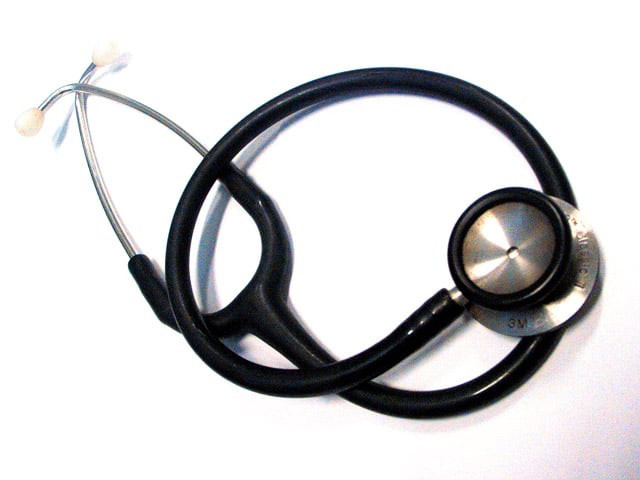
However, compared to all other provinces, health services/facilities in the Rural Health Centers (RHCs) of Punjab are better.
The report blames weak oversight by elected representatives, and unequal distribution of basic equipments, services, and medical staff at RHCs for their poor state.
The monitoring was done in September 2010 by FAFEN (a coalition of 30 leading Pakistani civil society organisations) in 83 RHCs nationwide.
This includes 36 in 25 districts of Punjab, 22 in 18 districts of KP, eight districts of Balochistan and 17 in 14 districts of Sindh. FAFEN was established in 2006 to observe the election process, educate voters, and advocate for electoral and democratic reform.
It was found that 98 per cent of all monitored RHCs were appropriately set up, while the buildings of one-fourth of the monitored facilities were in decrepit condition.
The report revealed that one fifth of the monitored RHCs across provinces lacked cleanliness and basic hygiene.
This was despite the fact that 94 per cent had serving sanitary workers. Only three of 16 RHCs where cleanliness was an issue did not have serving sanitary workers.
Better management and oversight and an increase in the number of sanitary workers may improve the better hygienic conditions, the report suggested.
Almost one third of the monitored RHCs either did not have latrines or had latrines without running water.
All provinces were somewhat short on staff except Sindh, where male and female doctors were in excess by 16 per cent and 25 per cent respectively.
Likewise, 53 per cent paramedic personnel and 50 per cent nurses were in addition to the sanctioned posts in Sindh. The excessive staffing may be a result of deputations within healthcare system.
Balochistan was found to be most deficient in female staff, maternity and family planning facilities. During a day-long monitoring, female staff was not found on duty in half of the observed RHCs and family planning counseling staff was absent in three-fourths of the RHCs.
The province has no sanctioned posts for nurses at the RHC while one-forth of the sanctioned positions for doctors were vacant. In addition, more than three-fifths of the facilities had no labour room and nearly two-fifth did not have the delivery kit to facilitate childbirth.
While all RHCs monitored in Punjab were equipped with oxygen tent, three-fourths of RHCs in Balochistan, half of RHCs in KP and two-fifths of RHCs in Sindh did not have this essential and low-cost life-saving device.
Availability of free medicines from the in-house pharmacies was confirmed from over 90 per cent of the observed RHCs nationwide.
Published in The Express Tribune, November 20th, 2010.
LATEST

Karachi sees heavy rain and hailstorms, strong winds sweep city
Naqvi criticises politicisation of Imran Khan’s health, accuses opponents of 'playing politics'

There were tears in his eyes
PTI, TTAP maintain parliament sit-in for fifth day as talks on next move continue

Tariq confident of Pakistan comeback

Pakistan, seven other countries condemn Israel's designation of West Bank as ‘state land’
MOST READ
Rs1500 prize bond draw winners for February 16, 2026 announced

Local gold, silver rates drop after declines in international markets
Cost of commuting rises as government hikes fuel prices

Europe's wake-up call — and Pakistan

Reregistration of vehicles begins in Punjab









COMMENTS
Comments are moderated and generally will be posted if they are on-topic and not abusive.
For more information, please see our Comments FAQ