
Mercury waste management: Disposal mechanism urged
Petition submitted to PM calling for legislation on issue.
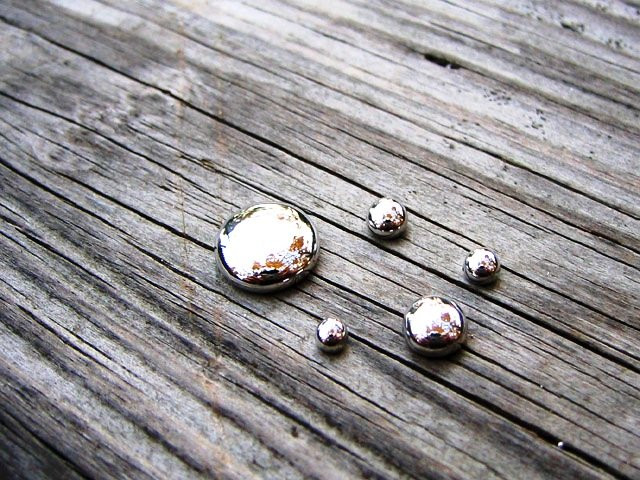
The study aims to improve, evaluate and revise the syllabus content in dental teaching institutes in Pakistan with regard to mercury amalgam. PHOTO: FILE
An expert has held lack of awareness and inappropriate knowledge of medical practitioners responsible for the increase in airborne mercury levels.
“It has been observed that many dental professionals do not use preventive measures”, Dr Mehmood A Khwaja, Senior Adviser Chemicals at the Sustainable Development Policy Institute (SDPI) said on Wednesday.
While presenting a survey report at a ceremony at the Pakistan National Council of Arts (PNCA) he suggested that a proper mechanism of mercury waste management should be put in place, said a press release issued by the institute.
The report on the bachelor of dental surgery curriculum, second toxic mercury study, was launched at the ceremony, organised by SDPI in connection with World Environment Day.
The study aims to improve, evaluate and revise the syllabus content in dental teaching institutes in Pakistan with regard to mercury amalgam.
Referring to the survey, Sadaf Nawaz, co-presenter of the study explained that 98 per cent of respondents of the survey wanted revision in the curriculum related to the use of mercury.
During the discussion, Anusha Shirazi suggested involving the Higher Education Commission (HEC) in revising the curriculum offered at dental teaching institutes in the country.
Asif Shuja Khan, a former Pakistan Environment Protection Agency (Pak-EPA) director general, discussed that both political and bureaucratic system should be involved in overcoming the mercury dispersion.
He suggested that SDPI launch a national level mercury reduction campaign with the government. He also emphasised that environment impact assessments (EIA) must be carried out before the start of any project, rather than after, as by that point, the report becomes meaningless.
A skit competition among schools of Islamabad and Rawalpindi was also organised.
PAEC Model College, Nilore won first prize, Roots International School, Westridge branch got second prize and Darul Arqam, Alipur Farash stood third.
The award for the distinguished performances went to Islamabad College of Arts and Science, Out of School Children School and Kids City High School, Kahuta.
Information and National Heritage Joint Secretary Mashood Ahmad Mirza, the chief guest, appreciated the effort of schools and the institute.
He said SDPI took an initiative to use art for advocacy and awareness on health and environmental issues, especially among school students.
“We had anticipated that the contest would lead to greater understanding for the protection of environment, healthy living and sustainable development” he added.
On the occasion, SDPI launched a petition against mercury.
While sharing the background of the petition, Mohammed Mobashir said recently, 140 countries have signed an agreement in Geneva to reduce mercury use and control its emission and release by the end of the 2020.
In this regard, SDPI worked on a study that indicates the level of mercury at selected sites is eight to 20 times higher than the permissible limit.
“In the light of study, SDPI has submitted a list of 1,000 signatories supporting the petition against mercury to Prime Minister Nawaz Sharif, urging him to consider the drafting of mercury-specific legislation across the country,” he added.
Published in The Express Tribune, June 5th, 2014.
LATEST
President Zardari, PM Shehbaz extend well wishes to incoming BD PM Rahman, look to ramp up ties

4 suspected terrorists killed in Karachi's Shah Latif Town as CTD claims foiling terror bid
Police open K-P's major roads, disperse PTI protesters after PHC order
500,000-tree plantation drive kicks off in Margalla Hills
12 terrorists killed, 11 security personnel martyred in Bajaur attack: ISPR
FM Dar heads to US for UNSC briefing on Palestine, Gaza peace board talks
MOST READ
Rs1500 prize bond draw winners for February 16, 2026 announced
Local gold, silver rates drop after declines in international markets
Cost of commuting rises as government hikes fuel prices

Europe's wake-up call — and Pakistan

Reregistration of vehicles begins in Punjab










COMMENTS
Comments are moderated and generally will be posted if they are on-topic and not abusive.
For more information, please see our Comments FAQ