
Prisoner’s escape: SC directs provincial aide to submit report by May 21
Despite the doctor’s observation, he was kept in the hospital till he escaped to Afghanistan on July 29, 2012.
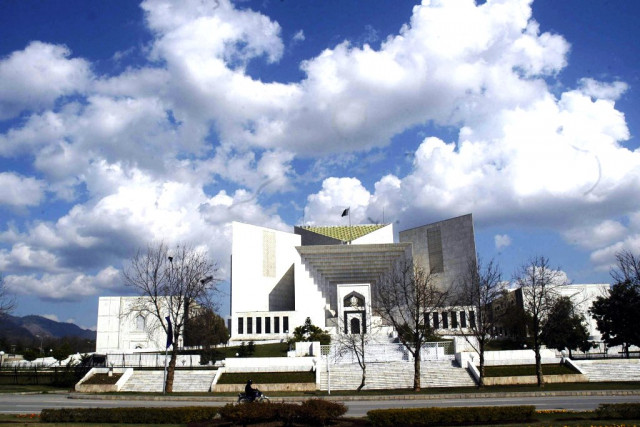
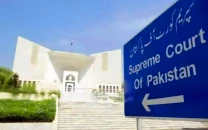
Supreme Court. PHOTO: EXPRESS/FILE
The three-judge bench, headed by Chief Justice Iftikhar Muhammad Chaudhry, directed Home Secretary Shaukat Ali Khan on Thursday to conclude his inquiry and submit a report to the apex court by May 21 — the next date of the hearing.
The chief justice asked the secretary to focus on two key points including why the administration of the District Headquarters (DHQ) Hospital, Rawalpindi kept the accused, Ruhullah Khan, in the hospital longer than he was required. Justice Chaudhry also directed the home secretary to inquire as to why the superintendent of the Adiala Jail did not bring the prisoner back to the prison soon after his medical tests.

“It was on June 18, 2012 that I allowed Ruhullah’s transfer from the jail to DHQ for his endoscopy examination and chemotherapy but the authorities, following my orders, transferred the accused to the hospital on July 16,” the home secretary explained to the bench also comprising of Justice Jawwad S Khawaja and Justice Ijaz Ahmed Chaudhry.
Reading from the record of the hospital administration, Khan stated that the endoscopy was carried out on July 17 and the doctors observed the patient did not need chemotherapy. But, despite the doctor’s observation, he was kept in the hospital till he escaped to Afghanistan on July 29, 2012.
“If there was no medical requirement, no particular order and no jail ward in the hospital why did the doctors keep the accused in the DHQ hospital?” questioned the chief justice, adding that it proved the superintendent’s negligence.
Appearing before the court, an assistant professor of medicine of DHQ said that the prisoner was being treating for hepatitis-C and it was the duty of the police to be vigilant.
Published in The Express Tribune, May 17th, 2013.
LATEST
Bugti distributes Rs3.2b interest-free loans

PTA announces 5G spectrum auction on March 10
TTAP ends Parliament protest, raises concerns over Imran Khan’s health
FBR permits stuck Afghan transit shipments to move from Chaman and Quetta to Karachi ports

Pakistan 'won't hesitate' to carry out more air strikes in Afghanistan, says Khawaja Asif
BISP increases Rs1,000 cash support for beneficiaries from 1st of Ramazan
MOST READ

Sri Lanka removes Pakistan from negative visa lists after Naqvi meeting

IMF review tied to governance
11 troops martyred repulsing Bajaur check post attack

'The cheater has finally been exposed': Sannia Ashfaq fires back at Imad Wasim
SC adjourns Imran Khan’s Toshakhana, cipher, defamation cases indefinitely









COMMENTS
Comments are moderated and generally will be posted if they are on-topic and not abusive.
For more information, please see our Comments FAQ