
Lawyers conference: ‘Current anti-terror laws not enough’
Three-day seminar concludes with suggestions to the people, the lawyers and the government.
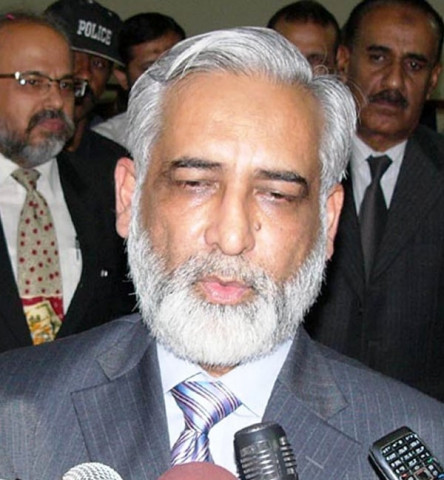
At the concluding session of the conference on combating terrorism through the law on Sunday, the legal community seemed to agree that the existing anti-terrorism laws are not sufficient to deal with the current scenario, but remained adamant that the courts try their best to provide assistance where required.
The Sindh High Court Bar Association in collaboration with the Sindh High Court had organised the three-day seminar, where around 25 speakers presented their opinions on issues like terrorism, its causes, role of courts, protection of witnesses, human rights and repercussions on the international community of the decisions taken by the judiciary.
“The existing laws dealing with terrorism are not sufficient to meet the requirements,” said Agha Rafiq Ahmed, the chief justice of the Federal Shariat Court. “No doubt there are anti-terrorism courts but the point worth considering is whether the investigation side of the cases is satisfactory?”
There have been many instances recently when the courts drew flak for allowing suspected militants to be released due to lack of evidence. “People, by and large, blame the trial courts for acquitting terrorists, but the courts cannot and should not record conviction on flimsy grounds, conjectures or surmises,” said Justice Ahmed. “Without addressing the root causes of terrorism, the menace cannot be uprooted.”
Violence not only breeds violence but it triggers more aggression, inflicting fatal blows to the economy, social and political areas, he said. “Being a part and parcel of the legal and judicial system, we have to try to uproot or at least minimise it through law.”
The only possible way to curb terrorism and the lawlessness in the country is through the implementation of law, said Sindh High Court Chief Justice Mushir Alam while castigating the current government on going against many court verdicts.
“The legal judgments have not been well received by the rulers, which trickles down the system,” he said. “Intellectual deliberation is required but the way the state is providing assistance is shameful.”
“Rule of law is the sole domain of the judiciary but our rulers do not want to follow it,” said Justice Alam. “The greatest responsibility lies on the state and we were just trying our best to provide assistance where it is required.”
The people have been driven down to a state where they have become terrorists, said the Sindh High Court chief justice, stressing upon the need to respect fundamental rights of individuals.
“Terrorism is a plague and is eating away our society. We can fight terrorism through law alone and it is the only thing which can guarantee peace in the country,” said Justice Alam. He added that developed countries have developed modern techniques for the investigation process and the country should also benefit from the modern systems.
The bar associations should come forward to play a positive role in the society, as people have confidence in them, said the Sindh High Court Bar Association president, Anwar Mansoor Khan.
Citing the success of the lawyers’ movement, he said that lawyers should take the responsibility to educate people. He encouraged the participants to mould the societies through law and constitution.
Published in The Express Tribune, October 1st, 2012.
LATEST

Pakistan 'won't hesitate' to conduct new strikes on Afghanistan, Khawaja Asif says
Ramazan moon sighted in Pakistan, fasting month begins on Thursday
IHC takes up Mazari, Chattha pleas challenging conviction under PECA
Islamabad, Sindh, K-P announce revised school hours for Ramazan

Punjab’s quiet acquisition of luxury Gulfstream jet spurs scrutiny

Second phase of displacement from Tirah's Maidan area begins
MOST READ
Rs1500 prize bond draw winners for February 16, 2026 announced

Local gold, silver rates drop after declines in international markets

Sri Lanka removes Pakistan from negative visa lists after Naqvi meeting
Political undertones mark CM's varsity visit

'The cheater has finally been exposed': Sannia Ashfaq fires back at Imad Wasim










COMMENTS
Comments are moderated and generally will be posted if they are on-topic and not abusive.
For more information, please see our Comments FAQ