Sanaullah says disputed referendum could prove 'harmful' for country
Updated 41 minutes ago

Urges political parties to reach consensus on new provinces and join the fight against terrorism
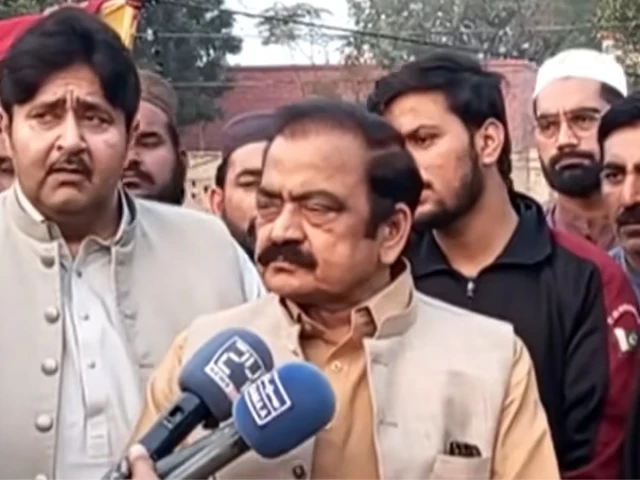
Adviser to the Prime Minister on Political Affairs Rana Sanaullah said on Sunday that any referendum on the creation of new provinces should be held based on consensus, warning that a disputed exercise would not serve the interests of the country or its people.
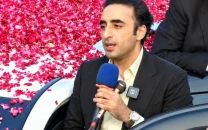
Speaking to the media in Faisalabad, he said Pakistan Peoples Party (PPP) Chairman Bilawal Bhutto-Zardari supported the creation of a province in South Punjab but opposed the division of Sindh.
“I have been saying from day one that whether it is the creation of a South Punjab province or the division of Sindh, parliament is the appropriate forum to discuss these matters. All sides should discuss them there and move forward through consensus,” he said.
Read: Shahid Khaqan Abbasi warns against referendum on new provinces without a clear roadmap
Sanaullah said decisions reached through consensus had historically been more durable and beneficial for the country and its people.
“Whenever decisions have been made through consensus, they have proved long-lasting and benefited the country and the nation. There should also be consensus on the issue currently under discussion. The positions of all political forces should be heard, and common ground should be found,” he said.
He added that the Pakistan Muslim League-Nawaz (PML-N), under the leadership of Nawaz Sharif and Prime Minister Shehbaz Sharif, would try to develop consensus on the matter.
Asked whether he supported holding a referendum or considered it a formality, Sanaullah said seeking the people's opinion was not objectionable.
“There is nothing better than seeking guidance from the people. However, if the referendum is disputed, its results will not be good for the country or its people. Therefore, the decision to hold a referendum should be based on consensus,” he said.
Asked about the recent crackdown against Jamiat Ulema-e-Islam-Fazl (JUI-F) chief Maulana Fazlur Rehman's, Sanaullah declined to comment directly, saying he wanted all political forces to participate in the fight against terrorism.
“I do not want to comment on this issue because I want everyone to be involved in the war against terrorism. Maulana Fazlur Rehman should also be part of it, as should all other political forces,” he said.
He described the success of the campaign against terrorism as essential for the country's survival, urging political parties to support the government and the armed forces.
“The success of the war against terrorism is a basic requirement for this country. Terrorism poses a threat to the country's existence. Given the way the government has been formed in Khyber- Pakhtunkhwa and the way our armed forces are fighting terrorism, we should all stand together,” he said.
Referring to Fazl's remarks about the martyrs, Sanaullah said the JUI-F chief was a senior politician who often expressed his views indirectly.
However, he said, the remarks concerning the martyrs were inappropriate.
He urged political leaders to avoid politicising the issue, saying the country's martyrs represented a red line for the entire nation.
“Instead of doing politics on this issue, we should focus on the fight against terrorism. Our martyrs belong to this country, and any remarks against them cross a red line for the entire nation,” he said.
He expressed hope that all political forces would work together to improve the situation.
Responding to a question about PML-N leader Khawaja Saad Rafique, Sanaullah said he had met him two days earlier and the latter had not made any such statement as reported.
“Sometimes our media also makes such assumptions. Khawaja Saad Rafique has his own opinion and expresses his views within the party. I do not think there should be any restrictions on him,” he said, adding that expressing a different opinion did not mean he intended to form a separate political party.
Asked about Bilawal Bhutto-Zardari's remarks, Sanaullah said the PPP chairman was entitled to express his views.
“If Bilawal Bhutto has said this, it is his opinion. I have no right to stop him from expressing it,” he said.
The debate around provinces gained momentum on July 31, when Interior Minister Mohsin Naqvi called for the creation of additional provinces or administrative units, arguing that Pakistan's existing governance structure was outdated and required a comprehensive overhaul. He renewed his proposal in November, asking political parties to hold a referendum to gauge public opinion, while maintaining that no decision would be taken without the consensus of coalition partners.
The proposal has drawn differing responses from political parties, with the PPP strongly opposing any move to divide Sindh, while the MQM-P has continued to advocate for the creation of additional units. The Sindh Assembly also passed a resolution on September 4 rejecting attempts to divide Sindh. Meanwhile, Defence Minister Khawaja Asif has supported the idea of creating at least 12 provinces, arguing that smaller administrative units could improve governance and service delivery.
The demand for new provinces is longstanding, with calls for separate provincial status in South Punjab, Bahawalpur and Hazara based on arguments concerning administrative convenience, political representation and development disparities. The Punjab Assembly had previously passed resolutions supporting the creation of South Punjab and the restoration of Bahawalpur province in 2012, but the proposals did not translate into constitutional changes.







This material may not be published, broadcast, rewritten, redistributed or derived from. Unless otherwise stated, all content is copyrighted © 2026 The Express Tribune.



COMMENTS
Comments are moderated and generally will be posted if they are on-topic and not abusive.
For more information, please see our Comments FAQ