No referendum talks in Bilawal meeting, PPP to remain part of coalition: minister
Updated 1 hour ago

Says no date has been finalised or announced by the government for the referendum
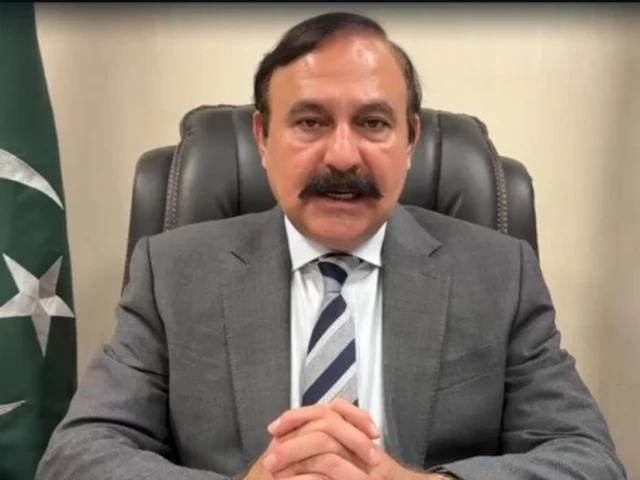
Parliamentary Affairs Minister Tariq Fazal Chaudhry said on Saturday that no discussion on a referendum took place during a meeting between Deputy Prime Minister and Foreign Minister Ishaq Dar and Pakistan Peoples Party (PPP) Chairman Bilawal Bhutto-Zardari, adding that the PPP would continue to remain part of the ruling coalition.
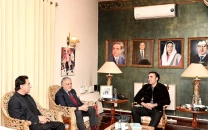
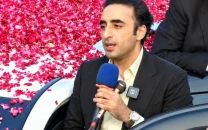
Bilawal and FM Dar met earlier in the day at Zardari House in Islamabad, where they discussed the raid on Jamiat Ulema-e-Islam-Fazl (JUI-F) chief Maulana Fazlur Rehman’s residence and matters related to the upcoming session of Parliament and potential legislative agendas.
Speaking on a private news channel about the meeting, Chaudhry declared that it was a "routine engagement", adding that such interactions with coalition partners and senior political leadership took place from time to time.
بلاول بھٹو زرداری سے ملاقات معمول کی تھی، اتحادی قیادت کے ساتھ وقتاً فوقتاً ایسی ملاقاتیں ہوتی رہتی ہیں
— Dr. Tariq Fazal Ch. (@DrTariqFazal) November 28, 2026
نائب وزیراعظم اسحاق ڈار کی قیادت میں وفد نے بلاول بھٹو زرداری سے ملاقات کی
وفد میں اسپیکر قومی اسمبلی، طارق فضل چوہدری اور وزیر مملکت بلال اظہر کیانی شامل تھے
نوید قمر اور… pic.twitter.com/WMLWW82mj0
When asked whether the issue of a referendum came under discussion, the minister replied in the negative: "There was no discussion on the referendum in today's meeting with Bilawal sahab."
Chaudhry stated that Bilawal had assured that the PPP would continue to play its "full role" as a coalition partner in the Parliament and maintain its cooperation with the government.
Asked about the procedure of a referendum on the question of new administrative units, Chaudhry explained that a referendum was being considered as a means of seeking "public opinion" on the creation of new provinces and was not a substitute for the "constitutional procedure" for establishing them.
The minister added: "No date has been finalised or announced by the government for the referendum."
Chaudhry elaborated that the issue of new provinces would be discarded if public opinion was unfavourable, while a positive response would pave the way for further steps.
"There is no button in the system which can be pushed so that the system can restart. A referendum is simply an effort to ask the people about their opinion on new provinces and how it can be beneficial for them," he remarked.
The minister thanked Bilawal for welcoming FM Dar and the government delegation with "respect", adding that the two sides held cordial discussions in "good spirits" on broader political and parliamentary matters.
He further stated: "The National Assembly is not in session. As you know, in the last few days, there was a heated political exchange between the two parties, so that's why the senior party leadership, including Dar sahab, went and spoke on all issues."
Chaudhry added that Bilawal expressed "good wishes" for Prime Minister Shehbaz Sharif and reiterated his desire that the incumbent government complete its constitutional term.
The minister further apprised that Bilawal spoke about his commitment to the Charter of Democracy during the meeting, adding that Dar raised the idea of signing a "Charter of Economy".
The minister informed that the delegation was led by FM Dar and included himself, the National Assembly Speaker Ayaz Sadiq and Minister of State for Finance Bilal Azhar Kayani, whereas the PPP delegation consisted of Senator Sherry Rehman and National Assembly member Naveed Qamar.
On parliamentary cooperation, the minister said the PPP had been asked to continue supporting legislation and maintain cooperation in the parliament.
He stated that representatives of both parties and the law minister were members of the parliamentary legislation committee, which had agreed to expedite the passage of pending bills from various ministries.
The minister also clarified that none of the pending bills related to the proposed 28th Constitutional Amendment.
Debate around new provinces
The debate on carving new provinces for broader governance reforms gained momentum on July 31, when Interior Minister Mohsin Naqvi called for additional administrative units or provinces to overhaul what he described as the country's outdated governance system. Addressing the Pakistan Economic Summit 2026 in Islamabad, he argued that the existing governance model had effectively “collapsed” after decades of failing to deliver.
His remarks drew a mixed response, with several political leaders also calling for a debate on the issue in parliament instead of public fora.
The proposal drew the interest of the Muttahida Qaumi Movement-Pakistan (MQM-P), which has repeatedly advocated carving out new provinces from Sindh. Even before Naqvi's July 31 remarks, Mustafa Kamal had floated the idea of dividing Sindh.
On September 4, the Sindh Assembly passed a resolution rejecting attempts to divide the province or create new administrative units. Chief Minister Syed Murad Ali Shah declared that there will be no compromise on Sindh's geographical unity.
More recently, Bilawal’s speech at the Karachi Press Club stirred up a storm after he said a bloodbath was imminent if Sindh was administratively divided. He also hinted that the government was mulling a 28th amendment for the purpose, while asserting that the 27th amendment was coerced onto the PPP lawmakers.
The PPP scion said he acknowledged a system collapse and was up for a reset ‘only’ through political interventions. The comments drew the ire of the political elite, with Adviser to the Prime Minister on Political Affairs Rana Sanaullah saying that Bilawal's remarks could lead to disqualification
"They were fully involved in the 26th Amendment. For the 27th Amendment, they ensured that every single vote was accounted for, and now they are calling it brute force,” Sanaullah said.
Meanwhile, Defence Minister Khawaja Asif also hit back at Bilawal, questioning his moral standing to lecture others while pointing to the PPP's 18-year rule in Sindh.
In response, Bilawal reasserted his views, giving out multiple statements in various televised interviews. He asked the government officials to "calm down" and hear out his opinions as one of the largest political stakeholders in the country. He once again turned down a referendum, saying it was never "historically" used for democratic reasons. The PPP stalwart also snubbed calls for the division of Sindh.
The MQM-P once again joined the chorus of new provinces, stating that their resolve to make new provinces was final.
The president and the prime minister have held a series of meetings on the issues that are in the limelight in the political space.
Subsequently, in an attempt to reduce political temperatures, PM Shehbaz and President Asif Ali Zardari agreed to resolve all outstanding issues through dialogue.






This material may not be published, broadcast, rewritten, redistributed or derived from. Unless otherwise stated, all content is copyrighted © 2026 The Express Tribune.


COMMENTS
Comments are moderated and generally will be posted if they are on-topic and not abusive.
For more information, please see our Comments FAQ