Govt asked to restore sugar export land routes
Updated 18 minutes ago

Cabinet body asks for holding regular SIFC committee meetings to expedite progress
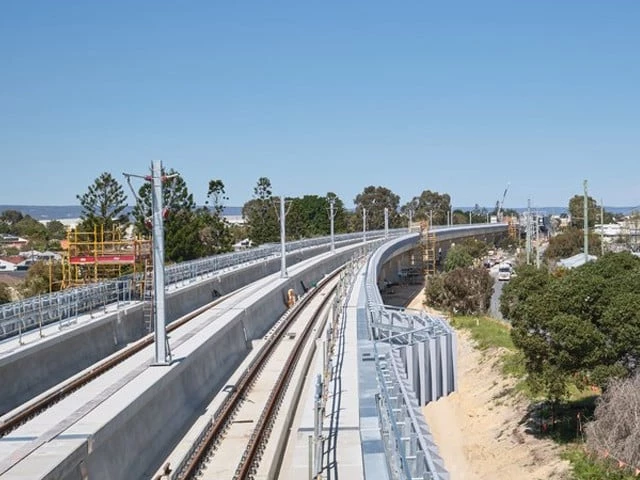
A cabinet committee has expressed concern over the slow pace of work on projects worth $22 billion signed with China and called for holding regular meetings of the Special Investment Facilitation Council (SIFC) executive committee to monitor progress.
Sources told The Express Tribune that the Cabinet Committee on Chinese Investment Projects (CCoCIP) took up the matter in a recent meeting. It was informed that Chinese investors and companies signed 566 memoranda of understanding (MoUs) and investment agreements worth $21.9 billion during the last two years.
Of these, 424 investment agreements worth $19.275 billion accounted for 88% of the total value. The remaining 142 agreements were related to trade and other arrangements.
The cabinet committee asked about the SIFC's classification of projects as "execution", "active" and "in pipeline". In that regard, the committee chairman observed that the meeting of the SIFC executive committee had not been convened since August 2025.
It was pointed out that the government had been actively involved in a series of business-to-business (B2B) engagements in China and Pakistan to attract Chinese investment, identify partners for joint ventures and promote industrial collaboration and technology transfer. Five Pakistan-China B2B investment conferences had been held since September 2025, with the SIFC/Board of Investment (BOI) providing secretarial support and ensuring coordination in collaboration with the concerned line ministries, provincial governments and sector-specific bodies.
The meeting was further apprised that those engagements comprised multi-sectoral investment conferences in Beijing and Hangzhou during the prime minister's visits and sector-specific conferences in Pakistan that covered agriculture, battery energy storage systems, home appliances, pharmaceuticals, healthcare and biotechnology.
In pursuance of the prime minister's directives to negotiate substantive agreements and joint ventures rather than mere MoUs, future B2B engagements would accord priority to investment proposals over trade-related arrangements. Adequate lead time would be provided for preparation of viable project proposals, identification of suitable partners and advance negotiations.
During discussions, the CCoCIP chair emphasised the need to expedite work on Chinese investment projects and ensure their completion on a fast-track basis. The chairman observed that the timely completion of projects, especially those related to the export sector, was essential to reduce the country's reliance on multilateral financing from institutions such as the International Monetary Fund (IMF).
The chair observed that, in view of the paramount importance of Chinese investment projects for the economic development of Pakistan, meetings of the SIFC executive committee should be held on a regular basis so that progress on investment projects could be correctly ascertained and properly monitored.
The CCoCIP observed that the terminologies used by the SIFC, namely "execution", "active" and "in pipeline", to categorise and classify investment projects according to the progress made with regard to their implementation, were blurred and therefore needed to be revisited to ensure that the actual status of each project could be reflected with greater clarity and accuracy.
The CCoCIP noted that some projects, which were still not on the ground as physical work on them had not yet started, had been erroneously included under the "execution" category.
Similarly, the cabinet committee observed that the use of the terms "active" and "in pipeline" did not clearly convey and indicate the exact current status or stage of implementation of the investment projects.
The committee asked the SIFC to review and improve the classification methodology, in consultation with the relevant ministries/divisions, and present a new classification for review before next meeting of the CCoCIP.
The cabinet panel was of the view that the reclassification was necessary because, without proper categorisation, neither the current status of the projects could be accurately ascertained nor any well-informed decision could be made for devising an effective strategy to expedite future work on those projects.











This material may not be published, broadcast, rewritten, redistributed or derived from. Unless otherwise stated, all content is copyrighted © 2026 The Express Tribune.







COMMENTS
Comments are moderated and generally will be posted if they are on-topic and not abusive.
For more information, please see our Comments FAQ