Misbah Arshad reflects on Miss Universe journey, says 'I'm very proud of me'
Updated 14 hours ago

'Jo Bachay Hain Sang Samait Lo' offers a chance to move beyond familiar TV formulas
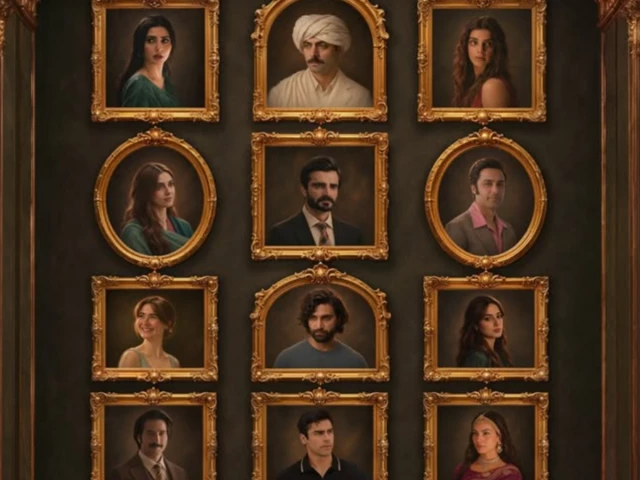
Pakistan’s long-awaited debut with a Netflix original series is significant for more than one reason. For an entertainment industry that has spent decades building its identity through television dramas, Jo Bachay Hain Sang Samait Lo represents an important step towards a much larger playing field.
It is not simply another high-profile production bringing together some of the country's most recognisable actors; it is an opportunity for Pakistani storytelling to reach audiences beyond the markets it has traditionally catered to. While Pakistani dramas have long found viewers internationally, particularly among overseas Pakistanis and audiences familiar with South Asian entertainment, having a series commissioned as a Netflix original carries a different significance.
It places a Pakistani production on one of the world's biggest streaming platforms, giving it the potential to reach viewers who may not otherwise have encountered our television industry. More importantly, it opens up a conversation about where Pakistani entertainment can go from here.
The excitement surrounding the series is understandable. Bringing together Fawad Khan, Mahira Khan, Hamza Ali Abbasi, Maya Ali, Bilal Ashraf, Sanam Saeed, Ahad Raza Mir, Iqra Aziz, Hania Aamir and Khushhal Khan, alongside several other established actors, is no small achievement. Based on Farhat Ishtiaq's novel, the series brings together three generations and six love stories, with relationships unfolding across Pakistan and Europe.
There is, however, something worth considering about the kind of story with which Pakistan has chosen to make this entry. At its heart, Jo Bachay Hain Sang Samait Lo is a romantic family drama. It brings together familiar themes of love, relationships, family histories and emotional conflicts, albeit on a considerably larger canvas. In many ways, it is a relatively safe introduction to Pakistani entertainment for a global streaming audience.
That is not necessarily a criticism. Romance and family drama have been among the strongest foundations of Pakistani television for decades. Productions such as Humsafar and Zindagi Gulzar Hai, and more recently Dar-e-Nijaat, have demonstrated how compellingly our industry can tell stories about relationships, class differences, personal ambitions and family expectations. These dramas have helped establish a recognisable identity for Pakistani storytelling, and there is no reason to abandon the genres that audiences have consistently connected with.
However, making a successful entry into the streaming world should also encourage us to think beyond the stories we already know how to tell. If this is the beginning of Pakistan's relationship with global streaming platforms, it should not become the blueprint for everything that follows. There is considerably more to our society, culture and collective experiences than romance, domestic disagreements and family conflicts.
One only has to look at Netflix's international catalogue to understand how much room there is for experimentation. The platform's global success has not been built exclusively on conventional romantic dramas or familiar family stories. Crime thrillers, psychological dramas, dark comedies, political narratives, social commentaries, historical productions and unconventional coming-of-age stories have all found substantial audiences.
Series such as Squid Game, Money Heist, Black Mirror and Adolescence demonstrate the different directions storytelling can take. They explore everything from economic inequality and human desperation to technology, social pressures, violence and the complexities of growing up. Their appeal lies not simply in their production budgets or visual scale, but in their distinctive concepts, carefully developed characters and willingness to explore uncomfortable subjects.
Perhaps even more significant is the fact that these stories do not need to originate in Hollywood or be told in English to find international audiences. Korean, Spanish, German and other regional productions have demonstrated that viewers are increasingly willing to engage with stories from different cultures, provided the storytelling gives them a reason to care.
According to research by Ampere Analysis, published in February 2026, non-English-language productions accounted for 52 per cent of Netflix's original television season releases in 2025, becoming the majority for the first time. This was an increase from 49 per cent in 2024.
Korean-language productions recorded particularly notable growth, rising from 12 per cent to 20 per cent of Netflix's non-English original television releases. Spanish-language productions also remained a major part of the platform's output, accounting for 21 per cent of new original television seasons in 2025.
These figures are important because they demonstrate that international storytelling is no longer a peripheral part of the streaming business. Regional productions have become an increasingly important part of how platforms build their global audiences. The success of Korean and Japanese productions such as Alice in Borderland and When Life Gives You Tangerines, alongside Spanish-language hits such as Cable Girls and Elite, illustrates how stories rooted in specific cultures can find viewers across geographical and linguistic boundaries.
India offers another particularly relevant comparison. Over the past few years, its streaming industry has demonstrated how productions can move beyond the conventional structure of mainstream television and experiment with more complex narratives, genres and production styles. Series such as Paatal Lok, Delhi Crime, Black Warrant and Khauf have explored subjects ranging from institutional corruption and social hierarchies to crime, gender-based vulnerability and the darker aspects of human behaviour.
What makes these productions interesting is their willingness to engage with subjects that are not always easy to accommodate within mainstream family entertainment. They give space to morally complicated characters, uncomfortable realities and narratives that do not necessarily offer straightforward answers. Their storytelling also demonstrates that regional identity does not have to be diluted to appeal to a wider audience. In fact, the specificity of their settings, characters and social contexts is often what makes them distinctive.
This is perhaps one of the biggest opportunities for Pakistan. We have no shortage of stories that could translate into compelling streaming productions. Our social realities, history, regional identities, political landscape, cultural diversity and changing generational attitudes offer an enormous range of possibilities.
There are stories about urban life and rural communities, class divisions, migration, historical events, crime, identity, women navigating different social structures and the experiences of Pakistanis living abroad. Many of these subjects have appeared in our films, literature and television, but there is considerable room to explore them through formats and genres that mainstream television has not always accommodated.
Part of the reason for this creative limitation lies in the different ways traditional television and streaming platforms operate. Pakistani television dramas are generally designed to appeal to the widest possible audience. They work within broadcasting schedules, advertising requirements and the pressure to maintain viewership over an extended period. This often encourages prolonged narratives, familiar conflicts, dramatic cliffhangers and characters whose stories can be stretched across dozens of episodes.
Writers must also account for the diverse sensibilities of households watching together, which can make certain subjects, themes and character choices more difficult to explore. There is an established formula that audiences recognise, and while many writers have found creative ways to work within it, the commercial expectations of television can sometimes discourage experimentation.
Streaming platforms offer a different model. With a defined number of episodes and a more contained narrative, writers have greater scope to develop a story with a clearer beginning, middle and end. They can experiment with pacing, character development, timelines and narrative structures without necessarily having to introduce new conflicts simply to sustain a long-running serial. A story can follow multiple perspectives, explore morally ambiguous characters or address complicated subjects while retaining a coherent overall direction.
There is also the advantage of reaching audiences who might not necessarily be interested in mainstream television programming. A production does not have to appeal to every household to find its audience on a streaming platform. It can explore a more specialised subject, tell a story from an unconventional perspective or feature characters who do not fit traditional ideas of heroism and romance. The availability of subtitles and multiple language options also makes it possible for these stories to reach viewers beyond their immediate cultural and geographical boundaries.
But this does not mean that streaming automatically produces better storytelling, or that every television drama needs to become darker, edgier or more unconventional. Romance and family drama will always have their place. The difference is that streaming creates room for a wider variety of stories to coexist, allowing writers and producers to take creative risks that may not always fit within the traditional television model.
This is where Jo Bachay Hain Sang Samait Lo becomes particularly interesting. Its premise already suggests a departure from the conventional Pakistani drama format. Rather than focusing on a single household and a familiar set of domestic conflicts, it brings together multiple generations, relationships and cultural experiences. Its characters inhabit different environments, have spent portions of their lives outside Pakistan and navigate identities shaped by more than one culture.
Perhaps one of the most refreshing aspects is the world it appears to be creating. We are seeing Pakistani characters whose lifestyles, appearances and cultural experiences differ from what we are accustomed to seeing on our television screens. From the clothes they wear to the languages they speak and the environments they inhabit, there is an attempt to represent a Pakistani identity that extends beyond our geographical borders.
It is interesting to see a production embrace the experiences of overseas Pakistanis without necessarily bringing every story back into the familiar drawing-room setting that has dominated our television for years. The different landscapes, cultures and languages give the series a more international outlook, while retaining the family relationships and emotional connections that remain central to Pakistani storytelling.
Equally interesting is the possibility that this global setting will not come at the expense of familiar family dynamics. The different generations bring their own experiences and expectations into the larger family picture. There is an opportunity here to explore the tensions between tradition and individual identity, between inherited expectations and personal choices, and between the cultures people grow up in and the ones they eventually make their own.
Visually, the trailer is promising. The cinematography, varied locations and changing settings give the production a scale that feels distinct from what we are accustomed to seeing on Pakistani television. If there is one observation to make, it is that perhaps the trailer tries to show us a little too much at once. With such an extensive cast, multiple storylines, different languages and locations, there is a lot to absorb in a few minutes.
At times, it becomes difficult to take in every character and understand their individual journeys. However, we do get a sense that these seemingly different stories are connected, and that is perhaps what makes the premise intriguing. There is enough to leave us curious about how these relationships and family histories eventually come together.
Ultimately, what makes Jo Bachay Hain Sang Samait Lo worth looking forward to is not simply its Netflix association or its impressive cast, but the possibility of seeing Pakistani storytelling evolve. Our industry has always been capable of telling compelling stories about love and family, but there is room to explore these themes through different cultures, generations, experiences and perspectives, and to venture into genres and subjects that have largely remained outside the mainstream.
Being Pakistan's first Netflix series is a milestone in itself, but its real significance could lie in what it encourages the industry to do next. It is an opportunity to experiment with scale, embrace different narratives and allow our stories to exist in worlds that are not always familiar to us.
There is always room to experiment, grow and push creative boundaries. Not every new venture needs to get everything right immediately, but the willingness to attempt something different is worth appreciating. And perhaps that is the most exciting thing about Jo Bachay Hain Sang Samait Lo: it gives Pakistani entertainment a much bigger canvas. The challenge now is to use it not simply to make bigger productions, but to tell braver, more ambitious and varied stories.











This material may not be published, broadcast, rewritten, redistributed or derived from. Unless otherwise stated, all content is copyrighted © 2026 The Express Tribune.






COMMENTS
Comments are moderated and generally will be posted if they are on-topic and not abusive.
For more information, please see our Comments FAQ