UNDP examines investment in priority climate projects
Updated 32 minutes ago

Panel seeks 20% levy on refineries' additional quarterly gains, excluding OMCs
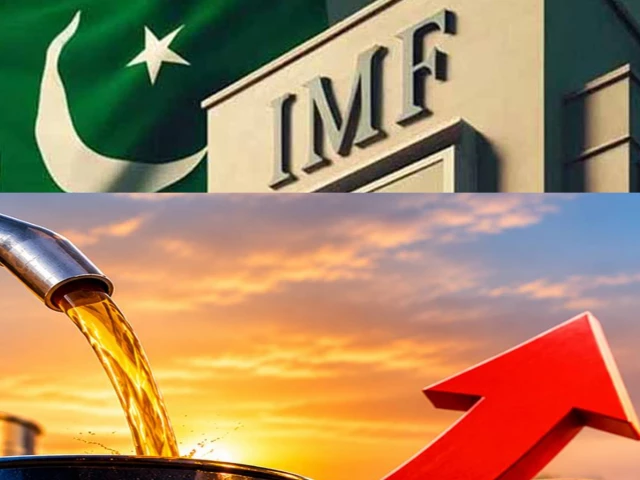
The government has revived a budget proposal to impose a windfall gain tax as part of a commitment with the International Monetary Fund (IMF) to collect a minimum of Rs25 billion from oil sector companies that benefited from Middle East war-spiked prices.
But a disagreement remains between tax authorities and the Petroleum Division over whether any such tax should be levied and whether end-June or end-September period accounts should become the base for the decision, according to senior government officials privy to these discussions.
The Federal Board of Revenue (FBR) was considering three different months, March, June and September, for calculating the windfall gains of oil refineries and marketing companies amid its inclination to use end-September accounts, according to the sources.
They said Finance Minister Muhammad Aurangzeb this week chaired a meeting to finalise the proposal, but it remained inconclusive due to disagreement over several issues.
The prime minister has also constituted a committee under the chairmanship of Petroleum Minister Ali Pervaiz Malik, which has finalised its draft recommendations and the report will soon be submitted to the prime minister. The committee has recommended that a 20% windfall gain tax could be levied on additional quarter-on-quarter gains, subject to the condition that any relief extended by the oil refineries should be adjusted against the levy. It has not recommended tax on oil marketing companies (OMCs).
After huge profits made by oil refineries and marketing companies due to the Middle East war-driven price hike, Prime Minister Shehbaz Sharif in May this year constituted a committee to recover windfall gains from OMCs.
The sources said the government has given a commitment to the IMF that it would recover Rs25 billion from oil sector companies in windfall gain tax. A senior government official said that in case the levy is not imposed on the oil sector, the government may have to take other revenue measures to fulfil the commitment.
However, the IMF seems lenient this time and has ignored many serious programme breaches, including complete deregulation of the sugar sector and taxation of the retail and real estate sectors.
The FBR is already facing a Rs95 billion shortfall, which may further widen amid prospects of missing November's target of Rs1.08 trillion by a wide margin. The collection remains sluggish, with hardly 7% growth achieved during the first four months compared to the needed 17% pace for this year.
The government will not be required to promulgate a presidential ordinance or move a bill in the National Assembly to impose the windfall gain tax, as Parliament has delegated this right to the federal bureaucracy.
Any decision to impose the windfall gain tax on both oil refineries and marketing companies can be implemented through a Statutory Regulatory Order (SRO) without the need for amending the Income Tax Ordinance.
The law states that "for any of the last three tax years preceding the tax year 2023 and onwards, in addition to any tax charged or chargeable, paid or payable under any of the provisions of this Ordinance, an additional tax shall be imposed on every person being a company who has any income, profit or gains that have arisen due to any economic factor or factors that resulted in windfall income, profits or gains".
These factors include "windfall income, profits or gains and economic factor or factors including but not limited to international price fluctuation having bearing on any commodity price in Pakistan or any sector of the economy or difference in income, profit or gains on account of foreign currency fluctuation".
The law empowers the government to impose up to a 50% tax on the gains, but a tax official said the goal was to collect a minimum of Rs25 billion, which would determine the final rate.
Another issue is that Pakistan's largest refinery, Pak Arab Refinery Company (PARCO), which accounts for 60% of refinery revenues, has not yet submitted its tax returns for the last fiscal year.
The tax authorities said all four major listed refineries, Pakistan Refinery Limited, National Refinery Limited, Attock Refinery Limited and Cnergy Co, have reported higher profits in the first quarter of this fiscal year, continuing the recovery seen in the last fiscal year.
These four listed companies reported Rs90 billion in profits for the first quarter, which the tax authorities wanted to tax. However, the Petroleum Division was not in favour of this and said the base should be June this year.
It was also of the view that these four companies could sustain losses in any of the next quarters of this fiscal year; therefore, quarterly accounts should not become the base of the decision, said the sources.
In the last fiscal year, these four listed companies had reported Rs84 billion in profits after booking losses for the fourth quarter, said the tax authorities.
But the tax authorities were of the view that these companies booked losses on inventories for the April-June period to avoid the windfall gain tax. They agreed that there was nothing illegal, and yet the tax authorities wanted to impose tax on net realisable value.
Pakistan State Oil (PSO) recorded a gross loss of Rs33.7 billion in the fourth quarter of the last fiscal year, which pulled down the full-year gross profit to Rs100 billion. This resulted in a fourth-quarter net loss after tax of Rs23 billion, reducing full-year profit after tax to Rs15 billion, avoiding the gain tax in a legal manner.
Some tax officials described it as "creative accounting", which the Petroleum Division did not agree with. The tax authorities said the oil refineries did not book any such inventory losses during the past five years.













This material may not be published, broadcast, rewritten, redistributed or derived from. Unless otherwise stated, all content is copyrighted © 2026 The Express Tribune.







COMMENTS
Comments are moderated and generally will be posted if they are on-topic and not abusive.
For more information, please see our Comments FAQ