Pakistan, China eye gas, mining projects
Updated 38 minutes ago

Minister invites Chinese investment in offshore exploration
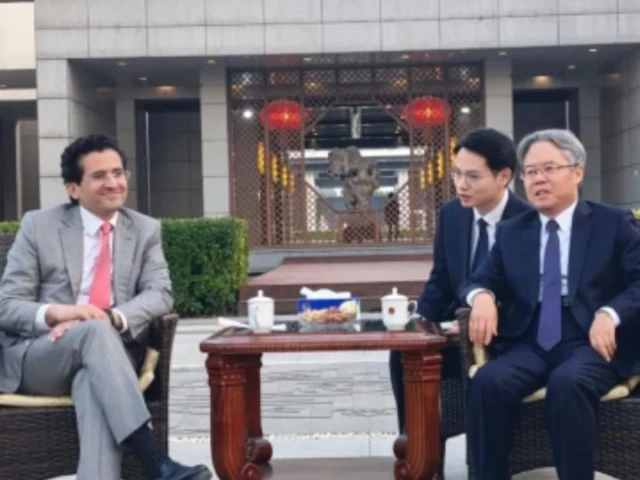
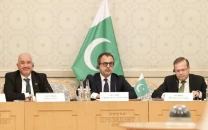
Federal Minister for Petroleum Ali Pervaiz Malik met Chinese Ambassador Jiang Zaidong to advance investment across upstream, offshore, minerals, mining and downstream energy infrastructure projects, building on President Xi's priorities announced at APEC 2026 in Shenzhen.
The federal minister, accompanied by Additional Secretary (Policy) Zafar Abbas, and Pakistan State Oil (PSO) Chief Executive Officer Jawwad Ahmed Cheema, held deliberations with the ambassador, and his commercial team. The two sides explored transformative investment opportunities and agreed on concrete steps to deepen bilateral cooperation across Pakistan's energy and mining sectors.
The engagement comes days after China hosted the 33rd APEC Economic Leaders' Meeting in Shenzhen on November 18-19, 2026, held under the theme "Building an Asia-Pacific Community to Prosper Together" with openness, innovation and cooperation as its priorities. The Pakistan-China energy partnership reflects that same vision: open markets that welcome new investors, innovation through Chinese technology and industrial expertise, and practical cooperation that connects Pakistan's resources with the wider region's growth.
The meeting covered a broad spectrum of collaboration, including upstream oil and gas exploration, offshore development, mineral exploration, mining, and the establishment of strategic energy infrastructure. Particular emphasis was placed on unlocking the investment potential in Balochistan and on emerging offshore opportunities, including the development of integrated offshore hubs.
A central focus of the discussion was the entry and expansion of Chinese downstream companies in Pakistan through strategic partnerships with PSO. Opportunities in petroleum storage, terminals and wider downstream infrastructure were discussed, positioning PSO as the key commercial partner for Chinese investment in Pakistan's downstream energy ecosystem. The engagement will further bring together leading national energy companies, including OGDCL, and Chinese upstream and downstream enterprises to build commercially viable partnerships across the entire energy value chain.
Both sides identified two government-to-government priorities for early action: a liquefied petroleum gas (LPG) plant with associated storage and terminal facilities to expand domestic supply, widen access to cleaner fuel and ease peak-season shortages; and the import of motor gasoline (Mogas), including sourcing, storage and logistics, to strengthen fuel security and secure reliable, competitively priced supply. Both are expected to deliver early, visible benefits for consumers and the wider economy. Federal Minister Ali Pervaiz Malik highlighted the government's resolve to transform Pakistan's investment landscape through progressive deregulation of the petroleum sector, investor-friendly policies, streamlined import and export procedures and improved security arrangements. He assured the Chinese delegation of the government's commitment to facilitating investors, protecting their investments and providing an enabling environment for long-term business operations.
The minister stated: "Pakistan offers immense untapped potential across its energy and natural resources' sectors. Our priority is to translate this potential into concrete investments, industrial growth and sustainable economic opportunities. "We are committed to creating a transparent, facilitative and secure investment environment, while opening our energy market to greater participation and competition. China's technological strength, industrial expertise and investment capacity, combined with Pakistan's resource potential, present an exceptional opportunity to build partnerships that deliver lasting value for both nations. We want to move decisively from discussions to implementation."









This material may not be published, broadcast, rewritten, redistributed or derived from. Unless otherwise stated, all content is copyrighted © 2026 The Express Tribune.






COMMENTS
Comments are moderated and generally will be posted if they are on-topic and not abusive.
For more information, please see our Comments FAQ