Grand jury indicts Meghan Markle's father on child porn charges
Updated 1 hour ago

Singer discusses musical upbringing, family expectations, career milestones and the health struggles that tested him
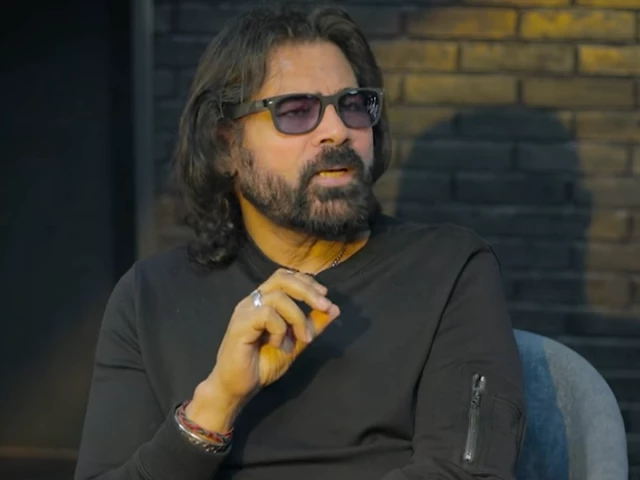
Shafqat Amanat Ali says carrying his family's musical legacy is a responsibility he takes immense pride in, adding that it has made him more conscious of his work and the expectations attached to his name. The singer believes that representing a family with such a rich musical history means not only honouring its achievements but also raising the bar for the generations that follow.
In a recent interview with Fuchsia Magazine, Ali opened up about his musical upbringing, the lessons he inherited from his grandparents, the pressure of belonging to a celebrated musical family and the personal choices that shaped his career. He also spoke about his journey towards becoming an independent artist, his popular song Aankhon Ke Sagar, the making of Mitwa and the health struggles that affected his ability to perform.
“Whether I want to or not, I am representing my family,” Ali said, explaining how he viewed his association with a renowned musical lineage. “It is not that I do not like that this is the case. It is something I am proud of. But as they say, great powers come with great responsibilities.”
Elaborating on what this meant for him as an artist, Ali spoke about the standards he believed came with carrying a family name and the example he hoped to set for younger musicians. “It makes you more responsible and more careful. If you have done your homework and know what you are doing, you feel more responsible to raise the bar for the upcoming generation,” he said.
For Ali, his relationship with music began long before he entered the industry professionally. He was introduced to the art at just three or four years old, with his grandparents taking an active role in his early education. “The journey, if we go way back, started when I was very young, like three or four, and had my first lesson from my grandfather and grandmother,” he recalled.
He described how the musical environment at home shaped his understanding of the art, revealing that his early education involved much more than formal lessons and practice. “The whole learning process does not include just singing but also anecdotes and incidents being told,” he said.
His grandfather, in particular, shared stories about the family's musical history, including how his father had performed before kings and other prominent figures. His grandmother, meanwhile, would bring the children together to revise their lessons.
The values Ali inherited from his grandparents also influenced how he approached people outside his family, particularly those who had established themselves in the music industry. “The point was to know how to respect them or it won't take you anywhere. It will take away from your voice,” he said, adding that respect for other human beings was as much a part of his musical education as the art itself.
Despite growing up surrounded by accomplished musicians, Ali admitted that belonging to such a celebrated family was not always straightforward. The presence of so many talented singers sometimes made him question his own abilities and whether he could establish an identity of his own. “Everyone in the family sings better than me and did. Even the kids now do,” he said.
He recalled comparing himself with relatives and other singers, including Nusrat Fateh Ali Khan, Sultan Fateh Ali Khan, Asad and others. At times, those comparisons left him wondering whether there was room for him as a singer in a family so rich in musical talent.
That uncertainty eventually contributed to his decision to pursue an independent career. Ali moved to Karachi to find his own direction, while also being mindful of the financial and personal independence he wanted to maintain.
“I did not want to take money from someone and then they will see me on television some day and tell people he took money from me,” he explained. “If you can't add respect for your family, then do not be a reason to insult them.”
His decision to pursue education before entering the music industry also set him apart. Ali said he was the first person in his family to attend university. Although he had initially wanted to study at the National College of Arts, there were no available seats, and he eventually enrolled at Government College.
He described the experience as an important turning point, particularly because university exposed him to different forms of music and helped him appreciate artistic expression beyond the traditions he had grown up with.
Ali also spoke about his exposure to Karachi's social environment, where drugs were widely available and normalised among some young people. Having witnessed friends in troubling situations, he said he had consciously stayed away from such influences.
His understanding of music also extends to the emotional demands he believes come with performing a song. For Ali, a singer must approach a composition with the ability to inhabit different emotions rather than rely on familiar themes or romantic storytelling. “Music is not just making stories about going to chai places and falling in love. There is more to it,” he said.
Drawing a comparison with acting, he explained what he expected from a singer when interpreting a composition. “I believe a singer is an actor and he has to do what an actor does. If he gets a happy or sad song, he has to show an emotional side or even be patriotic for certain songs,” he said.
One of the defining moments in Ali's career came when he was approached to sing Mitwa for Shah Rukh Khan's film Kabhi Alvida Naa Kehna. Recalling how the opportunity came about, he said he had been touring with several artists when he travelled to Mumbai and met composer Ehsaan Noorani, with whom he exchanged contact details.
About a month later, Ehsaan called him from Goa with news of a composition the team believed would suit his voice. “I was super happy because they are very talented people. I said yes, of course, I will do it, and that is how it happened,” he recalled.
Ali was also keen to clarify that his recognition in Pakistan had preceded the success of Mitwa. He pointed to Aankhon Ke Sagar, which had already gained popularity in Pakistan and India before he was approached for the Bollywood song.
“Many Pakistani critics or people say that unless someone goes to other countries or India, he is not recognised in Pakistan. So I wanted to clear that we were already popular in Pakistan,” he said.
The singer also recalled meeting Shah Rukh Khan once in Mumbai. Although they did not have an extensive personal interaction, the actor had recorded a special message thanking Ali for singing the song for him.
Away from the milestones of his musical career, Ali also discussed a difficult period when persistent physical pain began affecting his ability to perform. During a demanding schedule of back-to-back shows, his condition deteriorated to the point where walking became difficult, and he found himself relying heavily on painkillers.
“The worst part or tough part was we were performing back to back and what I was doing was I was living on painkillers. Once I returned home and met the doctor for my dosages, my pain began to go away and I became more positive,” he said.
Ali said he had since recovered from his diagnosis, adding that the experience had made him a stronger person.
Through his reflections on family, music and personal challenges, Ali's message remained rooted in responsibility: a musical legacy may open doors, but sustaining its respect requires individual effort, discipline and a commitment to doing justice to the generations that came before.








This material may not be published, broadcast, rewritten, redistributed or derived from. Unless otherwise stated, all content is copyrighted © 2026 The Express Tribune.










COMMENTS
Comments are moderated and generally will be posted if they are on-topic and not abusive.
For more information, please see our Comments FAQ