Balochistan announces rewards of up to Rs250m for information on most-wanted terrorists
Updated 1 hour ago

Former ambassador to China Masood Khalid calls for India-Pakistan dialogue, regional cooperation to avert escalation
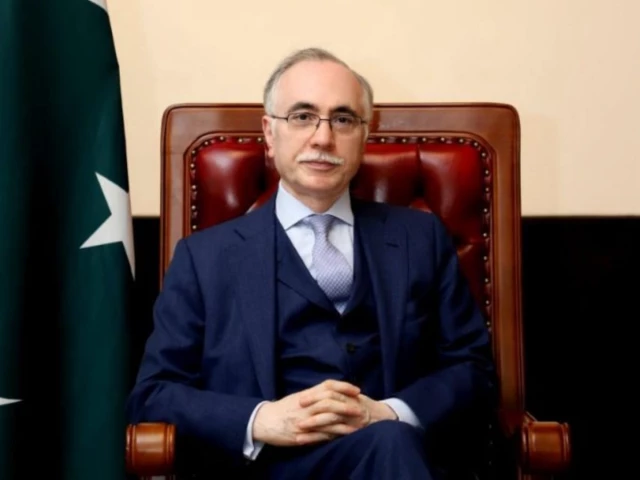
South Asia risks another potentially more devastating military confrontation unless regional countries address longstanding disputes and move towards dialogue and cooperation, former Pakistani ambassador to China Masood Khalid warned on Tuesday, describing the region as increasingly vulnerable to geopolitical rivalries and strategic miscalculations.
Speaking at the 14th World Peace Forum in Beijing, Khalid said the region had become a potential tinderbox amid competing global and regional interests, particularly the US-China rivalry, China-India tensions and the longstanding hostility between Pakistan and India.
He stressed that the previous year’s military confrontation between Islamabad and New Delhi was the most intense and perilous in their recent history, exposing the risks of escalation between two nuclear-armed neighbours.
Khalid said the confrontation had demonstrated Pakistan’s ability to respond effectively to conventional aggression under the nuclear umbrella, adding that India had overestimated its military prowess and underestimated Pakistan’s response capabilities.
He cautioned that the possibility of another confrontation could not be ruled out, despite the risks of uncontrollable escalation. The crisis, he said, had also exposed the limitations of India’s ‘New Normal’ doctrine and underscored the need for a regional security framework based on common security and development.
Also Read: Dar puts onus of talks on India
The former envoy argued that the crisis should not be viewed as an isolated incident resolved through international intervention. The absence of communication during the standoff reflected deeper mistrust between the two countries, compounded by unresolved disputes, including Kashmir, and tensions surrounding the Indus Waters Treaty.
He warned that allowing these issues to persist, particularly the water dispute, could trigger another conflict with potentially greater consequences. He also pointed to India’s growing ideological shift towards Hindutva and its alleged support for the Taliban regime in Afghanistan as factors adding to regional instability.
Beyond bilateral tensions, Khalid identified the intensifying US-China competition as a major factor shaping South Asia’s security environment. He said Washington’s growing strategic and military partnership with India over the past two decades had contributed to regional militarisation and an arms race, including in the Indian Ocean.
The institutionalisation of US-India defence cooperation through agreements and mechanisms, including QUAD, COMCASA, LEMOA and BECA, had enhanced India’s military capabilities, posing security challenges for Pakistan, he maintained.
While recent US overtures towards Beijing could indicate a more pragmatic approach to China, Khalid cautioned against assuming that Washington was abandoning its Indo-Pacific strategy, saying any perceived policy shift needed to be assessed against developments on the ground.
Read More: Iran says 4th oil tanker hits naval mine, catches fire in Strait of Hormuz
He also highlighted the economic costs of regional rivalries, noting that intra-regional trade accounted for just 5% of South Asia’s total trade, compared with 63% in the European Union, 56% in ASEAN and around 47% in North America.
The region, despite its rich civilisational heritage, remained constrained by weak connectivity, poverty, inadequate infrastructure and limited economic cooperation. The South Asian Association for Regional Cooperation (SAARC), once envisioned as the principal platform for regional integration, had remained dormant since 2016.
Khalid said South Asian countries also faced common challenges, including food and water insecurity, population growth, climate change, terrorism and extremism, but lacked effective mechanisms for crisis management and dispute resolution.
Calling for a reset, he urged India and Pakistan to resume dialogue on all outstanding issues and asked the international community to encourage urgent confidence-building measures between the neighbours.
He further argued that smaller South Asian countries were increasingly reluctant to become entangled in major-power rivalries and were seeking alternative regional cooperation arrangements, particularly with Eurasia, to secure reliable energy supplies and trade routes.
Concluding his remarks, Khalid said South Asia needed to move away from a security-driven narrative towards one centred on development, sovereign equality and mutual benefit.
The region’s future, he said, depended on its ability to transform geopolitical competition into meaningful cooperation and unlock the potential of its people.










This material may not be published, broadcast, rewritten, redistributed or derived from. Unless otherwise stated, all content is copyrighted © 2026 The Express Tribune.






COMMENTS
Comments are moderated and generally will be posted if they are on-topic and not abusive.
For more information, please see our Comments FAQ