Iranian parliament speaker says US seeks ‘no war, no peace’ stalemate with Iran, calls for deterrence
Updated 19 minutes ago

‘Sustainable deterrence means strengthening the country,’ says Mohammed Bagher Ghalibaf
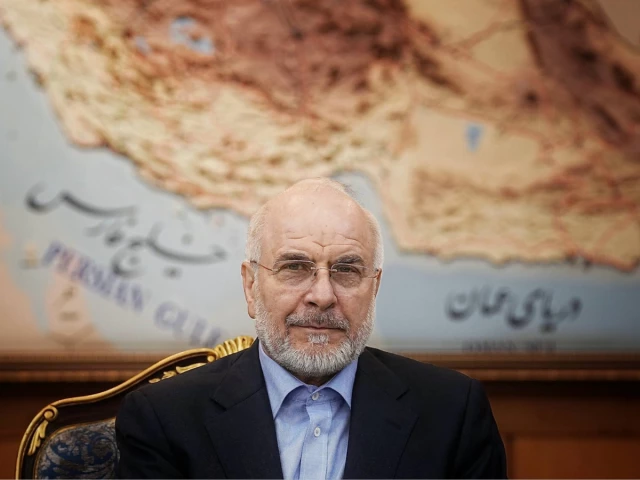
Iranian Parliament Speaker Mohammed Bagher Ghalibaf said on Monday that the US wants to impose a "no war, no peace" stalemate on Iran, arguing that "sustainable deterrence" alongside or instead of negotiations is the way to end the threat of conflict.
"Sustainable deterrence means strengthening the country," Ghalibaf said in remarks carried by Iran's semi-official Tasnim news agency.
Diplomacy and war are both instruments for achieving deterrence, he added.
The "neither war nor peace" situation cannot continue, Ghalibaf said, adding that it "must be resolved."
Read: Iran says it will use all available tools to confront US naval blockade
“The question now is how, by whom, and with what actions should we resolve this situation," he added.
Regional tensions have escalated since the US and Israel launched a war against Iran in February. Tehran responded by attacking Israel and US military facilities across the region.
The US and Iran signed a framework agreement in June to end hostilities and began negotiations, which later stalled amid disagreements over how to ensure safe and free navigation through the Strait of Hormuz.
Fighting between the parties has flared intermittently since July amid continuing efforts to end the war.
Iran’s Revolutionary Guard Corps Navy says mine blasts set 3 oil tankers ablaze in Strait of Hormuz
Iran’s Islamic Revolutionary Guard Corps Navy (IRGC Navy) said late on Monday that three oil tankers struck mines in the Strait of Hormuz.
It said two of the tankers struck naval mines in the eastern part of the strait and that powerful explosions triggered fires aboard all three vessels.
It said US military air cover had failed to prevent the incidents and that it would release footage of the explosions and fires.
It also warned vessels against taking “unauthorised routes” or ignoring maritime warnings in the strait.
Read more: Israel, US agree to develop joint plans for possible escalation against Iran: report
Iran announced on July 12 that it closed the Strait of Hormuz after the US resumed military strikes against the country.
Tehran has warned that it would target vessels using routes other than those designated by Iranian authorities or attempting to transit the waterway without permission.
The Strait of Hormuz is a major shipping route for global oil and liquefied natural gas supplies.
The US and Israel launched a war against Iran on Feb. 28, prompting Tehran to retaliate with attacks on Israel and US military facilities in Arab countries.
The US and Iran signed a memorandum of understanding on June 18, but implementation stalled over disagreements concerning freedom of navigation through the Strait of Hormuz.













This material may not be published, broadcast, rewritten, redistributed or derived from. Unless otherwise stated, all content is copyrighted © 2026 The Express Tribune.






COMMENTS
Comments are moderated and generally will be posted if they are on-topic and not abusive.
For more information, please see our Comments FAQ