Armed men accused of assaulting family, filming incident
Updated 20 minutes ago

Lahore records 17% decline compared to last year
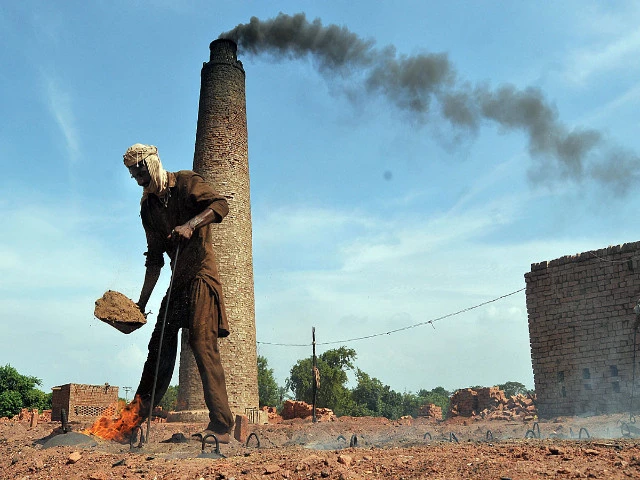
Air pollution levels remained above safe limits in four major Pakistani cities during last week, with Multan recording the highest level.
The city's average fine particulate matter (PM2.5) concentration was 204.1 micrograms per cubic metre, marking a 41 per cent increase compared to the same period last year, according to a weekly report of the Pakistan Air Quality Initiative (PAQI).
The report covering November 16 to 22 recorded Multan's average Air Quality Index (AQI) at 254, placing it in the "very unhealthy" category.
The pollution peaked on November 20, when PM2.5 levels reached 263.3 micrograms per cubic metre and the AQI 313.
In Lahore, the weekly average PM2.5 concentration stood at 180 micrograms, while the average AQI was 230. The city's highest pollution level during the week was reported on Sunday, when PM2.5 reached 236.7 micrograms per cubic metre and the AQI rose to 286.
However, Lahore recorded a 17% decline in air pollution compared to last year.
The report said that data from the past nine years showed no clear long-term trend in the city's pollution levels.
Karachi recorded a weekly average PM2.5 concentration of 75 micrograms per cubic metre, with an AQI of 160. Pollution in the port city increased by 96% compared to the previous week but remained 21% lower than the corresponding period last year.
Islamabad's weekly average PM2.5 level was recorded at 64.5 micrograms per cubic metre, while its average AQI stood at 155. The capital registered a 42% decline in pollution compared to the same period last year.
According to the PAQI, all four cities recorded PM2.5 concentrations above both the World Health Organisation's recommended limit of 15 micrograms per cubic metre and Pakistan's national standard of 35 micrograms per cubic metre on all seven days.
The report also highlighted high pollution levels in areas surrounding Lahore.
Kasur recorded an average PM2.5 concentration of 240 micrograms per cubic metre, followed by Narowal at 225, Kahna Nau 187 and Raiwind 186.
The pollution levels in some surrounding districts were higher than those recorded in Lahore.
An analysis showed that air reaching Lahore had passed over Indian territory for an average of 7% of the preceding two-day period, compared to 3% during the same period last year.
On November 21, the air trajectory passed over India for 43% of the time. However, the report did not establish a direct link between these trajectories and the sources of pollution.
Punjab Environmental Protection Department Deputy Director Ali Ejaz said local sources of pollution in Lahore had been brought under control to a considerable extent.
As a result, the AQI levels now rise for a few hours during the morning and evening before declining as temperatures increase, he said.
He said a direct comparison between Lahore and other districts was not possible because air quality monitors had only recently been installed in those areas and their number remained lower. He added that similar measures were being taken in other cities to address local sources of pollution.
The report advised residents of Multan to limit outdoor activities and recommended that vulnerable groups remain indoors.
It also urged people in Lahore to avoid outdoor activities, with particular caution advised for sensitive groups.















This material may not be published, broadcast, rewritten, redistributed or derived from. Unless otherwise stated, all content is copyrighted © 2026 The Express Tribune.








COMMENTS
Comments are moderated and generally will be posted if they are on-topic and not abusive.
For more information, please see our Comments FAQ