Smartphone imports put 40,000 jobs at risk
Updated 56 minutes ago

Govt targets $1b export in five years, against current formal exports of just $5.8m
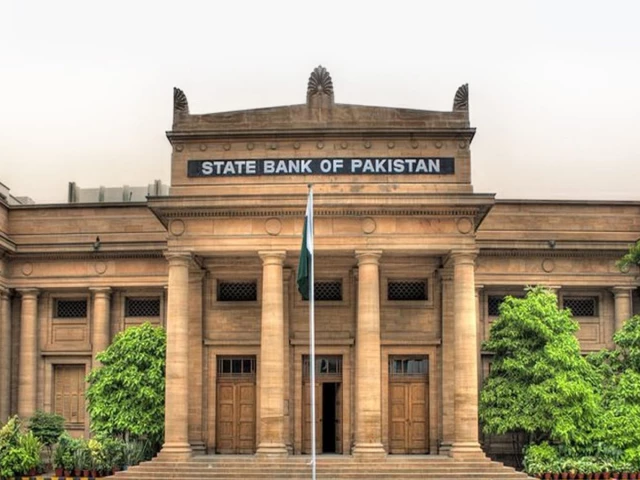
The State Bank of Pakistan (SBP) has tripled the permissible limit for commission, brokerage, discount payments and retention of export proceeds by the gemstone sector to 30% from the existing 10%, providing exporters greater flexibility in handling foreign exchange earnings as the government seeks to unlock the country's largely untapped mineral wealth.
In an Export Policy Department (EPD) Circular Letter No 18 issued on Monday, the central bank amended instructions under Para 35 of Chapter 12 (Exports) of the Foreign Exchange Manual, which governs the remittance of export commission, brokerage and discount and the retention of export proceeds in Exporters' Special Foreign Currency Accounts (ESFCAs). The SBP said the revision was aimed at supporting the gemstone sector in enhancing its exports. Accordingly, the table under Para 35(i) has been revised, increasing the maximum permissible rate for commission, brokerage, discount and retention for gemstone exports from 10% to 30%.
The revised framework places gemstones among the most favourably treated export categories under the foreign exchange rules, second only to books, journals and magazines, which enjoy the highest permissible ceiling of 33.33%. Pharmaceutical products carry a limit of up to 15%, while the ceiling for all other goods remains 10%. Cement and cotton exports are subject to limits of up to 5% and 2%, respectively. The differential treatment reflects the SBP's decision to provide targeted support to the gemstone sector, which has considerable potential to generate foreign exchange but remains a relatively small contributor to Pakistan's formal export earnings.
The relaxation also comes amid the government's renewed efforts to develop the country's gemstone industry as a significant source of export diversification. Pakistan possesses considerable deposits of precious and semi-precious stones, particularly in Gilgit-Baltistan, Khyber-Pakhtunkhwa and Balochistan. However, the availability of these natural resources has not translated into an organised, high-value export industry.
A major constraint has been the limited development of domestic processing and value addition. Much of the sector's potential lies not merely in extracting and exporting rough stones but in developing local capabilities in cutting, polishing, grading, certification and jewellery manufacturing. These activities can substantially increase the value captured within the country instead of leaving a significant share of the earnings to overseas processors and traders.
The government's National Gemstone Policy 2026-2030 seeks to address these shortcomings by formalising the industry, improving mining practices, strengthening certification standards and promoting value-added exports. The government has also set an ambitious target of increasing gemstone exports to $1 billion within five years, against current formal exports estimated at approximately $5.8 million.
The gap between the existing export base and the stated ambition highlights the scale of the challenge facing policymakers. Achieving the target would require considerably more than increasing mineral extraction. It would involve developing modern mining practices, establishing internationally recognised testing and certification facilities, training skilled workers and creating organised channels through which Pakistani gemstones can reach international buyers.
The sector's development also has implications for employment and regional economic activity. Gemstone mining, processing and trading can create opportunities for small businesses, skilled artisans, technicians and entrepreneurs, particularly in areas where mineral deposits are located. Expanding local processing could help retain more economic activity within these regions while creating stronger links between mining communities and international markets.
Another important challenge is the formalisation of gemstone trading. Weak certification arrangements, inadequate processing facilities and informal transactions can limit exporters' access to established international markets. Buyers require consistent quality, reliable grading and assurance about the origin and characteristics of stones. Without these arrangements, Pakistan risks continuing to sell a substantial portion of its mineral wealth without capturing the higher returns associated with internationally marketable finished products.
Against this backdrop, the SBP's relaxation provides an additional measure of support to exporters. A higher permissible ceiling for commission, brokerage, discount and retention gives businesses greater flexibility in meeting export-related commercial obligations and managing their foreign currency proceeds. This can be particularly relevant in international gemstone markets, where exporters need to operate through overseas buyers, agents and trading networks.
However, the foreign exchange concession is only one component of the broader effort required to develop the industry. Its effectiveness will ultimately depend on whether exporters can also access better processing facilities, reliable certification, skilled manpower and competitive international marketing channels.
The amendment provides targeted relief to gemstone exporters, while the broader challenge remains converting Pakistan's mineral potential into sustainable foreign exchange earnings.
The central bank has advised all authorised dealers in foreign exchange to bring the contents of the circular letter to the notice of their constituents and ensure meticulous compliance with the amended instructions.









This material may not be published, broadcast, rewritten, redistributed or derived from. Unless otherwise stated, all content is copyrighted © 2026 The Express Tribune.







COMMENTS
Comments are moderated and generally will be posted if they are on-topic and not abusive.
For more information, please see our Comments FAQ