
Sandpapergate controversy
Updated 43 minutes ago

.

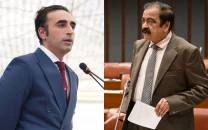
Bilawal Bhutto Zardari's recent catharsis deserves a candid appraisal. His call for a political reset – at a presser in Karachi on Tuesday – is a welcome step. Such a reset necessitates a national dialogue involving all political forces, including the PTI - an outreach Bilawal gracefully hinted at despite their years of bitter rivalry. Also, it is hard to disagree with his contention that policies of exclusion, pursued over decades, have severely dented national interests. His acknowledgment that the PTI has been wronged and must be part of the solution is also spot on.
However, Bilawal's outburst against the prevailing system has raised eyebrows, particularly since he and his party, the PPP, have been consistent beneficiaries of it. Thus, his assessment that the system has been "made to collapse" must be accompanied by an acceptance of responsibility. He cannot simply absolve himself of this burden or critique the status quo merely for political point-scoring; doing so is tantamount to having one's cake and eating it too.
This criticism is echoed by the pushback from the PML-N. Defence Minister Khawaja Asif and other party leaders have reminded Bilawal that it was the collective wisdom of the coalition allies that produced these very policies. Thus, there is little point in walking away now, especially as the debate over creating new provinces or administrative units is underway. Asif went so far as to challenge Bilawal to come clean before assigning blame for the current decay, pointing out that Sindh continues to lag in development despite being ruled by the PPP for decades.
Bilawal's remarks have come at a time when proposals are on the table to divide Sindh, alongside other provinces. There is little doubt that the Bhuttos are reluctant to see their influence in their traditional political bastion diluted by its administrative division. Yet Pakistan, mired in poor governance and an imbalance in resource distribution, is in dire need of more provinces. Devolving power into smaller administrative units is a common practice worldwide to ensure better service delivery. It is time to kickstart a serious debate on how to achieve this.







This material may not be published, broadcast, rewritten, redistributed or derived from. Unless otherwise stated, all content is copyrighted © 2026 The Express Tribune.






COMMENTS
Comments are moderated and generally will be posted if they are on-topic and not abusive.
For more information, please see our Comments FAQ