COP31 draft deal calls for 'accelerated action' to exit fossil fuels
Updated 1 hour ago

Draft urges countries to raise electricity's share of final energy demand to 35% by 2035
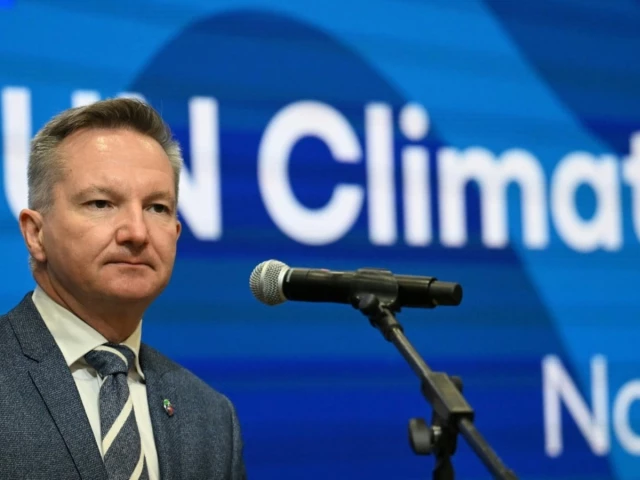
COP31 co-host Australia released the first draft of a broad political deal on Monday that includes a call for nations to speed up the phase-out of planet-heating coal, oil and gas.
The draft decision needs ultimate approval by the nearly 200 nations at the UN climate summit in Turkiye, where the future of fossil fuels has been among the most hotly debated issues.
The summit in Antalya, which is due to finish Friday, takes place against a difficult backdrop, with a conflict-driven energy crisis and geopolitical tensions tempering expectations.
Australia, which is steering the marathon talks, wants to produce an overarching political statement summing up what countries have agreed and setting the course for future climate action.
The proposed "cover decision" lays out the competing positions of governments from tiny island states to oil behemoths and emerging economies -- underscoring just how far apart they remain.
In one of the most closely watched proposals, it "calls for accelerated action to phase out fossil fuels, including through the immediate transition away from fossil fuels in energy systems".
This could be expected to encounter strong resistance at the UN climate negotiations, where any language around curbing fossil fuels — the main driver of global warming — is highly contested.
The draft also calls on countries to join a global push to raise electricity's share of final energy demand to 35 per cent by 2035, a key initiative of COP31 host Turkiye.
World is watching
The draft deal also includes calls from developing countries for rich nations to triple funding for climate adaptation to at least $120 billion.
This goes to the heart of long-running tensions over the responsibility of wealthy countries, most responsible for greenhouse gas emissions, to assist poorer nations bearing the brunt of global warming.
It also evokes "deep concern" over the impending breach of the Paris Agreement's 1.5 degrees Celsius target and recognises the "central role of the best-available science" of the IPCC, the global authority on climate change.
Many countries, particularly in Europe and small island developing nations, had pushed for a reference to the IPCC and a strong response to the "overshoot" of 1.5°C that scientists say is imminent and unavoidable.
Among the text's more divergent positions was a call for wealthy nations to "achieve net zero emissions by 2030" — a target few could realistically meet.
Australia's Climate Minister Chris Bowen, who is chairing the formal negotiations, said the draft was not "final" but something to be whittled down in the final tense days ahead.
"There are elements in this draft that not all parties will agree on. That is a given," he told reporters shortly after the document was published.
"What we'll be concentrating on in the coming days are those issues where people can find common ground. That will be the focus of the week ahead — because the world wants us to act on climate change."






This material may not be published, broadcast, rewritten, redistributed or derived from. Unless otherwise stated, all content is copyrighted © 2026 The Express Tribune.








COMMENTS
Comments are moderated and generally will be posted if they are on-topic and not abusive.
For more information, please see our Comments FAQ