Pakistan urges UN action to secure Gulf waterways
Updated 10 minutes ago

.
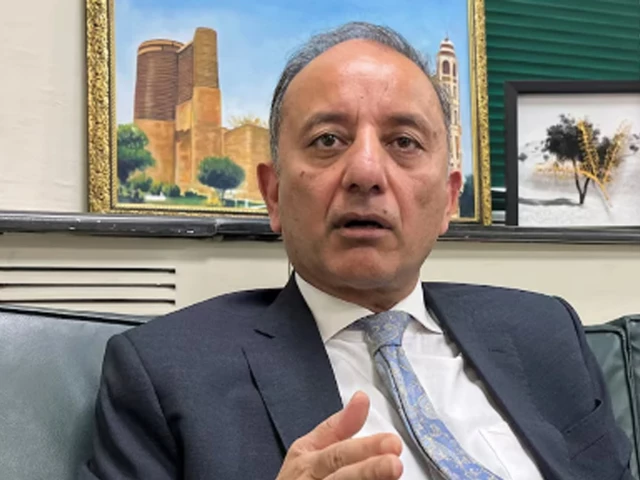
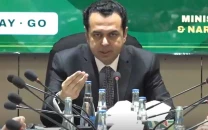
Federal Minister for Climate Change Dr Musadik Malik has called for a shift in international climate financing towards direct support for households adopting renewable energy, saying Pakistan’s rooftop solar expansion demonstrates how ordinary people are driving the energy transition in response to economic pressures. Addressing a ministerial panel titled “From Pledge to Plans: Electrifying the Transition” at the Global Renewables Hub during the 31st United Nations Climate Change Conference (COP31) in Antalya, Türkiye, the minister urged international partners to facilitate access to battery storage technologies and support decentralised renewable energy systems.
He said Pakistan’s solar transition was increasingly being driven by households making independent investments in rooftop solar installations, often without financial assistance from the government or international institutions. Illustrating the scale of this transformation, Dr Malik recounted the story of a villager, Karamat Ali, who sold 12 buffaloes and cows to purchase rooftop solar panels. He described livestock as a poor family’s financial security, providing milk, income and savings for emergencies and important household needs, including children’s marriages. The villager, he said, decided to invest in solar energy because he considered it a more reliable and economically viable option than depending on grid electricity and unpredictable fuel prices.
The minister said the example reflected a broader trend, with hundreds of thousands of households making similar choices to secure affordable electricity and sustain their livelihoods. He described the development as a people-driven energy revolution that was challenging the conventional centralised electricity distribution model. According to Dr Malik, Pakistan had saved around $12 billion in LNG and gas imports through the growing adoption of rooftop solar, although he did not provide a timeframe or supporting calculation for the estimate.
He said households had effectively created a decentralised electricity generation system, with rooftops emerging as new centres of energy production. Comparing the traditional electricity grid with a canal system, he said consumers situated upstream had historically enjoyed greater access to resources, while poorer communities downstream often received little benefit. The emerging rooftop solar model, he added, offered an alternative in which households could generate electricity locally and store surplus power for use when sunlight was unavailable. However, he stressed that solar panels alone were not sufficient to complete the transition, calling for investment in battery storage systems and improved grid connectivity. “Wire them,” he urged international partners, arguing that households had already invested in electricity generation but lacked the financial resources and technological capacity to establish the necessary storage and connectivity infrastruc









This material may not be published, broadcast, rewritten, redistributed or derived from. Unless otherwise stated, all content is copyrighted © 2026 The Express Tribune.





COMMENTS
Comments are moderated and generally will be posted if they are on-topic and not abusive.
For more information, please see our Comments FAQ