Auto policy benefits 6.6% of households
Updated 53 minutes ago

Motorcyclists, public-transport users, who make up over 90% of population, gain little
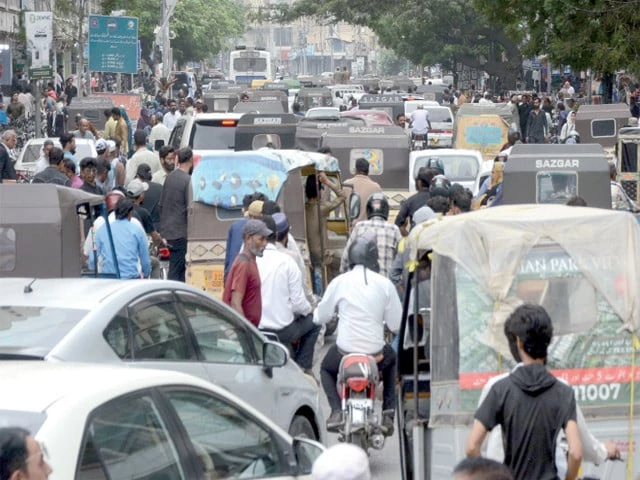
Pakistan's new Auto Policy 2026-31 promises cheaper and safer cars, but its biggest benefits will go to a small, better-off group of car buyers, while the motorcyclists and public-transport users will gain little, an independent policy consultant told a LENS (Learning, Ethics, Networking and Support for Media) virtual workshop on Saturday.
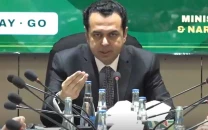
"A public policy should be judged on one test: whether it helps people get to work, school and healthcare affordably and safely," said Bilawal Suhag, Head of Research at the Federation of Pakistan Chambers of Commerce and Industry (FPCCI), who presented an analysis of the policy to journalists.
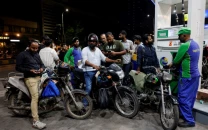
On that measure, he argued, the policy fell short. Of Pakistan's 241.5 million people, living in about 40 million households with an average income of Rs82,000 per month, only 6.6% of households own a car. About 57% own a motorcycle, and 41%, between 99 and 125 million people, own no vehicle at all.
"The people who gain most are the fewest; the largest group gains least," his presentation concluded. The policy was unveiled on November 7 by Information Minister Attaullah Tarar and PM Adviser Haroon Akhtar Khan after the prime minister approved a revised draft in October. It still needs cabinet's approval and a formal notification. Suhag cautioned that final figures could differ from those reported so far.
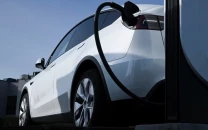
Under the plan, tariffs on completely built-up units (CBUs) and completely knocked down (CKD) kits will fall in stages to 15% by 2030-31, under a simplified four-tier customs structure of 0, 5, 10 and 15%. Regulatory and additional customs duties will be abolished by FY31. Electric vehicles will pay lower sales tax, from 1% for battery-electric to 9% for plug-in hybrids, and the financing limit for EVs rises from Rs3 million to Rs10 million.
Buyers will also get some protection. Advance payments on booking will be capped at 20% of the price to curb "on-money", and 45 new safety standards based on the UN WP.29 model will apply to local and imported used vehicles.
To pay for this, the government will impose an automotive development levy of 2% on vehicles of 1,001 to 2,000cc and 10% above 2,000cc. The levy is expected to raise Rs232 billion over five years, mostly for export incentives. The government's central target is to raise auto exports from $0.2 billion to $6 billion.









This material may not be published, broadcast, rewritten, redistributed or derived from. Unless otherwise stated, all content is copyrighted © 2026 The Express Tribune.





COMMENTS
Comments are moderated and generally will be posted if they are on-topic and not abusive.
For more information, please see our Comments FAQ