China, US discuss tariffs, farm trade
Updated 42 minutes ago

Funding woes stall $1b Reko Diq rail project amid renewed focus on minerals

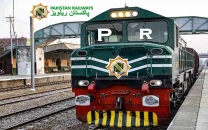
The government has deferred the approval of a $1 billion Mainline-3 rehabilitation project of Pakistan Railways, which has been conceived to transport minerals from Reko Diq mines, due to funding constraints and a possible change in minerals' transportation port from Karachi to Gwadar.
The Central Development Working Party (CDWP), for the third time in the past five months, deferred approval of the Rs278 billion, or $1 billion, up-gradation of ML-3 track from Nokhandi to Rohri this month, according to the Ministry of Planning officials.
The 996-kilometre-long track has outlived its life, and trains are crawling at an average speed of 30 km per hour. It requires a complete rehabilitation to make it viable for heavy cargo of minerals to be extracted from the Reko Diq mines.
Government officials said that the project's approval had been postponed due to funding constraints and the possibility that the Reko Diq Mining Company, being run by Barrick Gold, could use Gwadar Port for the transportation of minerals.
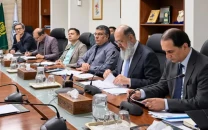
The project was deferred for more information and details about bridge financing with Barrick Gold, said Ahsan Iqbal, Federal Minister for Planning, while responding to a question.
The government had already approved to take a $390 million loan from Reko Diq Mining Co at an estimated rate of 6% per annum as bridge financing to complete the ML-3 track. The official said that in case of any change in the plan to use Gwadar Port instead of Karachi Port, fresh commitments were also needed from the mining company on whether it would extend the loan.
The up-gradation of the track had been proposed to transport minerals through the Nokhandi-Quetta-Rohri and Karachi rail track. Sources said that there was a possibility that the minerals might now be transported through Gwadar Port, which would require making fully functional the Nokhandi-Panjgur and Gwadar road link.
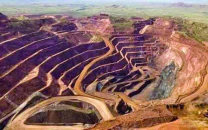
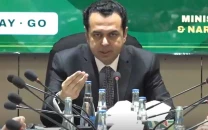
The development came in the middle of renewed focus on Pakistan's mineral potential, and this week the executives of three companies, Barrick Gold, Ivanhoe Atlantic and Minmetals, addressed the Pakistan Minerals Investment Forum.
Also, a delegation of Barrick Gold Company met with Planning Minister Ahsan Iqbal this week and sought details of the road project that could be constructed, according to people privy to the discussions.
An official statement issued after the meeting read that Ahsan Iqbal "emphasised the need to fast-track the Nokhandi-Gwadar road corridor through close collaboration between the federal government, the government of Balochistan and mining companies to fast-track logistics connectivity.
Earlier, the project was considered twice by the CDWP, first in June and then in August. In the second last meeting, the CDWP decided "the project is kept on hold until the Ministry of Railways provides a consolidated picture of its funding requirements for the next five years, indicating the funding to be arranged from its own resources, the requirement from PSDP, and any alternative financing arrangement without PSDP funding".
While addressing the mineral forum, Prime Minister Shehbaz Sharif and Chief of Defence Forces Field Marshal Syed Asim Munir emphasised the need to export finished mineral products instead of just the raw material.
The Quetta-Taftan rail section is also part of the transport corridor between Pakistan, Iran and Turkiye. All passenger and freight traffic of the Railways passes through this section to Iran and Turkiye. However, owing to the poor and dilapidated condition of the track, rail traffic has been drastically reduced.
At present, one or two freight trains per month ply between Quetta and Taftan. The government hopes that after rehabilitation of the ML-3 track, freight traffic up to eight sets of freight trains and other freight trains towards Iran and other countries will give a boost to freight traffic manifold and resultantly revenue generation.
However, the Planning Commission observed during project scrutiny meetings that project documents were silent about the consultation and coordination held with Reko Diq Mining Company.
According to the finance ministry officials, the company had promised funding through bridge financing, which the government was supposed to return by June 2028 through a bullet payment.
For the current fiscal year, only Rs250 million has been allocated for the project. The Planning Commission was of the view that if the funding could not be arranged, then the project would be delayed and, as a result, the cost would increase tremendously based on experiences in the case of railway projects.
At the agreed interest rate, the total repayment to the company will be nearly $450 million, according to the government officials. They said that during review meetings, Ahsan Iqbal also inquired from the Ministry of Railways about the source of funding, as it would not be possible to fund the project through the Public Sector Development Programme (PSDP).
The minister had also directed the Ministry of Railways to provide a consolidated picture of its funding requirements for the next five years, including the proposed works on ML-3, ML-2 and ML-1. The minister stated that the Ministry of Railways should undertake projects according to the availability of funds, observing that its development portfolio was limited to around Rs40 billion.
The government is already struggling to arrange funds for the ML-I (Karachi-Peshawar) project and is looking for multiple options, including a loan from the Asian Development Bank, a Frontier Works Organisation-led lease model and pledging the railways' land with the domestic commercial banks.







This material may not be published, broadcast, rewritten, redistributed or derived from. Unless otherwise stated, all content is copyrighted © 2026 The Express Tribune.






COMMENTS
Comments are moderated and generally will be posted if they are on-topic and not abusive.
For more information, please see our Comments FAQ