Russia demands Finland leave NATO in Abu Dhabi talks: report
Updated 2 hours ago

Informal proposals aim to introduce 'new European security order', German newspaper says
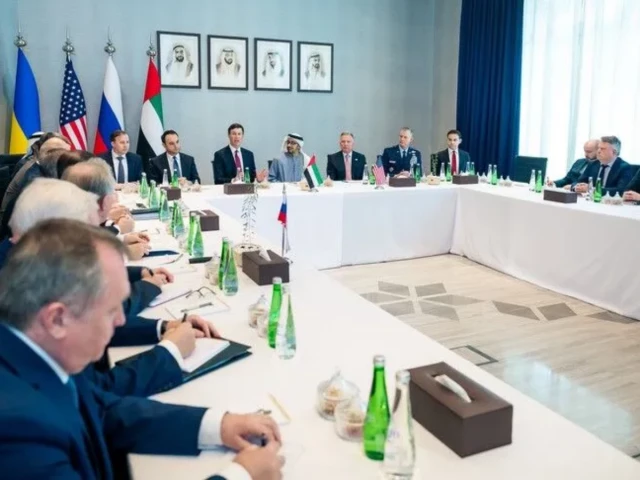
Russian negotiators have put forward far-reaching demands during Abu Dhabi talks to end the war in Ukraine, including Finland leaving NATO and a ban on any NATO military bases in the Baltic states, the German newspaper Bild reported on Friday.
Informal proposals, which were shared with European representatives in Abu Dhabi, go well beyond the territory of Ukraine and aim to introduce “a new European security order,” the daily reported, as Russian officials continue to argue that Western governments once promised not to enlarge NATO eastward.
According to the proposals to end the war, Russia would keep all currently occupied Ukrainian territory and receive the entire Donbas region. Ukraine would have to give up the remaining areas of Donetsk and Luhansk still under its control.
The ports of Odesa and Mykolaiv would be demilitarised and barred from use as naval bases, while separate arrangements would guarantee freedom of navigation in the Black Sea and the Baltic Sea.
Read: Putin lets Europe join Ukraine peace talks, as Kyiv says Starshield disrupted again
The daily said the proposal also calls for Ukraine to remain permanently non-aligned, ruling out NATO membership while leaving open the possibility of joining the European Union.
It further seeks a ban on NATO military bases in the Baltic states of Estonia, Latvia and Lithuania, with Finland required to return to its pre-membership status.
On Moldova, the plan envisions a federal republic made up of the core Moldovan territory, Transnistria and Gagauzia. If Moldova were to join the EU, Transnistria and Gagauzia would be allowed to hold referendums on independence.
In return, the Russian side offers to withdraw nuclear weapons from Belarus and forgo the stationing of intermediate-range missiles there, according to the report.









This material may not be published, broadcast, rewritten, redistributed or derived from. Unless otherwise stated, all content is copyrighted © 2026 The Express Tribune.





COMMENTS
Comments are moderated and generally will be posted if they are on-topic and not abusive.
For more information, please see our Comments FAQ