Safe AI use in everyday lives urged
Updated 1 hour ago

Food minister also seeks delivery, not pledges, of climate finance at COP31
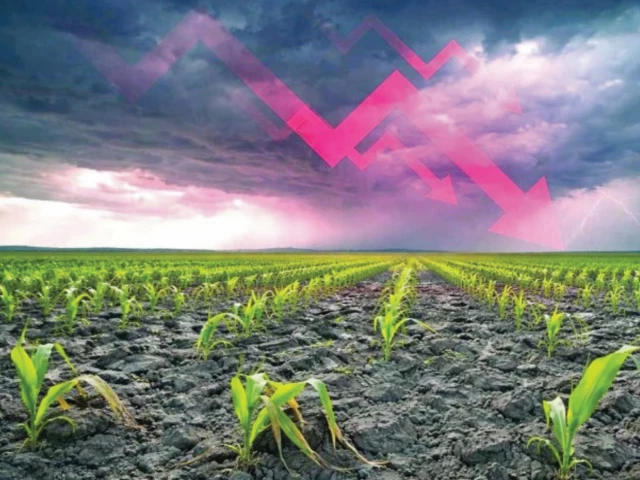
Pakistan and Uzbekistan have discussed joint research on hybrid and genetically modified (GMO) seeds for cotton and horticultural crops, along with technical cooperation in livestock development, as part of efforts to expand bilateral cooperation in agricultural research, seed development, horticulture and climate-resilient farming.
The areas were discussed at a meeting between Federal Minister for National Food Security and Research Rana Tanveer Hussain and Deputy Minister of Agriculture of Uzbekistan Alisher Shukurov on the sidelines of the 31st Conference of the Parties (COP31) in Antalya, Türkiye, according to a statement issued by the Ministry of National Food Security and Research on Thursday.
Both sides discussed opportunities for joint research, alongside technical cooperation in livestock development, with the talks focused on leveraging scientific expertise, exchanging research experience and exploring modern agricultural solutions to enhance productivity and strengthen food security.
Hussain welcomed Uzbekistan's proposal to send a technical delegation to Pakistan and expressed interest in facilitating direct engagement between agricultural experts and relevant research institutions of the two countries, saying the proposed exchange would help identify practical areas for joint research, technology transfer and institutional collaboration.
The discussions gained added significance from Uzbekistan's climate-smart agrifood investment agenda at COP31. On November 11, it launched its ANORA platform, formally the Agrifood Investment Opportunities for Resilient Agriculture, at its national pavilion. The government-led initiative aims to mobilise investment, develop bankable agricultural projects and promote climate-resilient agrifood systems, particularly through sustainable land management, water-efficient infrastructure and modern agricultural technologies.
Highlighting the importance of linking agricultural research with climate adaptation and investment, the engagement offers opportunities to explore cooperation in climate-resilient seeds, sustainable farming practices, livestock research and agricultural technology.
Both countries have significant scope to benefit from technical exchanges and knowledge-sharing to address emerging agricultural challenges, improve productivity and strengthen the resilience of their food systems, according to the statement.
The meeting reflects efforts to expand international agricultural partnerships, promote research-driven development and explore practical avenues of cooperation with friendly countries.
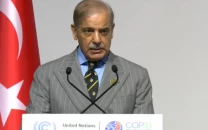
Separately, the food security minister told reporters on the sidelines of the leaders' summit of the 31st Conference of the Parties to the United Nations Framework Convention on Climate Change that the government was taking various measures to strengthen the resilience of the agriculture sector against climate change, with a focus on developing climate-resilient seeds, improving disaster preparedness and mitigating the impact of extreme weather events.
He said agriculture was among the sectors most severely affected by climate change in Pakistan, posing a major challenge to food security and agricultural productivity, and that the country's contribution to global greenhouse gas emissions was only around 0.1%, yet it remained highly vulnerable to the adverse effects of climate change. He stressed that international financial support was essential to help developing and climate-vulnerable countries address these challenges.
The government was focusing on developing and introducing climate-resilient seed varieties to enable farmers to cope with rising temperatures, heat stress and other climate-related challenges, he said, adding that considerable progress had been made in developing improved seeds to minimise the adverse impact of changing climatic conditions on agricultural production.
Referring to recurring floods, including the devastating floods of 2022 and 2025, he said the government was also strengthening disaster preparedness and early warning mechanisms to minimise losses to agriculture and communities.
He appreciated the efforts of local governments, the National Disaster Management Authority and provincial disaster management authorities for establishing effective early warning systems and taking measures to improve the country's capacity to respond to climate-induced disasters.
The minister said that although the government was undertaking substantial efforts at the domestic level to address climate challenges, international cooperation and financial assistance remained indispensable.
He emphasised that global climate finance commitments should be translated into tangible financial support rather than remaining limited to pledges, enabling vulnerable countries like Pakistan to strengthen agricultural resilience, protect farmers' livelihoods and ensure food security.
WITH ADDITIONAL INPUT FROM APP







This material may not be published, broadcast, rewritten, redistributed or derived from. Unless otherwise stated, all content is copyrighted © 2026 The Express Tribune.













COMMENTS
Comments are moderated and generally will be posted if they are on-topic and not abusive.
For more information, please see our Comments FAQ