Karachi inaugurates Pakistan’s first sponge park to conserve rainwater
Updated 1 hour ago

Six-month project aims to recharge groundwater, reduce urban flooding and reuse filtered rainwater for irrigation
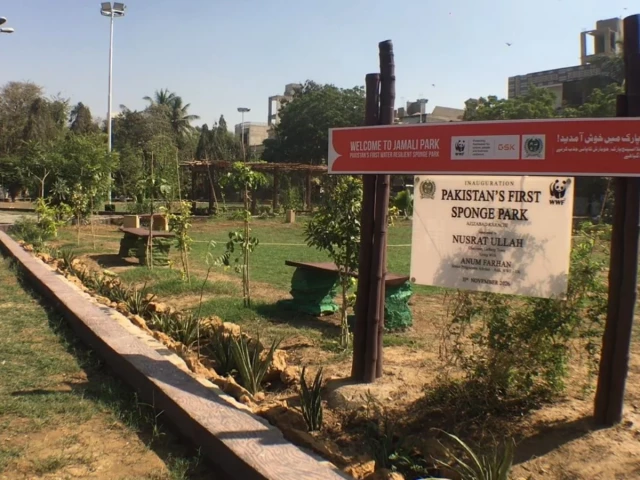
Karachi inaugurated Pakistan’s first experimental water-resilient sponge park at Jamali Park in Gulberg Block 2 on Thursday, introducing a system designed to absorb, store, and reuse rainwater instead of allowing it to flow through drains and eventually into the sea.
The project was completed through a partnership between the World Wide Fund for Nature (WWF-Pakistan), Gulberg Town Municipal Corporation and the private sector, with work taking six months.
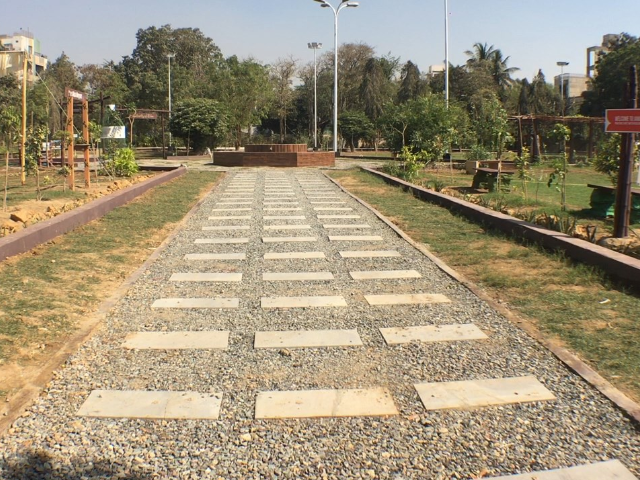
The system was designed to capture both rainwater and water from the ablution facilities of a nearby mosque. After passing through a series of filtration stages, the water would be stored underground or in tanks and reused to irrigate plants and trees in the park.
The project used locally developed filters installed beneath the park's water channels. These consisted of several layers of materials, including gravel, sand, silica, activated carbon, biochar, and zeolite.
The gravel and larger particles helped remove soil and debris, while sand and silica trapped finer particles. Activated carbon and biochar absorbed chemical and organic pollutants, while zeolite helped reduce certain heavy metals and other contaminants before the water was transferred to underground storage or drainage systems.
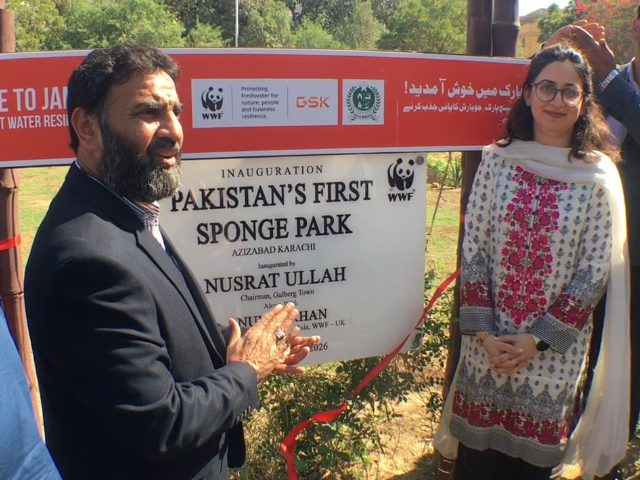
Speaking to The Express Tribune, Naim Ashraf Raja, director of biodiversity at the Ministry of Climate Change and Environmental Coordination, said underground freshwater reserves had been extensively extracted through boreholes and other methods, making it essential to replenish them through natural processes.
He said projects such as sponge parks were important to ensure future generations did not face worsening water shortages, adding that such initiatives could benefit both humans and animals.
Gulberg Town Chairman Nusratullah described the inauguration as a major milestone, saying climate change had become a serious global concern, with its effects also visible in European countries in recent years.
He stressed the need for urgent measures to protect the environment and conserve water.
Sohail Ali Rizvi, director of WWF-Pakistan's Freshwater Programme, said the organisation had revised its strategy about 15 years ago and began working on water-related projects with the private sector in Lahore in 2012.
He said the Karachi project had been developed through a collective effort and introduced Pakistan's first sponge park, where locally sourced materials, including soil and small stones, were used to create filters. These allowed rainwater to pass through filtration before being transferred underground or into storage tanks for reuse.
The park also featured a dedicated area to encourage household-level plantation. Residents could scan barcodes to obtain plants, including indigenous species such as tamarind, almond, peepal and gulmohar trees.
Those taking plants were required to commit to their proper care and growth and remain in contact with the park administration so that the plants could be monitored as they developed into trees. The park also included areas dedicated to biodiversity and butterflies.
A nature-based approach to urban flooding
Sponge parks are part of a wider approach to urban planning that seeks to manage rainwater through natural and engineered systems rather than relying solely on conventional drainage infrastructure.
The concept involves creating surfaces and designated areas where rainwater can collect and gradually seep into the ground. Some projects also use underground tanks and reservoirs to store water, while specially selected plants and vegetation help with natural filtration.
By slowing the flow of rainwater, such systems can reduce pressure on urban drainage networks and help limit the risk of flooding.
The sponge city concept gained prominence in China, where a national programme was launched in 2014 to improve rainwater management and address urban flooding. Cities including Wuhan and Shanghai introduced water-absorbing parks, artificial reservoirs, wetlands, green roofs and permeable pavements.
Copenhagen in Denmark introduced a cloudburst management plan after severe rainfall and urban flooding in 2011. Rotterdam in the Netherlands also developed its water square concept, while Singapore introduced projects under its Active, Beautiful, Clean Waters programme, transforming conventional concrete drains into natural waterways, green spaces and recreational areas.
Experts said similar green infrastructure and nature-based solutions had also been adopted in Berlin, New York and Auckland to absorb rainwater and reduce urban flooding.
Urban planning experts said sponge parks could be particularly useful in Karachi, a densely populated coastal city facing increasing challenges from intense rainfall, urban flooding and water shortages.
Concrete surfaces, tiled areas and paved roads across much of the city prevent rainwater from naturally seeping into the ground. As a result, water accumulates on roads and places additional pressure on the drainage system.
A sponge park could help conserve rainwater, replenish underground water reserves, support the growth of trees and plants, reduce urban temperatures and improve the environment, while also increasing the usefulness of public parks.
If the experiment at Jamali Park proved successful, the model could be extended to other parks and public spaces across Karachi.
However, its effectiveness would depend on factors including the local soil structure, the ground's capacity to absorb water, the quality of underground water, rainfall volumes and regular maintenance.
The sponge park system was not intended to replace conventional drainage infrastructure but to complement it by slowing rainwater runoff and helping reduce the risk of urban flooding during heavy rainfall.














This material may not be published, broadcast, rewritten, redistributed or derived from. Unless otherwise stated, all content is copyrighted © 2026 The Express Tribune.








COMMENTS
Comments are moderated and generally will be posted if they are on-topic and not abusive.
For more information, please see our Comments FAQ