PM okays IMF-cleared auto policy
Updated 18 minutes ago

Third parties to absorb Rs1.7tr legacy capacity to sell at deregulated tariffs
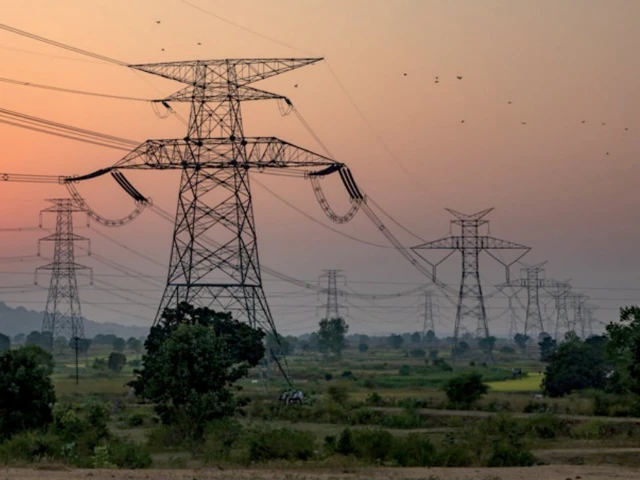
The government has proposed a two-tier business model for privatised power distribution companies under which a successful bidder would retain poles and wires but could auction the functions of selling electricity, billing and collection to other private contractors, including legacy capacity payments.
The model, subject to approval by the power sector reform steering committee and the federal cabinet, envisages regulating only the buyer of the distribution companies, to be called the supplier of last resort. These are the parties that would buy the companies from the government, with Faisalabad, Gujranwala and Islamabad currently up for sale.
The model allows third parties, dubbed competitive suppliers, to operate in a deregulated fashion, but only after buying the legacy capacity that costs consumers Rs1.7 trillion in annual capacity payments, along with the customers, from the new buyers of the distribution companies.
The proposed model would not immediately reduce the per-unit cost of electricity, which will still carry an idle capacity payment charge of Rs17 per unit. It nonetheless provides a path to marginally lower tariffs in the medium to longer term, where the third-party investor would be allowed to offer electricity to a set of consumers below officially approved tariffs.
The model aims to shift the obligation of legacy independent power producer contracts out of power purchasing altogether, create a competitive supply market and introduce market-based efficiencies and private investors into power supply, said an official of the Privatisation Commission working on the proposal.
Under the proposal, the uniform tariff regime would apply only to the extent of the original buyer of a distribution company, while the whole market would be deregulated with different tariffs.
The government may apply the new two-tier model to the Faisalabad Electric Supply Company (FESCO), which the Privatisation Commission is trying to sell by early next year.
After privatisation, the Central Power Purchasing Agency-Guaranteed (CPPA-G) would auction to private suppliers the capacity contracted on FESCO's behalf, together with all of FESCO's customers. Successful bidders would take over CPPA-G's position as buyers of that supply from the national power pool and the new buyer of the distribution company's position as counterparties to the customers.
The commission official said CPPA-G's existing contracts with independent power producers would remain unchanged, but CPPA-G would enter into separate agreements with the third party to allocate supply and customers to them.
The second tier would be responsible for electricity procurement, customer management, billing, collections and associated commercial obligations.
Protected consumers would continue to benefit from regulated tariff protection and would form part of the customer portfolios allocated to the third party. Existing cross-subsidy arrangements would be preserved during the transition to avoid creating additional fiscal burdens or separating commercially attractive customer segments from protected-consumer obligations.
The official said that if the government wanted to shift the risk of its legacy contracts, no third party would take on supply and capacity payment obligations without a matching customer base. A proposed solution is to transfer the government's contracted supply, together with the corresponding demand and customer base, to the third party in one step or a small number of stages.
The third party would take on the associated capacity payment obligations and would be free to sell the capacity it bid for to the customers it acquires at a deregulated tariff for all consumer categories except protected consumers, according to the proposal.
In this way, multiple private suppliers would step into the role currently performed by CPPA-G as single buyer, creating a competitive supply market.
Asked about investor interest, the commission official said potential buyers had shown keen interest in buying the idle capacity during the investor sounding exercise.
The government aims to make the power sector sustainable by lowering losses, ensuring higher recoveries and better service, with stronger accountability and reduced reliance on government support.
The key proposed objective is to separate the distribution business, which would stay regulated, from the supply of electricity, which any supplier in addition to the new owner of the company could provide by buying it from the government.
The Privatisation Commission believes this would encourage a competitive, innovative market through lower tariffs and new growth opportunities from customer choice, competition and new energy solutions, with appropriate safeguards.
The challenge for the government is that the defection rate to alternatives such as solar energy is far higher than any increase in the customer base on the national grid.
If a competitive supplier is unable to provide electricity, the buyer of the distribution company will act as the last resort supplier for all categories of consumers. The competitive supplier's tariff will be lower than the last resort supplier's, aimed at compensating the new buyers for retaining a minimum load base.
The government is also going to offer the additional business of providing battery storage to offset peak-hour network losses.










This material may not be published, broadcast, rewritten, redistributed or derived from. Unless otherwise stated, all content is copyrighted © 2026 The Express Tribune.






COMMENTS
Comments are moderated and generally will be posted if they are on-topic and not abusive.
For more information, please see our Comments FAQ