
Encroachment crisis
Updated 3 hours ago

.
The tectonic political shifts across the Atlantic Ocean are likely to have a profound impact on the Middle East. The Persian Gulf and Arab monarchies are keeping their fingers crossed, anticipating a policy shift for the war-ravaged region in the aftermath of the evolving new political order in the US.
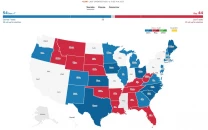
It is widely assumed that warmongering will take a backseat and geopolitical stakeholders will chart a new way forward. A prime reason for this anticipated change of heart is the decisive message delivered by the US electorate, which resoundingly said "No" to foreign adventurism. A landslide vote for the Democrats was primarily meant to negate Trump's hawkishness and his erratic handling of foreign affairs. With the White House incumbent having conceded, and Vice President JD Vance admitting that the defeat was rooted in an unwarranted confrontation with Iran, the stage is set for a new beginning.
Iran has long sent reconciliatory signals to its Arab neighbours, urging them to realise that reliance on American security shields is a mirage and that an indigenous collaborative mechanism is vital. This elicited a strategic response in the form of the trilateral Makkah Defence Pact - comprising Pakistan, Türkiye and Saudi Arabia - which acts as a deterrent against external aggression. When viewed against the backdrop of a depleting US military footprint, this alignment brings to the fore a shared commitment to counter-terrorism and perpetual peace. Consequently, this crisis presents an opportunity for both the US and Iran to revisit the Islamabad MoU to bring prevailing market volatility and regional uncertainty to an end.
The only plausible way forward for the US now is to rewrite its terms of engagement in the Middle East and iron out its differences with the Islamic Republic. It is time to shun jingoism, normalise global supply chains, and secure the Strait of Hormuz and the Bab-el-Mandeb for unhindered navigation. China, Russia and the EU have already voiced their grievances over Washington's monolithic hegemony, and are actively positioned to drive the rise of a multilateral, rules-based global order.





This material may not be published, broadcast, rewritten, redistributed or derived from. Unless otherwise stated, all content is copyrighted © 2026 The Express Tribune.



COMMENTS
Comments are moderated and generally will be posted if they are on-topic and not abusive.
For more information, please see our Comments FAQ