GM seed governance - lessons from cotton
Updated 3 hours ago

.

Pakistan faces two increasingly complex security challenges on its eastern and western borders. Both are characterised by hostility, mistrust and recurring confrontation, yet they differ fundamentally in their origins, character and strategic implications. India's increasingly assertive military posture and the Afghan Taliban's failure to restrain TTP call for a reassessment of Pakistan's responses. The question is not whether Pakistan possesses the strength and resolve to defend its interests, but how that strength can be exercised with prudence, confidence and clear political objectives.
The temptation to respond to belligerence with greater belligerence is understandable. However, relations between states cannot be reduced to the psychology of confronting a bully. Their behaviour is shaped by perceptions of power, domestic compulsions and national interests. A policy that succeeds in deterring one adversary may prove counterproductive against another. Pakistan must, therefore, avoid applying a common template to two distinctly different challenges.
On the eastern border, the May 2025 military confrontation altered prevailing assumptions about military coercion between Pakistan and India. Pakistan responded militarily before a ceasefire was reached on 10 May. Reuters reported? that the fighting represented the most serious confrontation between the nuclear armed neighbours in nearly three decades. The crisis demonstrated both the dangers of escalation and the continuing relevance of credible deterrence.
The strategic lesson of this short but very dangerous confrontation should not be confined to the military outcome. Pakistan demonstrated its willingness and capability to respond to aggression. Nevertheless, the larger challenge is translating that experience into sustainable deterrence and regional stability. India's decision to hold the IWT in abeyance introduced another dangerous dimension. In its award of 31 August 2026, the Court of Arbitration reaffirmed the treaty's continuing force and rejected unilateral abeyance as grounds for suspending obligations. India disputes the tribunal's jurisdiction. The controversy illustrates how political differences increasingly threaten the livelihoods and security of millions.
Pakistan needs a strong and proactive defensive posture towards India, but proactivity must not be confused with a preference for military confrontation. The purpose of deterrence is to prevent aggression, not perpetuate hostility. Military preparedness, diplomatic engagement and economic resilience must reinforce one another. Neither dialogue without credible deterrence nor deterrence without dialogue offers a satisfactory basis for lasting stability.
The western border presents a different predicament. Pakistan's expectations of a friendly government in Kabul following the Taliban's return in August 2021 have progressively given way to disappointment. The resurgence of the TTP and increasingly lethal attacks inside Pakistan have become central sources of friction. Islamabad protests the existence of terror sanctuaries, whereas Kabul consistently and knowingly denies all this. UNSC monitoring reports have repeatedly highlighted the TTP's presence in Afghanistan and its activities against Pakistan.
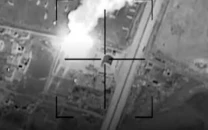
No state can remain indifferent to terrorist attacks launched from sanctuaries beyond its borders. Nevertheless, the central question is whether an increasingly aggressive military posture, accompanied by punitive measures, can persuade the Afghan Taliban to alter their behaviour. Military action may disrupt terrorist infrastructure and demonstrate resolve but unless it produces measurable changes in Kabul's conduct, its strategic value remains uncertain. Punitive action must not become a substitute for a clearly articulated political strategy. Recent border confrontations demonstrate how quickly hostility can acquire momentum of its own.
Pakistan must, therefore, distinguish between coercion as an instrument of policy and coercion as a policy in itself. Pressure on Kabul should pursue verifiable objectives, including denial of TTP sanctuaries, disruption of operational infrastructure and credible monitoring mechanisms. Military measures, where lawful and necessary, must remain proportionate. Diplomatic engagement, intelligence cooperation and calibrated economic measures should complement them.
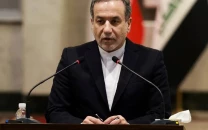
The diplomatic door has not been entirely closed. During the Moscow Format consultations on 5 October 2026, Afghan Foreign Minister Amir Khan Muttaqi maintained that differences could be resolved through dialogue. Pakistan reiterated its demand for ending terrorist impunity on Afghan territory. The challenge is converting declarations into verifiable commitments.
Pakistan cannot afford indefinite confrontation on both borders. Sustained military readiness, disrupted trade and border closures impose considerable economic costs. Internal stability, economic recovery and institutional strength are indispensable elements of national security. A state perpetually responding to external provocations risks allowing adversaries to determine its strategic priorities.
Classical realism offers useful guidance. Hans J Morgenthau, in Politics Among Nations, regarded prudence – understood as weighing the political consequences of alternative courses of action – as the supreme virtue in politics. Prudence does not imply weakness or abandonment of national interests. Strength is indispensable, but without political judgment it can become a liability.
Pakistan's approach towards India and Afghanistan should rest on a common principle but follow different operational paths. With India, the priorities should be credible deterrence, strategic confidence, crisis management and meaningful political engagement. With Afghanistan, effective counterterrorism must be supported by diplomatic pressure, verifiable commitments and proportionate measures.
A bully's bluff may be called through a demonstration of resolve, but the underlying conflict is seldom resolved by humiliation. Tactical success may impose immediate costs; strategic success lies in creating conditions under which threats diminish, and recurring confrontation becomes less likely. Pakistan has both the right and responsibility to protect its sovereignty and citizens.
The need of the hour is neither appeasement nor unrestrained retaliation. It is a recalibration of the two postures, anchored in confidence, credible deterrence and prudence, while pursuing improvement through sustained dialogue. Ultimately, the true measure of national strength is not how severely an adversary can be punished, but how effectively a nation can safeguard its interests without becoming a prisoner of perpetual confrontation.












This material may not be published, broadcast, rewritten, redistributed or derived from. Unless otherwise stated, all content is copyrighted © 2026 The Express Tribune.


COMMENTS
Comments are moderated and generally will be posted if they are on-topic and not abusive.
For more information, please see our Comments FAQ