Iran blinded US bases before striking military assets, AP analysis finds
Updated 1 hour ago

.
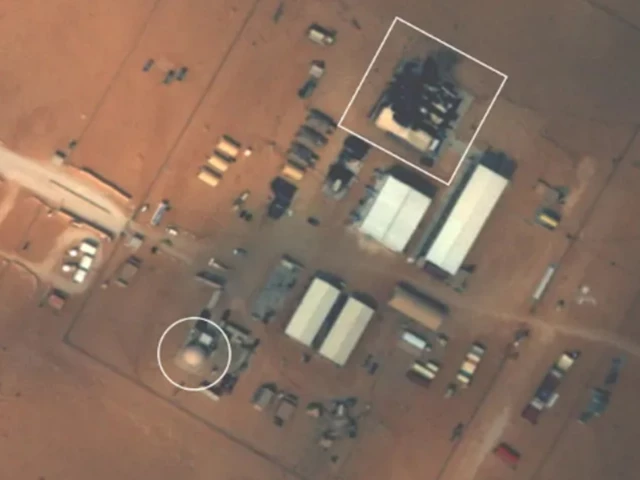
Iran's strikes on more than two dozen US bases in the Middle East focused on early-warning systems before hitting aircraft and buildings, causing billions of dollars in equipment damage, according to an Associated Press analysis.
The AP independently verified damage to American targets using satellite imagery from multiple providers and spoke to four regional officials who were briefed or have firsthand knowledge of what was hit. The AP found that, through August, more than 115 drone or missile strikes claimed by Iran or Iranian-backed militias damaged or destroyed structures on 26 military bases and other sites with US equipment.
The AP found that Iran initially focused its attacks on aircraft hangars and systems that detect incoming strikes, clearing the way for further strikes on warehouses, troop housing and more.
The damage has significantly reshaped the American foothold in the Middle East, with two regional officials saying the US has moved many of its assets out of the Persian Gulf. That includes aircraft, air defense systems, communications systems and other equipment crucial to base operations, one of those officials said.
The impact of the damage raises questions about American defenses in the region as President Donald Trump considers new strikes after Tuesday's midterm elections and Tehran has vowed major retaliation.
The AP's analysis found that from April 1 to June 30, Iranian strikes had damaged and destroyed hundreds of buildings and other structures on US bases.
US Central Command, which oversees operations in the Middle East, has refused to comment on or specify damage to bases or equipment, usually citing the need for operational security. The command did not comment for this story.
Pentagon spokesman Sean Parnell asserted that US "forces and bases are well protected and America's military is stronger than ever."
"Our service members in CENTCOM have everything they need to continue their historic success ensuring Iran never obtains a nuclear weapon," Parnell said in a statement to the AP.
Iran targeted at US bases
Most of the Iranian attacks have been in Kuwait, while US sites in Bahrain, Iraq, Jordan, Oman, Qatar, Saudi Arabia and the United Arab Emirates also have been targeted, the analysis of satellite imagery shows. The deadliest known strike on US troops in the Iran war was in Kuwait, where six soldiers were killed in a drone attack at Port Shuaiba on March 1.
Ali Al Salem Air Base in Kuwait was struck at least 30 times, damaging or destroying at least 15 aircraft hangars, numerous warehouses and 10 buildings near a residential area.
Camp Buehring, also in Kuwait, faced even heavier losses. While Iranian attacks made most of its hangars inoperable, gathering places for troops sustained much more damage because the base had limited aircraft. Its gym was destroyed in March and a store for troops to buy products on the base was hit in late July.
A strike also has severely damaged the garage and dining room there, according to the two regional officials. They and two others, who are regional military officials, spoke to the AP on condition of anonymity to discuss sensitive details about the damage to bases.
While strikes were much heavier against Iran, American matériel losses were inevitable, said Raphael Cohen, director of the National Security Program at the RAND School of Public Policy. The way wars are fought today makes all militaries "susceptible to large-scale, cheap drone attacks," he said.
"This should be a wake-up call for the United States," Cohen said.
Iran focused on targeting US systems meant to detect incoming strikes
Iran launched its response to the war with accurate attacks on systems meant to detect and thwart incoming strikes, then broadened its targets to buildings and equipment that made US bases useful and habitable.
Iran destroyed enclosures protecting US radar systems at Camp Arifjan in Kuwait and Naval Support Activity Bahrain within the first two days of the war's start in late February. Additionally, Iran hit portable radars at Prince Sultan Air Base in Saudi Arabia and Muwaffaq Salti Air Base in Jordan.
Iran prioritized striking at the backbone of the US air defense system, targeting key early-warning radars that are difficult and expensive to repair or replace, said NR Jenzen-Jones, director of the technical intelligence consulting firm Armament Research Services.
A radar was hit in Jordan and said to be destroyed. It was one of only 13 possessed by the Army globally, manufacturer Raytheon said. Budget documents show each costs about half a billion dollars.
Another radar in Qatar was damaged significantly, but it is unclear if it was destroyed. Purchased by the Gulf country in a 2013 deal valued at $1.1 billion, it appears to have been the only one in the region.













This material may not be published, broadcast, rewritten, redistributed or derived from. Unless otherwise stated, all content is copyrighted © 2026 The Express Tribune.






COMMENTS
Comments are moderated and generally will be posted if they are on-topic and not abusive.
For more information, please see our Comments FAQ