US embassy delegation meets PTI leaders
Updated 2 hours ago

Division bench to take up K-P govt petitions on Nov 5
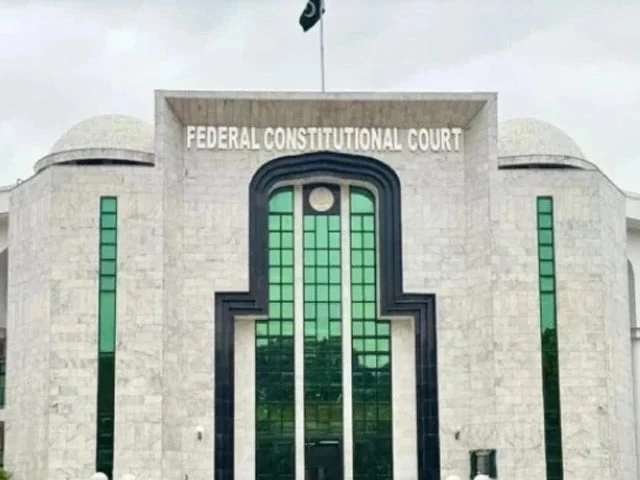
The FCC has listed for hearing K-P government petitions against a Peshawar High Court's interim order directing police not to arrest PTI workers in K-P.
An FCC division bench comprising Chief Justice Amin-ud-Din Khan and Justice Ali Baqar Najfi will take up petitions against the PHC interim order on November 5.
Earlier, PTI workers approached the PHC challenging their detention by the executive under Section 3 of the West Pakistan Maintenance of Public Order Ordinance 1960. The matter is still pending in the high court. However, the K-P government has challenged the interim order in 48 PTI workers' case.
It has been witnessed that though the PHC has granted some relief to PTI workers, no substantive relief has been granted to the party supporters by the Lahore High Court. PTI's legal team claims that thousands of workers are detained under MPO all over the country especially Punjab.
Since the passage of the 27th Constitutional Amendment, the PTI has struggled to get substantive relief in matters related to civil liberties.
Likewise, the PTI has not received any relief from the FCC, created last year under the 27th Amendment. Recently the court rejected PTI founder Imran Khan's wife Bushra Bibi's petition seeking suspension of her sentence in the Al-Qadir Trust case.
The FCC while hearing a three-prisoner case, summoned the record of Imran Khan's hospital shifting case from the Supreme Court. Although the PTI is reluctant to approach the FCC in any matter, the court has taken up several cases against the party. It has even passed interim orders.
The FCC judges face a battle of perception since the federal government appointed them. The federal government is also the primary litigant before the court.
Cameras
The FCC has reserved its verdict on an appeal filed by the Khyber-Pakhtunkhwa government against a high court order directing an end to CCTV surveillance inside prisoners' cells.
During the hearing, the court raised questions about inmates' privacy, human dignity and security, with Justice Rozi Khan observing that a prison cell was like a bedroom and questioning how cameras could be installed there.
The judge also questioned the practice in the context of Article 14 of the Constitution, which guarantees the inviolability of human dignity.
Justice Aamer Farooq asked whether cameras had been installed only inside prisoners' cells or throughout the prison. He also sought to know whether inmates' every movement was monitored inside their cells.
Representing the provincial government, lawyer Shamail Aziz argued that the prisoners were involved in serious crimes and that the cameras were primarily intended to ensure security.














This material may not be published, broadcast, rewritten, redistributed or derived from. Unless otherwise stated, all content is copyrighted © 2026 The Express Tribune.









COMMENTS
Comments are moderated and generally will be posted if they are on-topic and not abusive.
For more information, please see our Comments FAQ