Karachi hospitals report surge in flu cases as H1N1 strain circulates
Updated 1 hour ago

Says leveraging partnership with Alibaba Group to provide SMEs access to global markets among govt’s top priorities
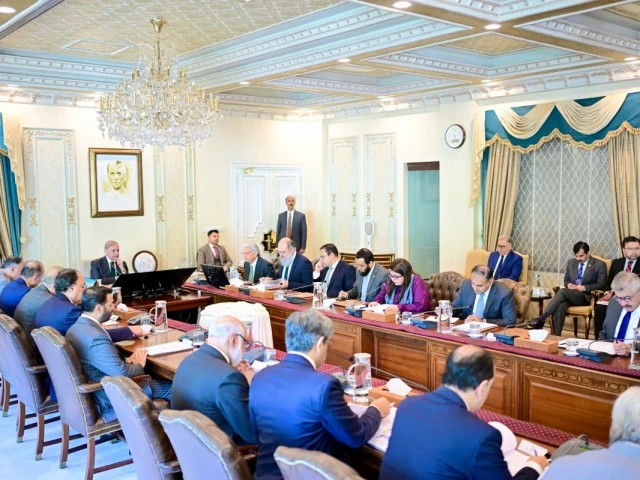
Prime Minister Shehbaz Sharif said on Wednesday that the secret to national development lay in artificial intelligence (AI) and digitisation, stressing the need to accelerate their adoption across key sectors, including agriculture, trade, healthcare and governance.
In a post on X, the Prime Minister's Office (PMO) said that a review meeting on the progress of AI, digitisation in the economy and governance, and cooperation with Alibaba was chaired by the premier in Islamabad.
During the meeting, PM Shehbaz stated that the "secret to national development lay in AI and digitisation", further adding that the effective use of digitalisation, AI, and modern technology played an important role in improving trade, exports, agricultural production, business facilitation, and the quality of government services in Pakistan, the PMO said.
Read: PM launches AI-powered system to digitise governance, track official directives
وزیرِ اعظم محمد شہباز شریف کی زیر صدارت معیشت اور گورننس میں مصنوعی ذہانت (AI)، ڈیجیٹائیزیشن اور اس حوالے سے علی بابا کے ساتھ تعاون کی پیش رفت پر جائزہ اجلاس آج اسلام آباد میں منعقد ہوا.
— Prime Minister's Office (@PakPMO) October 28, 2026
وزیرِ اعظم نے کہا کہ ڈیجیٹلائزیشن، مصنوعی ذہانت اور جدید ٹیکنالوجی کا مؤثر استعمال پاکستان… pic.twitter.com/U99U2xVdyv
The premier further said that during his visit to China, a memorandum of understanding was signed with them at the Alibaba headquarters in Hangzhou.
He underlined that leveraging the strategic partnership between Alibaba Group and the government to provide small and medium enterprises (SMEs) access to global markets and create new opportunities for technology-driven development was among the government’s top priorities.
The premier noted that modernising the agricultural sector was essential for national development, and he welcomed Alibaba's cooperation on automation in agriculture and exporting Pakistani agricultural commodities to Chinese markets.
PM Shehbaz also stressed the need to translate cooperation with Alibaba into tangible results by ensuring that all projects were implemented with clear targets, timelines and effective monitoring mechanisms, further directing the relevant ministries to complete all necessary measures by November and submit a progress report.
Prime Minister Muhammad Shehbaz Sharif chairs a meeting to review progress on application of AI and digitiazation of economy in governance and ongoing collaboration with AliBaba group. Islamabad, 28 October 2026. pic.twitter.com/2rChCfIhMV
— Prime Minister's Office (@PakPMO) October 28, 2026
The PMO said that the meeting was briefed on the ongoing progress in various sectors under the strategic cooperation between the government and the Alibaba Group, adding that the meeting was informed that work was underway on AI-based models in the agriculture sector, tobacco track-and-trace technology, and a digital platform for the export of citrus fruits and olives.
It added that a special Pakistan Pavilion had also been established on a dedicated website on Alibaba for the export of Pakistani products.
According to the PMO, the system for digital verification of trade documents through the Pakistan Single Window had been activated, while a two-year programme was also being launched in collaboration with the SMEs Development Authority and Alibaba to provide small and medium enterprises with access to global markets, training, and e-commerce opportunities.
"The meeting reviewed the progress on the preparation of a modern data platform and central data hub for the FBR and PRAL, and the proposed pilot project for cancer diagnosis in the health sector with the help of AI. In the energy sector, OGRA is being provided with artificial intelligence and business intelligence tools for the analysis of fuel supply chain data. Similarly, initiatives related to the use of digital technology and artificial intelligence in the sectors of higher education, railways, postal services, and urban administration are in the final stages of completion," it added.
Read More: Govt plans 20,000 AI training programmes
According to the PMO, the premier urged that the implementation of a cancer early detection system with Alibaba's cooperation should also be ensured at the earliest, further adding that the 15-day training programme for IT graduates in the field of artificial intelligence, under the Ignite programme of the Ministry of Information Technology and in collaboration with Alibaba, should be started soon.
PM Shehbaz also said that OGRA, with Alibaba's cooperation, should promptly introduce an analytics system for monitoring the supply chain of petroleum products, adding that the Export Promotion Board should ensure cooperation with Alibaba to increase national exports.
The PMO added that the meeting was attended by government ministers including Ahsan Iqbal, Rana Tanveer Hussain, Jam Kamal Khan, Musadiq Malik, Ahad Khan Cheema, Muhammad Aurangzeb, Ataullah Tarar, Shaza Fatima Khawaja, Syed Mustafa Kamal, Abdul Aleem Khan, Minister of State Bilal Azhar Kayani, and relevant senior officials.
On July 21, the premier launched the AI-based Prime Minister's Office System (PMOS) and directed all relevant authorities to ensure the immediate and full implementation of the AI-powered system, saying traditional paper-based workflows would be replaced by digital processes.
According to officials, PMOS was the first government platform in Pakistan to integrate artificial intelligence as a core component of decision-making and implementation monitoring, making it a key initiative in the federal government's digital transformation.
On May 10, the Ministry of IT and Telecommunication planned to launch 20,000 online training programmes in AI across the country for fresh graduates, government officials, professionals from various sectors, teachers and freelancers through an advanced learning management system.
The training programmes, spanning six to twelve months, would be introduced under the National AI Advancement Initiative, a strategic national intervention designed to position Pakistan as a competitive leader in the global AI landscape. The initiative aims to drive innovation in both the public and private sectors, enhance workforce capabilities, and establish robust AI governance across critical sectors such as healthcare, agriculture, education and industry.
According to estimates, emerging AI technologies, tools and applications are expected to replace millions of jobs annually across various sectors, potentially leading to unemployment and increased professional challenges for many workers.










This material may not be published, broadcast, rewritten, redistributed or derived from. Unless otherwise stated, all content is copyrighted © 2026 The Express Tribune.






COMMENTS
Comments are moderated and generally will be posted if they are on-topic and not abusive.
For more information, please see our Comments FAQ