Afghan posts destroyed after border shelling
Updated 1 hour ago

Report reveals pollution reduces average lifespans by four years
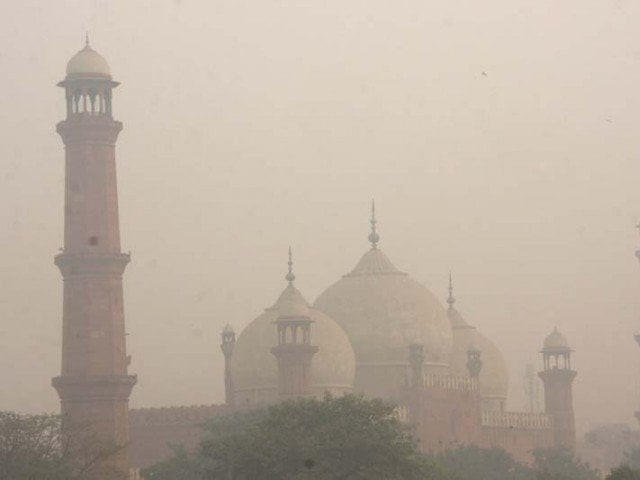
Air pollution reduces life expectancy in Pakistan by an estimated 3.9 years and contributes to around 128,000 premature deaths annually, according to a report by the Pakistan Air Quality Initiative (PAQI).
The report estimates that pollution imposes an economic burden equivalent to 6.5 per cent of the country's gross domestic product (GDP), while prolonged exposure to polluted air could cut life expectancy in Lahore by up to seven years.
Titled 'Unveiling Pakistan's Air Pollution: A National Landscape Report on Health Risks, Sources, and Solutions', the report presents Pakistan's first harmonised, multi-sector emissions inventory alongside a multi-city assessment of air quality.
It examines pollution patterns across the major urban airsheds of Lahore, Karachi, IslamabadRawalpindi and Peshawar, identifying the principal sources of emissions in each area and outlining measures that could reduce them by up to 50 per cent.
The founder of PAQI, who was part of the team that prepared the report, said the assessment drew on ground-based air quality measurements, satellite data and local activity datasets. These included fuel consumption, vehicle fleet composition, industrial records and estimates of pollutants released by different sectors.
The analysis covers fine particulate matter (PM2.5), carbon monoxide (CO), nitrogen oxides (NOx) and sulphur dioxide (SO2), providing a sector-wise assessment of emissions across the four urban airsheds.
According to the report, Lahore's annual average PM2.5 concentration exceeds 110 micrograms per cubic metre, more than 22 times the World Health Organisation's annual guideline of five micrograms per cubic metre.
Prolonged exposure to these pollution levels could reduce life expectancy in the city by up to seven years, the report estimates.
Winter temperature inversions further aggravate the problem by restricting the vertical dispersion of pollutants, allowing polluted air to accumulate near the ground.
Transport is identified as the largest source of primary PM2.5 emissions in Lahore, accounting for 35 per cent, followed by industry at 28 per cent and brick kilns at 17 per cent. These sources contribute significantly to the city's particulate pollution, with winter weather conditions intensifying their effects.
Karachi presents a different emissions profile, with industrial activity accounting for 49 per cent of emissions, according to the report.











This material may not be published, broadcast, rewritten, redistributed or derived from. Unless otherwise stated, all content is copyrighted © 2026 The Express Tribune.








COMMENTS
Comments are moderated and generally will be posted if they are on-topic and not abusive.
For more information, please see our Comments FAQ