New copper-gold deposits discovered in Balochistan's Chagai
Updated 3 hours ago

Brent crude futures rise 40 cents, or 0.4%, to $116.24 a barrel
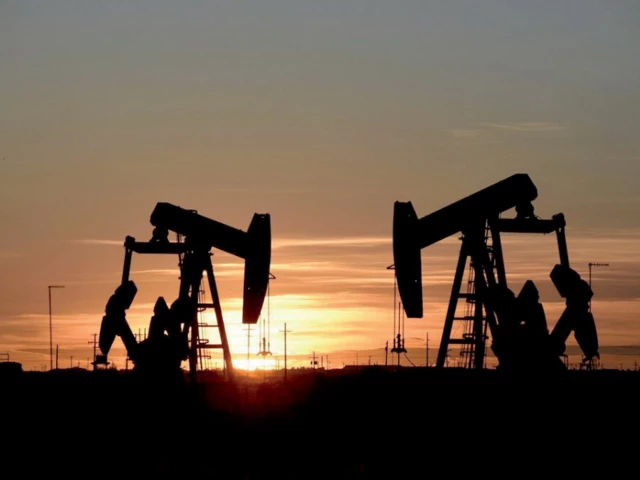
Oil prices turned positive on Tuesday after a fall of about 1%, earlier in the session, as the chance of talks in Tehran eased fears of a broader Middle East supply shock, while renewed Houthi attacks on Saudi Arabia highlighted persistent risks.
Brent crude futures was up 40 cents, or 0.4%, at $116.24 a barrel, while US West Texas Intermediate crude was up 30 cents, or 0.3%, at $102.07. Both fell 1% earlier in the session.
Saudi Arabia, Turkey and Pakistan held talks with Iranian officials in Tehran on Monday aimed at easing tension in the Middle East.
The four countries agreed to continue talks with a view to strengthening cooperation in peace and security, Iranian state media said.
"Prices remain elevated amid persistent geopolitical uncertainties," said Sugandha Sachdeva, founder of SS WealthStreet, a New Delhi-based research firm, adding that some profit taking earlier in the session was fuelled by hopes of a breakthrough in talks between the US and Iran, she said.
Last week, Brent prices surged to more than $117 a barrel, the highest since April, after a wave of Iranian attacks on tankers around the Strait of Hormuz. Brent prices touched $117 on Monday as well.
Scope for peace looked fragile, however, with renewed attacks by Iran-aligned Houthis on key producer Saudi Arabia.
Read: Oil drops from near six-month highs on hopes Iran war hostilities to ease
October has been the worst month for attacks on commercial shipping in the Strait of Hormuz and nearby waterways, data from a Washington-based think tank shows, among worldwide maritime security incidents it has tracked since 2017.
The war rippling across the Middle East has brought into focus the narrow waterway of the Strait of Hormuz, which carried about a fifth of global energy supplies before the conflict erupted in February.
The oil market is vulnerable with stress across areas such as supply, logistics, inventories and refining, ANZ Research said in a note.
Gulf crude exports fell for a fourth straight week and flows through the Strait of Hormuz were just about 60% of their normal level, while global distillate inventories held nearly 5% below their five-year average, it added.















This material may not be published, broadcast, rewritten, redistributed or derived from. Unless otherwise stated, all content is copyrighted © 2026 The Express Tribune.






COMMENTS
Comments are moderated and generally will be posted if they are on-topic and not abusive.
For more information, please see our Comments FAQ