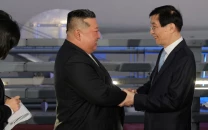
North Korea's Kim Jong Un returns from China after war memorial visit, state media says
Updated 1 hour ago

Gadi Eisenkot criticises proposed use of cryptocurrencies to prepare for potential international banking sanctions

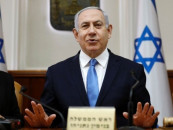
Just days before pivotal Israeli elections, opposition leader Gadi Eisenkot said on Saturday that Prime Minister Benjamin Netanyahu is “no longer fit” to lead the country, warning that his economic plan to counter potential international sanctions threatens national security.
On X, the Yashar party leader accused Netanyahu of turning his attention to “dismantling the Israeli economy for generations ahead” after “dismantling Israeli society and weakening the army.”
Eisenkot said Netanyahu’s recent remarks are “conclusive proof that he has lost touch with reality and moved into a world of delusions,” accusing him of proposing preparations to disconnect from the global financial system in response to Israel’s declining international standing.
“This is the madness of a man who is no longer fit to lead the country,” he said.
His comments came one day after Netanyahu said he had requested an economic plan involving alternative payment methods, including cryptocurrencies and blockchain technology, in preparation for possible international economic and banking sanctions.
Netanyahu expressed concern about potential sanctions, including restrictions on the Israeli banking system.
Read: Israel launches major West Bank operation after soldiers killed
Netanyahu did not say Israel would withdraw from the global economic system. The characterization of the proposal as economic isolation formed part of Eisenkot’s criticism.
Netanyahu also warned that US military aid would not last forever, urging Israel to prepare for its possible end and to strengthen military self-reliance.
Warning against economic isolation
Eisenkot mocked the proposal as “Bibicoin,” combining Netanyahu’s nickname, Bibi, with his proposed use of alternative payment methods and financial technologies.
He questioned how Israeli technology companies serving foreign clients would receive payments or attract overseas investment if they had to bypass international banking and rely on cryptocurrencies.
He also questioned how international acquisitions of Israeli companies could proceed if the economy moved toward isolation from the global financial system.
He warned that this course could prompt Israeli companies to relocate abroad, cause losses in savings and investments, and encourage citizens to leave the country.
Eisenkot said the consequences could include fewer jobs and reduced resources for healthcare and education, ultimately harming national security.
Read more: 'Apartheid automation': How Israel uses AI to monitor Palestinian land, movement and lives
“This is not an imagined nightmare scenario, but Netanyahu’s plan for Israel if he is reelected” on Tuesday, he said.
“This is a real warning. Israel will not withstand another four years like these.”
Controversial remarks
Netanyahu’s remarks also drew criticism in Israeli political and economic circles.
Israeli media cited an unnamed senior economic official who said that using cryptocurrencies and alternative financial technologies to circumvent banking sanctions would not achieve the intended goal. The official warned that merely proposing such an approach could damage the economy.
The debate comes amid mounting international pressure on Israel for its war on the Gaza, settlement expansion, and occupier attacks in the occupied West Bank.
The UK and other Western countries have taken measures against individuals and entities linked to Israeli settlements, while concerns have grown in Israel about broader economic and diplomatic pressure.
The exchanges also come ahead of Tuesday’s Knesset elections, in which Netanyahu and Eisenkot are competing to lead the next government.
Also read: Israel’s Katz vows to strike Beirut’s southern suburbs over any rocket or drone fire
In his post, Eisenkot urged Israelis to vote for “a better shared future.”
The former military chief is one of Netanyahu’s leading rivals, with the two sharply divided on security and economic policies, the country’s leadership, and its foreign relations.
Israeli politics also remains deeply divided on responsibility for the failures surrounding the October 2023 attack, the conduct of subsequent wars, military conscription, the economy, and relations with the US and other Western countries.











This material may not be published, broadcast, rewritten, redistributed or derived from. Unless otherwise stated, all content is copyrighted © 2026 The Express Tribune.






COMMENTS
Comments are moderated and generally will be posted if they are on-topic and not abusive.
For more information, please see our Comments FAQ