Unnecessary rules being removed
Updated 44 minutes ago

Parts makers challenge tariff cuts on imports, citing $1.8b import substitution
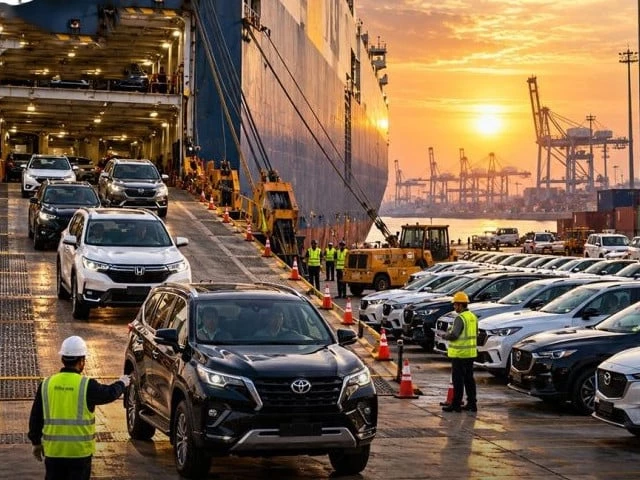
The Pakistan Association of Automotive Parts and Accessories Manufacturers (PAAPAM) has urged Prime Minister Shehbaz Sharif to review the draft Auto Policy 2026-31, warning that proposed tariff reductions on completely built-up vehicles, concessions for new-energy vehicles and lower duties on auto parts could undermine domestic manufacturing and employment.
In a letter dated October 23, PAAPAM Chairman Abdul Rehman Aizaz cited more than 1,200 companies, 1.5 million jobs, $1.8 billion in annual import substitution and Rs700 billion worth of locally manufactured components supplied to assemblers. The association has requested a meeting with the prime minister to present alternatives before the policy is finalised.
The objection highlights a fundamental conflict. Importers and businesses seeking greater access to foreign vehicles favour lower trade barriers, while local assemblers and parts manufacturers fear that cheaper imports could undermine domestic production and investments made over decades. For parts suppliers, the concern extends beyond competition between car brands to whether locally manufactured components will remain commercially viable as assemblers gain easier access to imported parts and complete vehicles.
The automotive industry is struggling to agree on its future as competing manufacturers, importers and parts suppliers push for policies that protect their commercial interests. The draft policy has exposed divisions in a sector once dominated by Japanese carmakers but now facing competition from Chinese brands, electric-vehicle manufacturers and businesses pursuing multiple technologies.
The government's challenge is no longer simply to balance the interests of a few established assemblers. Conventional petrol engines, hybrids, plug-in hybrids, battery-electric vehicles and range-extended electric vehicles now compete for market share, investment and tax incentives. Each technology has different manufacturing requirements, import dependencies and implications for the existing auto-parts supply chain, making a common industry position increasingly difficult to achieve.
The stakes have risen as Chinese manufacturers introduce new models and technologies into a market long shaped by Suzuki, Toyota and Honda. These Japanese companies helped develop the country's automotive manufacturing base and supplier networks, but their established position is now being challenged by changing consumer preferences and new competitors. Their long-term standing will depend on how effectively they respond to this changing market.
The transition has also complicated lobbying. Some companies operate across several vehicle technologies, while others specialise in particular powertrains or components. A concession benefiting one category may disadvantage another, even when their commercial interests overlap. The result is a contest in which manufacturers, importers and suppliers are not necessarily aligned even within their own segments.
A senior official of a Japanese auto manufacturer said: "The industry is no longer speaking with one voice because the business itself has changed." Traditional assemblers, parts manufacturers, importers and companies investing in electric and hybrid technologies have different priorities. "Everyone wants a policy that supports their own investment, but the government must consider the entire industrial ecosystem."
He added that opening the market too quickly could hurt local suppliers and employment, while excessive protection can discourage competition and keep prices high. "The real requirement is a predictable policy that encourages exports, genuine localisation and technology transfer. Companies should compete on efficiency and quality, but the transition must not destroy productive capacity built over decades."
The draft policy attempts to reconcile competing demands through a combination of tariff liberalisation, export obligations and incentives for cleaner vehicles. It targets $6 billion in cumulative vehicle and auto-parts exports by 2030-31, with incentives for companies meeting export targets and penalties for those falling short. Proposals also include phased tariff reductions and preferential sales tax rates of 1% for battery-electric vehicles, 6% for range-extended electric vehicles and 9% for plug-in hybrids, subject to the remaining approval process.
These measures could increase competition and widen consumer choice, but they also raise questions about the pace of liberalisation and the future of local suppliers. Stakeholders believe import competition may put pressure on prices, yet lower duties alone cannot guarantee that consumers receive the full benefit or that domestic manufacturers remain competitive. Conversely, prolonged protection without stronger productivity, exports and localisation could leave the industry dependent on a relatively sheltered domestic market.
The policy's success will ultimately depend on whether its incentives produce measurable gains in domestic value addition, exports, technology transfer and affordability. The government must also establish clear, predictable rules so that businesses can make long-term investment decisions rather than repeatedly lobbying for changes to taxes and tariffs, stakeholders added.














This material may not be published, broadcast, rewritten, redistributed or derived from. Unless otherwise stated, all content is copyrighted © 2026 The Express Tribune.







COMMENTS
Comments are moderated and generally will be posted if they are on-topic and not abusive.
For more information, please see our Comments FAQ