Banks urged to remove SME credit hurdles
Updated 1 hour ago

World Bank says Pakistan's growth rate not enough to create jobs for 3.6m people

The World Bank projected on Thursday a moderate 4.2% economic growth for Pakistan in the year before general elections in 2029 but urged the government to implement a plan to stay on course of macroeconomic stability in the election year.
In its Pakistan Development Outlook, the Washington-based lender said rupee-dollar parity was not "freely" responding to market conditions and a fully flexible exchange rate would better serve Pakistan's interests. The report discussed in depth Pakistan's current exchange rate policy, implying that such stability led to three macroeconomic crises in the recent past and adjustment was needed to arrest appreciation of the real effective exchange rate.
The report projected 4.2% economic growth in fiscal year 2027-28, which would be the second last year of the government, and 4.4% during the election year. It underlined that Pakistan's current-to-medium-term growth rate was not enough to create jobs for 3.6 million people entering the market every year.
"With the current International Monetary Fund programme ending in September 2027 and national elections scheduled for early 2029, developing, publishing and effectively implementing a medium-term fiscal plan that preserves macroeconomic stability is critical to maintaining confidence," said the World Bank.
The lender emphasised the need for preserving macroeconomic stability due to past episodes of loosening fiscal purse during the election year. For the current fiscal year, the World Bank projected 3.8% growth, slightly lower than the government target of 4%.
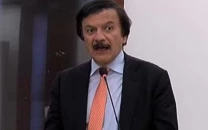
"The growth rate in the medium term does not seem going beyond 4.5%, which is too low to create enough jobs," said Sebastian Essl, Lead Author of the report. The report underlined growth-enabling reforms that were urgently required to reverse recent increases in poverty from 22% in 2019 to 29% in 2025 and create sufficient jobs for 3.6 million Pakistanis reaching working age every year.
The World Bank said that under a baseline scenario with continued sound macroeconomic management and limited structural reform progress, growth was projected to remain broadly stable at 3.8% this fiscal year. Elevated commodity and energy prices were expected to weigh on services and industry, it added. "The macroeconomic outlook assumes that Pakistan's economy will continue to be affected by the conflict in the Middle East through end-2026, with a gradual de-escalation over the course of 2027," said the lender.
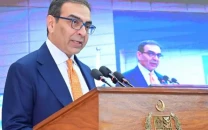
"Pakistan has made real progress in restoring stability and markets have taken notice," said Bolormaa Amgaabazar, World Bank Country Director for Pakistan. But real per capita growth – the rate at which the income of an average Pakistani increases – remains stuck at around 1.6% and reforms to drive faster growth are now urgently needed, according to Bolormaa.
The report showed that a more prolonged and intense conflict in the Middle East remained the most significant risk to Pakistan's near-term macroeconomic outlook. A longer or deeper conflict would sustain elevated energy prices and increase Pakistan's import bill while weighing on export demand and disrupting trade routes.
These effects could widen the current account deficit and add pressure to reserves. Intensified domestic demand-management measures to contain energy shortages could deepen the drag on domestic activity, while sustained higher input costs would renew pressure on inflation and household purchasing power.
The report found that such growth was possible if Pakistan followed the path taken by other successful countries in pursuing ambitious economic reforms. Reforms that upgrade policies and institutions to the quality seen in the average middle-income country could drive sustained growth of up to 6.2-6.9% per annum, sufficient for Pakistan to reach Vietnam's current level of income by 2050.
The World Bank commented extensively on Pakistan's exchange rate policy, suggesting that it had issues with the current policy. "The central bank exchange rate intervention creates temporary stability but leads to disruptive adjustments, deterring investment and undermining confidence," it stated.
"Stability in the face of these shocks suggests that the exchange rate is not responding freely to market conditions. A fully flexible, market-determined exchange rate would better serve Pakistan's economic development needs: it would buffer external shocks, support private sector confidence and prevent a gradual erosion of competitiveness."
The World Bank said that the rupee remained stable against the dollar, but the real exchange rate appreciated due to higher inflation, weighing on competitiveness. The average exchange rate in FY26 was Rs280.4 per dollar, compared to Rs279.4 the previous year. With higher inflation, deteriorating terms of trade and exchange rate stability, the real effective exchange rate (REER) appreciated 10% between end-June 2025 and July 2026, it added.
The World Bank said that over the past two fiscal years, its standard deviation was below Rs2, about 0.6% of its longer-term average. This stability was held through a series of terms-of-trade shocks from FY25, including lower rice export prices and sharp increases in import prices linked to the conflict in the Middle East.
It said that cross-country evidence demonstrated that exchange rate rigidity had increased macroeconomic risks. Among 50 emerging markets over 1980-2011, less flexible regimes were associated with greater vulnerabilities and more frequent crises. Rigid regimes also absorb shocks less well: in developing countries, negative terms-of-trade shocks cause larger output losses under fixed regimes than under flexible ones.
The World Bank said that the current account deficit was projected to widen in the current fiscal year as recovering demand kept import growth faster than exports, but remittances would remain a key offset. It said that external financing needs were estimated to average around 5% of GDP over the near term, reflecting continued reliance on external debt rollovers and remittance-financed current account deficits. Tighter global financial conditions could raise borrowing costs and reduce capital flows to emerging markets, complicating the rollover of financing at a critical juncture.











This material may not be published, broadcast, rewritten, redistributed or derived from. Unless otherwise stated, all content is copyrighted © 2026 The Express Tribune.










COMMENTS
Comments are moderated and generally will be posted if they are on-topic and not abusive.
For more information, please see our Comments FAQ