Samar Bilour holds public day at Lahori Gate
Updated 1 hour ago

Inquiry finds flood-damaged grain at Azakhel godown unfit for human consumption
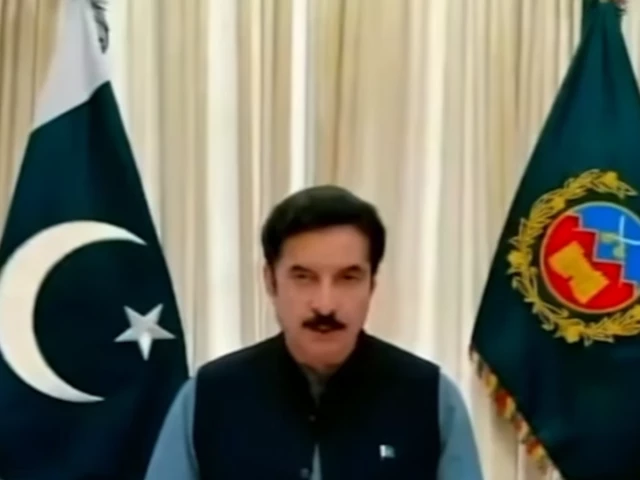
A high-level meeting chaired by Khyber-Pakhtunkhwa Governor Faisal Karim Kundi on Wednesday reviewed an inquiry into the supply of substandard and potentially hazardous wheat from the Azakhel wheat godown to flour mills across the province.
The Governor Inspection Team presented its detailed findings during the session. Team Chairman Mukhtiar Ahmad informed the governor that the team had thoroughly inspected the sprawling 150-kanal facility at Azakhel. Six godowns located in two blocks of the complex were found to have been inundated by floodwater. Samples of the damaged wheat were dispatched to the Pakistan Council of Scientific and Industrial Research (PCSIR) laboratory for analysis. The laboratory report declared the flood-affected grain harmful to human health and unfit for human consumption.
According to the inquiry, critical protective measures to shield the godown from floodwater had never been implemented. Despite repeated flood alerts issued by the Provincial Disaster Management Authority (PDMA), authorities failed to adopt even basic precautionary steps. After the flooding occurred, the Food Department neglected to constitute a technical assessment committee to evaluate the quality and safety of the stored wheat. The report explicitly recommended disciplinary action against the officers found responsible for this negligence.
Governor Kundi questioned why, despite the site's history of repeated flooding, a proper protective wall had never been constructed around the godown. Officials briefed him that existing gaps and holes in the incomplete barrier allowed rainwater and floodwater to pour directly into the storage blocks, spoiling large quantities of wheat.
Further discrepancies came to light: the Food Department's official stock records contained no entry acknowledging the flood-damaged wheat, and no scientific testing of the affected stocks had been carried out by the department itself prior to the Governor Inspection Team's intervention.
In clear and firm directions, Governor Faisal Karim Kundi ordered an immediate halt to the supply of any wheat deemed hazardous to health from the Azakhel facility to flour mills. He emphasized the urgent need to safeguard remaining wheat reserves, enforce strict quality controls on food commodities, and fix individual responsibility for lapses that placed public health at risk.
The governor stressed that protecting essential food stocks is a fundamental responsibility of the provincial administration. He directed relevant departments to ensure that all future storage facilities are adequately protected against natural disasters and that transparent record-keeping and independent quality assessments become standard practice. Officials were instructed to submit a follow-up compliance report detailing the steps taken to implement the recommendations of the inquiry.












This material may not be published, broadcast, rewritten, redistributed or derived from. Unless otherwise stated, all content is copyrighted © 2026 The Express Tribune.







COMMENTS
Comments are moderated and generally will be posted if they are on-topic and not abusive.
For more information, please see our Comments FAQ